You’re halfway through a busy Tuesday when the reminder appears. A call is running late, dinner needs reheating, and the dose you planned to take before bed is still sitting on the counter. By morning, you’re trying to remember whether you took it, skipped it, or moved it to the next day.
That moment isn’t a character flaw. Adherence to schedule is usually a design problem, especially when a peptide routine competes with travel, changing sleep patterns, work, training, and ordinary household interruptions. A workable system should make the next action visible, connect it to a familiar routine, and record what happened without creating more mental work.
Table of Contents
- Why Most Peptide Users Miss Their Schedule
- What Adherence to Schedule Actually Means for Peptide Protocols
- Common Barriers That Break Your Routine
- Why Routine Anchors Beat Perfect Timing Every Time
- Using PepFlow to Build a Consistent Dosing Habit
- Evidence-Based Strategies to Improve Consistency
- Your Week-One Consistency Checklist
Why Most Peptide Users Miss Their Schedule
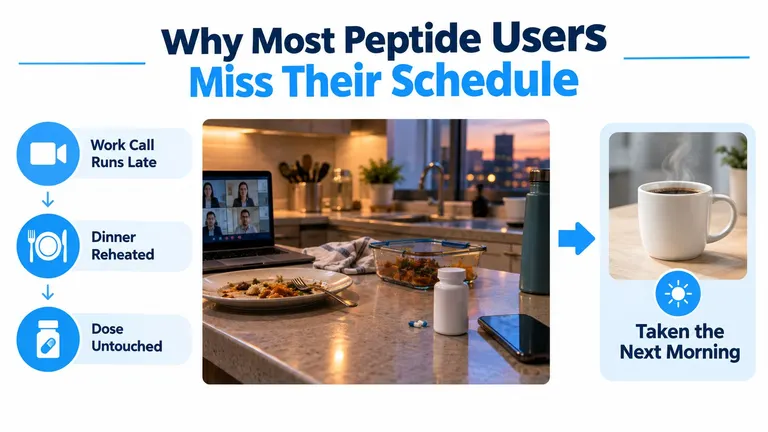
A reminder appears while a work call runs late. Dinner is still unfinished, the usual evening cue has disappeared, and the planned dose is no longer connected to a familiar action. The following morning brings a second problem: the dose may be missed, and the record may not show what happened.
This pattern appears across scheduled healthcare actions. A 2018 systematic review of 105 published studies found an average appointment no-show rate of about 23%, with substantial geographic variation. Its reported rates ranged from 43.0% in Africa to 13.2% in Oceania. The finding points to a recurring operational challenge, not an unusual personal failure.
Medication routines face similar pressure. A World Health Organization report reported that adherence among people with chronic diseases in developed countries averages about 50%, describing roughly half of patients as not taking medicines correctly. These figures cannot predict an individual peptide user’s actions. They do show why a reminder by itself may be too weak when the surrounding routine is hard to follow.
Where lapses tend to cluster
Certain situations remove the cues that normally keep a routine on track:
- Travel days: Storage locations, meal patterns, and evening setups change.
- Sleep shifts: A late night or early morning moves the usual trigger.
- Stressful weeks: More decisions make an action that is not visible or prepared easier to postpone.
Willpower can carry a new routine for a while. Later, a notification may blend into other alerts, particularly when it does not show the next action. Without a dose log or visible history, the user must reconstruct yesterday before deciding what to do today.
A stable wind-down routine for deep sleep can provide a dependable evening anchor when bedtime dosing fits the prescribed plan. PepFlow supports the same habit-first approach through a countdown, live activity, and a log-dose loop. Together, these cues make the next step easier to see and the completed step easier to verify. Consistency becomes less about perfect clock-time discipline and more about building a routine that survives ordinary disruptions.
What Adherence to Schedule Actually Means for Peptide Protocols
For peptide protocols, adherence to schedule means taking the intended dose within the acceptable timing window for that protocol. It doesn’t necessarily mean injecting at the exact same minute every day. The correct window depends on the instructions provided by a qualified healthcare professional and the cadence of the regimen.
Different schedules need different forms of consistency. A daily subcutaneous protocol may rely on reasonably even spacing between doses. A weekly plan may care more about keeping the designated injection day stable than about the exact hour. A cycled plan, such as an alternating active and pause structure, depends on following the complete sequence rather than judging success from one isolated dose.
Match the strategy to the cadence
| Protocol Type | Example Peptides | Acceptable Window | Risk of Drift |
|---|---|---|---|
| Daily | BPC-157 or tirzepatide-style regimens | Follow the prescribed daily interval and any clinician-defined flexibility | Repeated delays or multi-day gaps can disrupt the planned pattern |
| Weekly | Semaglutide | Keep the prescribed injection day consistent, with timing guidance from a clinician | Moving the day repeatedly can make the schedule harder to follow |
| Cycled | Protocols with active and pause periods | Complete each active and pause block as prescribed | Unplanned extensions or skips can change cumulative exposure |
Therapeutic windows matter. A small clock-time drift may be less important than a skipped day or an improvised change to the protocol, but you shouldn’t assume that flexibility is safe for every peptide. If you’re unsure whether a late or missed dose should be taken, delayed, or skipped, ask the prescribing clinician rather than guessing.
Adherence also differs from persistence. Adherence describes how closely you follow the schedule while using a protocol. Persistence describes whether you continue the protocol over its intended duration. Someone can persist for weeks while missing occasional doses, or stop early while having followed every dose until that point. You can use PepFlow’s dosing schedule guide to organize the timing structure, but clinical instructions should determine what the schedule means for you.
Common Barriers That Break Your Routine
A schedule can look simple on paper and still fail during an ordinary day. A late meeting, a different storage location, or uncertainty about the next dose can interrupt the habit before motivation has a chance to help. The useful question becomes: which barrier appeared, and what small change can address it next time?
Environmental barriers
Travel is a common example. A dose may end up in another bag, stored somewhere unfamiliar, or separated from the supplies you usually use. Shared kitchens create another interruption when the counter is cleared before you return to the task. Unstable storage can also raise a safety concern, so follow the product’s storage instructions and prepare a transport plan instead of improvising.
Practical fixes include:
- Pre-packed travel kits: Prepare the supplies you’re allowed to carry and verify storage requirements before leaving.
- A designated home location: Keep active supplies and the schedule reference in one consistent, appropriate place.
- A departure check: Add a short routine that confirms the kit, supplies, and next scheduled action before travel begins.
Cognitive barriers
Memory becomes less dependable when several vials, phases, or frequencies compete for attention. Loading and maintenance phases can add confusion if the current phase is not clearly marked. A single source of truth, such as a current protocol record showing the active cadence and start date, reduces repeated decisions.
PepFlow’s countdown, live activity view, and dose log can support the same loop: check what was planned, complete the action according to your instructions, then record what happened. That distinction matters because remembering a reminder does not confirm that the dose was completed.
Physical barriers
Soreness at an injection site, needle anxiety, or a supply interruption can turn a planned action into an avoided action. Rotating sites according to professional guidance and recording the location makes the routine easier to review. If supply continuity may become a problem, check availability early and discuss legitimate alternatives with a qualified clinician or pharmacist instead of relying on an unverified backup.
Emotional and social barriers
Shame can make one missed dose grow into a longer interruption. Someone may delay opening the log, avoid reviewing the schedule, and return later with more uncertainty. A no-judgment reset rule interrupts that spiral. One miss leads to one documented reset, followed by a return to the instructions you were given.
Practical rule: Record what happened, identify the barrier, and resume only according to the instructions you’ve been given.
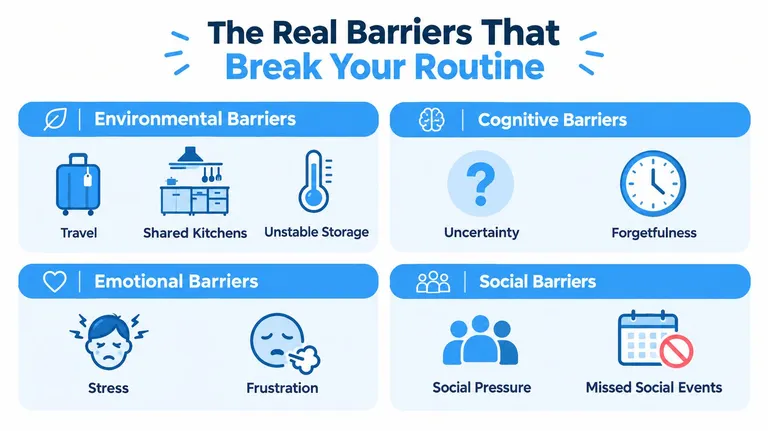
These barriers follow recognizable patterns and can be addressed with specific responses. Naming the pattern gives you something practical to adjust, especially at the moment motivation is weakest.
Why Routine Anchors Beat Perfect Timing Every Time
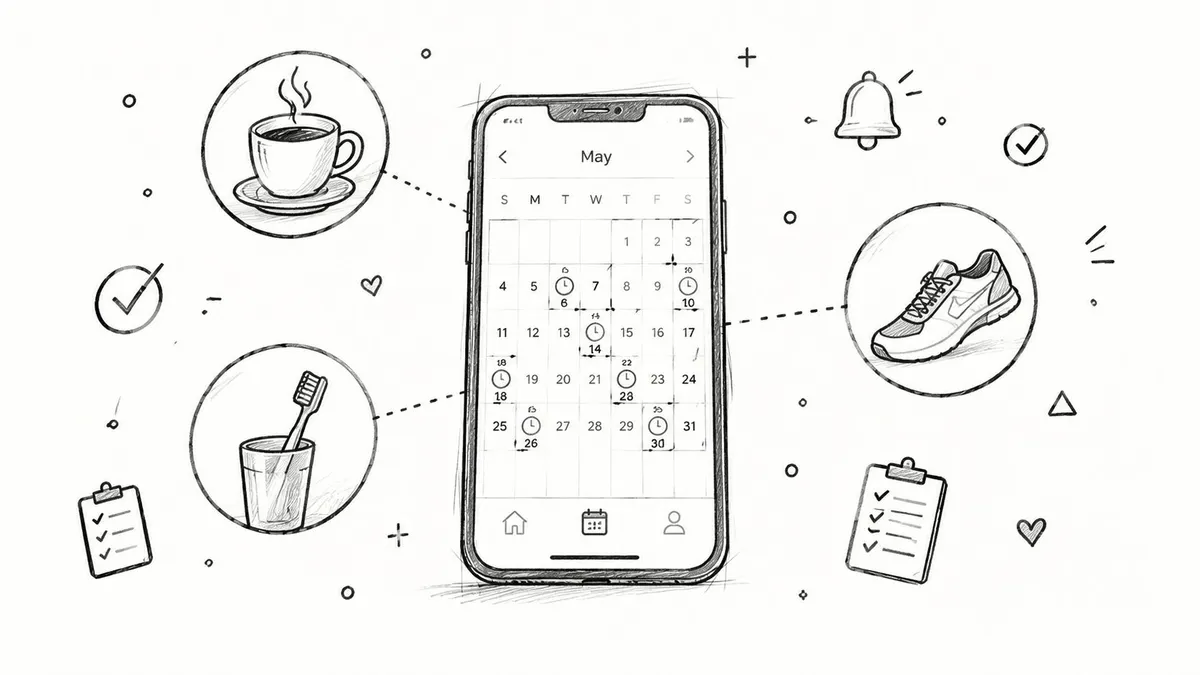
Exact clock-time discipline sounds precise, but it can make a routine brittle. If your schedule says a dose must happen at one exact minute, a late meeting can turn a manageable delay into an apparent failure. A routine anchor gives the action a stable context, such as morning coffee, brushing your teeth, finishing a shower, or preparing for a workout.
A 2024 ACM study offers a useful challenge to clock-time perfectionism. Among 22 participants, 20, or 91%, took medication in routine-linked time ranges, while 3, or 14%, used time-based reminders, according to the published study. The finding doesn’t establish that every peptide protocol should use flexible timing, but it does suggest that many people naturally organize medication around routines rather than exact clock times.
Build the cue around an existing behavior
The cue should be stable, frequent, and meaningful enough to notice. Morning coffee may work for a daily routine if mornings are consistent. A post-shower anchor may work better for someone whose mornings vary but whose evening preparation is reliable. A pre-workout cue can help some users, but it may be weak on rest days, so it shouldn’t be the only trigger if training frequency changes.
The loop is straightforward:
- Cue: The familiar activity signals that the scheduled action is approaching.
- Routine: You follow the approved preparation and dosing process.
- Reward: You log the dose and remove uncertainty about what happened.
The anchor shouldn’t override medical instructions. It should help you remember and complete the plan inside the window your clinician has approved.
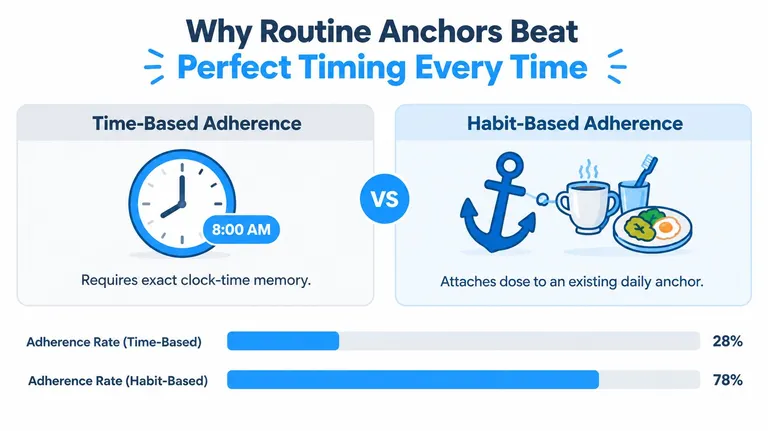
Digital prompts work best when they reinforce the physical cue. PepFlow’s countdown timers, live activity displays, and reminder stacking can keep the next action visible, while the routine anchor tells you when that action belongs in your day.
Using PepFlow to Build a Consistent Dosing Habit
Your schedule can be medically correct and still fail on a rushed morning. PepFlow helps turn that plan into a visible routine, while medical guidance remains the authority for dose, timing, storage, and missed-dose decisions.
Start with a clear protocol
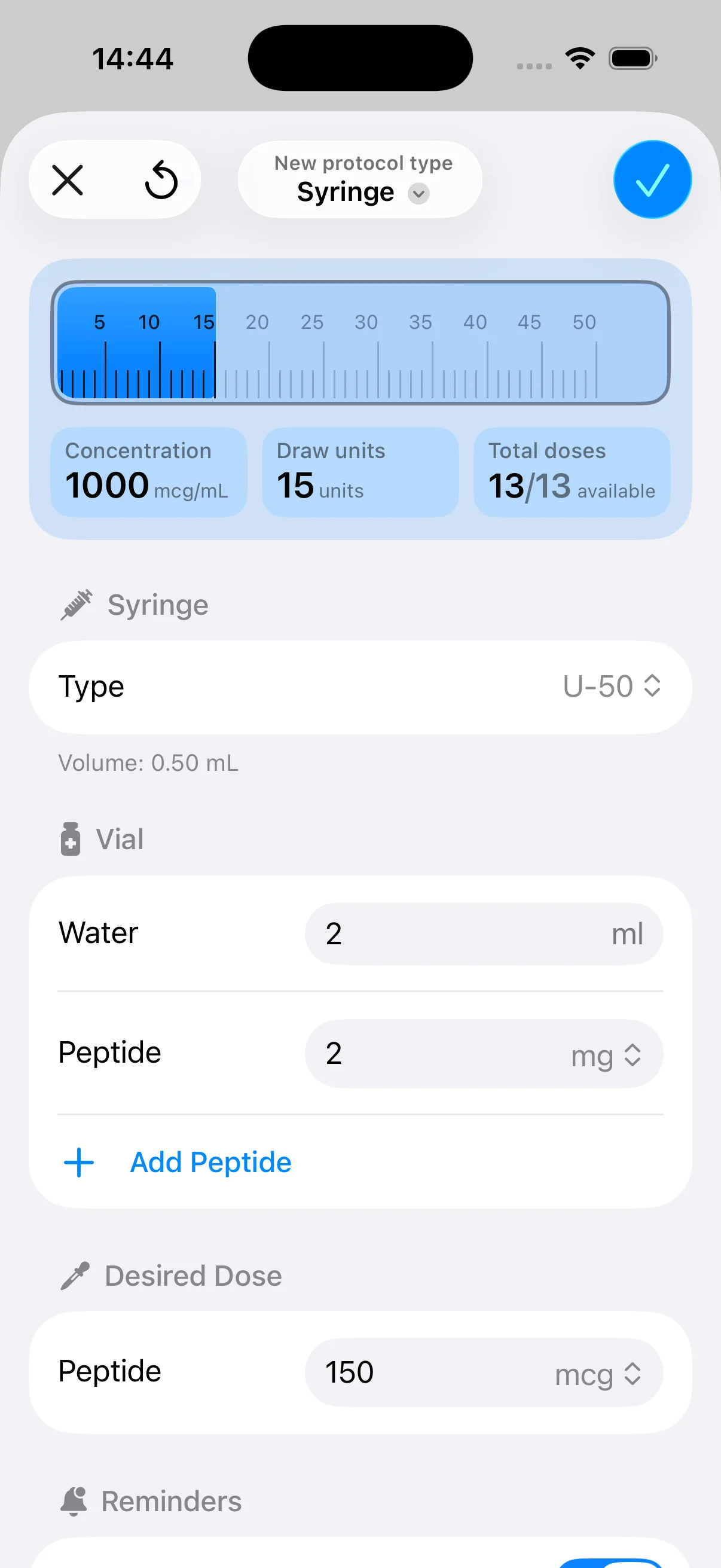
Enter the protocol’s cadence, start date, frequency, and planned pause periods. This creates a defined structure instead of leaving instructions as a loose phone note. If you manage more than one regimen, separate protocols so active phases do not blur with maintenance periods.
A 2024 ACM study found that among 22 participants, 20 (91%) used routine-linked time ranges for medication, while only 3 (14%) relied on time-based reminders. The practical lesson is simple: use the app to support a dependable daily event, rather than treating an exact clock time as the whole habit.
Choose one environmental anchor that fits your day. “After brushing my teeth” or “after morning coffee” gives the countdown a behavioral context, especially when the exact minute changes.
Make the cue visible
Push notifications can provide the first prompt. A home-screen countdown, widget, or live activity can keep the next action in view as you move between tasks. On busy days, that visibility saves you from reconstructing the plan from memory.
PepFlow’s countdown shows how close the next action is, while live activity keeps the status available without opening the app. Reminder stacking can add a follow-up cue when appropriate. Keep the alerts useful rather than noisy. The goal is a clear nudge, not a stream of interruptions.
Close the loop with a log
After following the approved process, use the log-dose action to record completion. That record resolves the question that often creates later uncertainty: “Did I do it?” Calendar and history views can then help you review late, missed, and completed actions over time.
Add factual notes or photos when they support personal tracking, such as recording injection-site rotation. Protect sensitive information, and share the record with a clinician when it helps explain what occurred more accurately than memory.
Missed-dose alerts and streak views can support accountability without turning a disrupted day into a source of shame. If supplies are part of a wider purchasing routine, consider buying pouches one time vs recurring so replenishment does not become a last-minute interruption. PepFlow makes the plan visible, keeps the next action connected to your routine, and makes completion easy to review.
Evidence-Based Strategies to Improve Consistency
Evidence supports using reminders as one part of a broader routine. A systematic review of 13 studies found improved adherence in 8 studies, with the clearest signal for SMS-based reminders. Across pooled evidence, reminder groups reached 66.61% adherence versus 54.71% in controls. Long-term benefit remained uncertain, and most positive studies followed participants for less than six months.
The practical lesson is simple: let a reminder point to the dosing window, then support it with context, a record, and a response plan. PepFlow’s countdown and activity view can keep the next action visible, while its log-dose loop helps turn completion into a checkable record.
Five layers that support consistency
| Strategy | Evidence Note | PepFlow Feature |
|---|---|---|
| Contextual reminders | Reminders showed short-term benefits in part of the reviewed evidence, especially when tied closely to the dosing window | Push notifications and reminder stacking |
| Implementation intentions | An if-then plan reduces reactive decision-making when a predictable disruption occurs | Protocol notes and a documented backup plan |
| Self-monitoring | A written record makes completed and missed actions easier to distinguish | One-tap dose logging, calendar, and history |
| Multi-day review | The measurement window can change what adherence reveals. A study comparing missed-dose timeframes found an intermediate 14-day window correlated best with viral load, while a 4-day window was less accurate | Calendar review and protocol history |
| Personalized support | A 2026 review of digital health interventions found no single superior approach and highlighted customized reminders, goal-setting, and clinician follow-up | Custom reminders, notes, and reviewable logs |
An implementation intention might read: “If my primary anchor is disrupted, then I’ll use my backup anchor within the approved window and log the result.” Decide that response before the disruption arrives. Do not invent a make-up dose or change the schedule without professional guidance.
A weekly review shows whether one barrier keeps returning. Place travel, sleep changes, and demanding work periods beside the protocol with a calendar or the SyncThemCalendars planning guide. For more practical ideas, review this guide on how to improve medication adherence, then keep only the layers that fit your routine.
Your Week-One Consistency Checklist
Routine anchors outperform rigid clock-time perfection because they connect the scheduled action to something you already do. The first week should focus on building that connection, not chasing a flawless streak.
Days one and two
- Choose the anchor: Select one stable activity for each scheduled dose, such as coffee, brushing your teeth, or a post-shower routine.
- Set the cue: Configure PepFlow reminders to appear 15 minutes before the chosen anchor, then check that the countdown reflects the expected interval.
- Log the first dose: Record the first completed action immediately rather than trusting memory.
- Verify the record: Review the live activity feed and confirm that the entry timestamp matches what happened.
Days three and four
Add a backup window of 90 minutes on either side of the primary anchor for travel or ordinary schedule shifts, but use it only within the flexibility approved for your protocol. Write an if-then plan for the most likely disruption, and don’t create a new dosing instruction for yourself.
Days five through seven
Use a weekly review to look for patterns of late or missed actions. Check whether the anchor is stable, whether notifications are too frequent, and whether storage or supply issues are interfering. Then prepare the next week’s protocol and adjust the anchor if your routine has changed.
The routine schedule app approach works best when it reduces decisions rather than adding more tracking work. Each completed checkpoint strengthens the cue, the action, and the log. Over time, consistency becomes less dependent on perfect timing and more connected to the routines already holding your day together.
PepFlow helps you organize peptide protocols with flexible schedules, countdowns, reminders, live activity updates, and quick dose logging. Visit PepFlow to set up a routine that keeps your next action visible and your completed doses easy to review.