Reference Guide
Peptide Cheat Sheet
Educational purposes only
Common ranges, frequency, timing, and cycle length—organized by route.
Jump To
Weight Loss & Metabolism
Compounds commonly referenced for appetite control, glucose management, and metabolic support.
| Peptide | Primary use | Route | Typical range | Cadence | Common timing | Typical cycle |
|---|---|---|---|---|---|---|
| Semaglutide | Weight loss and glucose management | InjectionOral | 0.25–2.4 mg · max 7.21.5–25 mg | WeeklyDaily | Same weekdayAM · empty stomach | Ongoing · titrate 3–4+ moOngoing |
| Tirzepatide | Weight loss and glucose management | Injection | Start 2.5 mg · max 15 mg | Weekly · titrate ≥4 wk | Same weekday · any time | Ongoing |
| Retatrutide | Multi-agonist weight loss and glucose support | Injection | 1–12 mg | Weekly | Same weekday | 48–80 wk |
| Cagrilintide | Appetite control and weight management | Injection | 0.3–4.5 mg | Weekly | Same weekday | 6–16 mo |
| AOD-9604 | Fat reduction support | InjectionOral | 250–500 mcg~1 mg | 1–2x dailyDaily | AM or pre-workoutAM | 8–12 wk~24 wk |
| 5-Amino-1MQ | Metabolic support | Oral | 50–100 mg | Daily | AM | 8–12 wk |
| MOTS-c | Metabolism and exercise performance | Injection | 5–10 mg | Daily | AM or pre-workout | 8–12 wk |
Recovery & Healing
Frequently cited options for tissue repair, inflammation support, and connective tissue recovery.
| Peptide | Primary use | Route | Typical range | Cadence | Common timing | Typical cycle |
|---|---|---|---|---|---|---|
| BPC-157 | Tissue repair and gut support | InjectionOralTopical | 250–500 mcg1–6 mgLabel amount | 1–2x daily3x dailyDaily | AM or PMAM or PMAM or PM | 4–8 wk2–3 wk2–3 wk |
| TB-500 | Recovery and inflammation support | InjectionTopical | 2–4 mg1 application | 2–3x weekly2x daily | Post-workout or PMAM + PM | 4–8 wk~4 wk |
| GHK-Cu | Collagen and skin support | TopicalInjection | 1–3%1–2 mg | 1–2x daily1–2x daily | AM or PMAM or PM | 8–12 wk4–12 wk |
| LL-37 | Antimicrobial and wound support | InjectionTopical | 500 mcg–1.6 mgLabel amount | 1–2x dailyCare schedule | AM or PMDressing change | 2–4 wkCare schedule |
| KPV | Anti-inflammatory support | OralInjectionTopical | 1–2 mg · oral / SL1–2 mgLabel amount | 1–2x daily1–2x dailyLabel cadence | AM or PMAM or PMAM or PM | 4–8 wk4–8 wk4–8 wk |
| ARA-290 | Neuropathic discomfort and tissue repair support | Injection | 2–4 mg | Daily | AM or PM | 4–8 wk |
Growth Hormone & Performance
Reference ranges often used when protocols focus on GH signaling, recovery, and body-composition support.
| Peptide | Primary use | Route | Typical range | Cadence | Common timing | Typical cycle |
|---|---|---|---|---|---|---|
| Tesamorelin | GH secretion and fat loss | Injection | 2 mg | Daily | PM | ≥180 days |
| Ipamorelin | GH secretion and recovery | InjectionNasal | 200–300 mcg~200 mcg | 1–3x dailyDaily | Bed or post-workoutBed · away from food | 8–12 wk~4 wk |
| CJC-1295 | GH production and muscle growth | Injection | 2 mg | 2–3x weekly | Before bed | 8–12 wk |
| GHRP-2 | GH secretion and appetite support | InjectionNasal | 100–300 mcg100 mcg | 2–3x daily2x daily | AM · pre-workout · bedAM + bed · away food | 8–12 wk~4 wk |
| GHRP-6 | GH secretion and appetite stimulation | InjectionNasalOral | 100–300 mcg0.03 mg/kg0.3 mg/kg | 2–3x dailySingle dose2x daily | AM · pre-workout · bedPre-mealPre-meal | 8–12 wkSingle dose4 days |
| Sermorelin | GH secretion support | InjectionNasal | 0.2–0.5 mg~100 mcg / spray | Daily5 nights / wk | Before bedBefore bed | 3–6 moOngoing |
| Somatropin (HGH) | Growth hormone replacement context | Injection | Start 0.15–0.30 mg | Daily | PM | Ongoing |
| Modified GRF 1-29 | GH secretion and recovery | Injection | 100–200 mcg | 1–3x daily | AM · post-workout · bed | 8–12 wk |
| IGF-1 LR3 | Muscle growth and recovery | Injection | 20–50 mcg | Daily or training days | AM or post-workout | 4–6 wk |
| Hexarelin | GH secretion and recovery | InjectionNasalOral | 100–200 mcg1.25 mg20 mg | 1–2x daily3x daily3x daily | AM or bedAM or bedAM or bed | 4–8 wk8–15 days8–15 days |
| PEG-MGF | Hypertrophy and post-training recovery | Injection | 200–400 mcg | 2–3x weekly | Post-workout | 4–6 wk |
Cognitive Enhancement & Neuroprotection
A quick lookup for peptides often discussed around focus, learning, and neuroprotective support.
| Peptide | Primary use | Route | Typical range | Cadence | Common timing | Typical cycle |
|---|---|---|---|---|---|---|
| Dihexa | Cognitive enhancement | Oral | 10–20 mg | Daily | AM | 4–8 wk |
| Semax | Cognitive function and neuroprotection | NasalInjection | 300–600 mcg / day~300 mcg | 1–2x dailyDaily | AM or afternoonAM or afternoon | 4–12 wk4–12 wk |
| Pinealon | Cognitive function and neuroprotection | OralInjection | 1–2 mg / day~1 mg | DailyDaily | AMAM | 4–8 wk~20 days |
| Cerebrolysin | Neuroprotection and cognition | Injection | 5–30 mL | Daily | AM | 10–20 days |
| P21 | Neurogenesis support | NasalInjection | 200–400 mcg / day~500 mcg | DailyDaily | AMAM | 20–30 days20–30 days |
| N-Acetyl Semax Amidate | Focus and cognitive resilience | NasalInjection | 300–600 mcg / day~250 mcg | 1–2x dailyDaily | AM or early afternoonAM | 2–4 wk2–4 wk |
Sleep & Stress Regulation
Purpose-based references for sleep quality, nervous-system calm, and circadian rhythm support.
| Peptide | Primary use | Route | Typical range | Cadence | Common timing | Typical cycle |
|---|---|---|---|---|---|---|
| DSIP | Sleep onset and sleep quality support | InjectionNasal | 100–300 mcg300 mcg | NightlyNightly | 30–60 min before bed30–60 min before bed | 2–6 wk5–10 days |
| Selank | Stress regulation and sleep-supportive calm | NasalInjection | 250–400 mcg / day~250 mcg | 1–2x dailyDaily | Afternoon or PMAfternoon or PM | 2–6 wk2–6 wk |
| Epithalon | Circadian rhythm and sleep timing support | InjectionOral | 5–10 mg / day~1 mg / day | DailyDaily | Before bedBefore bed | 10–20 days10–20 days |
| Oxytocin | Relaxation and social-bonding support | Nasal | 24 IU | 2x daily | Spread across day | ~4 wk |
Immune System & Longevity
Immune modulation, repair, and longevity-oriented compounds that usually appear in cyclical reference protocols.
| Peptide | Primary use | Route | Typical range | Cadence | Common timing | Typical cycle |
|---|---|---|---|---|---|---|
| Thymosin Alpha-1 | Immune function and inflammation support | Injection | 1.5 mg | 2–3x weekly | AM | 6–12 wk |
| NAD+ | Cellular energy and longevity-support context | InjectionNasalTopical | 50 mg30 mg100 mg / application | 3x weeklyDailyDaily | AMAMAM | 30 daysOngoingOngoing |
| Glutathione | Antioxidant and detoxification support | OralInjectionNasalTopical | 250 mgIM · 600 mg100–200 mgLabel amount | DailyDaily3x daily2x daily | Consistent timeConsistent timeAcross dayAM + afternoon | OngoingCourse based10–13 wk10–13 wk |
| VIP | Anti-inflammatory and immune modulation | InjectionNasal | 50–100 mcg~50 mcg | 1–2x daily2x daily | AM or PMAM or PM | 3–6 mo3–6 mo |
| Humanin | Mitochondrial support and neuroprotection | Injection | 2–4 mg | Daily | AM | 8–12 wk |
| SS-31 | Mitochondrial and anti-aging support | Injection | 20–30 mg | Daily | AM | ~52 wk |
| FOXO4-DRI | Senescent cell clearance | Injection | Start 250 mcg | 3x weekly | AM · space doses | 3 wk |
Sexual Function & Hormones
Short-cycle and event-based references for libido, sexual function, and related hormone-adjacent use cases.
| Peptide | Primary use | Route | Typical range | Cadence | Common timing | Typical cycle |
|---|---|---|---|---|---|---|
| PT-141 (Bremelanotide) | Sexual function and libido support | InjectionNasal | 1.75–2 mg20 mg | Event · max 1 / dayEvent based | 45 min–6 hr before45–60 min before | Review at 8 wkReview at 8 wk |
| Melanotan II | Tanning and appetite suppression | Injection | 250–500 mcg | Daily | PM | 4–8 wk |
| Melanotan I | Pigmentation and photoprotection context | ImplantInjection | 16 mgStart 250 mcg | Every 2 moDaily | ScheduledConsistent time | Ongoing~4 wk |
| Kisspeptin-10 | Reproductive hormone signaling and libido support | InjectionNasal | 100–300 mcg~0.075 mg/kg | 2–3x weeklySingle dose | PM or pre-eventPre-event | 4–8 wkEvent based |
| Gonadorelin | LH/FSH signaling support | InjectionNasal | 100–200 mcg~200 mcg | 1–2x daily6x daily | PMAcross day | 4–8 wk~90 days |
| hCG | LH-receptor signaling and fertility context | Injection | 500–1,000 IU | 3x weekly | Lab-based schedule | 3 wk · then reduce |
General reference ranges, not personal dosing instructions.

Keep It Organized
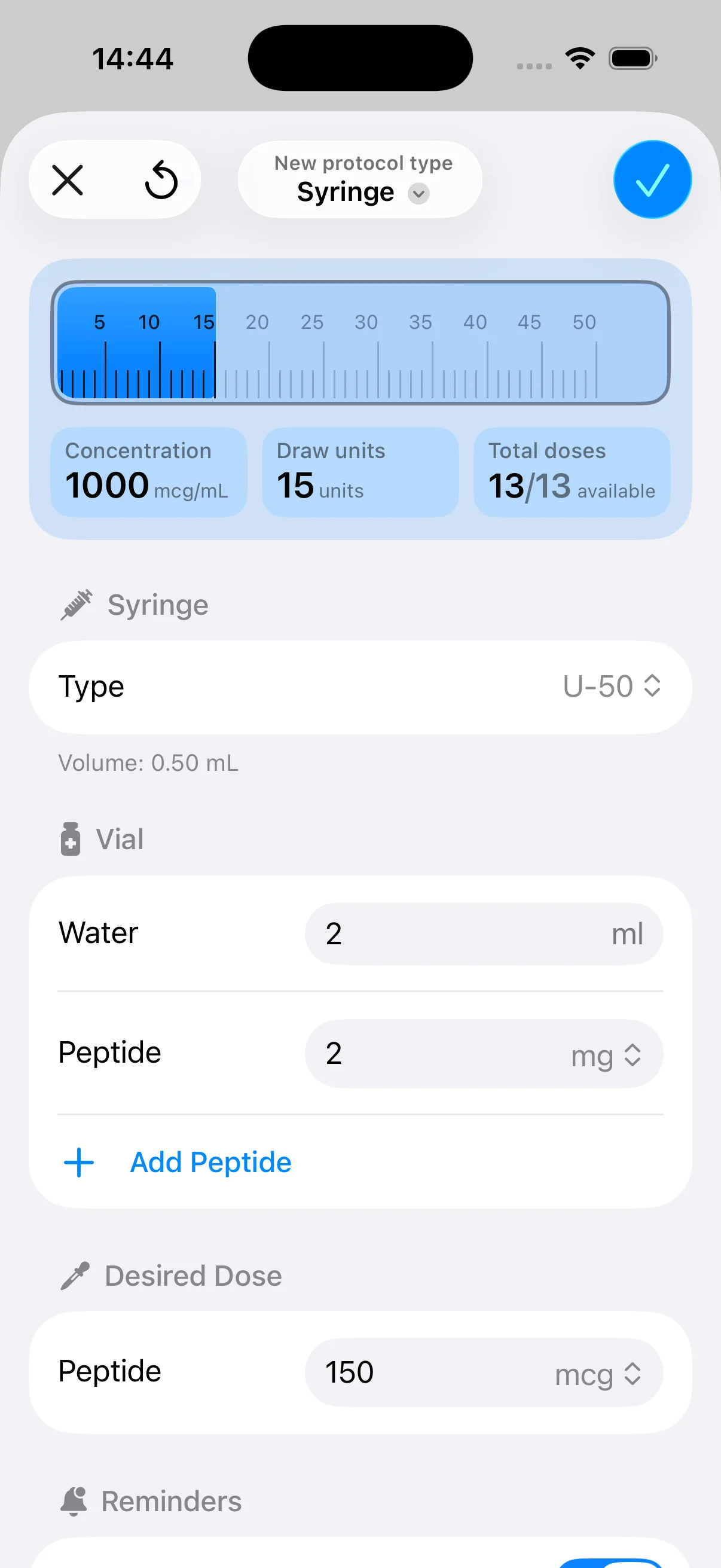
Turn reference ranges into saved formulas, reminders, and repeatable schedules.
PepFlow helps you keep concentrations, dose math, and planned injections in one place so you do not have to rebuild the protocol every time a new vial is mixed.