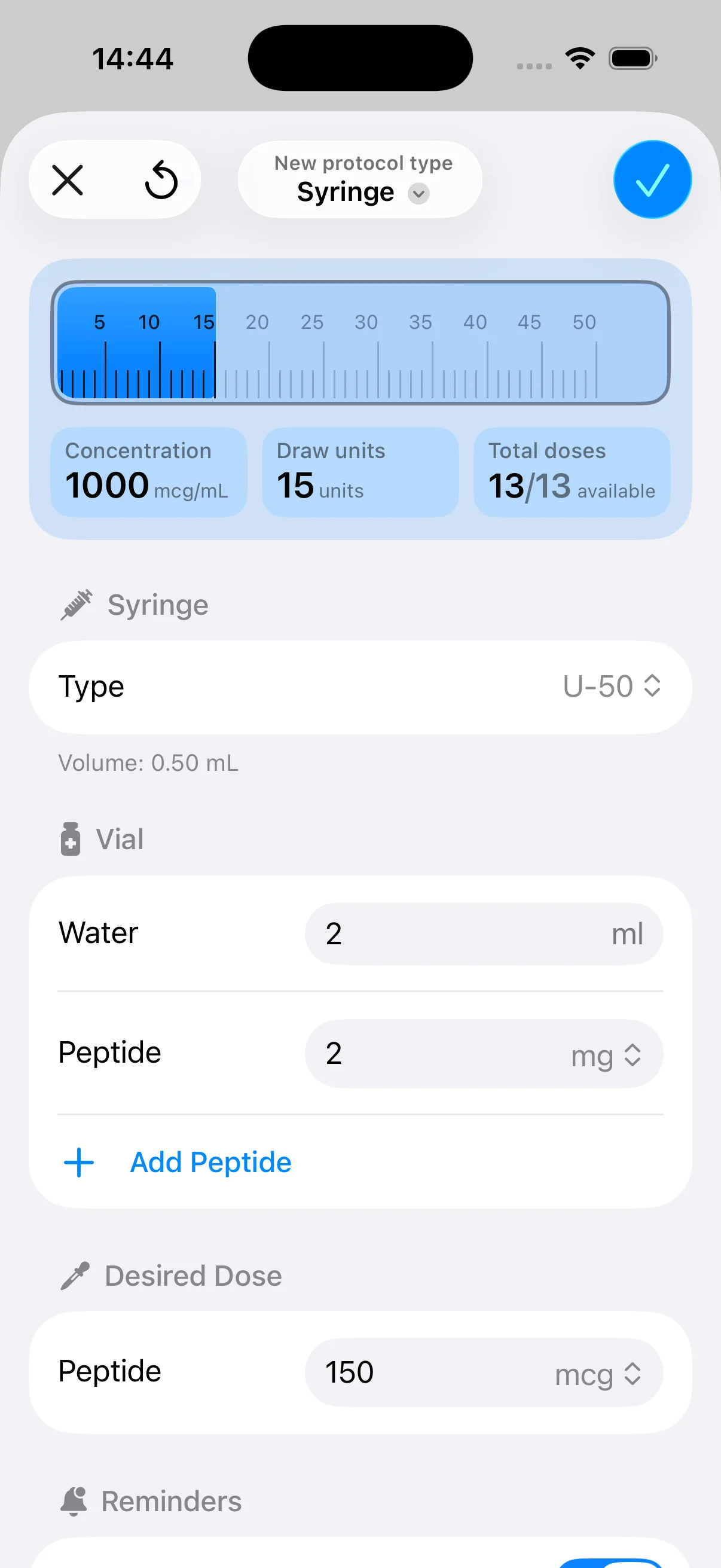
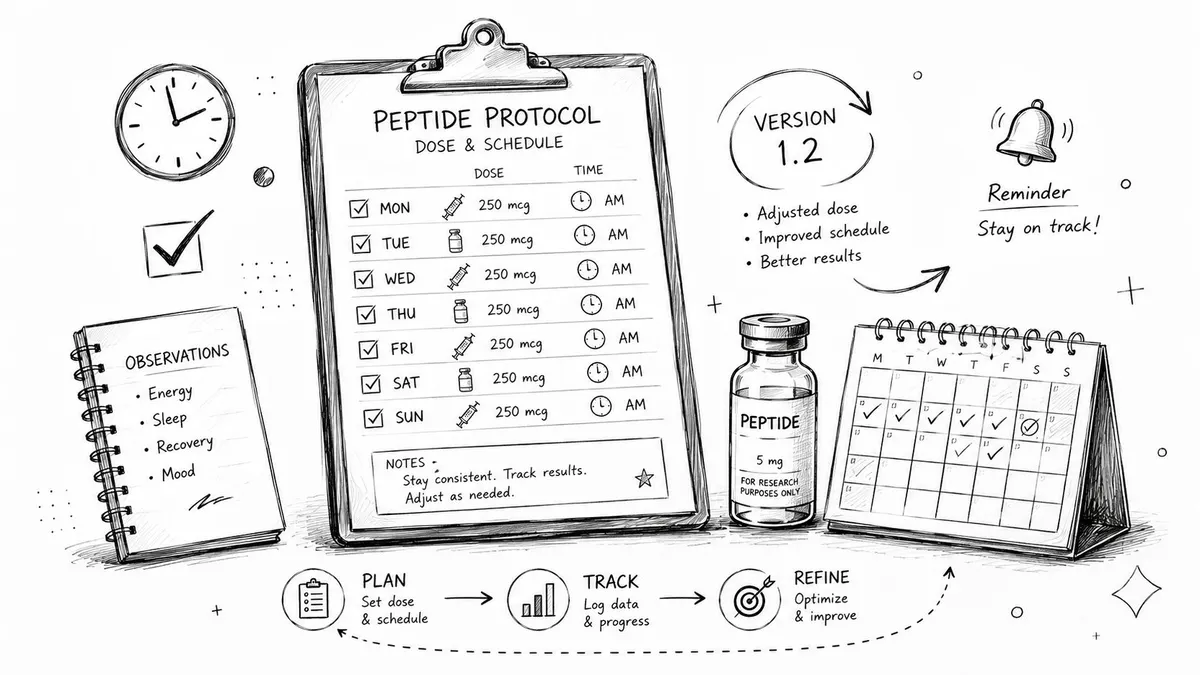
Protocol management boils down to defining what happens, when it happens, and under what conditions so actions repeat reliably. It operates much like a recipe or a pre-flight checklist, ensuring your peptide routine stays accurate and repeatable over time.
Table of Contents
- Understanding the Key Concepts
- The Building Blocks Every Protocol Needs
- Benefits and Common Pitfalls of Protocol Management
- Features to Look for in a Protocol Management Tool
- Frequently Asked Questions About Protocol Management
Understanding the Key Concepts
Protocol management organizes six core activities so a dosing routine behaves the same way every time. It removes the guesswork from your day-to-day execution.
- Creation — define the dose, frequency, and goal so the objective is clear.
- Versioning — track changes so older and newer plans remain comparable.
- Scheduling — map doses to specific calendar windows so timing is never left to chance.
- Reminders — nudge action with push notifications, widgets, or live countdowns.
- Logging — record what actually happened for later review.
- Compliance — measure adherence and identify when things start to drift.
A protocol only works if it is explicit and repeatable.
These components form a straightforward control loop: make a plan, run the plan, record the results, adjust the plan, and repeat. Grasping how to build efficient workflows is fundamental to understanding what protocol management really means. For practical workflow ideas that translate well to dosing routines, learn how to streamline your gym with Fitness GM.
The Six Core Components of Protocol Management
Here is a quick-reference breakdown of how these components operate in practice:
| Component | Purpose | Peptide Example |
|---|---|---|
| Creation | Define parameters | 250 mcg dose, five times per week |
| Versioning | Keep historical states | Ramp from 100→250 mcg over 2 weeks |
| Scheduling | Fix timing | MWF morning injections at 8 AM |
| Reminders | Ensure action | Push notification + widget countdown |
| Logging | Capture reality | Timestamped dose entry, missed-dose note |
| Compliance | Measure adherence | 92% of planned doses completed this cycle |
Keeping these six elements distinct helps prevent the common mistake of mixing up what you intended to do with what actually happened.
A Practical Analogy
Think of protocol management like baking sourdough. The recipe lists ingredients and times, which covers creation and scheduling. You note adjustments between batches for versioning. Timers remind you to feed the starter, acting as your reminders. A baking log records your outcomes, serving as logging. Finally, consistent results prove you followed the protocol, which is compliance.
What You Will Learn Next
Moving forward, we will break down step-by-step workflows that turn these concepts into action. You will see a 12-week peptide cycle featuring ramps, pause periods, and logging rules. We will also cover common pitfalls like missed-dose stacking and concentration mix-ups. To wrap things up, you will get a checklist of tool features that operationalize each component, keeping the math, timing, and history accurate without adding extra cognitive load.
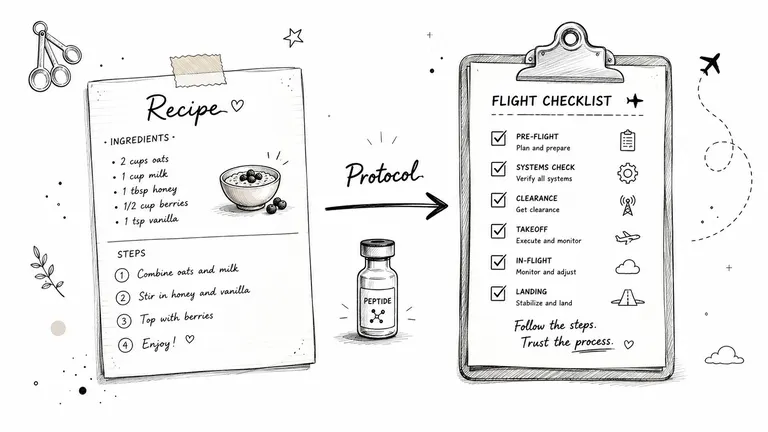
Long before we had apps, humans invented rules just to keep things running smoothly. Protocol management is simply the modern version of that age-old habit. Think about a royal court where ambassadors followed strict greetings and seating charts; those rituals kept diplomacy from falling apart. That same need for order connects ancient ceremony to computer code, and eventually right down to your dosing notebook.
Picture a naval captain working through a pre-sail checklist before leaving the dock. Every item checked off cuts down on risk and clears the captain’s head. Centuries later, engineers applied that exact same logic to computer networks, writing rules so machines know when to talk and when to listen. In both cases, explicit, repeatable steps keep things from descending into chaos.
Diplomatic protocols dictated exactly who sat where and when messages got delivered. In IT, TCP/IP dictates how data packets travel so information arrives intact and in the right order. The underlying logic remains identical across the board: clear rules, defined sequence, and shared standards. This operational framework scales seamlessly from managing empires to routing internet traffic.
Protocols are coordination tools that trade ambiguity for predictability
Eventually, this structured thinking moved into medicine and personal wellness. Doctors wrote out treatment pathways so multiple nurses and specialists would execute the exact same steps for a patient. Now, individuals take those same clinical practices for personal regimens like peptide dosing, where a simple math mistake or a missed timing window can throw everything off.
Looking back, the milestones are clear: ceremonial codes, industrial-era operating procedures, and late-20th-century network standards. Each step tightened the connection between a written instruction and the actual result. They reduced errors and made it possible for teams to collaborate across different locations and time zones. These shifts show exactly why having versioned, auditable steps matters in any complex system.
Historical Lessons That Matter Today
- Standardize the sequence so you can compare outcomes across different runs.
- Record changes so past versions help guide your future choices.
- Automate reminders so you do not have to rely on memory alone.
In a peptide routine, the mechanics are exactly the same, even if the scale is different. You must define the dose, lock in the timing, log the events, and keep your old plans intact. When you view protocol management as a direct descendant of royal ceremonies and network routing, it makes perfect sense. Explicit, versioned, and repeatable steps are the absolute foundation of safe, reliable daily routines.
The Building Blocks Every Protocol Needs
Think of protocol creation like writing a recipe—you need three things locked down before you start: the dose, how often you take it, and what you’re trying to achieve. Something like 250 mcg, five times a week, aimed at better recovery. That simple act of writing it down kills the guesswork and gives you a baseline to measure everything against.
Versioning works like saving drafts in a document. You never lose the original plan because each change gets its own snapshot. Say you ramp from 100 to 250 mcg over two weeks—save that as Version 1. Then when you move to a 12-week cycle, that’s Version 2. Now you can actually compare how different approaches played out without scrambling to remember what you did last time.
Scheduling takes those doses and pins them to real calendar windows so you’re not doing mental math every morning. A 5-day-on, 2-day-off cycle stops being abstract when you’ve got Monday through Friday at 8 AM blocked out and Saturday and Sunday clearly marked as off. That kind of clarity is what stops you from accidentally doubling up after a missed day.
Reminders are what bridge the gap between planning and actually doing it. Push notifications, widget countdowns, live activities—whatever interrupts your inertia. A live countdown showing when your next dose is due makes the schedule feel immediate instead of something you’ll get to later. That shift from abstract to present is what actually gets people to follow through.
Logging is where you record reality, not intentions. Timestamp each injection, flag the ones you missed, and jot down quick context like “ran late—30 minutes.” Those details seem minor in the moment, but they’re gold when you’re reviewing later. Over weeks and months, those logs start showing patterns that tell you whether a protocol change is working or if something needs adjusting.
Compliance is just measuring how closely you stuck to the plan and catching drift before it becomes a problem. Track it as a percentage—say 92% adherence over a full cycle—and you’ll know when to pause, retitrate, or dig into what went wrong. It keeps the whole process honest and makes your decisions based on data instead of gut feeling.
Practical Example Workflows
-
Titration ramp
- Build a ramp from 50 to 150 mcg across two weeks.
- Version and save each weekly increment.
- Schedule daily doses and turn on reminders.
- Log each dose and note any side effects.
-
5-day-on 2-day-off cycle
- Set your dose and off-days during creation.
- Schedule repeating blocks on the calendar.
- Use widget countdowns for weekend pauses.
- Log missed days and resume without stacking doses.
A protocol becomes useful only when each step is explicit and recorded
Manual vs Digital Protocol Tracking
Here’s how each component stacks up when you’re doing it by hand versus using a digital system:
| Component | Manual Approach | Digital Approach |
|---|---|---|
| Creation | Notes app with ad hoc math prone to errors | Structured fields that validate dose and concentration |
| Versioning | Overwrites or scattered notes | Saved versions with timestamps and labels |
| Scheduling | Calendar events or memory | Repeatable cycles with pause windows |
| Reminders | Alarms you must reset | Push + live activity + widget countdowns |
| Logging | Pen-and-paper or scattered notes | Timestamped logs with notes and analytics |
| Compliance | Guesswork based on recall | Percent adherence and history views |
The gap here isn’t just convenience—it’s accuracy and reliability. Manual tracking works until it doesn’t, usually right when you need it most.
When you treat each component as a repeatable habit, protocol management stops being this overwhelming thing and becomes a set of small routines that actually reduce cognitive load and cut down on manual errors. The tools that make this stick are the ones that handle microgram-to-unit checks, keep a clear version history, map things to your calendar, send reliable reminders, make logging simple, and track adherence—all without adding extra complexity to your day.
Designing a Practical Peptide Protocol Step by Step
Every solid protocol starts with a clear goal. Whether you are targeting recovery, better sleep, or a specific research outcome, this objective acts as your anchor. It guides every decision that follows, keeping your routine focused and purposeful.
Next, lock in your dose and concentration. Converting micrograms into practical units using a calculator saves you from doing mental math. For instance, translating 250 mcg into units eliminates guesswork and keeps your preparation consistent.
Now, map out your cycle. This means defining the frequency, duration, and necessary pause periods. A typical approach might be a 12-week cycle with 5 doses per week, building in off-days to help manage tolerance.
Set your start date and plan any ramp-up or taper. Easing into a dose over two weeks—say, moving from 50 to 150 to 250 mcg—is much safer than jumping straight to your target. Similarly, tapering down at the end of a cycle gives your body time to adjust.
Build in reminders and countdowns to keep your dosing on track. Relying on memory is risky, but widgets, push notifications, and live countdowns drastically cut down on missed doses. They also prevent accidental stacking if you happen to run late.
Finally, log every dose and review your history to spot trends. Timestamped entries paired with quick notes—like “ran late 30 min”—create a valuable dataset. Over time, this log helps you analyze side effects and gauge efficacy.
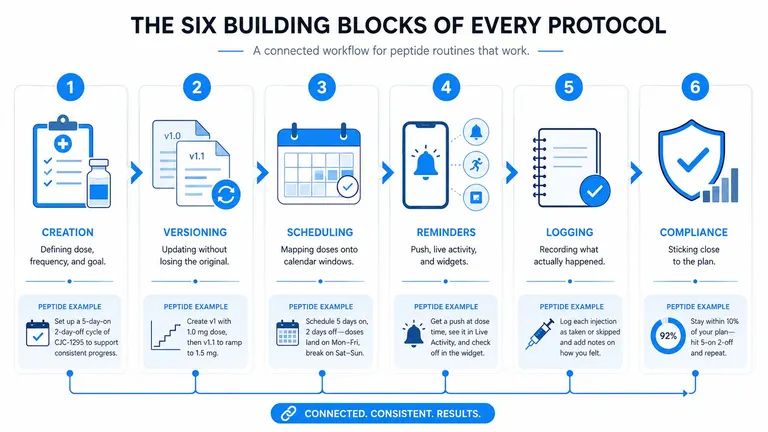
This infographic breaks down the six building blocks every protocol needs, mapping out a left-to-right workflow from Creation to Compliance. You will see concrete examples like a 5-day-on, 2-day-off cycle, a titration ramp, and pause periods, showing exactly how each stage fits into a real routine.
Looking at the visualization, you can see how explicit steps combined with the right tools close the loop between planning and doing. Creation and Scheduling turn vague intentions into precise plans. Reminders and Logging make execution reliable. Meanwhile, Versioning and Compliance let you compare different runs and measure how well you stuck to the plan.
Practical Example Scenario
Here is how this workflow looks in practice:
- Set a goal: Recovery for joint soreness.
- Choose a dose: 250 mcg, configure the vial concentration, and convert to units using a calculator.
- Define the cycle: 12 weeks, 5 days on and 2 days off, with a 2-week ramp at the start.
- Schedule it: Start on Monday, add daily 8 AM events, and include a taper during the final week.
- Set reminders: Turn on push notifications and a widget countdown for the next dose.
- Log everything: Record every injection with quick notes and review weekly charts for trends.
Key Tips and Safeguards
- Keep a versioned plan so you can easily revert if a change causes problems.
- Never double up after a missed day; just log it and resume your normal schedule.
- Remember, this workflow is an organizational tool, not medical advice.
A clear plan, reliable reminders, and honest logging are what turn intentions into consistent results
For more on preparing your vials, check out our peptide reconstitution practices guide.
Benefits and Common Pitfalls of Protocol Management
Disciplined protocol management cuts down errors and builds real confidence in your routine. Clear, written instructions mean fewer mental math mistakes — your doses line up with your plan every single time.
Consistency comes next. When timing and concentrations stay fixed, you get fewer surprise side effects and cleaner comparisons between cycles. That’s the whole point: knowing what actually worked and what didn’t.
A solid log creates a reliable history that answers questions weeks or months later. Timestamped entries reveal patterns you can trust, rather than relying on memory that tends to blur things together.
A protocol only works if it is explicit and repeatable
That’s the central truth. Everything else flows from it. Below are the most common ways protocols fall apart, along with practical habits and features that prevent them.
Common Pitfalls That Derail Protocols
-
Skipping the pause period. Planned off-days matter. Skipping them undermines tolerance control and skews your results. Schedule pause windows and treat them like non-negotiable blocks on your calendar.
-
Drifting doses from mental math. On-the-fly arithmetic invites gradual creep — doses creeping up or down without you noticing. Use an accurate microgram-to-unit calculator instead. Eliminate the guesswork entirely.
-
Mixing up concentrations across vials. Confusing vials leads to dangerous under- or overdosing. Label every vial with concentration and date, then verify against your protocol before drawing.
-
Losing track after a missed dose. Missed doses often trigger ad-hoc compensations like doubling up. Log the miss immediately and follow a simple “resume, don’t stack” rule.
-
Overcomplicating the workflow. Adding too many manual steps defeats the entire purpose of having a protocol. Choose tools that reduce clicks and give you a single source of truth for your plan and history.
Tools that pair calculators, reminders, and history tracking fill the most common gaps between intention and action
Short examples show how this plays out. A 12-week cycle with a two-week ramp benefits from saved versions so you can compare outcomes without losing the original plan. A 5-on, 2-off schedule benefits from countdown widgets that make pause days visible at a glance.
Practical Step-by-Step Fixes
- Create a versioned plan so changes are auditable.
- Configure vial concentration and run the calculator to get precise units.
- Schedule doses with built-in pause windows and enable reminders.
- Log each dose with a quick note and review weekly adherence metrics.
Key Benefits Summarized
- Fewer math errors through built-in calculators
- Better adherence with reminders and live countdowns
- Clear history for confident adjustments
- Reduced cognitive load by making decisions explicit
For deeper preparation practices, check out our guide on maintaining safe supplies and accurate dosing: Read also Learn more about peptide expiration tracking in our article.
Protocol management isn’t extra work. It trades mental overhead for predictable outcomes and genuine peace of mind.
Features to Look for in a Protocol Management Tool

Start with the essentials—features that stop errors before they ever reach your syringe. An accurate microgram-to-unit calculator removes guesswork entirely and prevents the slow dosage drift that creeps in when you’re doing mental math at 6 AM. Vial and concentration configuration ties each preparation to its specific protocol, so you never accidentally mix units across bottles mid-cycle.
Flexible cycle and frequency options let you model how you actually dose—whether that’s a 5-day-on, 2-day-off split or a gradual titration ramp over several weeks. Pause periods matter just as much. They’re not optional extras; they’re how you manage tolerance and plan recovery windows without scrambling to remember when your last break was.
Push reminders, live activities, and widgets take a plan off the screen and into your routine. They make timing immediate and dramatically cut missed doses. When you pair that with simple dose logging that accepts quick notes, you preserve the context that matters for later review. Clean history views then show adherence patterns over time, not just isolated data points.
Look for tools that make following the plan easier than ignoring it
The nice-to-haves come into play when things get more complex. Support for multiple concurrent protocols helps when you’re running separate routines—say, one for recovery and another for sleep. Exportable logs let you review offline or share with a coach. Personal-use privacy settings keep sensitive health details local, where they belong.
How to Evaluate Candidate Apps
Walk through this checklist before committing to any tool:
- Verify calculator precision and unit conversions with real scenarios.
- Confirm vial configuration and whether concentration presets save properly.
- Test cycle templates, pause windows, and custom frequency options.
- Check reminders, widgets, and live countdown behavior across devices.
- Inspect the logging flow—how many taps to log a dose? Is history clear at a glance?
- Look for export options and privacy controls that actually protect your data.
Protocol Management Features and the Problems They Solve
Here’s how each capability maps to the frustration it removes:
| Feature | Problem It Solves |
|---|---|
| Calculator | Prevents math errors and dose creep |
| Vial Config | Avoids concentration mix-ups |
| Flexible Cycles | Matches real-world dosing patterns |
| Pause Periods | Enforces tolerance management |
| Reminders/Widgets | Reduces missed doses |
| Simple Logging | Preserves context for reviews |
| Exports/Privacy | Enables sharing and protects data |
PepFlow bundles these capabilities as one example of a tool that follows this checklist. When considering options to streamline your protocol management, exploring various management software solutions can provide useful perspective on what to expect—the ultimate guide to gym software covers similar feature evaluation principles.
Read also: Learn more about peptide calculators and app features in our article Peptide Calculator App Guide.
Frequently Asked Questions About Protocol Management
Do I Really Need a Protocol for Peptide Dosing?
Probably more than you think. A short, written protocol is the difference between consistent results and a guessing game that falls apart the moment your morning gets hectic. It captures your dose, timing, and fallback rules so you’re not doing mental math at 6 AM with a coffee in one hand and a syringe in the other.
This cuts down on arithmetic errors and decision fatigue, two things that tend to creep in when routines rely entirely on memory.
For example, a simple written plan that says “250 mcg Monday–Friday, 2 days off” removes ambiguity and prevents accidental stacking.
The payoff? Fewer mistakes, and cleaner data when you sit down to review what actually worked.
Quick Clarification on Protocol Versus Schedule
A schedule is just a calendar view — when things happen. A protocol is the full rulebook: it includes the schedule, but also dose rules, pause policies, version history, and what you’re expected to log.
Think of it like this: the schedule is the train timetable. The protocol is the railway operating manual, complete with instructions for handling delays.
That distinction matters because operational decisions — like what to do about a missed dose — belong in the protocol, not buried on a calendar.
A schedule tells you when to act; a protocol tells you how to act and what to record.
How Should I Handle Missed Doses or Off-Cycle Days?
Log the miss immediately with a short note: what time, why it happened, and whether you noticed any effects. Do not double up to “catch up.” Just resume your normal schedule and flag the event as missed.
If you’re in a pause period, treat off-days as fixed boundaries. Don’t let them drift into active days — that’s how tolerance control falls apart and how outcome comparisons become meaningless.
When you’re unsure about recovery, create a versioned note that spells out your plan. Later, you can compare outcomes across versions and see what actually helped.
Practical tips for missed doses:
- Log timestamped entries with brief context — you’ll thank yourself later when patterns start to emerge
- Follow a “resume, don’t stack” rule to avoid accidental overdoses
- Use pause windows to enforce off-cycle behavior and keep drift in check
Can I Run More than One Protocol at the Same Time?
Yes, but track them separately with clear labels and distinct logs. Running a recovery protocol and a sleep-focused protocol simultaneously works fine — as long as each has its own vial, concentration, and timing window.
The danger zone is overlapping injection windows or shared vials without explicit cross-reference rules. Those mix-ups are one of the biggest sources of error people run into.
Use separate start dates and color-coded calendars so each protocol stays auditable on its own terms.
Step-by-step when running multiple protocols:
- Create distinct protocol names and version notes.
- Assign unique vial IDs and concentrations.
- Schedule non-overlapping windows or set explicit pause priorities.
- Log doses under the correct protocol and review your combined history weekly.
Final Reminder and Liability Note
Protocol management is an organizational practice that reduces errors and clarifies outcomes — it is not medical advice. Always consult qualified professionals for clinical decisions or questions about dosing safety.
Treat your protocol like a living checklist: version it, log honestly, and let the data guide your adjustments rather than gut feeling.
For a tool that implements these practices with precise calculators, clear versioning, reliable reminders, and simple logging, check out PepFlow at https://pepflow.app