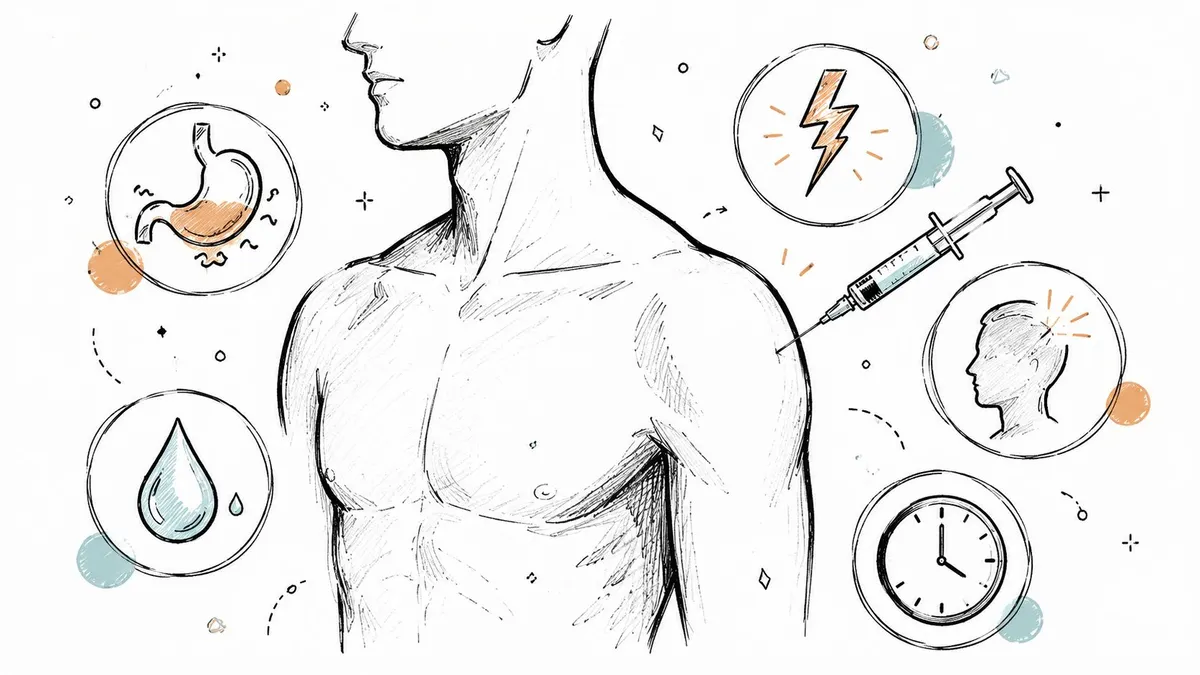
You can feel it in the first few minutes after a dose. Your stomach starts to tighten, your thoughts drift toward food, and a normal appetite suddenly feels primitive and urgent. If you’ve ever wondered why GHRP-6 side effects seem to arrive so quickly, the answer is usually not random irritation, it’s receptor biology doing exactly what this peptide was designed to do.
That matters because the same signal that can help stimulate growth hormone release can also create problems you didn’t plan for. Hunger can collide with calorie restriction, water retention can blur progress, and repeated exposure can nudge metabolic markers in the wrong direction. A careful look at the mechanism makes the whole side-effect profile easier to predict, and that’s a lot more useful than a simple list of complaints.
Table of Contents
- The First Hour on GHRP-6 and Why Hunger Hits So Fast
- What GHRP-6 Actually Is and How It Works
- Acute Side Effects You May Notice in the First Days
- Chronic and Metabolic Effects That Build Over Weeks
- A Practical Harm-Reduction and Monitoring Framework
- How Dosing Choices Shape Your Side Effect Profile
- When to Stop and Seek Medical Help
The First Hour on GHRP-6 and Why Hunger Hits So Fast
A lot of people expect a peptide to feel subtle. They dose, wait, and hope for a quiet background effect. GHRP-6 often doesn’t behave that way. The hunger can come on so fast that it feels disconnected from ordinary appetite, more like your brain has been switched into “eat now” mode.
That’s because GHRP-6 is built to act on the same receptor system that ghrelin uses, and ghrelin is the body’s hunger signal. In controlled human data, increased appetite showed up in 29 of 43 subjects (67%) on ibutamoren versus 8 of 22 (36%) on placebo, and the same review literature notes appetite as the most consistent non-serious effect across trials of this class, with serious adverse events uncommon in the studies examined (PMC review). For GHRP-6, the hunger response is described as rapid and pronounced, often within 15 to 20 minutes after injection and lasting about 30 to 60 minutes (PeptidePedia).
Why the timing matters
The early hunger wave is not just inconvenient. It can directly interfere with calorie restriction, meal timing, and disciplined dosing schedules. If someone injects near a meal, the urge to eat can become stronger than the plan they had five minutes earlier.
Practical rule: if hunger is the side effect that derails you, don’t treat it like a nuisance. Treat it like a schedule problem.
That’s the useful mental model for the whole guide. GHRP-6 side effects are best understood as consequences of one receptor action and the downstream hormones it nudges. When readers get confused, it’s usually because they’re trying to separate the hunger from the hormone effects, but they’re often part of the same chain.
If you’re comparing this experience with other drugs that affect weight and appetite, a good starting point is semaglutide weight loss risks at Spa Black, since appetite changes are a common thread across weight-related interventions, even when the mechanisms are completely different.
What GHRP-6 Actually Is and How It Works
GHRP-6 is a synthetic growth hormone releasing peptide, and its main trick is mimicry. It binds to the growth hormone secretagogue receptor, GHS-R1a, the same receptor used by ghrelin, which is why its appetite effects are so noticeable. Think of ghrelin as the key the body already knows, and GHRP-6 as a forged key that fits the same lock.
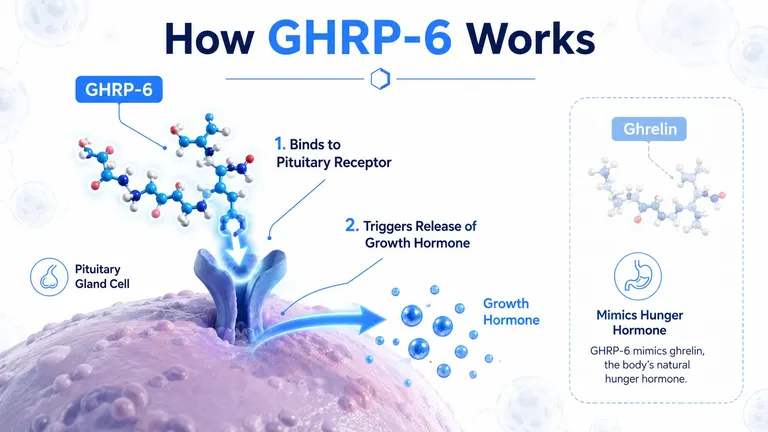
Once that receptor is activated, the pituitary responds with a pulsatile growth hormone release. That pulse can then influence downstream IGF-1 signaling, while also creating spillover effects in other hormones, especially cortisol and prolactin. The important point is that the side-effect profile isn’t a separate accident. It’s built into the same pharmacology that creates the intended GH effect.
Why different peptides feel different
People often get mixed up. GHRP-6 isn’t the same as GHRP-2, hexarelin, or ibutamoren. They all sit in the broader secretagogue family, but they don’t act with the same selectivity, so the balance between hunger, hormone spillover, and fluid shifts can differ. That’s why one person may describe GHRP-6 as “very hunger-forward,” while a different compound in the same class feels cleaner.
If you want a plain-language primer on what a secretagogue is, the overview at what is a secretagogue is a useful companion read.
You can also think of the receptor like a master switch with multiple downstream lights on the panel. Flip it one way, and growth hormone rises. Flip it hard or often, and you don’t just get the intended effect, you can also light up appetite, fluid balance, and endocrine spillover. That’s why the mechanism matters before the side effects list does.
For readers comparing peptide categories more broadly, peptide therapy for skin and weight loss gives a helpful high-level view of how different peptide goals overlap without being the same thing.
Acute Side Effects You May Notice in the First Days
The first few doses are where individuals meet the peptide in real life. Some side effects are obvious right away, some are more subtle, and some are easy to ignore until they start interfering with routine. The common theme is timing. If a reaction appears within minutes to hours, you’re usually looking at direct receptor activity or an immediate hormone response.
Appetite surge and the “can’t-ignore-it” feeling
The biggest acute effect is intense appetite stimulation. The literature describes it as rapid and pronounced for GHRP-6, with onset often within 15 to 20 minutes and duration of about 30 to 60 minutes after injection (PeptidePedia). That timing makes it especially disruptive around meals, because the urge to eat can show up before the planned window even opens.
This isn’t just discomfort. In a cutting phase, it can push people into unplanned calories. In a structured bulking phase, it may be useful, but only if the eating plan is already intentional.
Flushing, tingling, and injection-site reactions
Shortly after dosing, some people notice a head rush, tingling, or a pins-and-needles sensation. Injection-site redness or mild swelling can also happen with subcutaneous use. These are usually the reactions people ask about first because they’re the most noticeable physical signals after the appetite effect.
Not every immediate reaction means trouble. The practical question is whether the symptom is brief and predictable, or whether it keeps escalating with each dose.
Headache and water retention
Headache can appear early, and water retention may show up as puffiness, bloating, or a tighter feeling in the hands and face. In the safety profile literature, daily GHRP-6 acetate use has been associated with 2 to 4 kg of cumulative fluid gain over 4 to 8 weeks (Real Peptides safety profile). That number is about cumulative fluid, not pure fat gain, which is why scale weight can look misleading.
Here’s the useful split. If the effect is immediate, think appetite and transient sensory changes. If the effect starts stacking over days or weeks, think fluid balance and metabolic drift. The body doesn’t always announce which one it’s doing, so pattern-tracking matters more than single-day reactions.
Chronic and Metabolic Effects That Build Over Weeks
The short-term effects are easy to notice. The longer-term ones are easier to underestimate because they don’t always feel dramatic at first. That’s the problem with compounds that work through growth-hormone pathways, the visible signs can lag behind the biological shift.
Fluid gain and insulin changes
The same safety profile that describes 2 to 4 kg of cumulative fluid gain over 4 to 8 weeks also notes that metabolic side effects typically emerge between weeks 10 and 14 of continuous use, with protocols beyond 16 weeks showing a 67% incidence of fasting insulin elevation and a 42% reduction in GH pulse amplitude from receptor desensitization (Real Peptides safety profile). That pairing matters because the fluid retention is not just cosmetic, it can coexist with measurable metabolic drift.
Growth hormone secretagogues may also raise blood glucose because they can reduce insulin sensitivity. That doesn’t mean everyone sees the same lab change, but it does mean the risk isn’t limited to feeling bloated or hungry. It can extend into markers clinicians use to judge metabolic health.
Why “more” can backfire
Higher or more frequent exposure doesn’t solve the underlying problem. It can make it worse. Once receptor signaling starts to desensitize, the expected GH pulse becomes flatter, while the side-effect burden may keep climbing.
The same logic applies to cortisol and prolactin spillover. A review and safety summaries note that repeated daily injections and higher-than-saturation dosing make those transient endocrine effects more likely, with cortisol peaking around 30 minutes after dosing and resolving within 2 to 3 hours (Peptides Lab UK). That timing helps explain why some people feel wired or sleep-disrupted after a protocol that looked harmless on paper.
Clinical-style takeaway: if the plan depends on dose escalation to keep working, the protocol may already be too aggressive.
The chronic picture is less about one dramatic adverse event and more about accumulation. Fluid, hunger, insulin, receptor response, all of it can shift until the protocol that looked manageable starts to feel harder to recover from. That’s why timeline thinking is so important with GHRP-6 side effects.
A Practical Harm-Reduction and Monitoring Framework
A useful monitoring plan has to be simple enough that people use it. The goal is to catch drift early, before appetite, fluid retention, or sleep issues become the new normal. That means pairing labs with day-to-day observations.
Baseline and follow-up checks
Before starting, the most useful baseline labs are fasting glucose, HbA1c, IGF-1, lipid panel, prolactin, and cortisol. Those tests give you a map of where the body is before any secretagogue exposure changes the picture. Rechecking at 4, 8, and 12 weeks helps separate a temporary adjustment from an actual trend.
That same logic applies to home tracking. Waist circumference, morning blood pressure, sleep quality, and water weight are easy to log and often move before a lab panel catches the shift. If you’re seeing more puffiness, worse sleep, or a creeping waistline while the scale bounces around, that’s a better early warning than waiting for a dramatic blood test result.
Cycling and dose discipline
Continuous use is where many users get sloppy. Cycling gives the pituitary time away from repeated stimulation, and keeping doses at the lower effective end reduces the pressure on appetite and endocrine spillover. The point isn’t to chase the strongest possible signal, it’s to preserve a usable signal over time.
For readers who want a cleaner injection routine, the injection safety checklist is a practical companion to the monitoring mindset, especially if you’re new to handling peptide vials and needles.
A structured log helps too, even if it’s just a paper notebook. Write down dose time, hunger intensity, sleep quality, and any swelling. Patterns become obvious faster than memory does.
How Dosing Choices Shape Your Side Effect Profile
Protocol design changes the experience more than people expect. Two users can take the same compound and feel like they’re using different drugs, because timing, frequency, and pairing decisions change how much receptor stimulation the body sees. That’s why dose strategy isn’t a footnote, it’s part of the side-effect profile.
Timing and frequency
A low-dose twice-daily schedule usually produces a more manageable hunger curve than a high-dose single injection, even if both use the same total weekly amount. Smaller pulses are easier to fit around meals, and they’re less likely to create a big hormone spike that spills over into cortisol or prolactin. A large single dose may feel more dramatic, but dramatic is not the same as better.
The body tends to tolerate repeated, smaller signals better than one oversized one.
Meal timing matters too. If you inject close to eating, the hunger signal and the meal window collide. That sounds convenient until the appetite spike pushes intake past the original plan.
Pairing with other peptides
When GHRP-6 is paired with a GHRH analog like CJC-1295, the growth-hormone signal can become stronger, but the broader exposure can also make fluid retention and endocrine spillover more noticeable. That doesn’t make pairing wrong, it just means the side-effect budget changes.
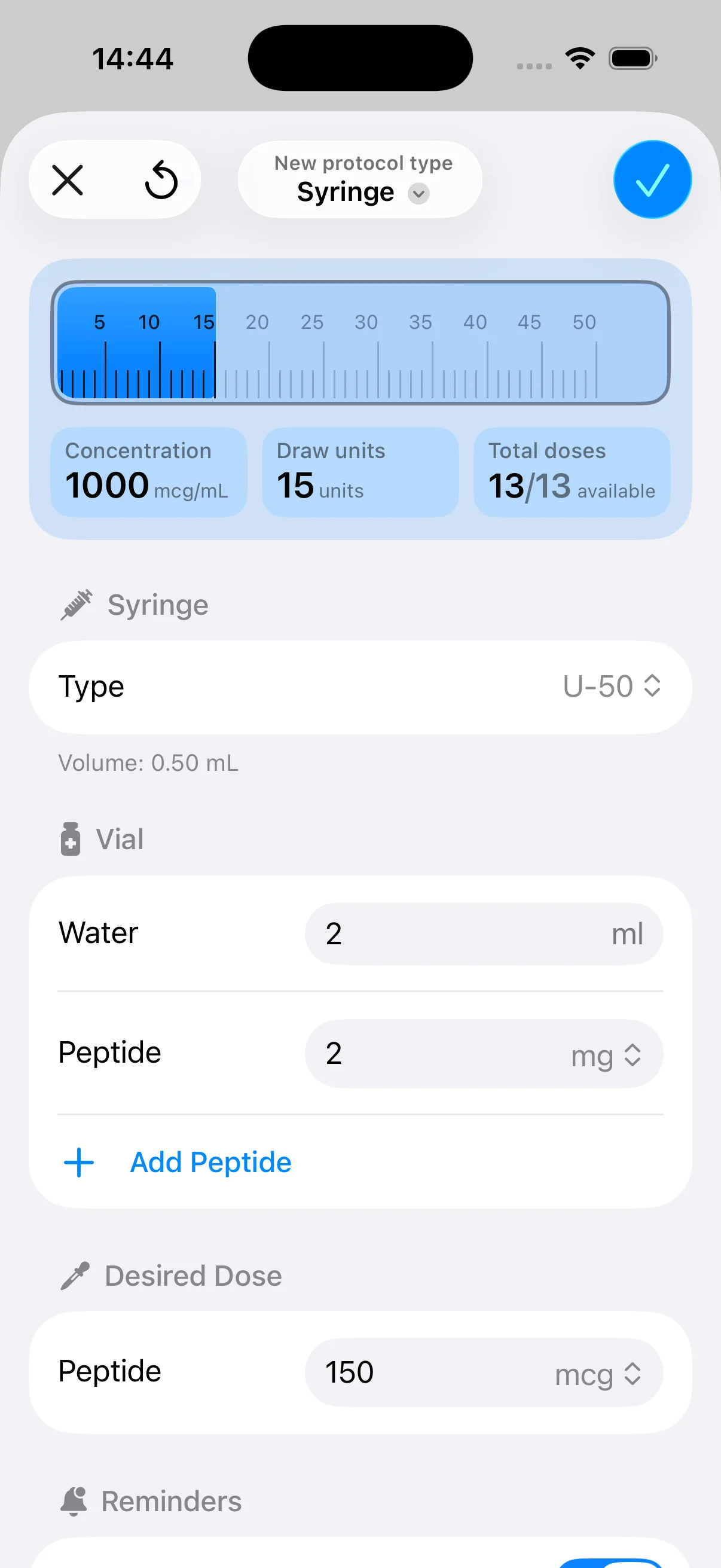
For people who want a dose-planning reference, the peptide dosage guide is a useful framework for thinking about how concentration, injection volume, and schedule fit together. The important part is consistency. If your dosing plan changes every few days, it becomes hard to tell whether a new symptom came from the compound, the amount, or the timing.
A structured protocol manager can help here, but the win is behavioral. Consistent timing makes patterns readable. Random timing makes every side effect look mysterious.
When to Stop and Seek Medical Help
Some reactions are inconveniences. Others are signals. The practical rule is simple, if a symptom is severe, persistent, or clearly getting worse, stop the protocol and contact a qualified clinician.
Red flags that deserve medical review
- Persistent severe headache, especially if it doesn’t fade after the usual post-dose window.
- Visual changes, because headaches plus vision symptoms can point beyond a routine peptide reaction.
- Chest tightness or shortness of breath, which should never be treated as a normal adjustment effect.
- Unusual swelling, especially if it’s dramatic, one-sided, or comes with rapid weight changes.
- Marked mood changes, including agitation, low mood, or a feeling that your baseline is shifting.
- Signs of high blood sugar, such as unusual thirst, frequent urination, or unexplained fatigue.
- Injection-site infection, including spreading redness, warmth, increasing pain, or discharge.
If the symptom is brief and predictable, it may be part of the expected profile. If it’s persistent, escalating, or affects breathing, vision, or general function, that’s no longer a side effect you watch, it’s a symptom you act on.
GHRP-6 use should be supervised by a qualified medical professional, especially if you have metabolic concerns, hormone-sensitive conditions, or any history of blood sugar problems. The safest way to approach a compound like this is not to guess, it’s to monitor, document, and get help when the pattern stops looking routine.
If you’re considering a GHRP-6 protocol, set up a clear dosing log, baseline labs, and a reminder system before the first injection. If you want a simple way to keep the schedule organized and reduce manual errors, visit PepFlow and build a routine that’s easier to track from day one.