You’re probably here because a recent injection felt a little too noticeable, a warm wave hit your face, your stomach flipped into “feed me now” mode, or your hands had a faint buzz that made you pause and wonder if that’s just part of the experience. With GHRP-2, that split-second uncertainty is common, because the body often responds right away, while the more important question is what happens after the first few minutes, after the next dose, and after the pattern repeats.
The phrase ghrp 2 side effects covers more than an immediate flush or a temporary appetite spike. It also includes the slower questions people live with, like whether sleep gets worse, whether recovery feels off, or whether a symptom that seemed minor at first keeps showing up. The evidence is clearer on short-term effects than on long-term safety, so the smartest way to read your body is to separate expected acute reactions from patterns that deserve attention.
Table of Contents
- What Most People Feel Within Minutes of an Injection
- How GHRP-2 Talks to Your Body
- The Side Effect Map from Common to Rare
- Dose and Protocol Choices That Change the Risk Picture
- The Long-Term Picture That Is Often Overlooked
- Practical Ways to Reduce and Track Side Effects
- When Normal Reactions Stop Being Normal
- Tracking Patterns That Actually Matter
What Most People Feel Within Minutes of an Injection
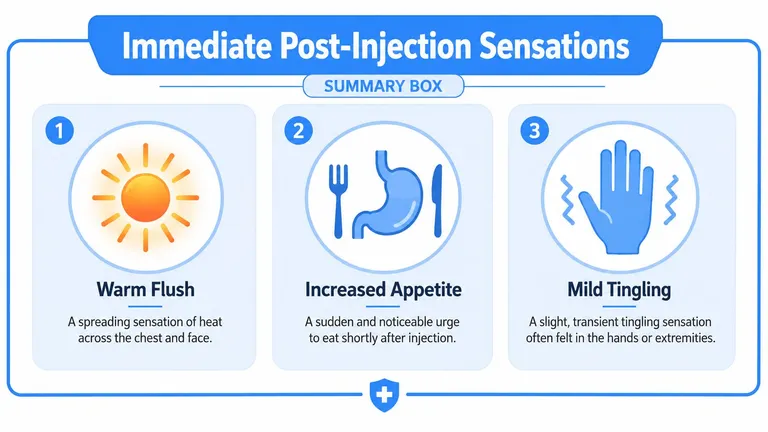
The first few minutes after GHRP-2 are where most users notice whether their body is reacting in a familiar way or sending a signal to slow down. A warm flush across the chest or face can show up quickly and fade just as fast, and the same is true for a strong urge to eat. Those early sensations can feel dramatic in the moment, but they’re often the body’s short-lived response to the peptide’s immediate signaling.
The sensations that usually pass quickly
The most common acute reactions described in clinical and research summaries are transient and usually mild. Facial flushing can appear within seconds to minutes and resolve in 5 to 10 minutes, while injection-site reactions such as redness, swelling, or tenderness are typically short-lived, with one safety profile summary reporting injection-site reactions in 18% of subjects and local symptoms resolving within 24 hours without intervention (side effects summary). In practice, that means a warm face, a brief sting, or a tender patch is not automatically unusual.
Practical rule: if a reaction arrives fast, stays mild, and fades on its own, it fits the pattern most people associate with the acute window.
Why appetite feels so loud
The reaction that tends to stand out most is hunger. That’s not a random nuisance, it’s part of how the compound works, and it can feel sudden enough that people mistake it for a crash or a blood sugar issue. The difference is timing and pattern, not drama, because a quick appetite surge right after dosing is one of the most reproducible effects reported in human studies (GHRP-2 overview).
If the sensation is just a transient flush, a stronger appetite, or mild tingling in the hands, that usually belongs in the “expected early response” bucket. If the reaction gets sharper with each dose, lingers well beyond the typical window, or starts pairing with chest tightness or dizziness, that’s no longer the same story.
How GHRP-2 Talks to Your Body
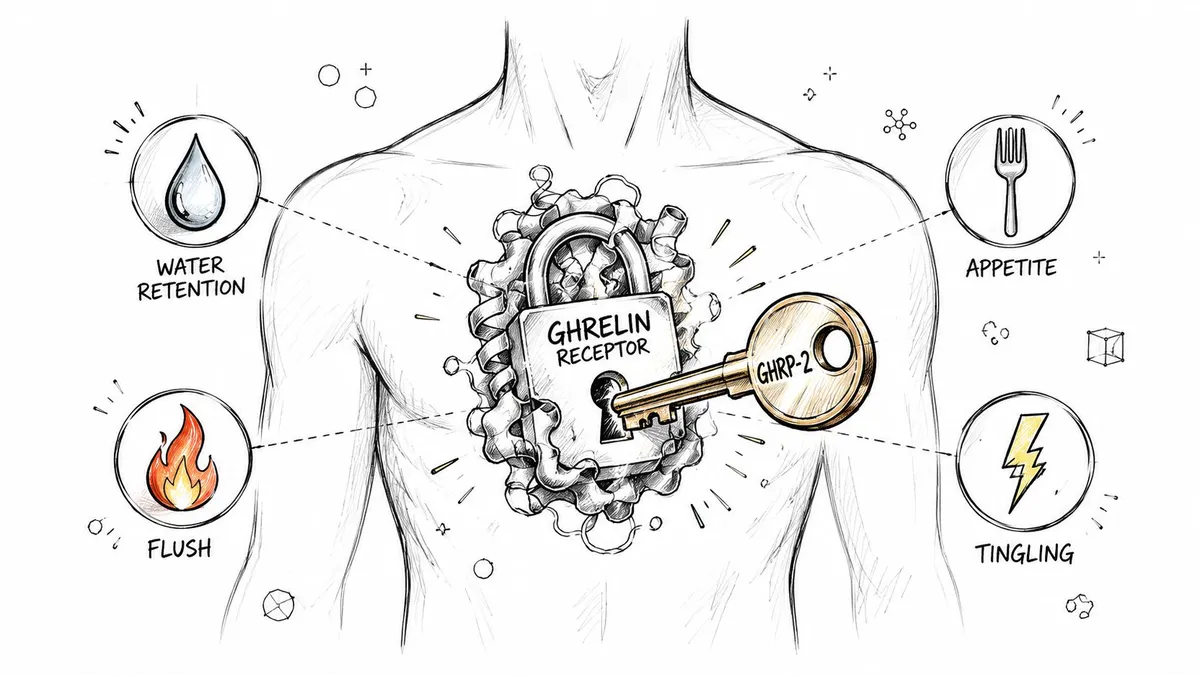
GHRP-2 behaves a lot like a key that fits a specific lock. The lock is the ghrelin receptor, and once it turns, the body doesn’t just release a single signal, it sends several at once. That’s why a dose can affect hunger, hormone release, and how you feel in the hours after injection instead of producing one neat, isolated effect.
One receptor, several downstream signals
Think of the ghrelin receptor as a control panel with more than one switch. When GHRP-2 activates it, the body can respond with growth hormone release, a stronger appetite signal, and transient endocrine changes that include cortisol and prolactin rises after dosing (GHRP-2 overview). That clustering matters, because the side effects people notice are often linked, not separate accidents.
The logic is simple. If a dose pushes the hunger pathway, you may feel driven to eat. If it also nudges stress and hormone signaling, the same user can feel energized one day and oddly off the next, especially when the schedule is aggressive. That’s why two people can use the same peptide and report very different experiences.
Why dosing frequency changes the experience
More frequent or higher doses tend to make the endocrine effects more noticeable, which helps explain why repeated use is linked to sleep and recovery disruption and possible metabolic effects rather than just temporary discomfort (GHRP-2 overview). The body does not treat every dose as a one-off event when the pattern keeps repeating.
If you want a plain-language shortcut, use this one. Short, occasional exposure tends to look like a brief reaction. Repeated exposure can start to look like a pattern, and patterns are where users get confused because the early symptoms can be subtle.
For a broader primer on how secretagogues work as a class, the secretagogue overview helps connect GHRP-2 to the larger hormone-signaling picture without getting lost in biochemistry.
The Side Effect Map from Common to Rare
A flat list of side effects can make GHRP-2 seem either harmless or alarming, and neither impression helps much. A better way to read the experience is to sort reactions by how often they show up, how strong they usually feel, and whether they point to a dose issue or to something that deserves more attention.
Common and usually short-lived
The reactions people hear about first are flushing, injection-site redness or tenderness, and increased appetite. Those are the effects most likely to appear early and then fade. Mild tingling and water retention also come up often in user discussions and review summaries, but the stronger evidence still points to a transient, short-lived acute pattern rather than a long catalog of severe events (side effects summary).
A helpful way to picture it is a smoke alarm that goes off briefly after cooking. It may be startling, but the alarm itself does not tell you there is a house fire. The same logic applies here, since a brief reaction right after dosing does not automatically mean a lasting problem.
Less common but more disruptive
The next layer is less dramatic at first glance, but it can affect the whole day. Cortisol and prolactin elevations after dosing are among the more consistent endocrine changes reported in human studies, and they matter more when dosing is frequent or high (GHRP-2 overview). Users may experience that as lighter sleep, less complete recovery, or a general feeling that the protocol is slightly out of sync even if the injection itself felt normal.
A symptom can be mild at the needle and still matter if it repeats every day.
That repeated pattern is where confusion starts. Some long-tail effects are not dramatic events, they are cumulative annoyances that people may blame on training stress, life stress, or poor sleep hygiene until the pattern becomes hard to ignore. If you want a broader comparison point, the GHRP-6 5 mg research guide can help show how appetite-heavy secretagogues overlap, and the discussion of GHRP-6 side effects is useful for separating class effects from compound-specific ones.
Quick reference table
| Reaction | Typical Timing | Likely Trigger |
|---|---|---|
| Warm flush | Seconds to minutes | Acute receptor response |
| Strong appetite surge | Shortly after dosing | Ghrelin-receptor activation |
| Injection-site redness or tenderness | Right after injection, usually brief | Local tissue irritation |
| Mild tingling | Short-lived, early window | Acute response, often transient |
| Cortisol or prolactin rise | After dosing | Endocrine signaling shift |
| Sleep or recovery disruption | With repeated use | Higher or more frequent dosing |
The table is most useful as a sorting tool. A flush that fades quickly fits a different pattern from sleep disruption that keeps showing up after the same protocol, and that difference is what helps tell ordinary acute reactions from a schedule that may be too aggressive for the person using it.
Dose and Protocol Choices That Change the Risk Picture
Two people can use the same peptide and still react differently, because the body responds to dose, frequency, and timing as much as to the compound itself. Side effects often come from a protocol that keeps pressing the same pathways again and again, not from one isolated injection that went badly.
A small change in schedule can feel like a different experiment. One setup may stay quiet, while another starts to produce hunger swings, sleep disruption, or a general sense that the body is being asked to respond too often.
More frequent use changes the balance
The clearest pattern is that endocrine effects become more pronounced at higher or more frequent doses (GHRP-2 overview). In practice, that means a person who tolerates occasional use may still notice appetite shifts, lighter sleep, or a kind of hormonal background noise once the timing tightens. The body gets less room to settle between signals, like a conversation that never pauses long enough to end cleanly.
Evening dosing gets special attention because sleep is where many people first notice the difference. If a protocol repeatedly leaves you hungrier late at night, more restless, or oddly alert when you expected to wind down, that does not prove the peptide is unsafe. It does suggest the schedule may be too aggressive for your current response pattern.
What a dose-dependent pattern feels like
The clue is repetition. One bad night can come from stress, caffeine, training, or a dozen other variables. A week of waking up hungrier, less restored, and more sensitive to the next injection points more clearly toward the protocol itself. That is where people often mix up a transient reaction and a dose-dependent pattern.
A simple filter helps. If the reaction shows up after a dose and fades before the next one, it is probably an acute effect. If it starts to spill into the rest of the day, the schedule deserves a second look.
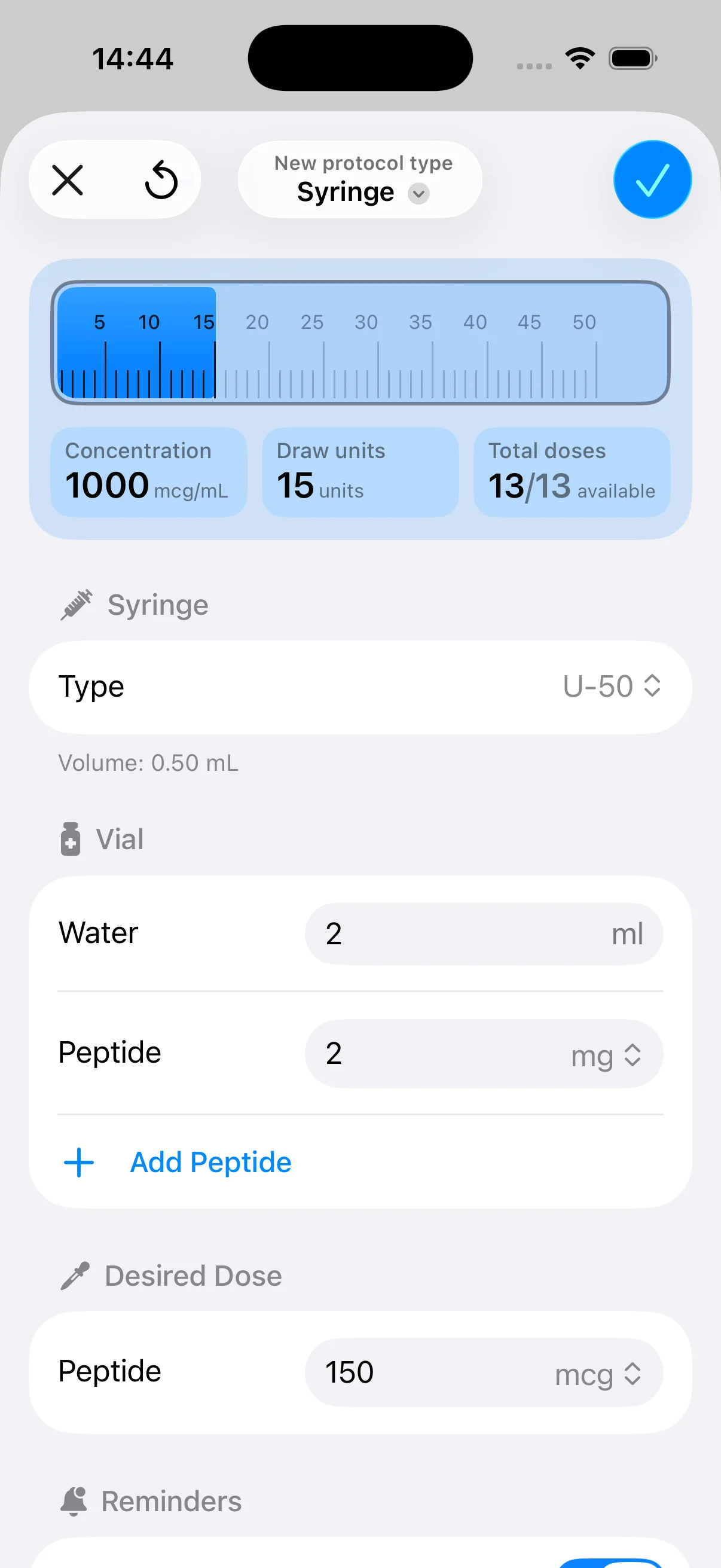
For practical injection setup, precision matters more than people expect. Small volume differences are easier to track when the syringe markings are easy to read, so a guide on how to choose the right insulin syringe can help when consistency matters.
The Long-Term Picture That Is Often Overlooked
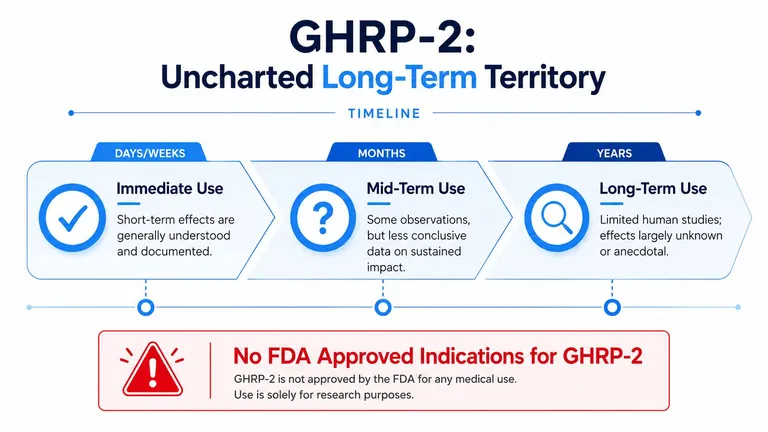
The hardest part of GHRP-2 side effects is not the first flush or the first wave of hunger. It is the part that is harder to map cleanly, because long-term human safety data are limited and there are no FDA-approved indications for GHRP-2. That does not prove harm, but it does mean caution belongs in the conversation from the start.
What the evidence gap actually means
A lot of coverage stays focused on the acute window, appetite increase, flushing, water retention, tingling, and transient cortisol or prolactin changes. The longer arc is less settled, including questions about insulin sensitivity, sleep quality, recovery, and hormone balance when use continues for months rather than days. The long-term discussion also raises possible cumulative HPA-axis stimulation and glucose metabolism effects, but much of that remains theoretical or based on small studies rather than extensive long-term datasets.
That uncertainty matters because a peptide can feel manageable at first and still create a different pattern once exposure becomes repeated. Early reactions are like a single rehearsal, while ongoing use is the full run of the show. The body may adapt, or it may keep signaling strain in quieter ways.
How to think about unknowns without guessing
The absence of long-term proof cuts both ways. Thin data do not justify claiming a hidden danger, and they also do not justify assuming repeated dosing behaves exactly like the first few injections. People who use peptides over time need more than memory. They need a record.
A simple protocol log can separate “I felt weird once” from “this has been building for weeks.” That distinction matters because the earliest clues of a longer-term issue are often indirect, like sleep that never quite recovers, training that feels flatter, or appetite that stays unusually loud.
For practical injection setup, precision matters more than people expect. Small volume differences are easier to track when the syringe markings are easy to read, so a guide on how to choose the right insulin syringe can help when consistency matters.
Practical Ways to Reduce and Track Side Effects
The safest approach is to reduce the variables you can control and watch the ones your body controls for you. Start conservatively, keep your schedule steady, and pay attention to whether the same symptoms return after similar doses. That kind of pattern is easier to read than a single isolated reaction, like checking a weather trend instead of reacting to one cloudy afternoon.
A short checklist that actually helps
- Start at the low end of your chosen range: Smaller exposures are easier to interpret, and they give you a cleaner read on whether a reaction is dose-related.
- Keep injection timing consistent: The body notices rhythm. Random timing makes side effects harder to interpret.
- Log sleep and morning readiness: These are often the first places a repeated protocol shows strain.
- Track appetite shifts separately: Hunger can be expected, but a strong or lingering surge can signal that the dose or frequency is too much for you.
- Watch for local reactions: Redness, swelling, or tenderness at the injection site usually stays brief, but recurring irritation deserves a closer look.
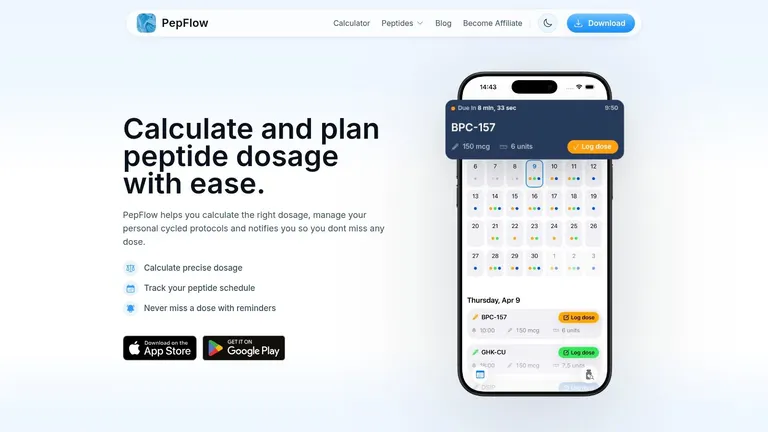
A simple log turns vague discomfort into something you can review later. A symptom that feels random in the moment often becomes easier to interpret once it is written down next to dose timing, sleep, and appetite changes.
Use the right tools for consistency
Precision matters more when a peptide’s effects are dose-sensitive. A good syringe choice helps prevent accidental over- or under-delivery, especially when you are adjusting small amounts or trying to keep injections repeatable. For a plain guide on hardware selection, the article on how to choose the right insulin syringe is worth a look before you troubleshoot anything else.
When Normal Reactions Stop Being Normal
A short-lived flush is one thing. A symptom that keeps returning, getting stronger, or drifting into the rest of your day is something else. That’s the line where self-monitoring stops being enough and a clinician should weigh in.
Clear reasons to pause and ask for help
- Sleep disruption that persists: If rest keeps getting worse across a full cycle, don’t write it off as training stress.
- Unexplained swelling or chest tightness: Those are not symptoms to normalize.
- Vision changes or escalating headaches: New neurological symptoms deserve attention.
- Symptoms that intensify with each dose: A pattern that worsens is more concerning than one that fades.
- Persistent endocrine concerns: Anyone with active pituitary or endocrine conditions should not treat this as a casual experiment.
Pregnant individuals, people taking interacting medications, and anyone already managing hormone-related illness need a professional conversation before self-directing use. The issue is not just side effects, it’s how a secretagogue can complicate an existing picture.
For researchers and handlers who work around peptide materials, the guide on secure peptide handling for researchers is a useful reference for general safety discipline and storage awareness.
If a reaction stops looking transient, treat it like a data point, not a nuisance.
Tracking Patterns That Actually Matter
The most useful question isn’t whether GHRP-2 can cause side effects. It can. The better question is whether what you’re seeing looks like a short-lived response, a dose problem, or the start of a longer pattern. A good log is the fastest way to tell the difference, and a best peptide tracker app guide can help you think about what a structured record should capture.
FAQ
Does GHRP-2 interact with food or alcohol?
Food timing matters because appetite is one of the most reproducible acute effects, so many users notice the strongest hunger changes around dosing. Alcohol isn’t well mapped in the verified human data, so the safest answer is to treat it as a variable that can blur your read on sleep, recovery, and appetite.
Why is cycling often recommended?
Because repeated exposure is where the concern shifts from a brief reaction to a pattern of endocrine stimulation and possible recovery disruption. Cycling gives the body time away from repeated signaling, which also makes it easier to see whether symptoms calm down when exposure stops.
What does a clinician usually check first if symptoms keep going?
They usually start with the symptom pattern itself, then look at sleep, timing, other medications, endocrine history, and whether the reaction is local, systemic, or worsening. Persistent symptoms matter more than a one-off flush because they point to a trend, not just an immediate response.
The smartest way to handle GHRP-2 side effects is to treat the log as a living record. You’re not just documenting injections, you’re documenting whether your body keeps returning to baseline or starts signaling that something in the pattern needs to change.
PepFlow helps you turn peptide dosing into a trackable routine instead of a guessing game. If you’re trying to separate transient reactions from real pattern changes, PepFlow gives you a precise way to plan, log, and review your protocol so the next decision is based on evidence, not memory.