You’re probably here because peptides keep showing up everywhere. A fitness coach mentions them for recovery. A wellness podcast frames them as the next frontier. An online store sells a vial labeled “research use only,” and suddenly the simple question, “What is a research peptide?” doesn’t feel simple at all.
That confusion is reasonable. The chemistry is straightforward compared with the marketplace around it. One can readily grasp that peptides are made of amino acids. What’s harder is understanding what the research label means in practice. Is it a scientific category, a legal disclaimer, a quality signal, or a way to avoid stricter standards? Often, it’s some mix of those.
If you’re a motivated self-learner, the useful question isn’t just what peptides are. It’s what responsibilities and risks show up when a product is sold outside normal clinical channels. That means thinking about sourcing, purity, concentration, handling, and whether a compound is approved for human use.
The practicalities reveal the limitations of mere hype. A peptide can be biochemically interesting and still be a poor choice to buy from an unregulated seller. A sequence can exist in both a legitimate therapeutic context and a loosely controlled research market. The molecule doesn’t tell the whole story. The supply chain does too.
Table of Contents
- Introduction Navigating the World of Peptides
- What Peptides Are at a Molecular Level
- How Peptides Work as Biological Messengers
- The Critical Distinction Research Versus Clinical Use
- Common Risks and Safety Considerations
- Sourcing and Handling Best Practices
- Frequently Asked Questions About Research Peptides
Introduction Navigating the World of Peptides
Online peptide discussion usually jumps between two extremes. One side treats peptides like cutting-edge biology with real scientific value. The other side treats them like a shortcut for recovery, body composition, or “anti-aging.” Both contain a grain of truth, but neither is enough to guide a careful decision.
Peptides do matter in biology. Researchers study them because they can act as highly specific signaling molecules, and that makes them useful in laboratory and therapeutic work. But the moment you encounter a product sold as a research peptide, the conversation changes from pure science to regulation, manufacturing quality, and personal risk tolerance.
That shift matters because many readers aren’t looking for a lecture in biochemistry. They’re trying to answer practical questions. Can I trust what’s in the vial? Does “research only” mean illegal, unsafe, or unapproved? If the same peptide sequence appears in medical literature and online shops, what’s the difference?
The chemical identity of a peptide is only one part of the story. The other part is who made it, how it was tested, and what it was actually intended for.
A clear-eyed view starts with two ideas. First, peptides are real and important biological tools. Second, the retail market can blur the line between scientific use and consumer use in ways that leave the buyer carrying most of the risk.
What Peptides Are at a Molecular Level
A peptide starts as chemistry, but the practical questions people care about begin one step later. Before you can judge a vial labeled “research use only,” you need a clear picture of what the molecule is.
A peptide is a short amino-acid chain
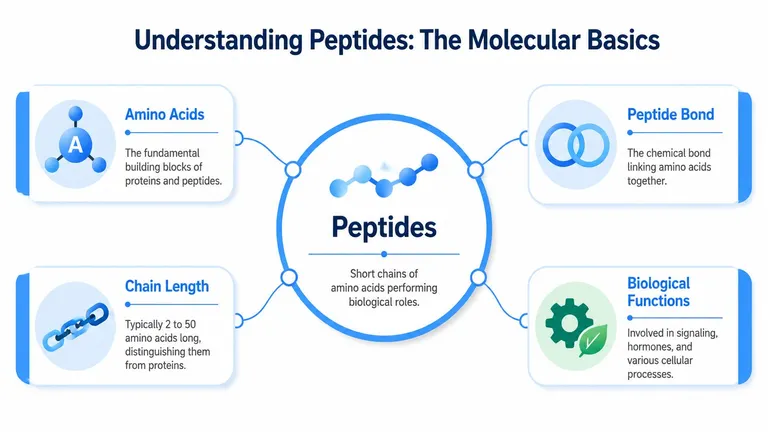
At the molecular level, a peptide is a chain of amino acids joined by covalent peptide bonds. Amino acids are the small units. The peptide bond is the chemical link between them. The sequence of those units matters because changing the order can change the shape, stability, and biological activity of the final molecule.
Researchers usually describe peptides as short chains, often around 2 to 50 amino acids, although some references use a broader upper limit. Longer chains are generally grouped with proteins instead. The boundary is partly about length and partly about behavior, as outlined in the NCBI overview of peptide structure and classification.
That middle size range is part of why peptides draw so much interest. They are larger and more structurally specific than many small-molecule drugs, but simpler than full proteins. In practice, that means they often require careful synthesis, storage, and reconstitution. Small errors in any of those steps can change the material you think you have.
If you want a closer look at the chemistry of the bond itself, PepFlow’s explainer on peptide bonds and peptide structure basics gives a useful chemistry refresher. For a related example of how small biomolecular components can have major biological effects, this comprehensive guide to rRNA is a helpful companion read.
Why this molecular definition matters in the real world
A peptide is not just “a tiny protein.” That shortcut misses the point. A short chain can still be highly specific, and a one-amino-acid change can turn a well-studied compound into something with different properties.
That has practical consequences:
- Sequence determines identity. Two peptides with similar names may not be the same molecule.
- Purity matters early. A correct sequence is only part of the story if synthesis byproducts or degradation products are present.
- Stability can be fragile. Heat, moisture, repeated freeze-thaw cycles, and poor handling can alter peptide quality.
- Label language can hide complexity. A seller may list a peptide name, but that does not confirm pharmaceutical-grade manufacturing or testing.
A useful analogy is a sentence made from a short string of letters. Even a brief sentence can carry a very specific instruction. Change one letter, and the meaning may shift. In peptides, the “letters” are amino acids.
Practical rule: The molecular definition tells you what kind of substance a peptide is. It does not tell you whether a product sold online was made cleanly, verified properly, or suited for human use.
How Peptides Work as Biological Messengers
Cells respond to signals, not magic
The easiest way to understand peptide function is to think in terms of signaling. Cells constantly send and receive instructions. A peptide can serve as one of those instructions. It binds to a receptor on or in a cell, and that interaction can trigger a response such as hormone release, metabolic regulation, or changes in tissue activity.
That’s why peptides often get described as “keys” fitting biological “locks.” The metaphor is imperfect, but it helps. The body already uses peptide-based signaling all the time. These aren’t automatically foreign or exotic molecules. In many cases, they resemble or derive from systems the body already uses for regulation.
A good example is insulin. Another is oxytocin. Their importance isn’t that they sound familiar. It’s that they show how a relatively small chain of amino acids can carry a highly specific biological message.
From natural hormones to designed drugs
Peptide science didn’t begin with wellness marketing. It grew out of foundational work on natural human hormones such as insulin, oxytocin, vasopressin, and GnRH, and since 2000, about 30 peptide drugs have been approved for conditions including multiple myeloma, erectile dysfunction, prostate cancer, and osteoporosis, according to a review available through PubMed Central on therapeutic peptides.
That same review notes there are about 7,000 peptides present in the body at any time. This helps explain why peptide research became so active in physiology, metabolism, signaling, and tissue repair. Scientists weren’t chasing a fringe topic. They were studying one of the body’s core communication systems.
This history matters because it keeps the discussion grounded. Peptides aren’t nonsense. But valid biology doesn’t automatically validate every product sold online. The existence of approved peptide drugs shows what careful development can produce. It doesn’t erase the gap between controlled drug development and loosely marketed research material.
The Critical Distinction Research Versus Clinical Use
Why the word research matters
Understanding the term “research peptide” can be a source of confusion. In chemistry, a peptide is just a class of molecule. In the marketplace, research peptide often signals something else entirely. It usually points to intended use, regulatory status, and quality controls, not just molecular structure.
Neutral industry sources describe therapeutic peptides as well-defined pharmaceutical agents with known biological uses, while research peptides are presented as tools for discovery in areas such as cell therapy, vaccines, immunology, and proteomics rather than approved consumer treatments, as outlined by JPT’s overview of peptide research applications.
That distinction carries practical consequences:
- Approval status: A research-use-only product isn’t the same thing as an approved medicine.
- Manufacturing context: The same sequence can exist in different grades with different validation standards.
- Intended use: A product sold for laboratory investigation is not automatically appropriate for self-experimentation.
- Buyer responsibility: If you step outside a clinical pathway, you usually take on more of the burden for verifying quality and understanding risk.
People often assume the word research means “advanced” or “pure.” It can mean neither. Sometimes it only means the seller is positioning the product outside consumer therapeutic claims.
Research Peptides vs. Therapeutic Peptides
Below is a practical comparison that helps clarify what the label usually implies.
| Attribute | Research Peptides | Therapeutic Peptides (FDA-Approved) |
|---|---|---|
| Intended use | Discovery and laboratory work | Clinical treatment for defined medical use |
| Regulatory status | Not presented as approved consumer treatment | Approved within a regulated medical framework |
| Validation | May vary by supplier and documentation quality | Tied to formal pharmaceutical standards |
| Manufacturing context | Can exist in different sourcing and quality environments | Produced for clinical use under stricter controls |
| Buyer assumptions | Buyer often has to verify identity, purity, and handling details | Prescriber, pharmacy, and regulatory systems provide more guardrails |
| Human use context | Labeling typically avoids approved human-use positioning | Used in a recognized clinical setting |
A useful way to frame it is this: the sequence may be similar, but the product context is not. That’s the part many casual buyers miss.
If you want a separate overview of drugs that have cleared the approval pathway, PepFlow’s article on FDA-approved peptide drugs can help you distinguish marketed research compounds from established therapeutic agents.
If a seller leans heavily on the science of peptides in general but says little about approval status, manufacturing standards, or validation, that’s a warning sign.
Common Risks and Safety Considerations
Most problems start before the peptide reaches you
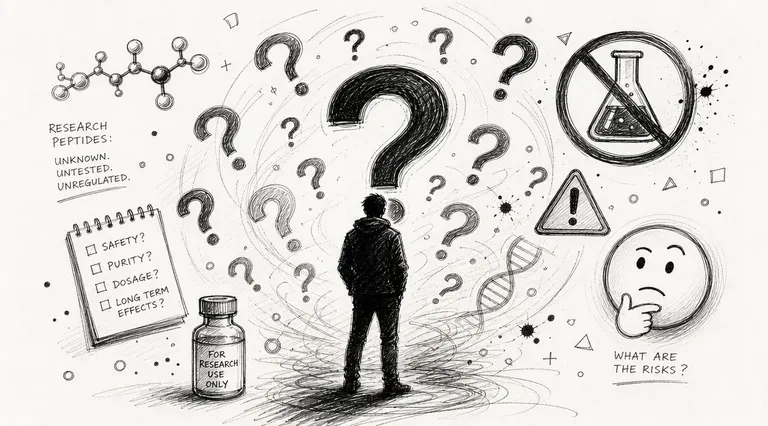
When people think about peptide risk, they often focus on the molecule’s possible biological effect. That matters, but it’s not the only problem. A major safety issue is the layer around the molecule: how it was made, whether its potency is known, whether contamination occurred, and whether the concentration on the label matches reality.
A neutral overview for researchers and developers notes that one of the biggest concerns is dose, concentration, and preparation, including how vial concentration translates into micrograms, how small volume changes affect delivered dose, and how to reduce math errors during reconstitution or scheduling, as discussed in this Adesis introduction to peptides for researchers and developers.
That point is easy to underestimate. Even if the intended sequence is biologically interesting, a mislabeled vial, unknown potency, or contamination issue changes the risk profile immediately.
Safety questions people often miss
The common trouble spots are usually practical, not glamorous.
- Identity risk: You may not receive the compound you think you bought.
- Purity risk: Impurities can come from synthesis, storage, or poor handling.
- Concentration risk: A label can be misunderstood, or the contents may not match the label.
- Preparation risk: Reconstitution errors can change the delivered amount more than users realize.
- Scheduling risk: Repeated manual calculations increase the chance of inconsistent dosing.
Some people who are mainly interested in general recovery supplements would be better served by lower-complexity options. If that’s your lane, a broader wellness resource like Nutrition Geeks’ wellness guide may fit better than jumping straight into research compounds with more handling risk.
Here’s a short explainer that captures why preparation errors matter as much as sourcing errors:
A careful takeaway is this: the phrase research peptide should trigger more questions, not more confidence. It doesn’t automatically mean dangerous, but it does mean you should assume fewer external safeguards.
Sourcing and Handling Best Practices
What to check before you buy
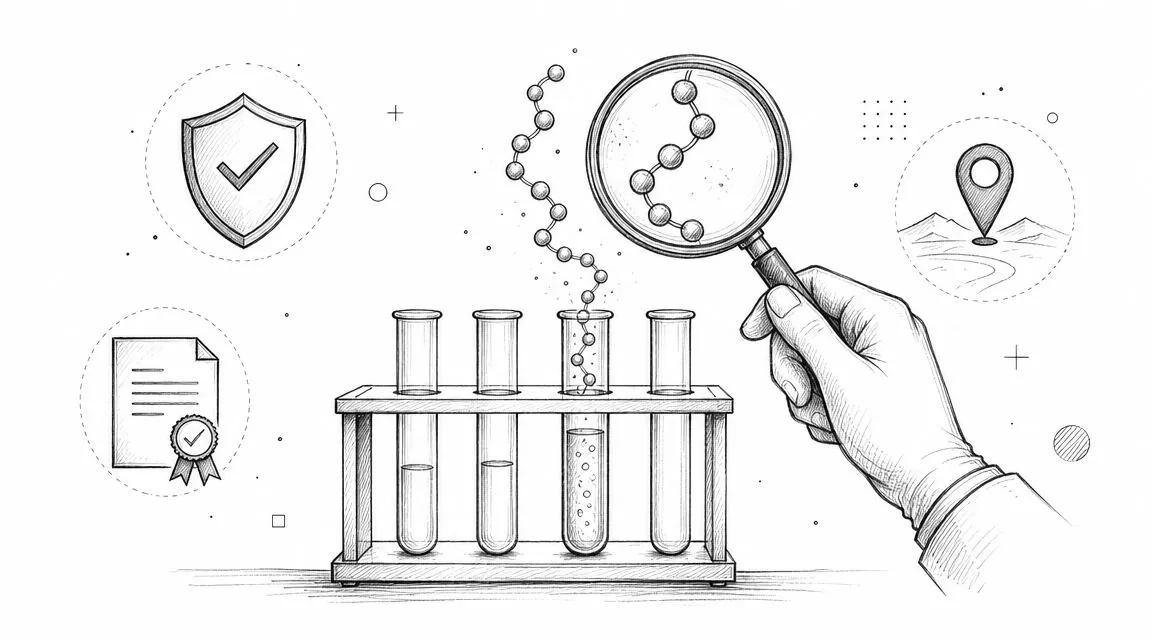
A vendor page can look polished and still tell you very little. For research peptides, the useful question is simple: can this seller show what the vial is, which batch it came from, and how it was handled before it reached you?

Start with the paperwork, but read it like a skeptic.
- Certificate review: A Certificate of Analysis only helps if it matches the batch in hand and includes details you can interpret.
- Identity and purity detail: You want more than marketing language. You want testing information.
- Storage and shipping clarity: A seller should explain storage conditions, shipping controls, and what happens if temperature-sensitive material is delayed.
- Traceable documentation: Sloppy records suggest sloppy process control.
The practical meaning of the research label shows up here. In a clinical supply chain, documentation is built into the system. In a research-only market, you may be doing more of that checking yourself. If a seller cannot answer basic questions about batch records, handling conditions, or test methods, treat that as a warning sign rather than a minor inconvenience.
For readers who want a broader sense of why documented procedures matter in regulated environments, Verbex insights on GxP requirements gives useful context. It is not a peptide buying guide, but it helps explain why controlled documentation sits so close to product quality.
Handling discipline matters more than people think
A peptide vial is less like a finished consumer product and more like a sensitive lab input. Once it is in your hands, small process errors can change what you believe you are using. A legitimate batch can still become a problem through poor labeling, bad math, repeated temperature swings, or careless reconstitution.
That is why handling should be treated as a written process, not a memory task.
- Write out the concentration clearly. Put the final concentration in plain language on the vial or in your log.
- Convert mg to mcg carefully. Unit mistakes are simple, common, and avoidable.
- Record every reconstitution detail. Note solvent volume, final concentration, date prepared, and storage condition.
- Use a consistent schedule. Improvised timing increases the chance of inconsistent use.
- Separate planning from action. Do calculations before you touch the vial.
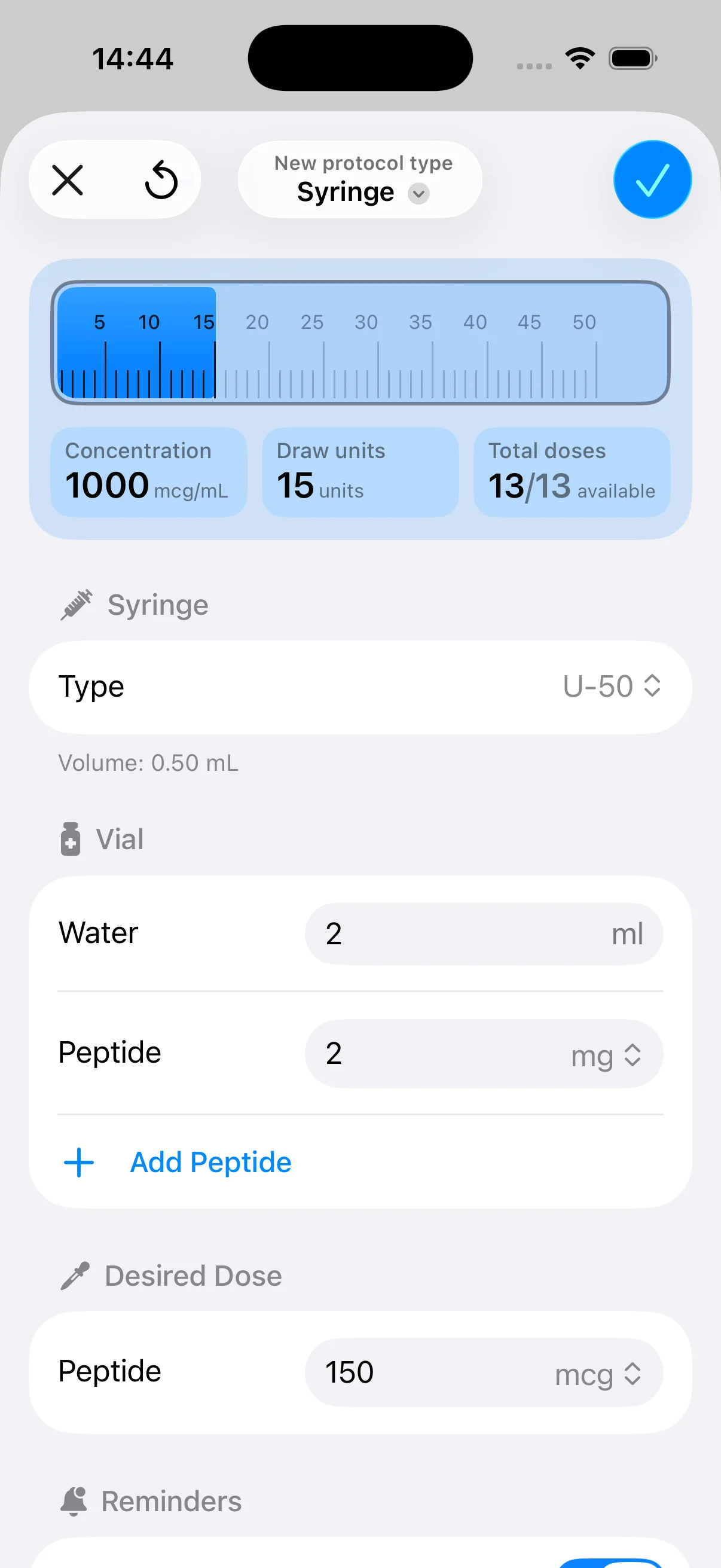
If you want a clearer framework for reviewing lab evidence, this guide to how peptide purity testing is documented and interpreted is a useful reference. For dose calculations and schedule management, PepFlow is one example of a tool people use to convert target microgram amounts into practical unit measurements and keep preparation notes organized. A calculator does not make a research compound safer, but it can reduce avoidable arithmetic errors.
Small arithmetic mistakes can become meaningful dosing mistakes. Careful prep matters even when the vial itself is legitimate.
Frequently Asked Questions About Research Peptides
How should peptides be stored
Storage depends on the form and the supplier’s instructions. Lyophilized powder and reconstituted liquid don’t behave the same way. In general, people should avoid assuming that all peptides share one storage rule. Heat, light, moisture, and repeated handling can all affect stability.
The safest approach is simple. Follow the product-specific storage guidance, minimize temperature swings, and label the vial clearly once it has been prepared. If you can’t find reliable storage guidance from the supplier, treat that as a quality concern.
What does the vial label actually mean
Most confusion comes from mixing up mass and concentration. A vial label might show a total amount in milligrams. After reconstitution, what matters operationally is concentration, meaning how much material is present per unit of liquid.
People also trip over units. Milligrams and micrograms are not interchangeable, and dosing mistakes often begin there. Before using any plan, write out the total amount in the vial, the volume added, and the resulting concentration in plain terms you can check twice.
How are experimental doses chosen in research settings
In real research settings, dose selection comes from protocol design, prior literature, assay goals, and controlled observation. It does not come from forum repetition or product-page suggestions alone. That’s an important distinction.
For a non-clinical reader, the key point is restraint. Experimental context is not the same as a medical recommendation. If you are reading scientific literature to understand a compound, focus on how the protocol was defined and what population or model was studied. Don’t assume that a published experimental setup translates directly to personal use.
If you want a practical way to reduce calculation mistakes and keep peptide schedules organized, PepFlow can help with concentration math, protocol planning, reminders, and dose logging. It’s designed for accuracy and routine management, not as a substitute for professional medical advice.