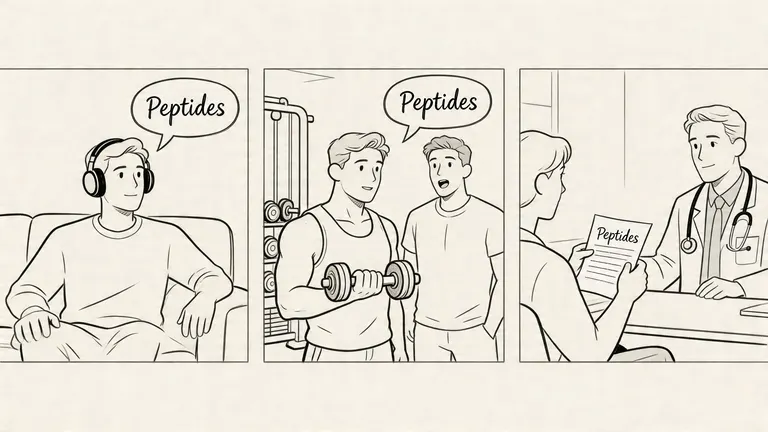
You hear about peptides in three completely different places. Your doctor mentions a peptide-based medication. A friend at the gym talks about recovery peptides. Then your feed serves you a clip claiming peptides can help with skin, fat loss, healing, and longevity.
No wonder people ask, what are peptides used for, exactly?
The confusing part is that “peptides” isn’t the name of one product or one effect. It’s a broad category. Some peptides are established medicines with decades of clinical use. Others show up in skincare, sports recovery conversations, or research settings where the evidence is much less settled. The useful question isn’t just what they are. It’s what they do, how they work, and where the line is between legitimate use and hype.
This guide breaks that down in plain language, with real examples, practical cautions, and the context most quick explainers skip.
Table of Contents
- The Growing Buzz Around Peptides
- What Exactly Are Peptides and How Do They Work
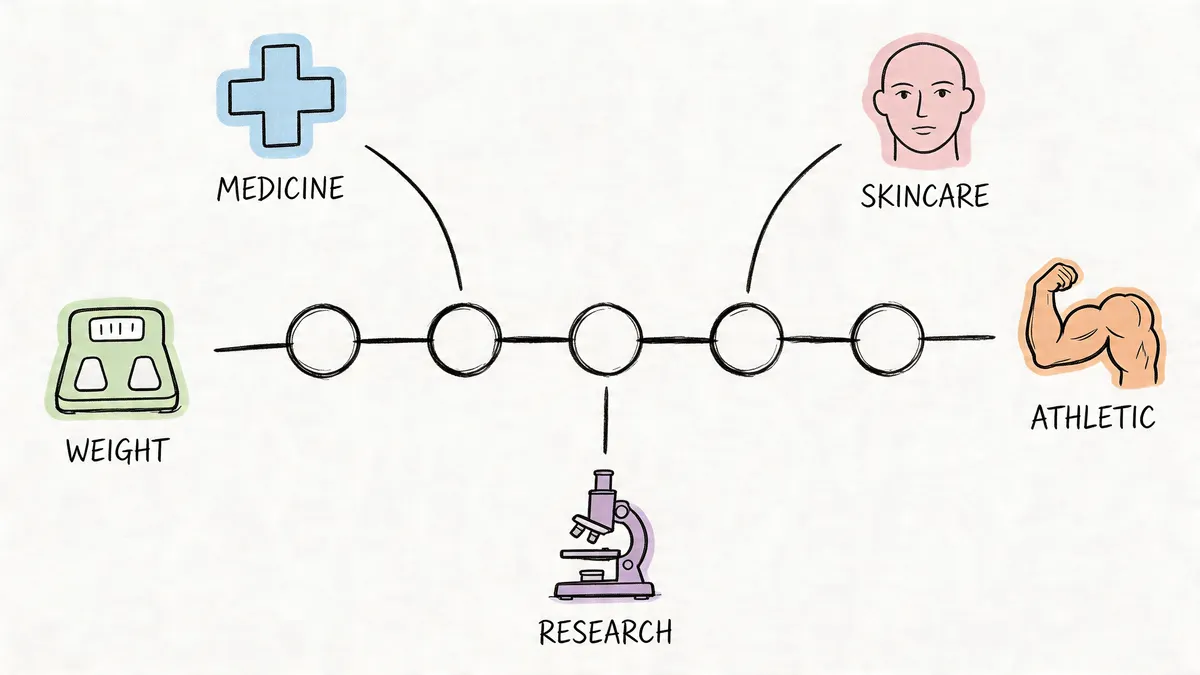
- The Five Major Arenas of Peptide Use
- Common Peptide Classes and Examples
- Understanding the Evidence and Key Limitations
- Navigating Safety Legality and Responsible Use
- Frequently Asked Questions About Peptides
The Growing Buzz Around Peptides
A lot of people arrive here from a mixed bag of conversations. One person is looking into wrinkle creams. Another is reading about recovery after training. Someone else has been prescribed a peptide medicine and wants to understand why it works differently from a standard drug.
That overlap creates a strange effect. Medical peptides, cosmetic peptides, and “research peptides” often get discussed as if they belong in the same bucket. They don’t. They share a basic biological idea, but the strength of evidence, the legal status, and the safety picture can be very different.
Some people first encounter peptides through a clinic discussion about peptide therapy. Others hear about them through body composition goals or recovery forums. The word starts sounding like a cure-all, which is usually the moment skepticism becomes useful.
Peptides aren’t one miracle substance. They’re a category of molecules that can be used in very different ways for very different goals.
The reason the topic keeps coming up is simple. Peptides sit in an interesting middle ground. They’re small enough to act with precision, but biologically familiar enough that the body often handles them differently from many synthetic compounds. That makes them attractive in medicine, intriguing in research, and easy to overmarket in wellness spaces.
If you want the short version, peptides are used for things like disease treatment, targeted cancer therapy, metabolic regulation, skin-focused products, tissue engineering research, and some recovery-focused applications. The longer answer depends on understanding how they work.
What Exactly Are Peptides and How Do They Work
A simple way to think about peptides
Peptides are short chains of amino acids. Amino acids are the small building blocks your body uses to make larger structures, including proteins. If proteins are like full machines, peptides are more like small components or short instruction notes.
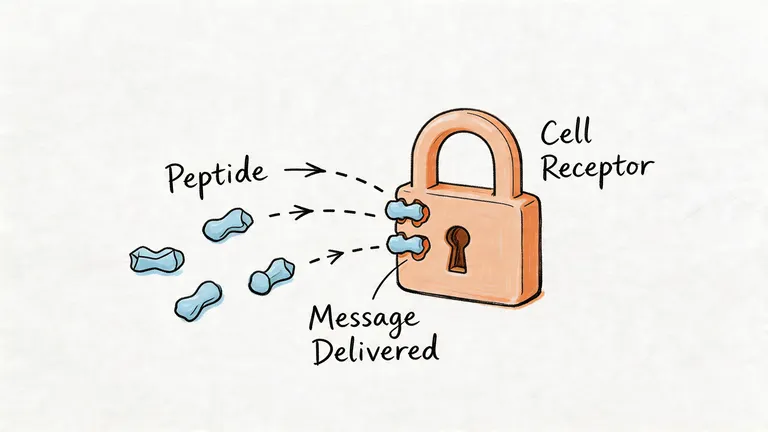
A useful analogy is key and lock. A peptide often acts like a specially shaped key. It fits a matching cellular lock, called a receptor. When it fits, it tells the cell to do something. That “something” could be releasing a hormone, changing inflammation signals, helping cells communicate, or directing a therapeutic effect toward a specific tissue.
This is why peptide effects can feel so varied. The peptide itself isn’t magical. It works because its shape helps it interact with a particular biological target.
Why doctors and researchers care about them
Researchers have been working on peptide medicines since 1921, and the first synthetic peptide, insulin, has been used clinically since 1923. Today, over 100 peptide drugs are FDA-approved in the United States, spanning areas including endocrinology, oncology, and infectious disease, which shows that peptide therapeutics have a long and established medical history, not just a recent wellness trend (WebMD overview of peptide drugs).
That history matters because it clears up a common misunderstanding. Not all peptides are fringe. Some are central to modern medicine.
Their appeal comes from how they behave in the body:
- High specificity: Many peptides interact closely with intended receptors instead of hitting many unrelated targets.
- Favorable tissue penetration: Some can reach tissues effectively and trigger focused biological effects.
- A more familiar breakdown process: Because peptides are built from amino acids, the body naturally knows how to break down and recycle their building blocks.
- Potentially fewer off-target effects: Their precision can reduce unwanted activity elsewhere.
Those points help explain why peptide therapeutics are often described as a useful bridge between classic small-molecule drugs and larger protein-based treatments.
A short visual explainer helps make that receptor idea click:
Practical rule: When someone says a peptide “boosts” something, ask what receptor or pathway it’s supposed to act on. If they can’t explain that, the claim may be more marketing than biology.
Another point that often gets lost is that specificity is not the same as universal safety. A peptide can be precise and still be inappropriate for a person, a goal, or a medical situation. That’s one reason approved peptide drugs and unsupervised peptide use need to be discussed separately.
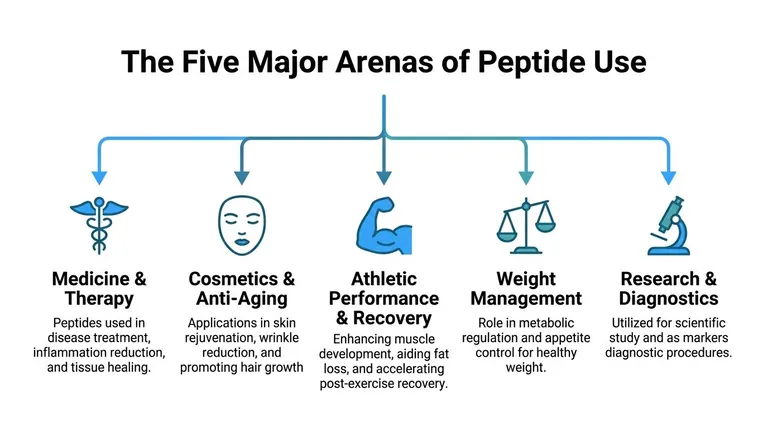
The Five Major Arenas of Peptide Use
People asking what are peptides used for usually want concrete categories. The easiest way to make sense of the subject is to group peptide use by purpose.
Medical and therapeutic use
This is the strongest and clearest arena. In medicine, peptides are used as active therapies, not vague wellness enhancers. They can replace missing signals, mimic natural messengers, or deliver treatment with a high degree of targeting.
One striking example is peptide receptor radionuclide therapy, or PRRT. In this approach, a peptide binds to receptors that are highly expressed on certain tumor cells and delivers radiation directly where it’s needed. With Lutathera, this approach extended progression-free survival to 28 months, compared with 8.4 months for high-dose octreotide in neuroendocrine tumor patients, with minimal severe side effects reported in the cited summary (BroadPharm discussion of PRRT and Lutathera).
That example shows the “how” behind peptide medicine. The peptide acts like an address label. It helps deliver the payload to cells carrying the right receptor.
Cosmetic and anti-aging use
In cosmetics, peptides are usually used for a different reason. The goal isn’t to treat a major disease. It’s to influence skin appearance or support skin-related signaling.
You’ll often see peptides in serums, creams, and hair-focused products marketed around firmness, texture, or visible aging. The basic idea is that certain peptides may act as signals relevant to skin structure or repair processes. This area attracts a lot of interest because peptides sound more biologically targeted than generic moisturizing ingredients.
That doesn’t mean every cosmetic peptide product works equally well. Formulation, delivery, concentration, and the actual peptide used matter a lot. Product labels often make this category sound simpler than it is.
If you want a narrower look at this area, PepFlow has a useful overview of anti-aging peptides.
Athletic performance and recovery
A common area of increasing confusion involves athletes, lifters, and active people discussing peptides for muscle support, injury recovery, tendon issues, and post-exercise healing. Their interest usually comes from the idea that peptides may influence growth signaling, tissue repair, or inflammation-related pathways.
A more research-grounded example comes from tissue engineering rather than gym culture. In peptide-functionalized hydrogels used for bone tissue engineering, researchers reported 3 to 5x greater mesenchymal stem cell adhesion, 4 to 6 fold increases in key bone growth markers, and 2.5x higher bone volume after 8 weeks in animal models compared with controls (GenScript summary of peptide biomaterials research).
That doesn’t prove that every recovery peptide discussed online will help a training injury. It does show why the category attracts so much attention. Peptides can influence the signals cells use during repair.
Recovery claims often sound plausible because the underlying biology is plausible. Plausible biology is not the same thing as proven benefit in humans.
Metabolic health and weight management
Another major arena is metabolic regulation. Some peptide drugs are used in endocrinology and weight management because peptides can participate in appetite, insulin-related signaling, or other metabolic pathways.
This is one of the clearest examples of why peptides don’t belong in a single stereotype. Some people hear “peptides” and think only of bodybuilding or anti-aging. In practice, some of the most familiar peptide medications are used in mainstream care for metabolic conditions.
The key idea is that peptides can act as signal mimics. If a disease involves a disrupted signal, a peptide may help restore or modify that message.
Scientific research and diagnostics
Peptides are also used in labs and diagnostic settings. Researchers use them as molecular tools to test signaling pathways, study receptor behavior, build biomaterials, and develop targeted therapies. Sometimes the peptide itself is the intervention. Other times it’s part of a larger delivery system, scaffold, or imaging approach.
This category matters because many compounds sold online are labeled “for research use.” That phrase can mean very different things depending on context. In legitimate science, it points to experimental work with careful controls. In online marketing, it can blur the line between laboratory material and personal use.
Common Peptide Classes and Examples
The word “peptide” gets thrown around as if it refers to one thing. In reality, people are usually talking about different classes with different purposes. Looking at categories makes the names less intimidating.
A practical reference table
| Peptide Class | Primary Function | Common Examples |
|---|---|---|
| Hormone replacement or mimic peptides | Replace or imitate a natural body signal involved in regulation | Insulin, semaglutide |
| Targeting peptides in cancer therapy | Bind specific receptors so treatment can be directed toward tumor cells | Lu-177 DOTATATE (Lutathera) |
| Growth hormone secretagogue peptides | Signal pathways involved in growth hormone release | CJC-1295, Ipamorelin |
| Recovery-focused peptides | Discussed for tissue support, healing, or repair-related signaling | BPC-157, TB-500 |
| Cosmetic signaling peptides | Used in skincare to support appearance-focused goals like firmness or texture | Commonly listed as signal peptides in serums and creams |
| Pigmentation-related peptides | Affect pathways linked to pigmentation or related signaling | Melanotan II |
| Myostatin-related or muscle-regulation peptides | Marketed around muscle growth limits or body composition goals | Follistatin |
| Biomaterial and scaffold peptides | Help cells attach, organize, or differentiate in tissue engineering systems | cRGD, DWIVA |
A few of those names are well known in online discussion spaces, especially growth-hormone-related compounds and recovery peptides. If you’re trying to sort through terms people use in training circles, this overview of peptides for muscle growth gives examples of how that category is commonly framed.
Why these categories can be misleading
A name alone doesn’t tell you how strong the evidence is.
For example, BPC-157 often comes up in recovery discussions. The broader scientific interest in repair-related peptide systems is understandable. As noted earlier, peptide-based biomaterials in bone research have shown effects such as 3 to 5x higher mesenchymal stem cell adhesion, 4 to 6 fold increases in osteogenic markers, and 2.5x higher bone volume after 8 weeks in animal models. But those findings come from a very specific research setup, not a blanket endorsement of every peptide used for recovery talk online.
That’s where readers often get tripped up. They hear one peptide-related result and assume the whole category shares the same evidence base.
A second source of confusion is overlap in goals. The same peptide class may be discussed for fat loss, performance, or anti-aging, depending on who’s selling the idea. If you’re comparing those claims, this guide to fat loss peptides is a useful example of how these compounds get grouped in practice.
A peptide class is not a promise. It’s just a starting point for asking better questions about mechanism, evidence, and real-world use.
Understanding the Evidence and Key Limitations
The biggest mistake people make is assuming all peptides sit on the same scientific footing. They don’t.
Approved drugs are not the same as online peptide products
Some peptides are FDA-approved drugs with clinical use, defined manufacturing, and a clear medical purpose. Others are sold online as research chemicals or discussed in forums as if personal experimentation and medical treatment were interchangeable.
Those are very different worlds.
An approved peptide drug has gone through formal development and regulatory review. A peptide sold in a gray-market setting may be attached to claims that sound scientific but rest on preclinical data, indirect reasoning, or community anecdotes. Even when the underlying mechanism sounds plausible, the actual human evidence may be thin or absent.
Responsible skepticism is important. A compound can be interesting without being proven. It can be popular without being well studied. It can also have a plausible mechanism and still be a poor choice for self-experimentation.
How to read claims without getting fooled
A simple filter helps:
- Ask what kind of evidence exists: Is the claim based on approved medical use, human trials, animal work, or just word of mouth?
- Separate mechanism from outcome: A peptide may affect a pathway in theory without producing a meaningful real-world benefit.
- Check whether the setting matches the claim: Cancer therapy data does not automatically support gym recovery claims. Biomaterials research does not automatically validate self-injection.
- Watch for category creep: People often borrow credibility from established peptide drugs to promote unrelated compounds.
The safest mindset is to treat peptides as a mixed field, not a single answer. Some uses are firmly grounded in medicine. Others remain exploratory, overstated, or poorly characterized for humans.
Navigating Safety Legality and Responsible Use
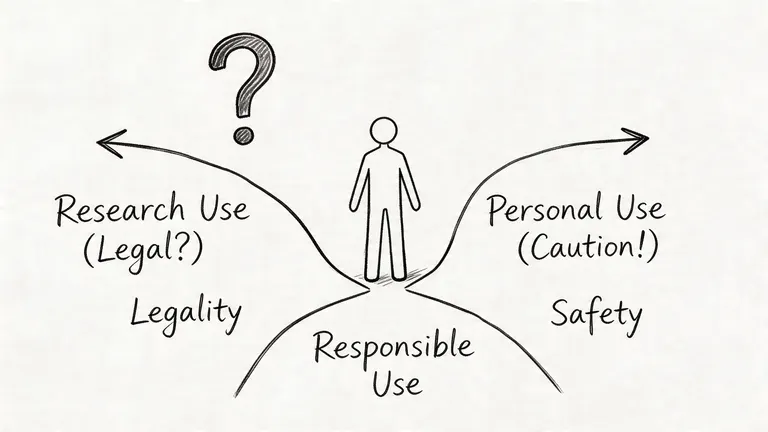
People don’t usually struggle with the word “peptide.” They struggle with what comes next. How is it taken, how is it measured, what’s legal, and where do mistakes happen?
Where people make mistakes
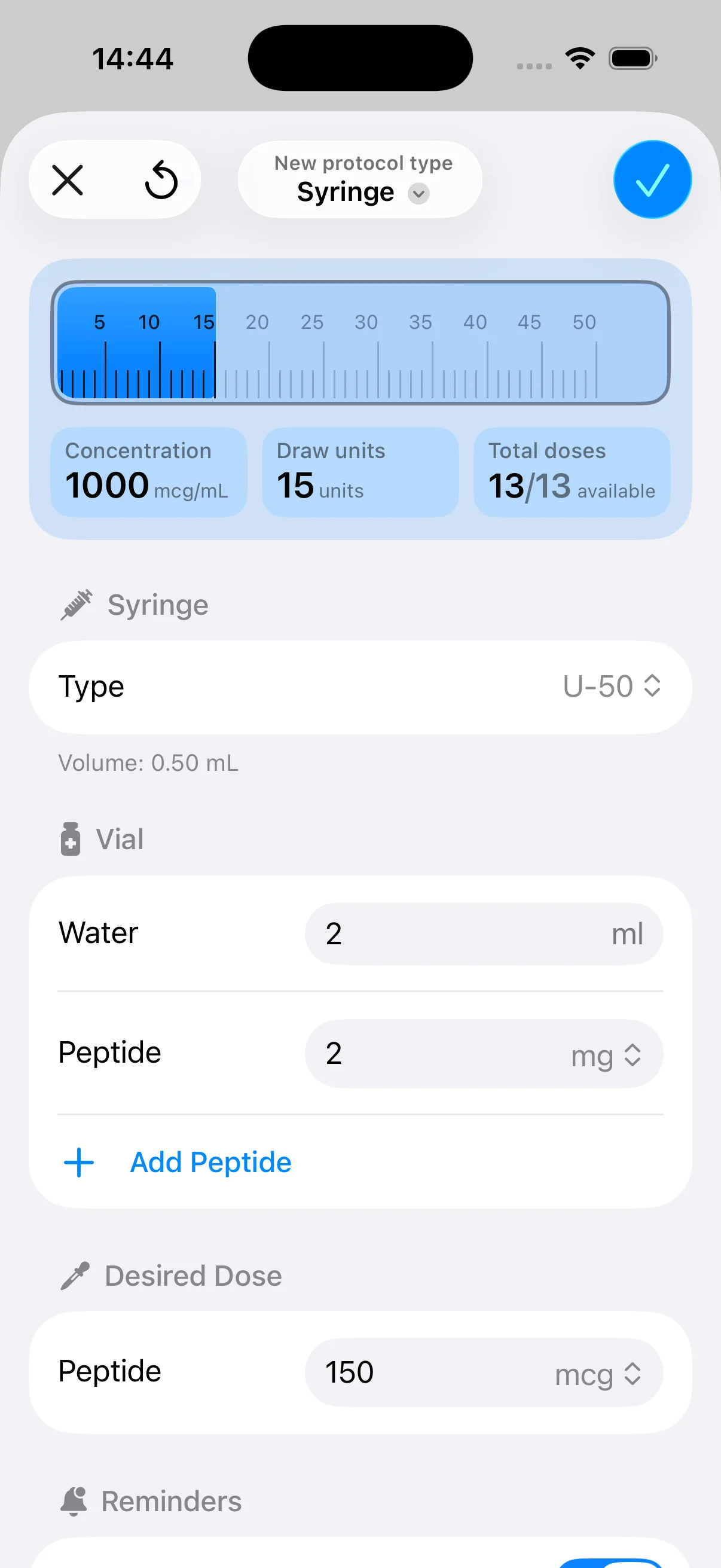
The practical side is often messier than the marketing. A vial label may show one amount, a protocol may describe another, and the user then has to translate that into a reconstitution plan, an injection volume, and a schedule that matches the intended dose.
That’s not a small issue. A 2025 survey of 1,200 biohacking forum users found that 68% reported making dosing errors that led to wasted product or inconsistent results (M D Esthetics discussion of peptide therapy risks and practical use).
Common failure points include:
- Microgram confusion: Milligrams, micrograms, units, and milliliters are easy to mix up.
- Reconstitution errors: Users may misunderstand how much liquid changes concentration.
- Schedule drift: A protocol that looked easy on paper becomes hard to follow over weeks.
- False confidence: People assume that if a peptide is discussed often, the process must be straightforward.
Reality check: The math and scheduling are often more difficult than the sales page makes them sound.
Questions worth asking before using anything
Before anyone uses a peptide product, a few questions matter more than branding:
- Is this an approved medication or a research-market product?
- What evidence supports the exact use I’m considering?
- Who is guiding the protocol, if anyone?
- Do I understand concentration, measurement, and timing well enough to avoid preventable mistakes?
- Would I recognize a side effect, stop condition, or mismatch between expectation and evidence?
Legal status can also be confusing. Some peptides are legitimate prescription medications. Others are sold under research-only language that may not line up with personal use. That gray area alone should make people slow down.
If you want a clearer sense of where approved peptide medicine ends and everything else begins, this list of FDA-approved peptide drugs is a helpful reference point.
Frequently Asked Questions About Peptides
Are peptides steroids
No. Peptides and steroids are different categories of compounds. Steroids have a distinct chemical structure and work through different biological mechanisms. Peptides are short chains of amino acids that usually act by signaling through specific receptors or pathways.
People sometimes lump them together because both can show up in performance or body-composition conversations. That shortcut causes confusion.
What is the difference between peptides and proteins
The simplest answer is size. Peptides are shorter chains of amino acids. Proteins are larger, more complex chains folded into bigger structures. A peptide is often more like a short instruction signal. A protein is more like a complete machine built from many parts.
That isn’t a strict “small equals peptide, big equals protein” rule in every context, but it’s a good practical distinction for most readers.
How are peptides usually taken
It depends on the peptide and the use case. Some peptide drugs are given by injection. Others appear in topical cosmetic products. In research and medicine, the route matters because it changes how the body absorbs, preserves, or breaks down the compound.
This is one reason people shouldn’t assume that a peptide discussed in a cream is comparable to one used in a clinic or one sold for injection.
Do peptides always have fewer side effects
Not always. But one important advantage of peptides is that the body naturally knows how to break down and recycle amino acids, their building blocks, which can contribute to fewer side effects and fewer off-target effects than many synthetic small-molecule drugs when the peptide is appropriately designed and used (peer-reviewed overview of peptide therapeutics).
That’s an advantage, not a blanket guarantee. The actual safety picture still depends on the specific peptide, the dose, the product quality, the route of use, and the person using it.
Peptides are best understood as precision signals, not miracle shortcuts. Some have transformed medicine. Some are promising tools in research. Some are sold far ahead of the evidence. Knowing which is which is the difference between informed curiosity and expensive confusion.
If you’re using structured peptide protocols and want help staying organized, PepFlow is built for the practical side of the process. It helps with dosing calculations, vial and concentration setup, cycle scheduling, reminders, and logging, so you can reduce manual math mistakes and keep your routine consistent. It doesn’t replace medical advice, but it can make planning and adherence much easier.