
What are you trying to change when you search for the best peptides for anti aging: surface-level signs such as fine lines and texture, or deeper processes tied to recovery, repair, and age-related decline?
That question matters because peptides sit in two very different buckets. Cosmetic peptides are usually applied topically and work by signaling in the skin, with goals such as improving the look of wrinkles, supporting barrier function, or encouraging a firmer appearance. Systemic peptides are used in medical or performance contexts to influence processes such as growth hormone release, tissue repair, or cellular senescence. Treating both categories as interchangeable leads to poor expectations and poorly designed protocols.
A better framework is mechanism first, goal second. Argireline and Matrixyl 3000 target visible skin aging through topical pathways. CJC-1295, Ipamorelin, Sermorelin, BPC-157, and FOXO4-DRI are discussed for very different use cases, often involving recovery, endocrine signaling, or experimental longevity strategies. GHK-Cu sits in the middle, which is one reason it draws so much attention. It appears in skincare, hair applications, and broader regenerative discussions.
That split between cosmetic and therapeutic use is where many peptide roundups fall short. A serum peptide that softens expression lines does not replace a clinician-guided protocol aimed at sleep, recovery, or body composition. The reverse is also true. An injectable peptide with systemic effects will not stand in for a well-formulated topical that you use consistently on the skin.
Practical use matters as much as theory. Users comparing secretagogues often start with dosing intervals and half-life questions, especially when reviewing options such as CJC-1295 DAC vs no DAC. The better decision usually comes from matching the peptide’s mechanism, delivery method, and risk profile to a specific outcome, then tracking how the protocol performs over time.
If you want a broader skincare-first perspective alongside this clinician-style guide, see The Best Peptides for Anti Aging Your Ultimate Skincare Guide.
Table of Contents
- 1. CJC-1295 with Ipamorelin
- 2. Epitalon
- 3. GHK-Cu Copper Peptide
- 4. Matrixyl 3000
- 5. BPC-157
- 6. Argireline
- 7. FOXO4-DRI
- 8. Sermorelin
- Top 8 Anti-Aging Peptides Comparison
- Building Your Protocol Peptides, Precision, and Partnership
1. CJC-1295 with Ipamorelin
What if the visible signs of aging are downstream effects of a deeper shift in recovery, sleep architecture, and anabolic signaling?
That question explains why CJC-1295 with Ipamorelin keeps appearing in anti-aging discussions. Unlike topical peptides that act locally in the skin, this combination is used for a systemic goal: stimulating endogenous growth hormone release through two different signaling routes. CJC-1295 acts as a GHRH analog. Ipamorelin acts as a ghrelin receptor agonist, or GHRP. The intended effect is not growth hormone replacement, but stronger pulse signaling within the body’s existing endocrine framework.
That mechanism matters because it changes the use case. Users interested only in fine lines usually get more direct value from cosmetic peptides such as Matrixyl 3000, GHK-Cu, or Argireline. Users dealing with slower training recovery, reduced sleep quality, declining body composition, and lower day-to-day resilience are asking a different anti-aging question. For that profile, a clinician-supervised GH secretagogue protocol is more logically aligned than a skin-first peptide serum.
Why this combo gets attention
The evidence is stronger for the broader GH secretagogue category than for this exact stack in a clean head-to-head aging trial. Still, the clinical interest is easy to understand. Age-related decline in growth hormone signaling is associated with changes in body composition, tissue repair capacity, exercise recovery, and sleep quality. A protocol that increases natural GH pulsatility may therefore affect how aging feels before it affects how aging looks.
This is the point many readers miss. Anti-aging peptides are not one category with one endpoint. Topical peptides mostly target extracellular matrix signaling, wrinkle formation, or skin barrier quality. CJC-1295 with Ipamorelin sits on the therapeutic side of the spectrum, where the target is systemic physiology.
A practical candidate is the user whose main complaint sounds cosmetic on the surface but is physiologic underneath. They may say they “look older,” yet the pattern includes poor recovery after lifting, more abdominal fat, shallower sleep, and lower exercise output. In that setting, appearance may improve only after sleep and recovery improve.
Practical rule: Consider this category for whole-body aging concerns tied to recovery, sleep, and body composition. It is a poor fit if your only goal is softening expression lines.
Protocol design is where enthusiasm often runs ahead of judgment. DAC versus no-DAC changes half-life and dosing frequency. Timing matters because GH release is pulsatile. Reconstitution accuracy matters because small peptide volumes are easy to miscalculate. If you are comparing formulations, PepFlow’s guide to CJC-1295 DAC vs no DAC is useful. If you are calculating a reconstituted dose, the peptide dosage calculator helps reduce avoidable math errors when setting up a protocol.
The larger takeaway is strategic. CJC-1295 with Ipamorelin belongs in an anti-aging plan only when the plan extends beyond skin. It sits at the intersection of longevity medicine, recovery support, and body-composition management, which is why informed users often track it with the same discipline they use for labs, sleep metrics, and training data.
2. Epitalon
What if the anti-aging peptide you choose is aimed less at wrinkles and more at the biology that drives aging in the first place?
Epitalon sits on the systemic side of this guide. That makes it very different from cosmetic peptides such as Matrixyl 3000 or Argireline, which are used to improve visible skin quality. Epitalon is usually discussed in longevity circles because it has been investigated for effects related to telomerase activity and cellular aging, not because users expect faster changes in texture, firmness, or expression lines.
That distinction matters in practice. A topical peptide can make sense when the goal is local skin signaling. Epitalon belongs to a different decision tree. People considering it are usually asking a broader question about aging rate, recovery, sleep regularity, or long-horizon health strategy.
Where Epitalon fits in a real protocol
The best candidate is rarely someone focused only on mirror-level improvement. A better fit is the data-oriented user who already tracks sleep, exercise output, and lab work, and wants to separate cosmetic interventions from systemic ones. In that context, Epitalon is less a beauty tool and more a therapeutic experiment in upstream aging biology.
That is also why expectations need to be set carefully.
If a user compares Epitalon to a remodeling skin peptide such as GHK-Cu (Copper Peptide), the mismatch becomes obvious. GHK-Cu is often chosen for tissue repair and visible skin support. Epitalon is usually chosen for a longevity thesis. The mechanism, use case, and outcome horizon are different.
A practical takeaway follows from that difference. Systemic peptides are harder to judge by appearance alone, because the signal is often subtle and the timeframe is longer. Users who run Epitalon casually, without cycle notes or dose records, often end up with impressions rather than usable observations. If you are reconstituting a vial and need to convert a microgram target into an actual injection volume, the PepFlow peptide dosage calculator helps reduce avoidable dosing errors.
Epitalon makes the most sense in an anti-aging plan that includes both halves of this article. Topicals address visible skin aging directly. Systemic peptides address deeper physiology, where the payoff may be slower but strategically broader. That split is easy to miss, and it is one reason informed users increasingly track peptide protocols with the same discipline they apply to sleep data, training logs, and symptom trends in PepFlow.
3. GHK-Cu Copper Peptide
GHK-Cu is the rare peptide that makes sense in both halves of this article. It belongs in skincare discussions, but it also belongs in broader regenerative discussions. That dual role is exactly why it’s one of the best peptides for anti aging.
Why GHK-Cu bridges cosmetic and systemic thinking
The verified data describes GHK peptides as influencing over 4,000 human genes tied to tissue repair and anti-inflammation in a 2021 Clinical Interventions in Aging study, which is an unusually broad signal for one peptide family (GHK-Cu evidence summary). That helps explain why GHK-Cu keeps appearing in both topical and injectable conversations.
Its skin case is also unusually practical. The verified material states that a clinical trial in the International Journal of Cosmetic Science found significant skin-thickness increases and fine-line reductions after 12 weeks of GHK-Cu application. That’s the kind of endpoint real users care about, because it connects mechanism to visible change.
Here’s the important distinction. Many topicals are maintenance tools. GHK-Cu often functions more like a remodeling signal.
That makes it especially relevant for:
- Post-procedure recovery: Users often pair regenerative topicals with microneedling or similar treatments when they want skin repair support.
- Thinning, crepey, or slower-healing skin: GHK-Cu’s reputation comes from repair signaling, not just hydration.
- Hybrid anti-aging plans: It fits people who want one peptide category that can sit near both aesthetic and wellness protocols.
A good real-world scenario is the person who doesn’t want to choose between “beauty peptide” and “health peptide.” GHK-Cu is one of the few compounds that justifies that overlap.
The overlooked takeaway is that GHK-Cu may be the best entry point for users who want evidence-backed skin improvement without limiting themselves to a purely cosmetic framework.
4. Matrixyl 3000
What should an anti-aging peptide do if your main goal is visible skin change rather than systemic repair? Matrixyl 3000 is one of the clearest answers. It sits on the cosmetic side of the peptide spectrum, where the priority is daily signaling at the skin surface, not whole-body endocrine or regenerative effects.
That distinction matters. This guide compares topical peptides with therapeutic peptides because they solve different problems. Matrixyl 3000 is best used for texture, early fine lines, and gradual support of the extracellular matrix through consistent topical use.
Best use case for Matrixyl 3000
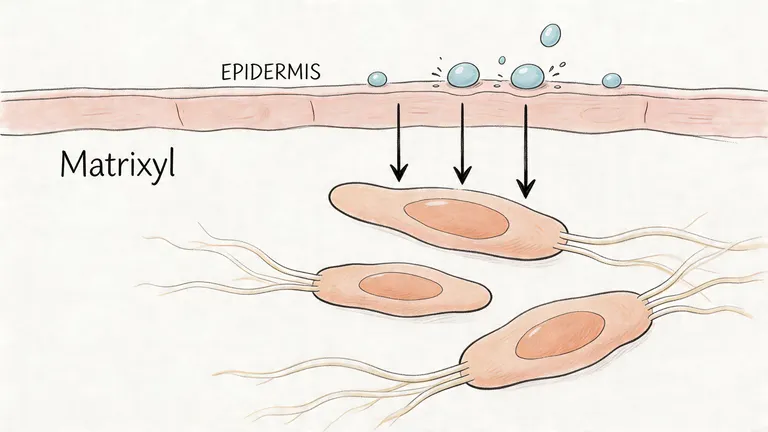
Matrixyl 3000 combines palmitoyl tripeptide-1 and palmitoyl tetrapeptide-7. In practical terms, formulators use it to support skin-repair signaling tied to collagen maintenance and the surrounding matrix. The appeal is less about novelty and more about fit. A user can add it to a serum or cream protocol without changing sleep, training, injection schedules, or broader longevity plans.
That makes Matrixyl 3000 a strong option for a specific type of user:
- Early visible aging: Fine lines, mild roughness, reduced elasticity, or skin that looks less resilient than it did a few years ago.
- Topical-first users: People who want peptide exposure but have no interest in injectable or systemic compounds.
- Procedure-adjacent skincare: Users building a clinician-guided routine around peels, microneedling, or lasers and wanting a peptide topical that is easy to keep in rotation.
- Adherence-driven protocols: People who are unlikely to maintain a complex regimen but will apply the same product once or twice a day for months.
The clinical logic is simple. A lower-intensity intervention can outperform an advanced protocol if the advanced protocol never becomes consistent behavior.
Matrixyl 3000 also helps clarify a common source of confusion in peptide discussions. Popular skincare peptides and systemic anti-aging peptides are not interchangeable. CJC-1295 with Ipamorelin, Epitalon, or Sermorelin are usually discussed in relation to broader physiologic signaling. Matrixyl 3000 stays in a narrower lane. Its value comes from local cosmetic use, predictable integration into skincare, and a lower barrier to adherence.
That narrower lane is a strength.
For an informed user, Matrixyl 3000 often works best as a baseline topical peptide. It can sit alongside retinoids, sunscreen, and barrier-support products while more advanced users evaluate whether they also want a therapeutic peptide for recovery, sleep-related repair, or systemic aging concerns. If a routine includes multiple peptide formats, basic storage discipline also matters, especially for users handling more fragile products in parallel. A quick review of how freeze-dried peptides should be stored and handled helps prevent avoidable mistakes.
The non-obvious takeaway is that Matrixyl 3000 is not competing with advanced therapeutic peptides. It complements them by covering the cosmetic end of the anti-aging spectrum well. For someone building a realistic protocol, that makes it less of a compromise and more of a smart first layer.
5. BPC-157
What if the more relevant anti-aging question is not “How do I look younger?” but “How well do I recover?”
BPC-157 belongs on this list because aging is not only a cosmetic process. It is also a repair problem. Recovery slows. Irritation lasts longer. Minor tissue stress becomes more disruptive to training, procedures, and day-to-day comfort. In that context, BPC-157 is usually discussed less as a beauty peptide and more as a therapeutic peptide tied to healing capacity.
That distinction matters.
Topical peptides such as Matrixyl 3000 or Argireline are used for visible skin goals at the site of application. BPC-157 is usually considered for broader recovery use cases, especially by people thinking beyond wrinkles and toward resilience, tissue tolerance, and post-stress repair. That makes it one of the clearer examples of the divide between cosmetic peptides and systemic peptides. Both can fit an anti-aging plan, but they are solving different problems.
Where BPC-157 makes the most sense
BPC-157 is most compelling for the user whose main complaint is slower recovery. That can include recovery after aesthetic procedures, recurring training-related irritation, or the general sense that tissues no longer bounce back efficiently.
Common scenarios include:
- Post-procedure support: Users focused on the healing window after interventions that challenge the skin or underlying tissue.
- High-output training: People managing cumulative wear from exercise while also pursuing long-term aging support.
- Recovery-limited consistency: Users whose routines keep getting interrupted by nagging irritation, soreness, or delayed repair.
The practical point is simple. Better recovery can produce anti-aging benefits even when the first improvement is functional rather than visual.
BPC-157 also adds a layer of protocol complexity that topical users may not have dealt with before. Storage and handling matter more once a routine includes lyophilized products or multiple peptide formats. If that applies to your stack, this guide on storing and handling freeze-dried peptides is a useful reference.
For tracking, BPC-157 also benefits from a more clinical mindset than many cosmetic products. A serum can be judged in the mirror. A recovery-focused peptide usually needs a log. Procedure dates, irritation levels, training interruptions, sleep quality, and time-to-recovery are more informative than casual impressions. That is where a tool like PepFlow can help connect peptide use to actual outcomes instead of vague optimism.
The non-obvious takeaway is that BPC-157 expands the definition of anti-aging. It addresses how aging feels in the body, not only how it appears on the face.
6. Argireline
Argireline is one of the easiest peptides to explain because its use case is narrow and intuitive. It targets expression lines.
If wrinkles are forming because your face moves, not because your skin structure is broadly thinning, Argireline makes more sense than many collagen-focused peptides.
Who should choose Argireline
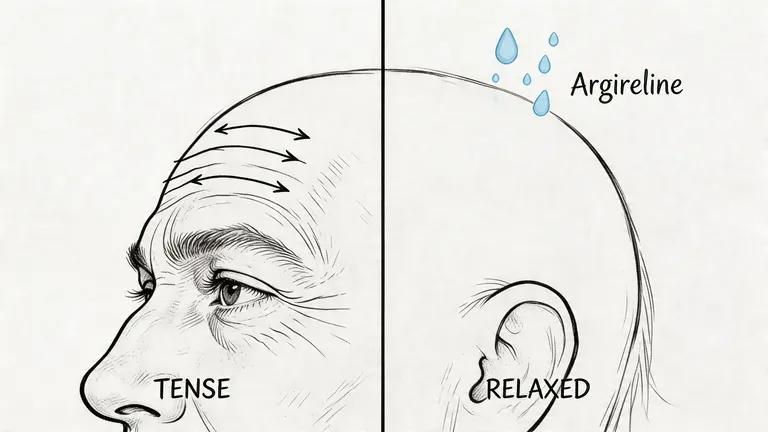
Argireline, also called Acetyl Hexapeptide-8, is commonly used in topical formulas aimed at dynamic wrinkles such as forehead lines and crow’s feet. It’s often described as interfering with the signaling involved in muscle contraction at the skin-expression level.
The practical takeaway is that Argireline doesn’t compete with systemic anti-aging peptides. It solves a different problem.
That makes it best for people who want:
- Forehead and eye-area maintenance: Especially when expression lines are the dominant concern.
- A non-injection cosmetic option: Users who want topical support first.
- A complementary product: It often sits well in routines built around hydration, retinoids, and collagen-supporting topicals.
It’s not the best choice for tissue repair, post-procedure healing, or whole-body recovery. That limitation is a strength. You know what job it’s being asked to do.
A realistic example is the user in their thirties or forties with visible “11 lines” and forehead creasing but otherwise decent skin quality. That person may get more practical value from Argireline than from a more complicated peptide chosen for longevity branding.
The deeper point is that anti-aging products work better when they target the dominant mechanism of aging in front of you. For some faces, that mechanism is repetitive expression, not collagen collapse.
7. FOXO4-DRI
FOXO4-DRI sits at the far experimental end of anti-aging interest. It gets attention because it’s associated with senolytic thinking, meaning the attempt to eliminate senescent cells that accumulate with age.
That makes it intellectually exciting. It also means caution should be much higher.
How to think about senolytic peptides
The verified material doesn’t provide direct clinical outcome statistics for FOXO4-DRI, so the honest way to discuss it is qualitatively. It represents a frontier concept in anti-aging rather than a straightforward, consumer-ready recommendation.
That matters because senolytic enthusiasm can outrun practical evidence. A peptide can have a compelling theory and still be the wrong choice for most users right now.
Who is interested in FOXO4-DRI?
- Advanced biohackers: People following longevity research closely.
- Mechanism-first users: Those more interested in cellular aging theory than visible short-term skin change.
- Experiment-driven trackers: Users who document every variable because outcomes can be subtle and interpretation can be messy.
What it is not is a first peptide.
If a peptide sounds like it belongs in a research discussion more than a skincare cabinet, that’s usually a sign to slow down.
There’s also a strategic lesson here. The best peptides for anti aging aren’t always the most novel. In practice, many users get more from established peptides with clearer use cases, because they can match them to a real goal and execute them well.
FOXO4-DRI belongs on this list because it reflects where anti-aging science is heading. It doesn’t belong near the top of a beginner shopping list.
8. Sermorelin
What if the anti-aging goal is not fewer wrinkles first, but better sleep, recovery, and body composition from the inside out?
That question points to Sermorelin’s role on this list. Unlike topical peptides such as Matrixyl 3000 or Argireline, Sermorelin is a systemic peptide used to stimulate endogenous growth hormone signaling through the GHRH pathway. The practical implication is different. Topical peptides aim at the skin surface and dermal matrix. Sermorelin is usually considered when the problem looks broader: slower recovery, poorer sleep quality, reduced training tolerance, or the gradual shift in body composition that often shows up with age.
Sermorelin tends to attract users who want a simpler entry point into the growth-hormone-support category. Its appeal is not novelty. It is control. Because it works by prompting physiologic GH release rather than replacing growth hormone directly, clinicians often frame it as a more measured option for people who want systemic support without jumping straight to more aggressive protocols.
That distinction matters.
A cosmetic peptide can improve how skin looks. A systemic peptide can change the conditions that influence how someone feels and recovers day to day. For some users, that difference is the reason Sermorelin makes more sense than adding another serum to the bathroom shelf.
Typical candidates often describe a pattern like this:
- sleep is less restorative than it used to be
- recovery after training has become less predictable
- abdominal fat is easier to gain and harder to lose
- the goal is healthy aging support, not an elaborate stack
That use case also explains why Sermorelin sits in a different category from the purely cosmetic entries in this guide. It is less about immediate visible change and more about whether the larger physiology behind aging feels like it is drifting in the wrong direction.
Its shorter acting profile is part of that positioning. Some clinicians and experienced users prefer a peptide with a tighter relationship to natural signaling rhythms, especially if they are trying to build a protocol they can observe, adjust, and track carefully over time. That is where good logging becomes practical rather than obsessive. If someone is testing Sermorelin for sleep, recovery, waist measurement, training output, and subjective energy, a tool like PepFlow can help separate real trends from expectation bias.
A useful way to place Sermorelin in an anti-aging plan is this: topical peptides address visible tissue quality, while Sermorelin is used for upstream systemic inputs that may influence appearance indirectly. Users who understand that split usually make better decisions. They stop expecting an injectable peptide to function like skincare, and they stop expecting skincare alone to solve a whole-body aging pattern.
Top 8 Anti-Aging Peptides Comparison
| Item | 🔄 Implementation Complexity | ⚡ Resource Requirements | 📊 Expected Outcomes | Best Use Cases | ⭐ Key Advantages |
|---|---|---|---|---|---|
| CJC-1295 with Ipamorelin | High, frequent timed injections, precise schedule | High, prescriptions, vials, refrigeration, medical oversight | Broad systemic GH effects: improved composition, recovery, skin (⭐⭐⭐⭐) | Comprehensive anti-aging, body recomposition, recovery | Synergistic GH stimulation with sustained pulsatility. 💡 Requires strict dosing schedule |
| Epitalon | Medium, short intensive daily injections for cycles | Low–Medium, short vial use, basic monitoring | Targets telomerase/telomeres; potential longevity and circadian benefits (⭐⭐⭐) | Cellular longevity interventions, sleep/circadian normalization | Telomerase activation with short protocols. 💡 Best used in intermittent 10–20 day cycles |
| GHK-Cu (Copper Peptide) | Low (topical) / Medium (systemic injections) | Low (serum) / Medium (injections, monitoring for copper) | Strong wound healing and remodeling; skin firmness and repair (⭐⭐⭐) | Topical skin repair, wound healing; short systemic regenerative use | Versatile topical + systemic applications; well‑studied for remodeling. 💡 Watch systemic copper balance |
| Matrixyl 3000 | Low, simple topical application | Low, over-the-counter serums | Visible wrinkle reduction, improved texture and hydration (⭐⭐⭐) | Non-invasive wrinkle reduction and skin-firming | Clinically validated topical peptide with excellent safety. 💡 Consistent AM/PM use needed |
| BPC-157 | Medium, typically twice-daily injections, often localized | Medium, injections, frequent dosing, research-grade sourcing | Accelerated tissue repair and angiogenesis; strong healing (⭐⭐⭐⭐) | Injury repair, tendon/muscle healing, gut recovery | Potent regenerative and anti-inflammatory effects. 💡 Often dosed near injury for local benefit |
| Argireline (Acetyl Hexapeptide-8) | Low, topical, easy application | Low, targeted serums | Reduces expression/dynamic wrinkles (moderate effect) (⭐⭐⭐) | Preventing/treating expression lines as non-invasive alternative to injectables | Topical muscle-relaxing action with minimal risk. 💡 Best for early/mild dynamic wrinkles |
| FOXO4-DRI | Very High, experimental intermittent protocols, complex handling | Very High, research settings, controlled administration | Potential senolytic effects; dramatic animal results but human data lacking (⭐⭐⭐ preclinical) | Research and experimental longevity studies | Targets senescent cells with promising preclinical reversal of aging markers. 💡 Strictly research-use; unknown long-term safety |
| Sermorelin | Medium, daily injections (often 5 on/2 off), prescription | Medium, prescription, monitoring of IGF-1/GH markers | Restores GH pulsatility: improved sleep, energy, body composition (⭐⭐⭐) | Medically supervised GH restoration and mild anti-aging therapy | Mimics natural GHRH with safer feedback control. 💡 Typically used under physician supervision |
Building Your Protocol Peptides, Precision, and Partnership
Choosing the best peptides for anti aging starts with identifying your primary aging pattern.
If your concern is expression lines, a topical such as Argireline makes sense. If your concern is collagen support and visible skin quality, Matrixyl 3000 and GHK-Cu are more coherent choices. If your concern is systemic aging signals such as slower recovery, poorer sleep, body-composition drift, and lower vitality, peptides like Sermorelin or CJC-1295 with Ipamorelin belong in the conversation. And if you’re thinking at the cellular-aging level, compounds like Epitalon and more experimental options like FOXO4-DRI reflect a very different goal from cosmetic skin maintenance.
The useful distinction is not “which peptide is strongest.” It’s “which pathway matches the problem I’m trying to solve.”
That’s where many protocols fail. People combine a serum, a recovery peptide, and a GH secretagogue without defining what success looks like. Then they change too many variables at once and can’t tell what helped. The better approach is staged and measurable. Pick the main target first. Skin texture. Dynamic wrinkles. Recovery. Longevity signaling. Then track that target long enough to judge the protocol objectively.
This is also where implementation becomes more important than marketing. The verified material highlights a major blind spot in peptide content: adherence and dosing accuracy are rarely discussed, even though those practical issues can undermine otherwise promising protocols (anti-aging peptide adherence gap). Another verified source points out that peptide stacking and protocol orchestration remain underexplored, especially for users trying to combine classes thoughtfully rather than improvising them (protocol optimization gap in anti-aging peptides). That’s exactly why tracking matters.
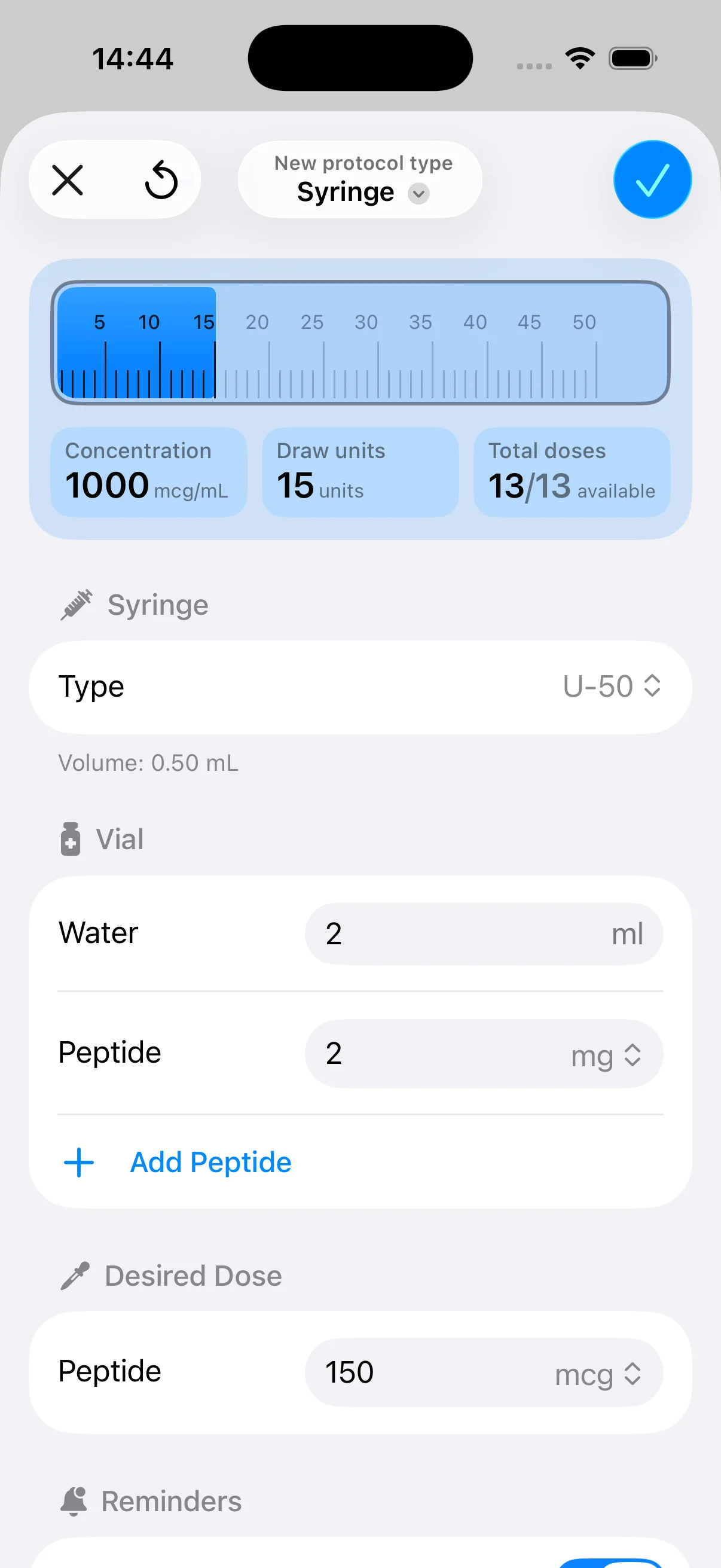
PepFlow is useful in that real-world layer. It helps users convert intended microgram doses into practical unit measurements, organize cycles, set reminders, and maintain logs that make a protocol reviewable instead of vague. For someone using a structured peptide regimen, that’s not a minor convenience. It’s part of making the protocol executable.
The smartest anti-aging strategy is usually a layered one. A topical for daily skin signaling. A clinician-guided systemic peptide only if your goals justify it. A tracking system that prevents the usual failures of missed doses, sloppy calculations, and random changes. Anti-aging isn’t just about choosing a peptide with a compelling mechanism. It’s about choosing one you can use correctly, consistently, and safely.
Disclaimer: The information in this article is for educational purposes only. Peptides, particularly systemic ones, are powerful compounds that should only be used under the guidance of a qualified medical professional. This content is not a substitute for professional medical advice, diagnosis, or treatment. Always consult with your doctor before beginning any new health regimen.
If you’re running peptide protocols and want less spreadsheet work, less dosing math, and better consistency, PepFlow is built for exactly that. It gives you a precise dosing calculator, flexible cycle planning, reminders, logs, and simple day-to-day tracking so your protocol stays organized instead of guesswork-driven.