You may be reading this after another stalled month of trying to lose weight. You cleaned up your meals, you started walking more, maybe you added strength training, and the scale still feels stubborn. Then you hear people talk about “peptides” for weight loss, and the term sounds equal parts medical, trendy, and confusing.
That confusion makes sense. Some peptides are legitimate prescription medications with strong clinical evidence. Others are experimental compounds sold online with far less oversight. The science can be promising, but their actual use is where many people get lost. They don’t just need to know what a peptide does. They need to know what it is, how it works, what the risks are, and why dosing mistakes and missed schedules can derail the whole process.
Table of Contents
- What Are Peptides and Why Are They Used for Weight Loss
- The Science Behind Peptide Mechanisms for Fat Loss
- Exploring the Main Classes of Weight Loss Peptides
- What the Research Says About Peptide Efficacy
- Understanding the Risks and Legal Landscape
- How to Manage Peptide Protocols for Consistency
- A Responsible Path Forward with Peptides
- Frequently Asked Questions About Peptides for Weight Loss
What Are Peptides and Why Are They Used for Weight Loss
Peptides are short chains of amino acids. If proteins are like long sentences, peptides are like short instructions. Your body already uses many peptide signals every day to regulate appetite, blood sugar, digestion, repair, and hormone activity.
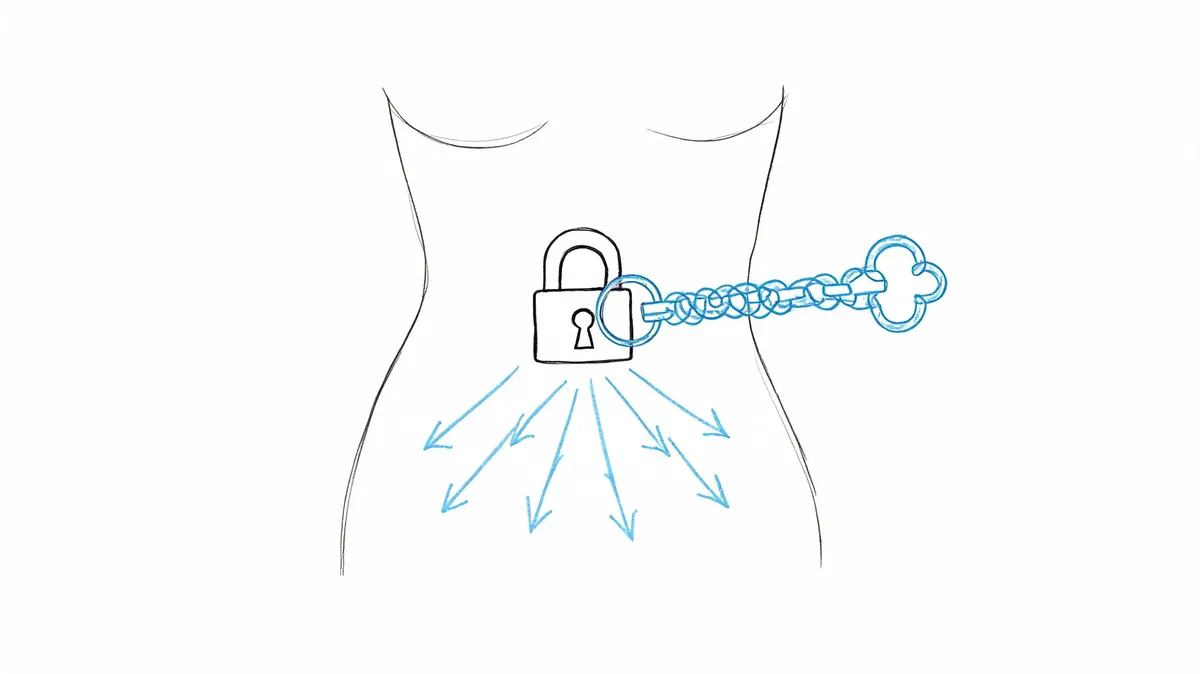
For weight loss, the easiest way to think about peptides is this. They act like keys that fit specific locks in the body. When the right key reaches the right lock, it can change a process such as hunger, fullness, stomach emptying, or how the body handles energy after a meal.
That’s why the phrase what are peptides for weight loss doesn’t have one simple answer. It refers to a category of compounds, not a single product. Some are designed to help people feel full sooner and eat less. Others are discussed for body composition, recovery, or metabolic support, though the level of evidence varies a lot.
Why people turn to them
Individuals typically don’t start by looking for peptides. They start by looking for help with a problem that feels resistant to effort. A person may do “all the right things” and still deal with intense hunger, frequent cravings, or a body that seems to push back against calorie reduction.
That’s where certain medical peptide therapies became so important. Some of the best-known examples are FDA-approved GLP-1 medications, which target appetite and blood sugar regulation in a more direct way than willpower alone ever could.
Peptides can support weight loss, but they don’t replace eating patterns, sleep, movement, or medical evaluation. They change the conditions you’re working under. They don’t remove the need for the work.
A simple way to separate the category
When people talk about peptides for weight loss, they usually mean one of two buckets:
- Prescription peptide medications: These are used under medical supervision and have clearer dosing standards.
- Research or experimental peptides: These are often discussed in online communities, but they may lack standardized protocols, consistent product quality, and strong long-term human data.
That distinction matters more than the marketing language around any single product.
The Science Behind Peptide Mechanisms for Fat Loss
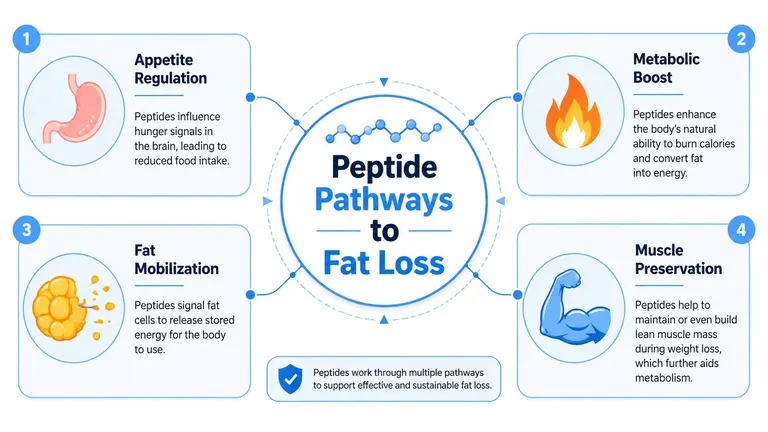
Some peptides affect weight through one main pathway. Others influence several at once. The important thing is that they don’t “melt fat” in a magical way. They change signals that shape how much you eat, how quickly you feel full, and how your body handles stored energy.
Appetite regulation
This is often the first mechanism discussed. Some peptides act like an appetite volume control. They interact with signaling pathways involved in hunger and satiety, so meals may feel more satisfying and snack urges may feel less loud.
A useful analogy is a thermostat. If your internal hunger thermostat has been running high, a peptide that targets appetite signaling may turn the setting down. You still choose what to eat. You just may not feel like you’re fighting your body at every step.
Slower gastric emptying and steadier intake
Another pathway involves digestion speed. Certain peptides can slow gastric emptying, which means food moves out of the stomach more slowly. This means the incoming signal to eat again may arrive later, and fullness may last longer.
Many people overeat not from lack of knowledge, but due to the rapid return of hunger. When digestion slows, appetite often becomes easier to manage in practical terms.
Practical rule: If a treatment changes how hungry you feel but your eating routine stays chaotic, you may still struggle. Biology helps, but structure still matters.
Energy use and fat mobilization
Some newer and more experimental peptides are discussed for their ability to influence energy expenditure and fat metabolism. That means the body may not only take in less energy through reduced appetite, but may also use stored fuel differently.
Readers often misunderstand this concept. “Fat burning” doesn’t mean a peptide reaches in and removes fat directly. It means the peptide may alter the signals that govern whether the body stores energy, releases it, or burns more of it over time.
Muscle preservation during weight loss
A final concept matters even if a peptide’s main job is appetite control. Weight loss isn’t only about reducing fat. It’s also about trying to keep as much lean mass as possible. If someone loses weight quickly without enough protein intake, resistance training, or medical monitoring, body composition can move in a less favorable direction.
That’s one reason peptide conversations should never be reduced to “How much weight can I lose?” The more useful question is, “What kind of weight is being lost, and under what conditions?”
Exploring the Main Classes of Weight Loss Peptides
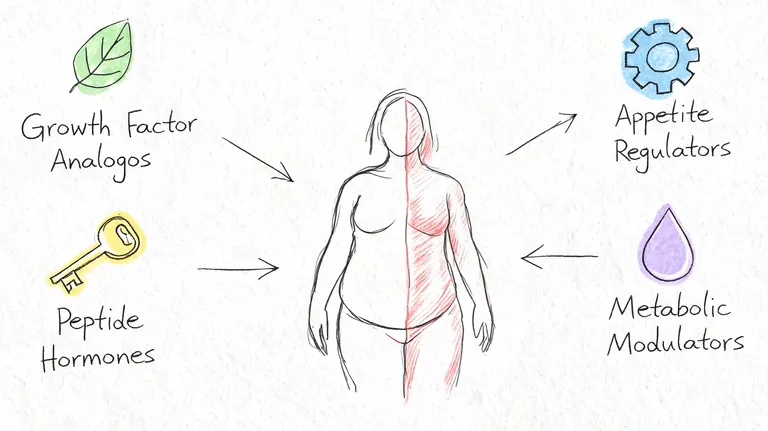
The peptide field is crowded, and online discussions often mix prescription medications with experimental compounds as if they belong in the same category. They don’t. It helps to group them by how they’re used and how strong the evidence is.
GLP-1 and related agonists
This is the class with the clearest public awareness. These peptides target hormone pathways involved in appetite, fullness, blood sugar regulation, and digestion speed. In practical terms, they’re often used to help people eat less without feeling constantly deprived.
Semaglutide is the most established example in this discussion. It belongs to the GLP-1 receptor agonist family and has become a reference point for modern medical weight management.
Some compounds go further and target more than one receptor. Retatrutide is a triple agonist that targets GLP-1, GIP, and glucagon receptors. According to GoodRx’s overview of peptides for weight loss, retatrutide produced a 24.2% mean body weight reduction from baseline in a 48-week phase 2 trial, and phase 3 data is anticipated in H1 2026. That’s a strong example of how newer peptide designs aim to affect both appetite and energy use, though it remains investigational.
Growth hormone secretagogues
This group includes compounds such as CJC-1295 and Ipamorelin. They’re often discussed in fitness, recovery, and body composition circles rather than mainstream obesity care.
People usually reach for this category hoping to support fat loss while preserving muscle or improving recovery. The challenge is that practical use often outruns the quality of evidence, and the protocols discussed online are rarely standardized.
Emerging and research peptides
This bucket includes names that circulate widely in forums, wellness communities, and “biohacking” spaces. Examples often mentioned include AOD-9604, BPC-157, and MOTS-c.
The key issue here isn’t just whether a peptide sounds promising. It’s whether the product is regulated, whether the dosing protocol is established, and whether the person using it can prepare and schedule it correctly. That’s why many people looking into peptides for fat loss end up needing basic help with concentration math before they even understand the mechanism.
A side note that matters in real life: appetite suppression can make it easier to skip meals impulsively and then rebound later. Some people do better when they plan protein-forward snacks ahead of time, including things like guilt-free crunch options that fit a structured routine instead of relying on whatever is nearby.
Comparison of Common Weight Loss Peptides
| Peptide | Primary Mechanism | Regulatory Status |
|---|---|---|
| Semaglutide | GLP-1 receptor agonist that helps reduce appetite, slows gastric emptying, and supports blood sugar regulation | FDA-approved |
| Retatrutide | Triple agonist targeting GLP-1, GIP, and glucagon receptors to affect appetite and energy expenditure | Research / investigational |
| CJC-1295 | Growth hormone secretagogue discussed for body composition and recovery support | Research / non-FDA-approved for this use |
| Ipamorelin | Growth hormone secretagogue discussed for recovery and lean mass support | Research / non-FDA-approved for this use |
| AOD-9604 | Research peptide discussed for fat metabolism support | Research / non-FDA-approved for this use |
| BPC-157 | Research peptide often discussed for healing and metabolic support | Research / non-FDA-approved for this use |
| MOTS-c | Research peptide discussed for metabolic flexibility and insulin sensitivity | Research / non-FDA-approved for this use |
What the Research Says About Peptide Efficacy
The evidence for weight loss peptides isn’t evenly distributed. A few compounds have strong clinical trial data. Many others have far thinner support, or support that gets overstated online.
What strong evidence looks like
The clearest example is semaglutide. In the 68-week STEP 1 clinical trial, participants taking semaglutide 2.4 mg had an average 14.9% body weight reduction from baseline, compared with 2.4% in the placebo group, and 86.4% of semaglutide users lost at least 5% of body weight, according to Medical News Today’s summary of the STEP 1 findings.
Those numbers matter because they give readers a realistic frame. This isn’t a story of overnight transformation. It’s sustained change over a long study period, paired with lifestyle intervention.
Here’s another important detail from the same verified evidence set. In the STEP trials summarized by that source, people weren’t just handed a peptide and left alone. The treatment was used alongside diet and exercise support. That’s how these therapies are studied and how they should be understood.
Evidence-backed peptide treatment works best as part of a system. Nutrition, movement, and follow-up aren’t optional extras.
Where evidence gets thinner
Some research peptides may eventually prove useful. Some may not. The problem for consumers is that early enthusiasm often gets translated into certainty long before the evidence justifies it.
That’s especially true in forum culture, where anecdote can sound more persuasive than trial design. One person’s report of appetite reduction or body composition change doesn’t tell you product purity, actual dose, concurrent diet changes, or whether the effect would hold up under proper study conditions.
So if you’re asking whether peptides can work for weight loss, the cautious answer is yes, some clearly can. If you’re asking whether every peptide marketed for weight loss has comparable support, the answer is no.
Understanding the Risks and Legal Landscape
A peptide can be biologically active and still be a poor choice for you. It can also be effective and still require close medical oversight. Safety depends on what the substance is, how it’s sourced, how it’s dosed, and whether a qualified clinician is monitoring the person taking it.
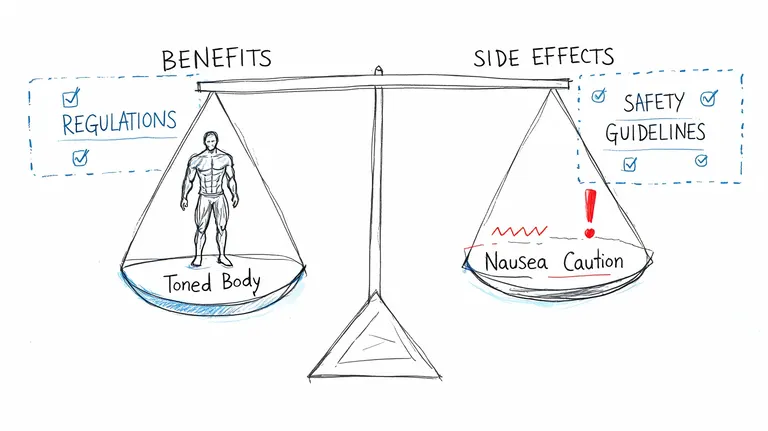
Prescription treatment is not the same as research supply
This is the line many readers need to draw more clearly. A prescribed, medically supervised peptide is not the same thing as a vial purchased online and labeled for research use.
Prescription products come with established manufacturing standards, formal dosing guidance, and clinical oversight. “Research” products may not offer any of those protections in a way that serves a real patient. Even if a label lists a familiar peptide name, that doesn’t guarantee purity, accurate concentration, or safe handling.
If you want a broader patient-friendly overview of how side effects can show up in women, this discussion of Ozempic impacts on female heart health can help frame the kinds of issues worth discussing with a clinician. For a wider look at approved peptide medications, this FDA-approved peptide drugs list is also useful for separating regulated therapies from experimental ones.
Common safety concerns
The exact risk profile depends on the peptide, but several themes come up repeatedly:
- Gastrointestinal effects: Prescription appetite-focused peptides are often associated with nausea, constipation, vomiting, or diarrhea.
- Dosing sensitivity: Taking too much, increasing too quickly, or measuring incorrectly can make side effects more likely.
- Unknown long-term safety: This matters most with experimental peptides, where human data may be limited.
- Source quality: Unregulated products can introduce purity and labeling concerns that patients can’t easily verify on their own.
Buying a compound because it’s popular online isn’t the same as choosing a therapy with a clinician who knows your history, medications, and risks.
The legal picture is often murky for consumers, but the practical lesson is simple. If a product is being sold outside normal prescription channels for self-experimentation, you should assume the burden of risk rises sharply.
How to Manage Peptide Protocols for Consistency
The theory of peptide use is often simple. The practice isn’t. Many people can explain what a peptide is supposed to do, but they still struggle with the daily mechanics of using it correctly.

Where people make mistakes
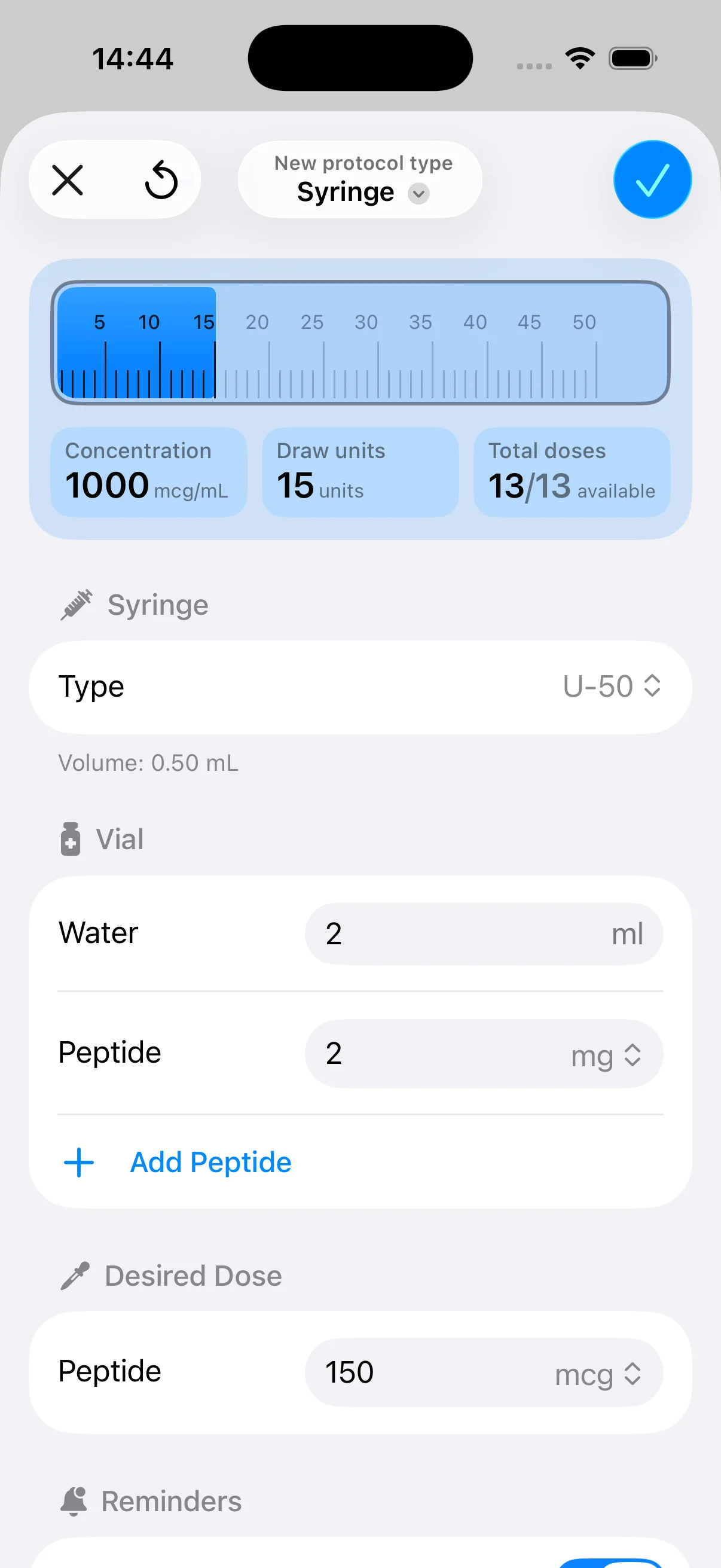
With many research peptides, users have to deal with reconstitution, which means mixing powdered peptide with a liquid before use. That step sounds minor until you realize one small math mistake changes the final concentration and every dose that follows.
According to Dr. Axe’s discussion of peptides for weight loss, many users of research peptides like AOD-9604 or CJC-1295 struggle with reconstitution and with converting micrograms to units, which can lead to under-dosing or over-dosing. The same source notes that poor adherence can halve the efficacy of peptide regimens. That’s a practical problem, not a theoretical one.
Common points of failure include:
- Concentration confusion: A person knows the amount they want in micrograms but doesn’t know how that translates into syringe units.
- Schedule drift: Weekly, daily, or cycled protocols are easy to misremember once life gets busy.
- Protocol creep: People change dose, timing, or frequency based on forum chatter instead of instructions from a clinician.
What consistency actually requires
People often assume success comes down to picking the “right” peptide. In reality, consistency depends on a chain of small tasks done correctly over time.
A good routine usually includes:
- A clear prescribed or planned protocol with no guesswork about dose or frequency.
- A way to verify measurements before drawing up a dose.
- Reliable reminders so missed doses don’t become normal.
- Tracking so you can see what you did, not what you think you did.
This short video gives a sense of how people think through dosing workflow and tracking in practice.
Tools can reduce avoidable errors
If someone is following a legitimate peptide protocol, tools can help with organization even though they don’t replace medical advice. For example, a peptide calculator app can help users translate desired amounts into practical measurements and keep schedule reminders in one place. PepFlow is one example. It’s an iOS app that calculates doses based on vial setup and helps users manage cycled protocols with reminders and logging.
That kind of support matters because peptide adherence isn’t just about motivation. It’s about reducing friction. If every dose requires fresh math, memory, and manual tracking, errors become more likely.
The most dangerous part of many research-peptide routines isn’t the biology alone. It’s the combination of weak oversight, home mixing, and repeated chances to get the numbers wrong.
A Responsible Path Forward with Peptides
Peptides sit at the intersection of strong science, fast-moving marketing, and real patient need. That makes them easy to misunderstand. Some are well-studied medical tools for weight management. Others are still experimental, loosely discussed online, and far harder to use safely than they first appear.
The most useful takeaway is straightforward. Don’t ask only whether a peptide can help with weight loss. Ask which peptide, under what supervision, with what evidence, and with what plan for monitoring. Those questions filter hype out of the conversation quickly.
A responsible path usually looks boring compared with internet shortcuts. You talk to a qualified medical professional. You review your history, goals, medications, and risk factors. If a peptide is appropriate, you use it as part of a broader plan that includes food quality, resistance training, sleep, and follow-up.
That approach won’t satisfy people looking for a loophole. It does protect people who want durable results and fewer preventable mistakes.
Frequently Asked Questions About Peptides for Weight Loss
Can I combine peptides for better results
Sometimes people discuss “stacking” peptides to target appetite, metabolism, and recovery at once. That may sound efficient, but it also increases complexity and can raise the chance of side effects, dosing confusion, and overlapping risks. Combining therapies is a medical decision, not a forum experiment.
How long does it take to see results
It depends on the peptide, the dose progression, your starting point, and whether your eating and activity patterns support the treatment. Appetite changes may appear before visible body changes. Body composition shifts usually take longer than people expect, especially if the goal is losing fat while preserving muscle.
Are the results permanent
Usually not by default. Peptides can help create weight loss, but maintenance still depends on habits, long-term treatment decisions, and follow-up. If the underlying drivers of weight regain remain in place, stopping a peptide doesn’t guarantee the result will hold.
How are peptides different from anabolic steroids
They’re different categories. Peptides are short amino acid chains that act through specific signaling pathways. Anabolic steroids are hormone-based compounds that act differently in the body and carry a different risk profile. People sometimes lump all performance or body-composition drugs together, but that shortcut creates confusion and can lead to poor decisions.
If you’re trying to make a peptide protocol safer and easier to follow, PepFlow can help with the logistical side of the process. It’s built for dose calculation, scheduling, reminders, and protocol tracking, which are often the exact points where people make avoidable mistakes. It’s not medical advice, and it doesn’t replace a clinician, but it can make a structured routine easier to manage accurately.