You’re probably here because peptides sit in that uncomfortable middle ground between legitimate medical science and internet hype. One tab says they’re precise tools for recovery, body composition, skin, or metabolic health. Another tab warns about contaminated vials, hormone disruption, and side effects nobody mentioned in the sales copy. That tension is reasonable.
Individuals asking about side effects peptides aren’t trying to be reckless. They’re trying to separate manageable downsides from real danger. They want to know what a mild reaction looks like, what should stop a protocol immediately, and why one person tolerates a compound well while another gets headaches, nausea, swelling, or worse.
A useful starting point is understanding that peptides aren’t magic and they aren’t harmless. They’re biologically active compounds. Some are FDA-approved drugs. Some are compounded. Some are sold through channels that deserve skepticism. If you need a quick refresher on the basics, this overview of what peptides are gives the foundation. The rest of this guide focuses on risk, mechanism, and practical judgment.
Table of Contents
- Navigating the Promise and Perils of Peptides
- Why Peptides Can Have Side Effects
- A Catalog of Peptide Side Effects by Class
- Understanding Your Personal Risk Factors
- Strategies for Mitigation and Safe Monitoring
- How Precision Dosing Supports a Safer Protocol
- Red Flags and The Bottom Line on Peptide Safety
Navigating the Promise and Perils of Peptides
The appeal is easy to understand. A peptide can sound cleaner and more targeted than a broad-acting drug. For someone focused on wellness, recovery, or longevity, that promise is hard to ignore. So is the marketing language around “precision,” “repair,” and “optimization.”
The problem is that real side effects don’t care how elegant the theory sounds. A compound can have a narrow intended purpose and still cause nausea, fatigue, injection reactions, hormonal disruption, or immune problems. A protocol can look disciplined on paper and still go sideways because the vial was poor quality, the dose was off, or multiple compounds were stacked without a clear reason.
That’s where most online discussions fail. They either reduce the issue to “peptides are safe if you’re careful” or “all peptides are dangerous.” Neither is useful. What matters is the combination of mechanism, source quality, dosing accuracy, and your own health context.
Practical rule: Don’t ask only, “What are the side effects?” Ask, “What biological system is this peptide pushing, and what happens if that push goes too far or lands in the wrong place?”
That question changes how you evaluate risk. It moves you away from chasing anecdotes and toward a more clinical way of thinking. If you understand why a side effect happens, you’re less likely to dismiss an early warning sign and less likely to panic over a mild, expected one.
Why Peptides Can Have Side Effects
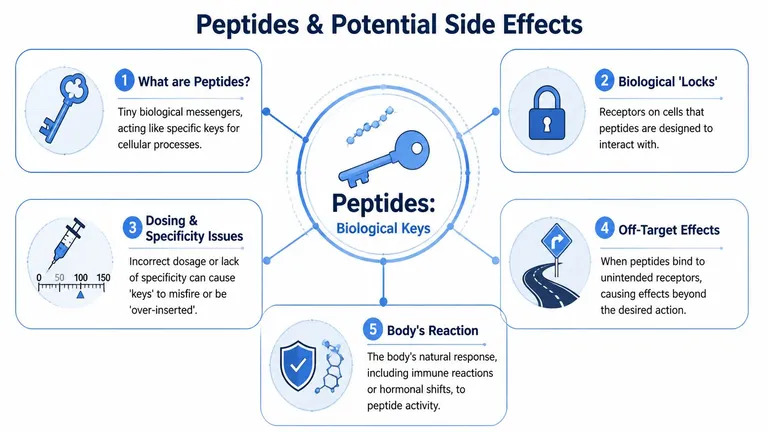
Peptides are short chains of amino acids that act like biological signals. A simple way to think about them is as keys designed to fit specific biological locks, usually receptors or signaling pathways. That targeted design is part of their appeal. It’s also where many side effects begin.
Targeted does not mean isolated
A peptide can be selective without being perfectly isolated. If it binds strongly to the intended receptor, that’s good. But biology isn’t a clean lab diagram. Receptors exist in networks. Hormones interact. Tissues respond differently. Dose changes matter.
That’s why a peptide meant to nudge one pathway can produce off-target effects elsewhere. A growth-related signal may also affect appetite, water balance, glucose handling, or tissue growth. A peptide used for metabolic benefit may produce gastrointestinal symptoms because the gut is part of the target system, not collateral damage.
This broader context helps explain why side effects peptides discussions often sound inconsistent. Two people may use what they think is “the same” compound and report different experiences because receptor sensitivity, formulation, dose, schedule, and baseline health aren’t the same.
Immunogenicity is a real biological problem
One of the most important mechanisms is immunogenicity, which means the body recognizes a peptide or a peptide-related impurity as something it should react to. That reaction can reduce efficacy and can also cause adverse effects. According to this FDA peptide review in the medical literature, over 11% of all new pharmaceutical chemical entities authorized by the FDA between 2016 and 2024 were peptides, and a critical safety concern is immunogenicity, including reactions such as injection site reactions, allergies, and autoimmunity.
Immunogenicity isn’t just about the peptide sequence itself. Risk can rise with impurities, formulation problems, delivery method, dosing schedule, storage issues, and patient-specific factors such as genetics or prior immune exposure. That’s why a “good peptide” handled badly can still become a safety problem.
A related issue is aggregation. Some peptides can clump together during storage or handling, especially when quality control is weak. Aggregated material is harder to characterize and may increase immune reactivity. That matters more in compounded or poorly manufactured products, where purity and stability can vary.
A side effect isn’t always a sign that the compound is inherently reckless. Sometimes it’s the signal that the biology, the product quality, or the protocol no longer matches the plan.
A Catalog of Peptide Side Effects by Class
If you strip away the branding and online claims, peptide side effects usually fall into a few practical buckets. Some are local and mild. Some are systemic and annoying but manageable. Others raise enough concern that they change whether a protocol makes sense at all.
The common baseline most users notice first
Across peptide classes, the most common side effects reported in clinical observations include injection site reactions, headaches, fatigue, and nausea. For GLP-1 agonists, Columbia Doctors notes that these drugs are used by 12% of Americans, and gastrointestinal effects are common enough to lead to discontinuation in up to 10% of users.
Those common effects matter because people often misread them. A little redness at an injection site may reflect irritation. Nausea may be expected with a gut-active peptide. Fatigue can show up when a protocol pushes appetite, sleep, glucose handling, or inflammation in a way the user didn’t anticipate. Mild does not mean irrelevant. Persistent does not mean normal.
Here’s a practical reference point.
Side effect profiles by peptide class
| Peptide Class | Examples | Common Side Effects | Less Common / Serious Concerns |
|---|---|---|---|
| General injectable peptides | Various compounded or research peptides | Injection site irritation, headaches, fatigue, nausea | Infection, abscesses, scarring, allergic reactions, immune reactions |
| Growth hormone secretagogues and related peptides | CJC-1295, Ipamorelin, GHRP-family compounds | Hunger changes, water retention, headaches, fatigue, joint discomfort | Hormonal disruption, blood sugar changes, elevated blood pressure, theoretical cancer concern through increased IGF-1 and cell proliferation signals |
| GLP-1 peptide drugs | GLP-1 agonists | Upset stomach, diarrhea, constipation, nausea | Pancreatitis risk, discontinuation due to gastrointestinal effects, muscle loss, potential eye issues noted in large trials |
| Healing and recovery peptides | BPC-157 and similar compounds discussed in wellness circles | Variable and poorly defined in real-world use | Immunogenic reactions, impurity concerns, unknown human safety profile in unapproved contexts |
| Melanocortins | Melanotan II | Nausea, skin flushing | Kidney failure, skin cancer concern, cardiovascular issues; not approved by the FDA and illegal in the US |
A few class-specific patterns deserve plain language.
- Growth-focused peptides can create the illusion of progress while increasing complexity. If the protocol affects IGF-1 signaling, appetite, or fluid balance, users may notice swelling, altered hunger, or joint complaints before they recognize the endocrine effect underneath.
- GLP-1 drugs produce a side effect profile that’s more predictable because they’ve been studied more rigorously. That doesn’t make them easy drugs to tolerate. It means the trade-offs are better characterized, especially around gastrointestinal symptoms.
- Melanotan II sits in a different category from a risk management perspective. It’s associated with enough serious concerns that many clinicians view the downside as hard to justify outside legitimate research oversight.
- BPC-157 and similar unapproved compounds often get discussed as if they are low-risk because they’re framed as “healing” peptides. That framing can hide the underlying issue, which is the gap between marketing claims and controlled human safety data.
Some body-composition side effects are secondary, not direct. For example, people using GLP-1 drugs sometimes notice facial volume loss after rapid weight change. If that specific issue is on your radar, this comprehensive guide to Ozempic face is useful because it explains the mechanism without pretending the drug itself selectively “ages” the face.
Don’t rank peptides by how friendly their names sound. Rank them by how well their risks are characterized, how reliable the source is, and how reversible the likely side effects are if you stop.
Understanding Your Personal Risk Factors
Two people can use a peptide with the same label and face very different risk. That difference often has less to do with courage or discipline than with variables they didn’t fully control.

Source quality changes the risk picture fast
The first variable is source quality. A pharmaceutical-grade product and an unregulated vial sold as a research chemical don’t belong in the same mental category. The label may look polished. That doesn’t tell you whether the concentration is accurate, whether the material is degraded, or whether trace contamination is present.
This matters even more with aggregation-prone compounds. The FDA has warned that certain bulk substances used in compounding may present significant safety risks, including concerns related to aggregation, immunogenicity, infection, pancreatitis, and blood glucose effects in some settings, as described in the FDA discussion of compounded bulk drug substance risks. If a peptide is difficult to characterize and unstable in storage, sloppy handling can turn a tolerable protocol into a problem.
A few practical risk multipliers show up again and again:
- Weak storage practices can degrade sensitive material. Heat swings and repeated mishandling aren’t trivial.
- Poor reconstitution habits increase dosing error and contamination risk.
- Blind trust in labeling leads people to troubleshoot symptoms as if the vial contents are certain when they may not be.
Stacking creates blind spots
The second variable is protocol design. Stacking peptides is common in athletic and biohacking circles because users want overlapping outcomes such as appetite control, recovery, body composition, and skin effects. The trouble is that stacked protocols can create interactive side effects that aren’t well mapped.
A compound that alters appetite may be stacked with one that affects growth signaling. Another may influence inflammation or water balance. Individually, each might seem manageable. Together, they can blur the source of headaches, edema, fatigue, mood change, joint discomfort, or glucose instability. Once multiple variables move at the same time, attribution gets weak.
Here’s a useful primer before anyone normalizes that practice:
When people say a stack is “working,” that often means they feel some desired effects. It doesn’t mean they understand which compound is causing which side effect, or whether an interaction is building slowly in the background.
Your own biology still matters
Even with a well-made product and a conservative protocol, your baseline health changes the equation. Pre-existing gastrointestinal issues can make GLP-1 side effects harder to tolerate. A history of allergy or immune sensitivity may make injection reactions more concerning. Anyone with endocrine, metabolic, or cancer-related concerns should assume the threshold for caution is lower, not higher.
The most common mistake I see is treating tolerance as proof of safety. Feeling fine for a while doesn’t prove the protocol is well designed. It only proves that no obvious problem has declared itself yet.
Strategies for Mitigation and Safe Monitoring
A safer peptide protocol starts with restraint. Not enthusiasm. The riskiest users are often the ones who think they can outsmart variability with confidence and internet research.
What a cautious protocol looks like
Start lower than your ego wants. A conservative opening dose gives you room to observe headache, nausea, swelling, digestive upset, fatigue, or unusual skin reactions before they escalate. If a side effect appears early, you learn something useful at lower exposure.
Then keep the protocol simple. One change at a time beats a stack every time if your priority is safety. Cycling also deserves more respect than it gets. Planned breaks can help you evaluate whether benefits are real, whether side effects resolve off-cycle, and whether you’re drifting into continuous use without a clear rationale.
A few habits work well in practice:
- Use one variable at a time when possible. If you add two compounds together, you lose clean feedback.
- Keep a written log of dose, timing, symptoms, appetite shifts, sleep changes, bowel changes, and injection reactions.
- Stop improvising reconstitution math. If you’re preparing injectable peptides, use a clear process and review a step-by-step reference like this guide to mixing peptides with bacteriostatic water.
“Mild” side effects are only mild if they stay mild, are expected for the class, and improve with dose adjustment or discontinuation.
Monitoring beats guessing
Long-term safety is where casual users usually underperform. As this review of peptide therapy effects notes, acute issues are easier to notice, while the risks of chronic low-dose use remain less clear, with emerging preclinical concerns around kidney strain and cardiovascular stress. That’s exactly why users should build their own monitoring routine instead of relying on subjective “I feel okay.”
For growth-oriented protocols, many practitioners track markers such as IGF-1 under medical supervision. For metabolically active compounds, fasting glucose and related labs may be relevant. The exact panel depends on the peptide and the patient. The key principle is consistency. Baseline first, follow-up after exposure, then repeat if use continues.
This same mindset applies outside injections. People often assume topical peptides are automatically benign, but skin actives can still irritate when combined poorly. If you’re navigating cosmetic peptides and retinoids together, these retinol and peptide skincare tips are a good example of how combination strategy matters even in non-injectable use.
How Precision Dosing Supports a Safer Protocol
Most peptide mistakes aren’t dramatic. They’re arithmetic mistakes, schedule drift, or logging failures that accumulate until the user no longer knows what they took.
Small math errors become real exposure errors
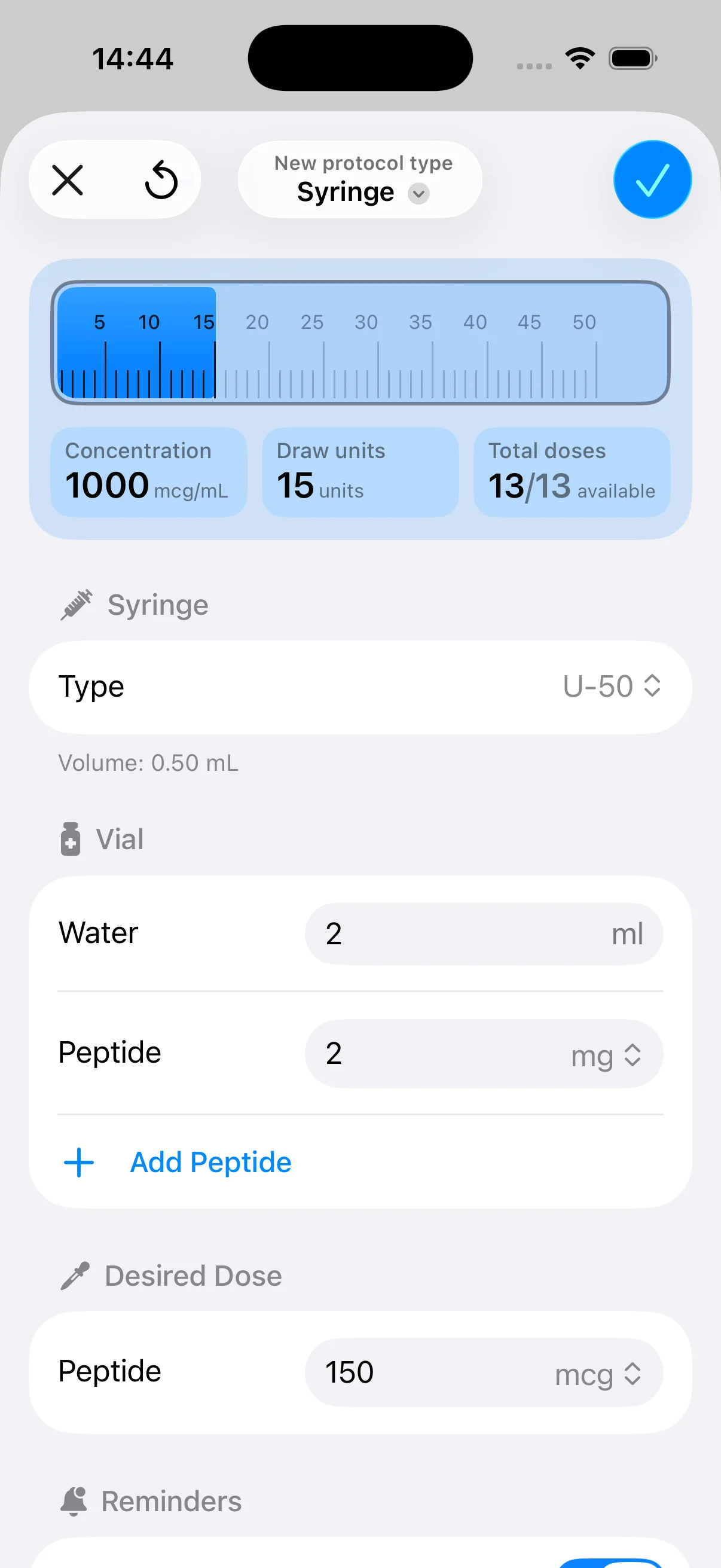
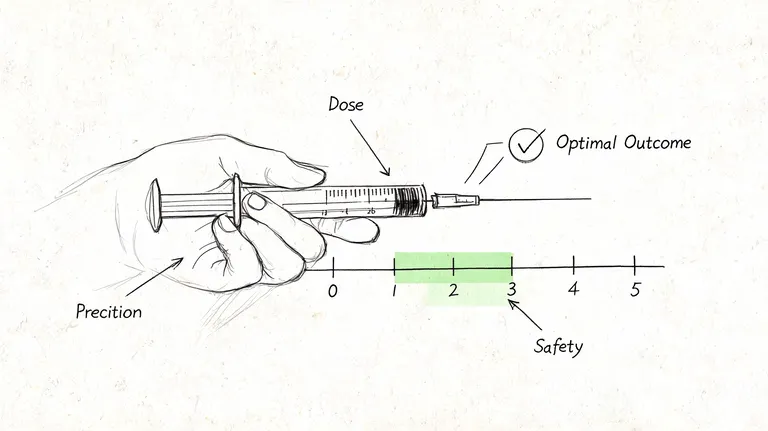
Peptide dosing usually requires translating vial strength, reconstitution volume, desired micrograms, and syringe units into one accurate number. That sounds simple until someone is tired, rushing, or using a new vial concentration. Then the “small” mistake becomes a larger exposure than intended.
That matters because side effects often scale with dose and frequency. If a user thinks they’re taking a conservative amount but the math is wrong, they may misinterpret the resulting headache, nausea, appetite swing, or water retention as an unavoidable property of the peptide instead of a preventable dosing error.
Consistency lowers avoidable mistakes
A useful safety tool doesn’t diagnose, prescribe, or replace a clinician. It reduces execution errors. That means clearer dose calculations, scheduled reminders, cycle planning, and a clean history of what was taken and when.
For people who want that kind of structure, a peptide calculator app can help convert intended doses into practical syringe measurements and keep protocols organized over time. That doesn’t make a risky peptide safe. It does make a reasonable protocol easier to carry out accurately, which is one part of harm reduction that users can control.
Accuracy won’t fix a bad compound or a bad indication. It will reduce the number of mistakes you create yourself.
Red Flags and The Bottom Line on Peptide Safety
Some side effects can be watched. Others should end the experiment immediately and trigger prompt medical evaluation.
Symptoms that need prompt medical attention
Stop and seek urgent care if you develop signs consistent with a severe allergic reaction. That includes trouble breathing, facial or throat swelling, widespread hives, or rapid worsening after injection. These are not symptoms to monitor at home.
Other red flags deserve fast medical review:
- Severe abdominal pain especially with persistent vomiting or marked gastrointestinal distress
- Sudden vision changes or major new eye symptoms
- Signs of infection such as spreading redness, drainage, fever, or a painful enlarging injection-site lesion
- Chest symptoms or major cardiovascular changes that feel new or intense
- Neurologic or mental status changes that are abrupt, confusing, or severe
If a symptom is escalating, unusual for the peptide class, or doesn’t fit the timing you’d expect, stop rationalizing it.
The practical bottom line
Peptides deserve the same respect you’d give any active therapeutic compound. Some have legitimate medical value. Some have narrower but plausible wellness use cases under careful oversight. Some are sold in ways that make the risk impossible to quantify cleanly.
The safest mindset is simple. Control what you can. Use reliable sourcing. Keep protocols minimal. Dose accurately. Track effects accurately. Get medical input when the peptide meaningfully affects metabolism, growth signaling, or immune response. Don’t confuse community familiarity with safety data.
If you approach side effects peptides as a management problem instead of a loyalty test, your decisions get better. You stop asking whether peptides are good or bad in the abstract and start asking the only question that matters: is this specific compound, from this source, at this dose, in this body, worth the trade-off?
PepFlow helps people run peptide protocols with more accuracy and less guesswork. If you want a simple way to calculate doses, organize cycles, set reminders, and keep a clean history of what you took, take a look at PepFlow. It’s built for planning and adherence, not as a substitute for medical advice.