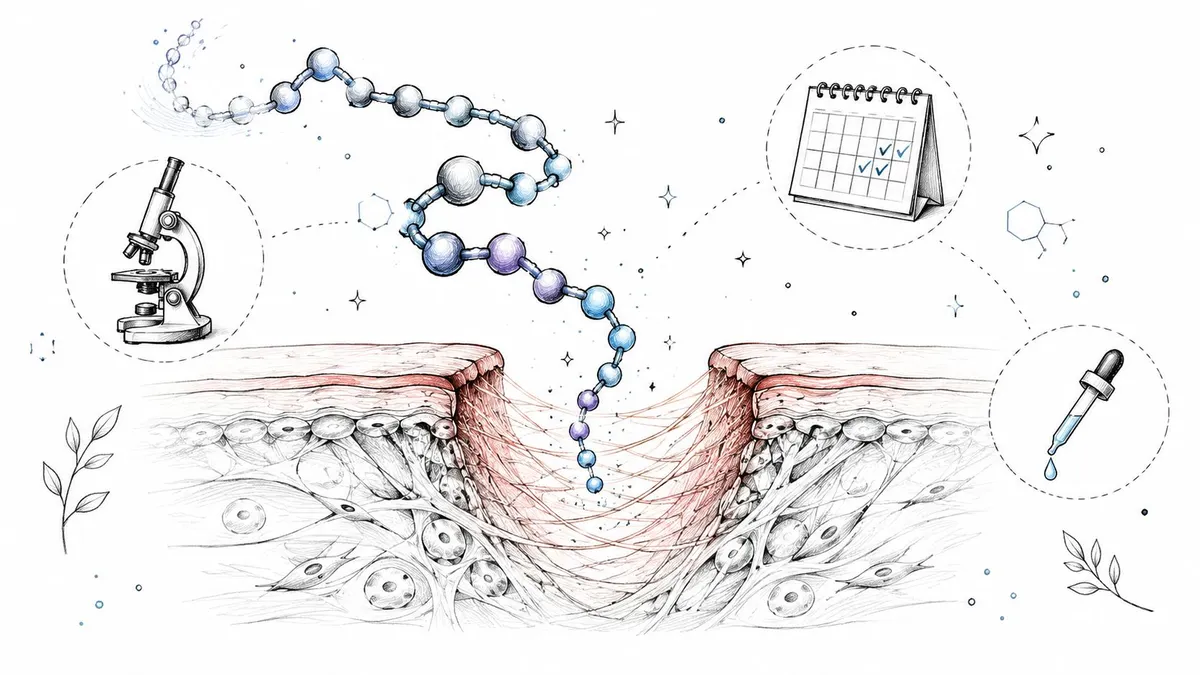
If you’ve spent any time reading about peptides for tissue repair, you’ve probably seen two extreme messages. One says these compounds are miracle tools for faster recovery. The other says it’s all nonsense. Neither view is very useful.
The more honest answer is harder and more helpful. Some peptides are scientifically interesting because they affect the same biological processes involved in repair, such as cell migration, collagen formation, angiogenesis, and inflammation resolution. But for many of the names people talk about most, the strongest evidence still comes from cell studies and animal models, not well-designed human trials.
That gap matters. A molecule can look impressive in a dish or in rodents and still fail to translate cleanly to real patients with real injuries, mixed health histories, and messy day-to-day variables. This article is educational only. It isn’t medical advice, and it isn’t a recommendation to use any specific compound. The goal is to help you read peptide claims with better scientific judgment, especially if you’re sorting through broad wellness content such as discussions of the benefits of peptide therapy.
Table of Contents
- Peptides and Healing Beyond the Hype
- How Peptides Signal Your Body to Repair Itself
- Common Peptides in Tissue Repair Research
- The Critical Gap Between Animal Promise and Human Proof
- Understanding Safety Sourcing and Legal Status
- Practical Logistics for Peptide Protocols
- A Realistic Look at the Future of Peptide Repair
Peptides and Healing Beyond the Hype
Most bad advice about peptides for tissue repair starts with certainty. The compound is framed as proven, the protocol is presented as obvious, and the unanswered questions disappear. Science rarely works that way.
Peptides are short chains of amino acids that can act as signals in the body. That basic idea is real. Researchers study them because repair is a signaling problem as much as a structural one. Cells need instructions about when to migrate, when to divide, when to build matrix, and when to stop inflaming injured tissue.
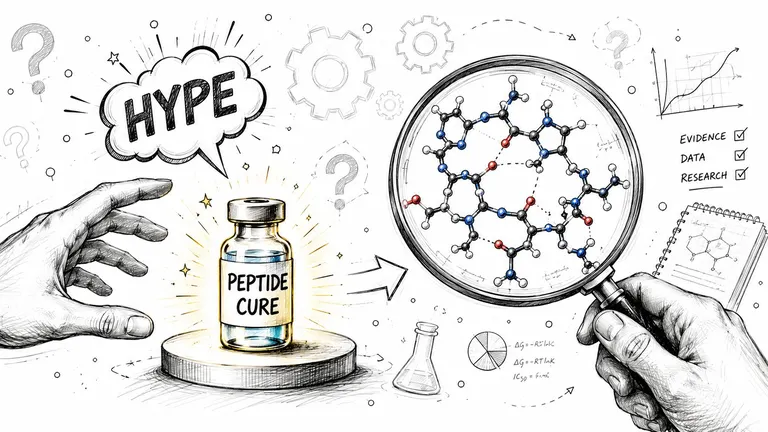
What the hype gets wrong
The problem isn’t that peptide research is fake. The problem is that marketing often treats mechanistic plausibility as if it were the same thing as established clinical benefit.
That jump sounds small, but it changes everything. A peptide may appear to support collagen synthesis or fibroblast activity in early research. That still doesn’t tell you whether a person with a tendon injury, surgical wound, or chronic overuse problem will experience a safe, predictable, repeatable outcome.
Practical rule: When a claim about healing sounds absolute, ask what kind of evidence supports it. Cells, animals, small human observations, and randomized clinical trials are not interchangeable.
What a responsible middle ground looks like
A careful view of peptides for tissue repair does two things at once. It takes the biology seriously, and it refuses to pretend the evidence is stronger than it is.
That middle ground is more useful than both hype and dismissal because it helps you ask better questions:
- What is known: Does the peptide have a plausible repair mechanism?
- What is uncertain: Has that mechanism translated into meaningful human outcomes?
- What is missing: Are safety, dosing, and product quality established?
- What is being sold: A regulated therapy, or an uncertain product with a popular label?
If you keep those questions in mind, you’ll read the rest of the peptide field much more clearly.
How Peptides Signal Your Body to Repair Itself
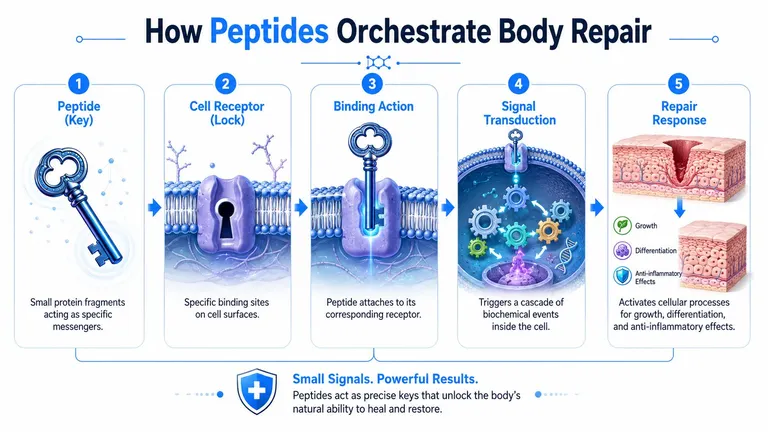
Peptides don’t repair tissue like tiny construction workers. They act more like messages. A useful analogy is a key and lock. The peptide is the key. A receptor on or in a cell is the lock. When the right key fits, the cell changes its behavior.
Why signaling matters
Tissue repair isn’t one event. It’s a sequence. First, the body contains damage. Then it clears debris, recruits cells, restores blood supply, lays down new matrix, and remodels that matrix over time. Researchers are interested in peptides because they may influence several points in that sequence.
A recent orthopaedics review describes tissue-repair peptides as one of the most actively studied regenerative-medicine categories because they can affect pathways such as PI3K/Akt, MAPK, TGF-β, and NF-κB, which are involved in fibroblast proliferation, collagen synthesis, angiogenesis, and inflammation resolution. The same review identifies BPC-157, TB-500, and GHK-Cu among named peptide families in wound-healing research, and notes that growth-hormone secretagogues such as ipamorelin, CJC-1295, tesamorelin, sermorelin, and AOD-9604 act through the GH/IGF-1 axis in this broader regenerative framework, as described in this orthopaedics review on regenerative peptides.
That sounds technical, so here’s the plain-language version:
- Fibroblasts help build and organize connective tissue.
- Collagen synthesis matters because collagen is part of the structural fabric of repair.
- Angiogenesis means new blood vessel growth, which helps deliver oxygen and nutrients.
- Inflammation resolution matters because inflammation helps early on, but lingering inflammation can slow good healing.
For readers who want a broader clinician-style conversation around biologics and recovery culture, this episode featuring PTU Clinic’s biologics discussion adds useful context.
A concrete research example
One lab-to-animal example shows why scientists remain interested. A 2025 Scientific Reports study on a visfatin-derived peptide found measurable wound-healing effects in both cells and mice. In human dermal fibroblasts, the peptide increased wound closure to 71.7% at 0.1 µM and 67.0% at 1 µM, compared with 54.8% in controls, and the same peptide reduced wound area in a mouse excision model while increasing angiogenesis, neo-epithelium thickness, and collagen fiber formation, according to the Scientific Reports study on the visfatin-derived peptide.
Good peptide science usually starts with signaling and mechanism, not with miracle narratives.
Common Peptides in Tissue Repair Research
Searches for peptides used in tissue repair consistently reveal the same few names. That doesn’t mean those compounds are equally validated. It means they’re prominent in discussion and research interest.
A quick comparison
| Peptide | Primary Research Focus | Proposed Mechanism of Action |
|---|---|---|
| BPC-157 | Soft-tissue healing, especially tendon, ligament, muscle, and related injury models | Proposed links to angiogenesis, fibroblast activity, and collagen organization in preclinical work |
| TB-500 | Tissue recovery and repair-focused research discussions | Often discussed in relation to cell movement and repair signaling in regenerative literature |
| GHK-Cu | Skin-related repair, matrix support, and collagen-focused applications | Studied for roles connected to collagen synthesis, tissue remodeling, and repair signaling |
What these names actually mean
BPC-157 gets the most attention in sports and recovery circles. Much of that attention comes from animal work, especially around soft tissue.
TB-500 is often grouped into the same conversation, but readers should be careful not to treat all peptide names as if they carry the same kind or depth of evidence. Being discussed often isn’t the same as being proven in people.
GHK-Cu tends to show up in conversations about skin quality, collagen, and matrix support. That makes it especially relevant when people use the phrase peptides for tissue repair in a broader sense that includes skin and superficial tissue recovery, not only tendons or ligaments.
The most discussed peptide is not automatically the most established one.
One reason these compounds keep appearing together is that a recent review identifies BPC-157, TB-500, and GHK-Cu as some of the most actively studied peptides in regenerative medicine, and notes that they can influence pathways such as PI3K/Akt and TGF-β, which govern fibroblast proliferation, collagen synthesis, and inflammation resolution.
The useful takeaway isn’t to memorize every acronym. It’s to understand that these peptides are being studied because they may alter the behavior of repair-related cells and tissues. That’s the research case for them. The harder question is whether those proposed actions hold up in real human use.
The Critical Gap Between Animal Promise and Human Proof
This is the part many articles skip. They describe exciting mechanisms and then treat them as settled clinical facts. That’s where readers get misled.
Why animal success doesn’t settle the question
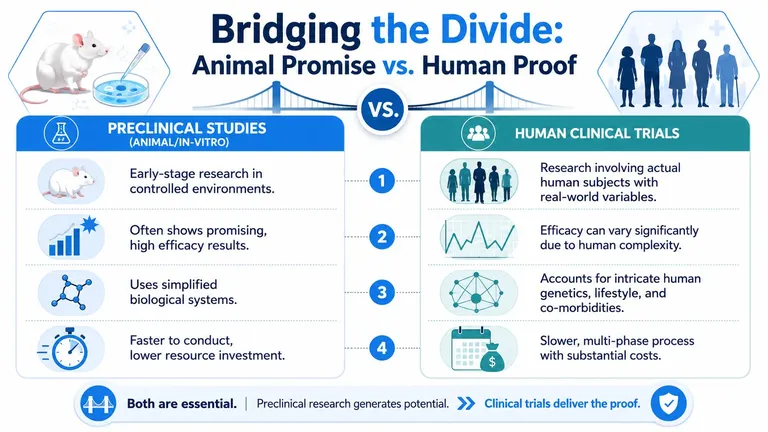
Animal studies matter. They help researchers ask whether a compound affects wound closure, vascular growth, collagen deposition, or cell migration under controlled conditions. But people are not large rodents living in standardized environments.
Human healing varies with age, training load, sleep, nutrition, medication use, injury pattern, endocrine status, and simple adherence to treatment. A peptide can look clean and impressive in a preclinical model while still failing to produce reliable clinical benefit in actual patients.
Here’s the practical interpretation:
- Preclinical evidence can tell you a compound is biologically interesting.
- Human clinical evidence is what tells you whether it works predictably and safely in the populations who want to use it.
- Without strong trials, dosing confidence and long-term risk assessment stay weak.
If you want a broader sense of how that distinction relates to approved medicines versus experimental compounds, PepFlow has a useful reference on FDA-approved peptide drugs.
BPC-157 as the clearest example
BPC-157 shows why this gap matters so much. A sports-medicine review notes that in animal models, BPC-157 has been associated with enhanced angiogenesis, nitric-oxide pathway modulation, improved fibroblast migration, and more organized collagen deposition, correlating with better healing of tendon, ligament, muscle, and nerve injuries in rodents. The same review also emphasizes that these findings are preclinical, and that there is no high-quality human clinical evidence yet to support safety, dosing, or long-term use in athletes, as described in this sports-medicine review of BPC-157 evidence.
That doesn’t mean the peptide is worthless. It means the strongest claims should stay inside the boundaries of the evidence. “Promising in animal research” is accurate. “Proven healing tool for people” is not supported by the evidence described above.
A smart reader doesn’t ask only whether a peptide has data. A smart reader asks what kind of data it has.
Understanding Safety Sourcing and Legal Status
When people talk about risk, they often focus on side effects inside the body. That’s only part of the problem. With peptides for tissue repair, a major real-world issue is whether the product is what the label says it is.
The molecule is only part of the risk
Independent sports-medicine guidance explicitly notes that peptides like BPC-157 are not FDA-approved and lack quality or safety oversight, while warning that marketing claims often outpace the science and that a major risk is uncertainty around product identity and purity, as explained in this sports-medicine discussion of peptide hype versus evidence.
That point is easy to underestimate. Even if a peptide concept were sound, a mislabeled, impure, degraded, or contaminated product changes the entire risk picture. You’re no longer evaluating only a research compound. You’re evaluating an uncertain supply chain.
For readers trying to understand that category more clearly, PepFlow’s explainer on what a research peptide is is a useful starting point.
Questions careful readers should ask
A responsible buyer or researcher should slow down and ask basic verification questions before getting pulled into protocol talk.
- Approval status: Is the specific peptide an approved drug for this use, or is it being sold outside that framework?
- Identity evidence: Is there documentation showing what the vial contains?
- Purity concerns: Is there any trustworthy testing information, or just branding and claims?
- Use-case mismatch: Is the product being discussed as experimental while being marketed with treatment-like confidence?
Those questions won’t answer every safety issue, but they do force the conversation back to reality.
If you can’t establish what the product is, discussions about ideal use become much less meaningful.
Practical Logistics for Peptide Protocols
Even when people understand the evidence limits, they often trip over the basics of handling and tracking. The practical side is less glamorous than repair biology, but it’s where many avoidable mistakes happen.
Where people make mistakes
Most protocol errors come from ordinary workflow problems, not advanced science. Common friction points include reconstitution math, concentration confusion, storage errors, inconsistent timing, and forgotten doses.
If you’re learning the mechanics, start with a plain-language guide to how to reconstitute peptides. That process matters because a small math mistake at the mixing stage can carry through the entire schedule.

A sensible logistics checklist usually includes:
- Know the vial amount before you mix anything.
- Track the diluent volume so concentration stays clear.
- Write down the target dose in the same unit every time.
- Record timing and route consistently.
- Store according to the product’s handling requirements rather than relying on memory.
Why tracking matters
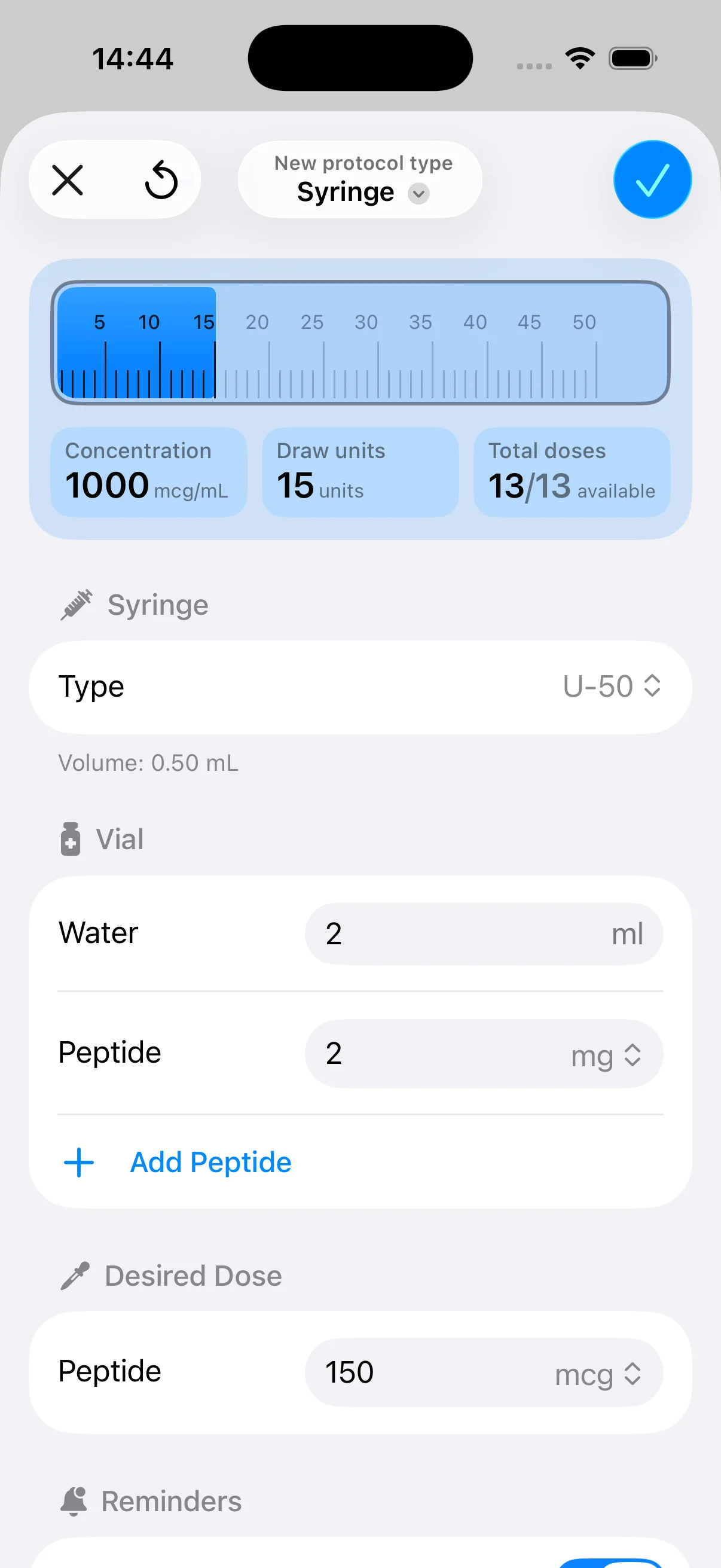
Tools can offer assistance, helping without purporting to answer medical questions. PepFlow is one example. It’s an iOS app that calculates dose conversions from desired microgram amounts into practical unit measurements, and it lets users schedule cycled protocols, reminders, pause periods, and dose logs.
That kind of tool doesn’t tell you whether a peptide is medically appropriate. It helps reduce routine execution errors once someone has already chosen a protocol for personal tracking purposes. For compounds surrounded by uncertainty, clean recordkeeping becomes more important, not less.
A Realistic Look at the Future of Peptide Repair
Peptide research sits in an unusual place. The biology is compelling enough that scientists keep studying it. The clinical evidence for many headline compounds is still too limited to justify the certainty you often see online.
What deserves optimism
There are good reasons researchers remain interested. Peptides can act on pathways involved in fibroblast behavior, collagen formation, vascular support, and repair signaling. That makes them a serious area of regenerative-medicine research, not a passing fad.
The strongest reason for optimism is not hype. It’s that repair is a signaling-driven process, and peptides are signaling molecules by nature. That biological fit is why the field keeps advancing.
What deserves caution
The most important caution is simple. Promising doesn’t mean proven. For some of the peptides people discuss most aggressively, the strongest evidence still comes from preclinical systems rather than definitive human trials.
A careful reader should also remember that practical risk doesn’t stop at biology. Product identity, purity, oversight, and legal status shape real-world safety just as much as mechanism does.
If you leave with one useful mindset, let it be this: treat peptides for tissue repair as a field worth following closely, but not a field where confidence should outrun evidence.
If you want help staying organized with peptide calculations, scheduling, and dose tracking, PepFlow is a simple tool built for that workflow. It’s designed for planning and adherence, not medical advice, which makes it useful for people who want fewer math mistakes and better protocol recordkeeping.