
You’ve probably seen the pattern already. A guy at the gym mentions BPC-157 for recovery. A podcast guest talks about CJC-1295 and ipamorelin for sleep, body composition, or “optimization.” Then you open five tabs, read for an hour, and end up more confused than when you started.
That confusion makes sense. The world of peptides for men sits in an awkward middle ground. Part of it is real biology. Part of it is legitimate medicine. Part of it is aggressive marketing wrapped in scientific language. If you’re trying to sort out what might prove helpful, what’s still mostly theory, and what can go wrong in day-to-day use, you need a filter.
This guide is that filter. It won’t treat peptides like magic, and it won’t dismiss them as nonsense either. You’ll get a plain-English explanation of what peptides are, how they work in the male body, which male-focused peptides get the most attention, where the evidence is strongest, where the hype gets ahead of the science, and why the boring details like dose math and schedule adherence matter more than is commonly recognized.
Table of Contents
- Your Introduction to Peptides
- What Peptides Are And What They Are Not
- How Peptides Work in the Male Body
- Common Peptides for Men and Their Evidence
- Evaluating the Potential Benefits and Risks
- Understanding Legal Status and Safety Considerations
- Planning and Monitoring Your Peptide Protocol
Your Introduction to Peptides
A lot of men come to peptides from the same place. Training feels harder to recover from than it used to. Sleep is lighter. Fat loss takes more effort. Libido isn’t as reliable. You still want to perform well, but you’re starting to notice that brute force and motivation don’t solve everything.
That’s where peptides start sounding appealing. They’re often presented as targeted tools rather than blunt instruments. Not “take this and flood the body with more hormone,” but “use this signal to encourage the body to respond.” For men who like systems, tracking, and performance, that idea is compelling.
The problem is that online peptide content tends to split into two extremes. One side talks as if every peptide is a shortcut to better muscle, recovery, and sexual function. The other side gets so technical that normal readers lose the thread after two paragraphs.
Peptides are easier to understand when you stop treating them like a trend and start treating them like signals with very specific jobs.
For men, that distinction matters. Some peptides are discussed in relation to recovery. Some are tied to libido. Some are marketed around growth hormone release, body composition, or testosterone support. But those use cases don’t all carry the same level of evidence, and they definitely don’t all carry the same safety profile.
If you’re considering peptides for men, the useful question isn’t “Which one is best?” It’s “What is this peptide supposed to do, what evidence supports that job, and can I manage the protocol responsibly?”
That’s the right lens. It keeps you out of the hype cycle and closer to decisions that make sense for your body, goals, and risk tolerance.
What Peptides Are And What They Are Not
A simple mental model
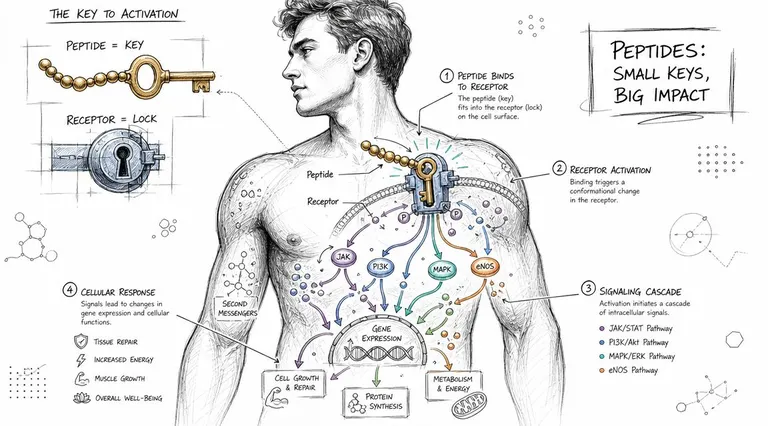
Peptides are short chains of amino acids. The simplest way to think about them is as specialized biological messages. If a hormone is a broad instruction sent through the body, a peptide often acts more like a highly specific key designed to fit a particular lock.
That “lock” is usually a receptor on or in a cell. When the peptide binds to the right receptor, it can trigger a response. That response might influence repair, appetite, sexual function, hormone signaling, or other processes, depending on the peptide and the tissue involved.
If you want a broader primer before going deeper, it can help to explore peptide science and compare it with a more practical overview of what peptides are. Both are useful for building the vocabulary you’ll see in men’s health discussions.
What peptides are not
A common point of confusion is that peptides are not the same thing as steroids. Steroids like testosterone derivatives act very differently and tend to produce broader systemic effects. Peptides are also not SARMs, which are another distinct category with different mechanisms and risks.
They’re also not automatically the same as traditional hormone replacement. A peptide may influence a hormone pathway, but that doesn’t mean it replaces the hormone directly. In many cases, it’s trying to stimulate a process upstream rather than supply the end product itself.
A cleaner way to separate them looks like this:
- Peptides often act as signals.
- Steroids act more like direct hormonal inputs.
- Hormone replacement provides the hormone itself.
- SARMs target androgen receptors through a separate mechanism.
Practical rule: Don’t judge a peptide by the result people claim. Judge it by the pathway it uses.
That one habit clears up a lot of confusion. Two compounds may both be discussed for muscle, libido, or recovery, but if one is a signal and the other is a replacement, the decision-making framework changes completely.
How Peptides Work in the Male Body
A man starts a peptide protocol because he wants more energy, better recovery, or higher testosterone. A few weeks later, he says it “did nothing” or that it “worked for a few days.” In many cases, the missing piece is not motivation. It is mechanism. If you do not understand what signal a peptide sends, where that signal lands, and whether your body can respond, the whole category looks more mysterious than it really is.
Peptides work more like instructions than replacement parts. They bind to receptors on cells and trigger a response. That response may change hormone release, tissue repair, appetite, inflammation, blood flow, or skin and hair biology. The result depends on the pathway being targeted, how healthy that pathway is, and how the peptide is dosed over time.
For men, one of the clearest examples is the reproductive hormone axis. Some peptides act upstream, meaning they stimulate the body’s own signaling chain instead of supplying the final hormone directly. WebMD’s peptide overview notes that kisspeptin-10 and gonadorelin can increase GnRH activity, which can then raise LH and FSH, the messenger hormones that tell the testes to make testosterone.
That sequence matters. It explains why a peptide that affects testosterone can behave very differently from testosterone replacement.
A simple way to picture it is a relay race. The hypothalamus hands off to the pituitary. The pituitary hands off to the testes. A peptide such as kisspeptin or gonadorelin tries to improve one of those handoffs. If the next runner in the chain is slow, injured, or not showing up, the final result may be limited even if the first signal was real.
This is also why context matters so much in men’s health. A man with functional but underactive signaling may respond very differently from a man with primary testicular failure, pituitary dysfunction, sleep deprivation, obesity, or heavy alcohol use. The peptide is only one variable. The rest of the system still has to cooperate.
The same logic applies outside testosterone. A peptide discussed for recovery may act through growth hormone signaling. A peptide discussed for sexual performance may influence melanocortin pathways and arousal signaling rather than directly changing testosterone. A peptide used in aesthetics or peptides for male hair loss may target local repair, inflammation, or follicle behavior instead of changing whole-body hormone levels. Same category, different biology.
That gap between category and mechanism is where hype grows. Men hear “fat loss peptide” or “libido peptide” and assume every compound in that bucket works the same way. They do not. Two peptides can be marketed for the same goal while acting on completely different receptors, with different evidence, side effects, and scheduling demands.
The practical lessons are straightforward:
- A peptide’s effect depends on the pathway it uses. Ask what receptor it targets and what happens downstream.
- Upstream signaling is not the same as replacement. A peptide can ask your body to make more of something, but it cannot guarantee that output.
- Timing can change the result. Some peptides create short pulses, so injection timing and frequency can matter more than many beginner guides admit.
- Dose accuracy matters. Small measurement errors can change the response or side effect profile.
- Monitoring matters. Symptoms alone are noisy. Labs, body composition changes, performance markers, and side effects give a clearer picture.
Peptide use becomes less glamorous and more practical. The science is not only about what a peptide can do in theory. It is also about whether a real man can follow the dosing schedule, store and reconstitute it correctly, tolerate the side effects, and tell the difference between a true response and wishful thinking.
That is the bridge between hype and science. Peptides are signals. To use them well, you need to know what message they send, whether your body can receive it, and how the day-to-day logistics affect the outcome.
Common Peptides for Men and Their Evidence
A common real-world pattern looks like this. A man wants three things at once: better recovery from training, a leaner body composition, and stronger sexual function. He searches “best peptides for men,” gets a list of names, and runs into a problem fast. Those names do not belong in one evidence bucket.
Some have human data tied to a specific outcome. Some are used in narrower medical contexts. Some are talked about far more than they are studied.
One useful anchor point comes from a single NIH/PMC review that helps separate hype from stronger evidence in men. It summarizes a 12-week resistance-training study in overweight men where collagen peptides at 15 grams per day were linked with gains in fat-free mass and larger reductions in fat mass than placebo, and it also notes PT-141 (bremelanotide) as a recognized peptide relevant to male sexual health discussions, including libido and erectile function (NIH/PMC review on peptides and male outcomes).
That matters because these are two very different use cases. Collagen peptides are basically nutritional signaling support with exercise. PT-141 works through melanocortin pathways tied to sexual arousal. Grouping them together under “peptides for men” is accurate at the category level, but not very helpful unless you also explain what kind of evidence each one has and what problem it is trying to solve.
Practical comparison of commonly discussed peptides
| Peptide | Primary Area of Interest | General Level of Human Evidence |
|---|---|---|
| Collagen peptides | Body composition during resistance training | Clearer human evidence for a defined training-related use case |
| PT-141 (bremelanotide) | Libido and erectile function | Recognized clinical relevance in sexual health discussions |
| CJC-1295 | Growth hormone signaling, recovery, body composition | Limited broad human evidence in typical wellness use |
| Ipamorelin | Growth hormone signaling, recovery, sleep, body composition | Limited broad human evidence in typical wellness use |
| Sermorelin | Hormone signaling support | Used in limited contexts, not a universal anti-aging solution |
| BPC-157 | Injury recovery and tissue repair | High interest, but stronger human validation is still needed |
The easiest way to read that table is to ask a simple question: are you looking at a peptide with direct human outcome data for your goal, or a peptide that is mostly circulating through clinic marketing, forums, and anecdotal reports?
CJC-1295 and ipamorelin are a good example of that difference. Men often hear about this pair in the context of recovery, sleep, and body composition because both are used to stimulate growth hormone signaling rather than replace growth hormone directly. That mechanism makes physiological sense. The harder part is the evidence. Confidence in these compounds inside wellness culture is often stronger than the long-term human data available for everyday male optimization use.
Sermorelin sits nearby but deserves its own lane. It is often framed as a gentler option because it encourages endogenous signaling. That can sound appealing to men who want support rather than full replacement. But endogenous stimulation is still a real intervention, and it still raises practical questions about dose timing, treatment duration, response variability, and side effects.
BPC-157 is the peptide many active men ask about when tendons, joints, or stubborn overuse problems start limiting training. Its reputation is much larger than its clinical certainty. That does not mean it is useless. It means the public excitement has moved faster than the human evidence, so expectations need tighter control.
Side effects also differ by peptide class. A man comparing a libido-focused peptide with a growth-hormone secretagogue should not expect the same tradeoffs, and a quick review of common peptide side effects by compound and use case helps put those differences into practical terms.
Hair is another example of how broad this category has become. Men who start with recovery or body composition often end up asking about appearance-related use cases too, and this article on peptides for male hair loss shows how peptide interest now reaches well beyond gym performance and hormone discussions.
A smarter filter is simple. Separate “popular in men’s health” from “supported for this exact goal in humans.” That one shift improves peptide decisions more than memorizing a longer list of names.
Evaluating the Potential Benefits and Risks
Where men hope peptides can help
A common pattern looks like this. A man is training hard, sleeping less than he should, feeling more beat up than he used to, and starting to notice that recovery, body composition, or sexual performance no longer responds the way it did a few years ago. Peptides get his attention because they sound more targeted than a supplement and less drastic than a major hormone intervention.
That appeal makes sense. Peptides are usually discussed as signalers, not blunt-force replacements. In plain terms, the pitch is that you are nudging a system rather than overriding it. For men, that often translates into interest around recovery, fat loss, lean mass retention, libido, erectile function, sleep quality, or tissue repair.
The hard part is separating a believable mechanism from a proven outcome. A peptide can make biological sense on paper and still have thin human evidence for the exact result men want.
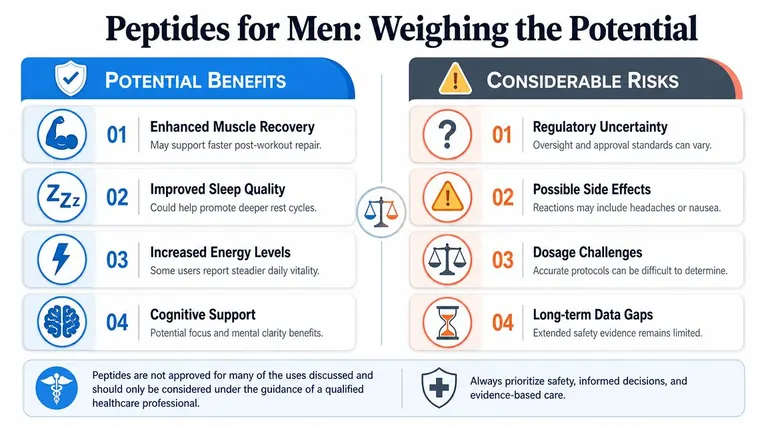
Potential benefits usually fall into a few buckets:
- Recovery and tissue support: Men dealing with joint irritation, tendon strain, or heavy training blocks often look for compounds that may support repair or reduce downtime.
- Body composition: Some peptides are used with the goal of improving fat loss, preserving muscle, or supporting training adaptation.
- Sexual health: Peptides such as PT-141 draw interest because libido and erectile response are concrete, measurable goals.
- Sleep and resilience: Growth hormone secretagogues and related compounds are sometimes discussed in the context of sleep quality and next-day recovery.
The practical question is not whether these goals sound good. It is whether the peptide being considered has meaningful human evidence for that specific use, in men like you, at doses and schedules people can adhere to.
Side effects need the same practical lens. A man comparing options should review peptide side effects by compound and use case before he gets attached to the upside, because the tradeoffs for a libido-focused peptide are different from the tradeoffs for a growth-hormone-related protocol.
A visual overview helps put both sides next to each other.
Where caution matters most
The biggest mistake is treating “promising” and “worth doing” as the same thing.
Benefits in this category often sit on a sliding scale of evidence. At one end, you have mechanisms that are plausible and consistent with what the peptide is known to signal. In the middle, you have early human data or limited clinical use. At the other end, you have broad online claims that spread faster than careful follow-up. Men often enter the peptide world hearing all three levels at once, which makes weak evidence sound stronger than it is.
That matters because risk is not limited to dramatic side effects. It also includes uncertainty, wasted time, false confidence, and protocols that are harder to execute than they first appear. A peptide that requires precise timing, repeated injections, refrigeration, reconstitution, or careful symptom tracking creates its own burden. If the expected benefit is modest or unclear, that burden becomes part of the risk calculation.
Short-term problems can still be very real. Depending on the compound, men may deal with injection-site irritation, nausea, flushing, headaches, appetite changes, water retention, or sleep disruption. Some men stop not because the peptide is dangerous in an obvious way, but because the protocol becomes annoying enough that adherence falls apart.
A better risk-benefit filter asks a few direct questions:
- What problem am I trying to solve? “Optimize everything” is too vague to guide a good decision.
- How strong is the evidence for this exact goal? Popularity in men’s health is not the same as proven benefit in controlled human use.
- What will daily or weekly execution look like? Dosing frequency, timing, and monitoring affect real-world results more than marketing language does.
- What am I giving up if this does not work? Cost, effort, attention, and delayed use of better-supported options all count.
- How will I know whether it helped? You need a before-and-after plan, not just hope and a few good workouts.
A useful rule is simple. The more experimental the peptide, the clearer your goal and monitoring plan should be.
That is the honest middle ground for men considering peptides. There may be upside for a specific use case. There may also be limited evidence, inconvenient logistics, and unanswered safety questions. Good decisions come from weighing all three, not from chasing the most exciting claim.
Understanding Legal Status and Safety Considerations
A common peptide scenario goes like this. A man reads about better recovery, fat loss, or libido support, finds a vial online in ten minutes, and assumes the hard part is choosing the right compound. In practice, the legal status and product quality are often the harder part.
Peptides sit in an awkward middle zone between medicine, experimentation, and marketing. Some are prescribed in specific medical contexts. Some are prepared through compounding pharmacies. Many others are sold online with labels such as “research use only,” which is a legal and quality signal, not a minor disclaimer. If a seller avoids stating that a product is intended for human use, you should assume extra uncertainty around oversight, consistency, and accountability.
That matters because peptide risk is not only about the molecule itself. It is also about what is in the vial, whether the concentration matches the label, how the product was stored, and whether the instructions are clear enough to prevent dosing mistakes. A peptide protocol works a bit like cooking from a precise recipe. Even a well-chosen ingredient becomes a problem if the measuring, storage, or labeling is off.
The American Medical Association has taken a cautious position on injectable peptides, noting limited evidence for broad use and pointing out that interest in compounds such as CJC-1295 and BPC-157 has grown faster than high-quality long-term human safety data. That caution reflects a situation many men overlook. Hype spreads faster than regulation.
What a cautious path looks like
A safer approach starts with the question behind the peptide, not the peptide itself. If the underlying issue is low energy, poor training recovery, reduced libido, or concern about testosterone, the first step is clarifying the cause. Lola Health’s guide to testosterone is useful background here because it shows why symptom-based guessing can blur together problems that need very different solutions.
Then look at the logistics. Legal status and safety connect directly to execution. You need to know where the product comes from, whether a clinician is involved, how the dose is measured, what supplies are required, and what would make you stop. Men often focus on the peptide name and ignore the workflow. That is how preventable errors happen.
A cautious path usually includes:
- Medical review before purchase: A qualified clinician should review symptoms, medications, health history, and the specific goal.
- Verified sourcing: Prescription products and legitimate compounding channels differ from anonymous online listings that provide little accountability.
- Clear dosing instructions: If you cannot explain your dose, reconstitution steps, syringe units, and schedule on paper, the protocol is not ready. A practical peptide dosage and reconstitution guide can help you spot where confusion tends to start.
- Baseline and follow-up markers: Safety is easier to judge when you know what you are monitoring and why.
- Defined stop rules: Side effects, lack of benefit, or unexpected lab changes should have a preset response.
One simple standard helps. If a peptide is hard to source legally, hard to verify, and hard to dose correctly, the burden of proof should be much higher before you use it.
That may feel less exciting than online peptide marketing. It is also closer to how a careful adult handles a compound that affects health.
Planning and Monitoring Your Peptide Protocol
The practical work most men underestimate
Most peptide guides spend their time on benefits and almost none on execution. That’s a mistake, because protocol management is where a lot of men get confused.
A key operational gap is described by Tower Urology’s peptide therapy overview, which highlights questions men struggle with, such as “How do I calculate the right volume from a microgram dose?” and “How do I avoid missed doses over a cycle?” Those are not small details. They affect both safety and consistency.
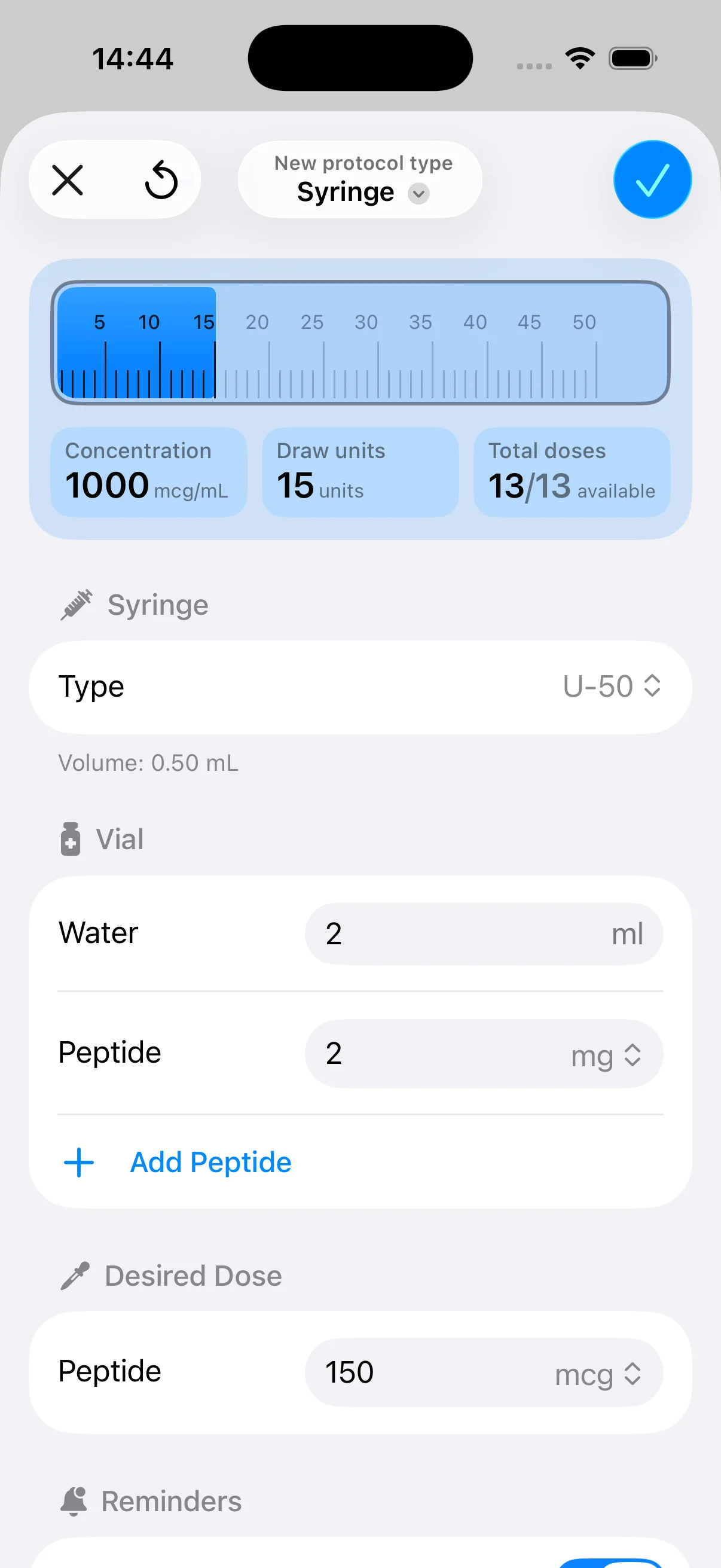
This gets harder when a peptide comes in one vial strength, you reconstitute with a particular volume, your target dose is listed in micrograms, and your syringe markings are in units. That’s where people make preventable mistakes. Not because they’re careless, but because the workflow is clunky.
If your goals include hormone-related decision making, pairing peptide discussions with broader biomarker literacy helps. For example, Lola Health’s guide to testosterone is useful context for understanding why symptom-based guessing isn’t enough when you’re evaluating male performance and endocrine issues.
A simple system for staying consistent
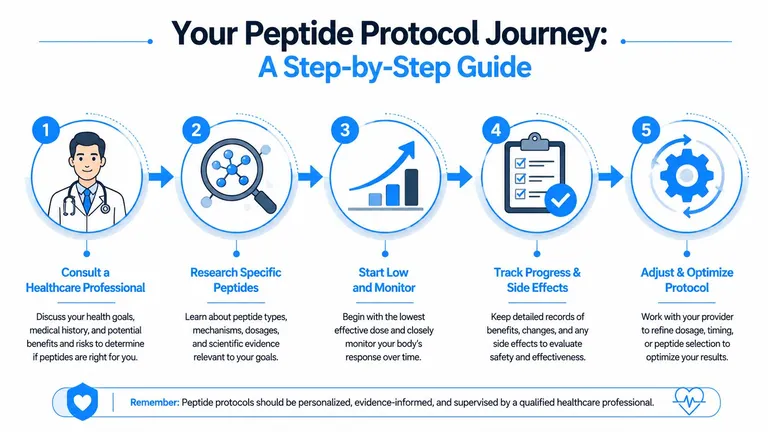
You don’t need a complicated biohacking ritual. You need a repeatable process.
-
Define the reason for the protocol. “I want to optimize” is too vague. “I’m addressing libido,” “I’m testing recovery support,” or “I’m evaluating an endocrine pathway with supervision” is specific enough to monitor.
-
Write the dose in one standard language. Pick a format that maps cleanly from prescribed amount to actual injection volume. If dose math is fuzzy, the whole protocol is fuzzy.
-
Set the calendar before the first dose. Decide your start date, frequency, and any planned pauses up front. A peptide cycle falls apart when scheduling is improvised.
-
Track every administration and every response. Energy, sleep, libido, recovery, side effects, and missed doses all matter. Subjective changes count, but only if they’re logged consistently.
-
Review the protocol with someone qualified. Adjustments should come from response plus clinical context, not internet enthusiasm.
For men who want help with the logistics, a dedicated tool can reduce manual errors. A practical example is the peptide dosage guide, and tools like PepFlow are built around the same operational problem. Converting microgram targets into usable unit measurements, organizing cycled schedules, and keeping reminder-based adherence in one place.
Consistency is part of safety. A perfect protocol on paper doesn’t help if the real-life schedule is chaotic.
That’s the piece many men miss. The science matters. The compound matters. But the daily execution often determines whether a protocol is even interpretable.
If you’re already using peptides or planning a structured protocol, PepFlow can help you handle the practical side more cleanly. It’s an iOS app for peptide dose calculation, reconstitution planning, protocol scheduling, reminders, and dose logging. It doesn’t replace medical advice, but it can make the math and calendar side of peptide use easier to manage accurately.