Your knee has been grumbling for months. At first it was just stairs. Then squats. Then that odd moment when you stood up from the couch and felt older than you expected. Maybe you’ve tried rest, braces, fish oil, physical therapy, or internet rabbit holes full of confident claims and thin evidence. Somewhere along the way, you ran into peptides.
That’s where many people get stuck. The language gets technical fast, the claims get exaggerated even faster, and the practical details often get skipped entirely. One page says peptides can “heal” everything. Another says they’re useless. Most readers are left trying to sort out what’s known, what’s still experimental, and what’s marketing.
A cautious approach makes more sense. Some compounds discussed under the umbrella of peptides for joint health are nutritional supplements with human clinical data behind them. Others are still better understood as research compounds with limited human evidence. If you’re comparing options or trying to explore options for joint pain relief, it helps to separate pain management, tissue support, and true structural repair instead of treating them like the same thing.
This guide takes that slower, clearer route. You’ll get the plain-English version of what peptides are, how they may affect joints, where collagen peptides fit, why BPC-157 and TB-500 generate so much interest, and why dosing math and tracking matter more than most articles admit.
Table of Contents
- Introduction When Joint Pain Disrupts Your Life
- What Are Peptides and How Do They Help Joints
- A Closer Look at Key Peptides for Joint Health
- Evaluating the Evidence and Safety Profile
- Administration Dosing and Legal Status
- Planning and Tracking Your Protocol Responsibly
- Answering Your Lingering Questions
Introduction When Joint Pain Disrupts Your Life
Joint pain rarely arrives as a dramatic event. More often, it creeps in through little compromises. You stop sitting cross-legged. You avoid hills. You tell yourself you’ll get back to running when things “calm down,” but weeks turn into months.
That’s why peptides for joint health get attention. People aren’t usually looking for something trendy. They’re looking for a way back to normal movement. They want to garden without aching later, train without flaring up, or sleep without that deep shoulder soreness waking them up at night.
The problem is that “joint pain” covers a lot of ground. A cranky tendon, irritated synovium, worn cartilage, stiffness after inactivity, and advanced osteoarthritis can all feel similar at first. The same substance won’t address each problem in the same way. That’s one reason the peptide conversation gets messy.
The gap between interest and reality
Some peptide-related options have a reasonable evidence base for improving comfort and function. Others are still mostly discussed in forums, clinics, or animal research. That doesn’t mean they’re worthless. It means you need to know what category you’re dealing with before you expect too much.
Joint support is not the same thing as structural reversal. Many people blur those two ideas and end up disappointed.
A careful reader should ask four questions early:
- What tissue is primarily affected: cartilage, tendon, ligament, bone, or general inflammation?
- What kind of evidence exists: human trial, animal model, or anecdote?
- How is it taken: orally, topically, or by injection?
- What’s the goal: less pain, better function, faster recovery, or avoiding a procedure?
Those questions sound simple, but they keep you grounded. They also make the rest of the discussion much easier to follow.
What Are Peptides and How Do They Help Joints
Peptides are short chains of amino acids. A helpful way to think about them is as tiny instruction signals. Proteins are like full machines built from amino acids. Peptides are more like short messages telling cells what to do next.
Why small molecules can have specific effects
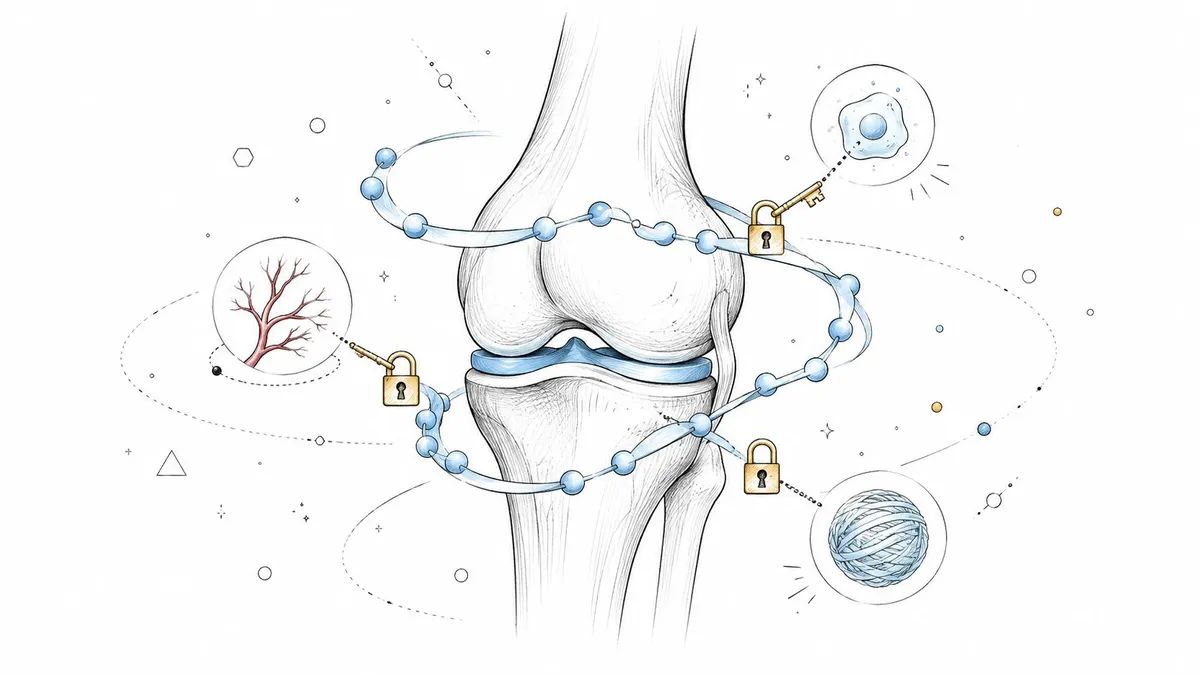
The easiest analogy is key and lock. A peptide is the key. A receptor on a cell is the lock. If the fit is right, the cell gets a message. That message might be “dial down this inflammatory pathway,” “support tissue remodeling,” or “change how this area responds to stress.”
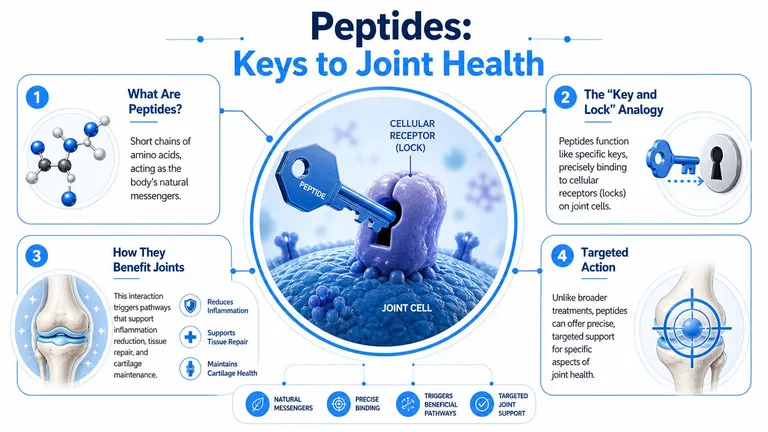
This matters for joints because joints aren’t just hinges. They’re living systems made of cartilage, synovial fluid, bone, ligaments, tendons, blood vessels, and immune signals. If any part of that system is irritated or breaking down, cell signaling changes.
People who want a broader lifestyle approach often combine any peptide discussion with basics that lower inflammatory load overall. If that’s relevant for you, this practical guide to discover natural inflammation reduction methods is a useful companion.
What that means inside a joint
When people talk about peptides for joint health, they’re usually referring to one or more of these ideas:
- Inflammation control: Some peptides are discussed as modulators rather than blunt suppressors. The goal is less excess irritation around the joint.
- Tissue repair signaling: Certain compounds are studied for how they may influence healing responses in soft tissue like tendons and ligaments.
- Cartilage support: Some peptide-related products, especially collagen peptides, are used with the aim of supporting cartilage matrix and joint comfort over time.
- Bone and cartilage protection: RANKL-binding peptides add a more specific mechanism to the conversation.
One notable example comes from research on OP3-4 and W9, which showed targeted molecular actions in joint regeneration models. OP3-4 acts as a synthetic analog of osteoprotegerin and binds to RANKL to inhibit osteoclastogenesis and preserve cartilage integrity, while W9 blocks RANKL-induced bone resorption and also stimulates periarticular bone formation, according to this RANKL peptide research review.
Practical rule: The more specific the proposed mechanism, the more important it is to ask whether that mechanism has been shown in humans, not just in theory or animal models.
That distinction keeps expectations realistic. A mechanism can be biologically interesting without yet being a proven treatment.
A Closer Look at Key Peptides for Joint Health
Most conversations about peptides for joint health circle around three categories. Two of them, BPC-157 and TB-500, are commonly discussed as research compounds. The third, collagen peptides, sits in a very different bucket. It’s a nutraceutical category that’s widely sold and much more familiar to mainstream sports medicine and nutrition readers.
The names people mention most often
BPC-157 is usually framed as a localized tissue-repair peptide. People often mention it in connection with tendons, ligaments, and stubborn overuse injuries. The interest is strong, but the evidence base most readers encounter is still much thinner in humans than the online confidence level suggests.
TB-500 is the commonly referenced synthetic version associated with thymosin beta-related tissue repair discussions. It’s often described as more systemic in feel than BPC-157, especially in sports and recovery circles. Again, interest is high. Human evidence suitable for strong conclusions is still limited.
Collagen peptides are different. They’re not marketed as a niche research chemical. They’re a hydrolyzed protein supplement aimed at connective tissue support. Verified data in this topic area is much stronger here than it is for the more famous forum peptides. One reference notes that collagen peptides show chondro-protective and chondro-regenerative properties when administered at 5 to 15 g/day, with peak efficacy observed after about 3 months of continuous daily use paired with regular exercise, as described in this review on collagen peptides and joint health.
If you’re comparing broader athletic recovery options, this overview of the best peptides for athletes gives helpful context on where joint-focused compounds fit into the larger picture.
Comparison of Common Peptides for Joint Health
| Peptide | Primary Proposed Mechanism | Evidence Level | Regulatory Status | Common Administration Route |
|---|---|---|---|---|
| BPC-157 | Tissue repair signaling, soft tissue healing, inflammation modulation | Mostly preclinical and anecdotal human use | Often sold in research-only contexts, not broadly approved as a standard joint treatment | Commonly discussed as subcutaneous injection |
| TB-500 | Cell migration support, tissue repair, anti-inflammatory effects | Mostly preclinical with limited formal human evidence | Commonly found in research-only markets | Commonly discussed as subcutaneous injection |
| Collagen peptides | Connective tissue support, cartilage matrix support, joint comfort | Stronger human clinical support than the other two in this category | Widely sold as a nutraceutical supplement | Oral |
A useful way to interpret that table is this: collagen peptides are the least exciting online and the least mysterious scientifically. BPC-157 and TB-500 attract more attention because they sound more targeted and more “advanced,” but the gap between enthusiasm and human evidence is wider.
If a product sounds more sophisticated, that doesn’t automatically mean the evidence is better. Sometimes it means the opposite.
That doesn’t settle what any individual should do. It means the evidence conversation should start with honesty, not hype.
Evaluating the Evidence and Safety Profile
When readers ask whether peptides work, the first question should really be, which peptide, for what joint problem, and based on what level of evidence.
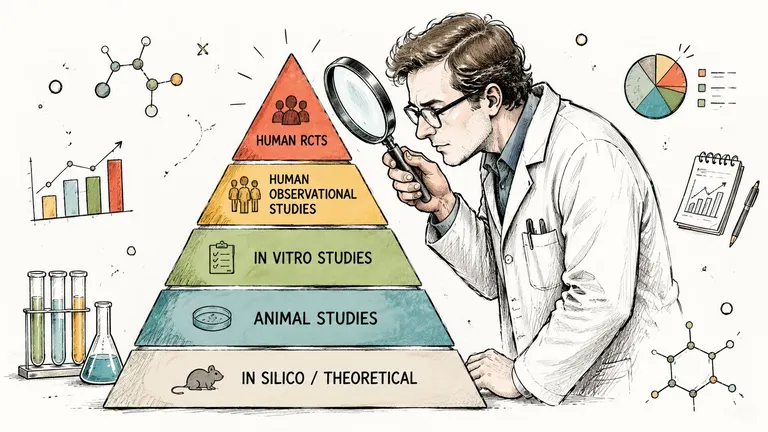
Anecdotes sit at the bottom. Animal studies can be useful for mechanism. Human randomized trials tell you far more about what a real person might reasonably expect. That hierarchy matters because joint pain is easy to overinterpret. Symptoms often improve and worsen naturally, especially when people also change training load, sleep, rehab, or body weight.
What strong evidence looks like
A good example comes from collagen peptides. In a key clinical study published in 2013, daily supplementation with 5 grams of specific collagen peptides known as Fortigel® led to a statistically significant and clinically relevant decrease in functional joint pain in 120 healthy adults aged 45 to 55 with knee and hip discomfort over 6 months. Participants reported a 30% reduction in pain scores during rest and a 25% reduction during walking compared to baseline. Physician evaluations also found a 28% improvement in joint function, with reported improvement when kneeling down (40%) and squatting (35%) ([clinical study summary from verified data]).
A separate meta-analysis involving nine randomized controlled studies reported that oral supplementation with 10 grams of hydrolyzed collagen structurally improved articular cartilage thickness, with a mean improvement of 12.4 ± 3.7% measured by dGEMRIC, and additional trial data confirmed reduced joint pain indexes and improved synovial fluid quality. The same body of evidence also indicated a 20% reduction in additional treatment interventions in young adults with activity-related knee pain ([meta-analysis summary from verified data]).
Those are the kinds of details that make evidence more useful. You can see dose, time frame, population, and outcome.
For readers trying to compare supplements more broadly, AloeCure’s guide to joint support is worth reading alongside the peptide literature because it helps place these products in the wider joint-care context.
Where caution matters most
BPC-157 and TB-500 don’t have the same level of human joint data behind them. That doesn’t mean people never report benefit. It means the quality of certainty is lower, and that should affect how confidently anyone talks about them.
Potential concerns go beyond whether a peptide “works.” You also have to consider:
- Product quality: research-market products may vary in purity, labeling accuracy, or handling.
- Medical fit: a person with complex health history shouldn’t treat online peptide chatter as individualized guidance.
- Expectation mismatch: relief in a soft-tissue recovery context is not the same as rebuilding a badly damaged joint surface.
A useful primer on the broader repair conversation is this article on peptides for tissue repair, especially if you’re trying to separate tendon and ligament support from major structural joint disease.
A short explainer can help if you want a different format before reading further:
Administration Dosing and Legal Status
Many articles get fuzzy here. They’ll discuss peptide mechanisms in detail, then skip over the awkward part. How is the substance taken, and what legal category is it in?
Why route of administration matters
Collagen peptides are taken orally because they’re used as a nutritional supplement. The goal is ongoing connective tissue support, not direct injection into a treatment site. That route is simple, familiar, and legal in standard supplement channels.
BPC-157 and TB-500 are different in how people commonly discuss them. They’re often talked about in injection-based protocols, usually subcutaneous. The reason readers hear about injections so often is simple: many peptides are fragile molecules, and route affects how much of the intended compound reaches circulation in a useful form.
That doesn’t mean you should copy a protocol from a forum. It means administration isn’t a cosmetic detail. It’s part of the risk profile.
Here are the practical questions a careful person should answer before going any further:
- What exactly is the compound listed on the vial or product page?
- Is the intended use oral or injectable based on the form being sold?
- What does the label state about research use versus human use?
- Do local rules allow possession or purchase in your area?
- Could your current medical history make experimental use a bad idea?
The more complicated the administration method, the less room there is for casual trial and error.
The legal gray zone readers often underestimate
A lot of peptide products are sold under phrases like “for research purposes only.” Many buyers read that as legal padding. Sometimes it is a warning that should be taken at face value. It usually means the product is not approved as a standard medication for consumer self-treatment.
That creates several problems at once:
- Quality control may be uncertain
- Labeling may not reflect consistent manufacturing standards
- Medical supervision may be absent
- Consumer assumptions may outrun the evidence
Even where purchase is possible, “available online” does not mean “well regulated,” and it definitely doesn’t mean “appropriate for your condition.”
If you’re considering any injectable peptide, the cautious move is to treat legality and sourcing as seriously as mechanism. People often reverse that order and end up focusing on biological theory while ignoring the basics that keep them safe.
Planning and Tracking Your Protocol Responsibly
Once someone decides to use a peptide protocol, the conversation changes from biology to logistics. That shift sounds boring, but it’s where many preventable mistakes happen.
Where people make avoidable mistakes
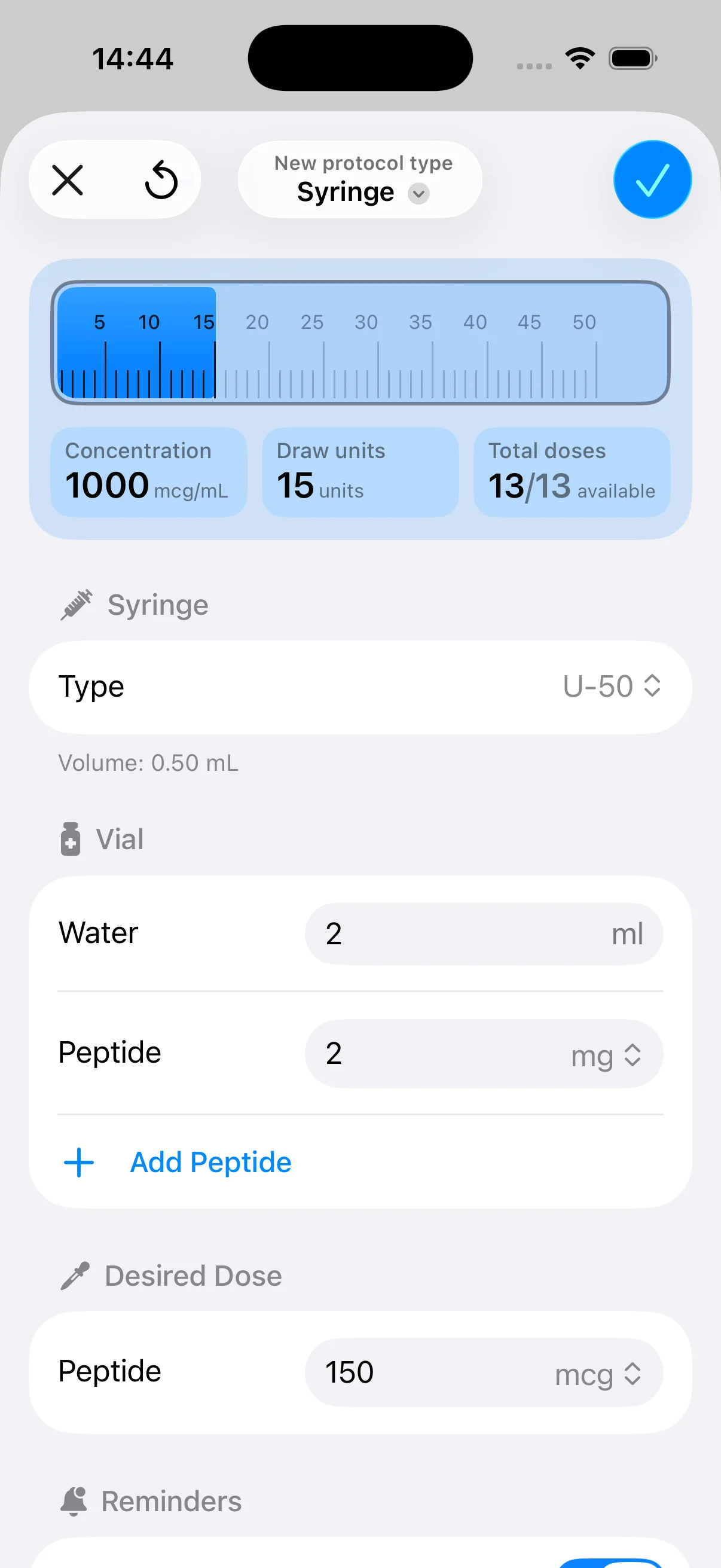
The biggest confusion point is usually dose conversion. A person sees a target dose expressed in micrograms, then has to translate that into a usable injection volume based on vial concentration after reconstitution. That sounds simple until you add syringe markings, leftover volume, changed schedules, and the fact that many users are doing the math while already uncertain about the product itself.
Verified background for this article notes that a 2024 industry report on off-label peptide usage found 30% of adverse user experiences were linked to dosing inaccuracies rather than product safety ([verified data summary]). Even if you set that number aside, the underlying point is easy to believe. Math mistakes are common when protocols involve multiple units, variable concentrations, and inconsistent schedules.

A lot of readers don’t need more mechanism explainers. They need a safer process for staying organized. That’s why roundups like these best peptide tracker apps have become useful. The value isn’t just convenience. It’s error reduction.
A practical workflow for staying organized
If someone is going to proceed, responsible planning usually includes four layers:
- Concentration first: know exactly how much peptide is present per unit volume after preparation.
- Volume second: convert the intended dose into a measurable amount on the syringe, not a rough guess.
- Schedule third: decide frequency, cycle length, and any pause periods before starting.
- Tracking fourth: log what was taken, not what was planned in theory.
That structure sounds basic, but it prevents drift. Without tracking, people forget doses, repeat doses, or make unrecorded changes to the protocol and later misread the results.
A protocol you can’t measure is a protocol you can’t interpret.
This also matters for side effects and expectations. If a person changes three variables at once, such as product, frequency, and training load, it becomes hard to tell what helped, what irritated the joint, and what did nothing.
Answering Your Lingering Questions
Can peptides replace surgery
Usually, that’s the wrong framing. Peptides may be discussed as supportive tools for pain, inflammation, or soft-tissue recovery, but that doesn’t mean they can replace a needed structural procedure. Verified background for this topic notes that a 2024 study on bioactive collagen peptides found a 30 to 50% reduction in recovery time for soft tissue but no significant reversal of bone-on-bone arthritis ([verified data summary]).
If the issue is severe mechanical damage, such as advanced degeneration or a major structural defect, expecting a peptide to function like surgical correction is often unrealistic. Supportive and corrective are not the same category.
How long does it take to notice anything
That depends heavily on the compound and the problem being targeted. Nutritional support approaches like collagen peptides are usually discussed in terms of steady daily use over months, not overnight changes. Research-style peptides are often talked about in shorter cycles, but the evidence is far less settled, so certainty about timeline is lower too.
The safer mindset is to think in terms of gradual change, careful tracking, and willingness to stop if the plan doesn’t make clinical sense.
What about stacking multiple peptides
People stack because different compounds are thought to influence different parts of healing. On paper, that can sound logical. In practice, stacking makes everything harder to interpret.
More variables mean more chances for dosing errors, more cost, and more confusion about what caused a benefit or side effect. If someone can’t clearly explain the rationale for each item in a stack, that’s usually a sign to simplify.
If you’re already dealing with peptide schedules, vial concentration math, or recurring reminders, PepFlow can help you stay organized without turning your notes app into a dosing calculator. It’s built for planning, tracking, and routine adherence, which is often the missing piece between a theory-heavy protocol and a manageable real-world one.