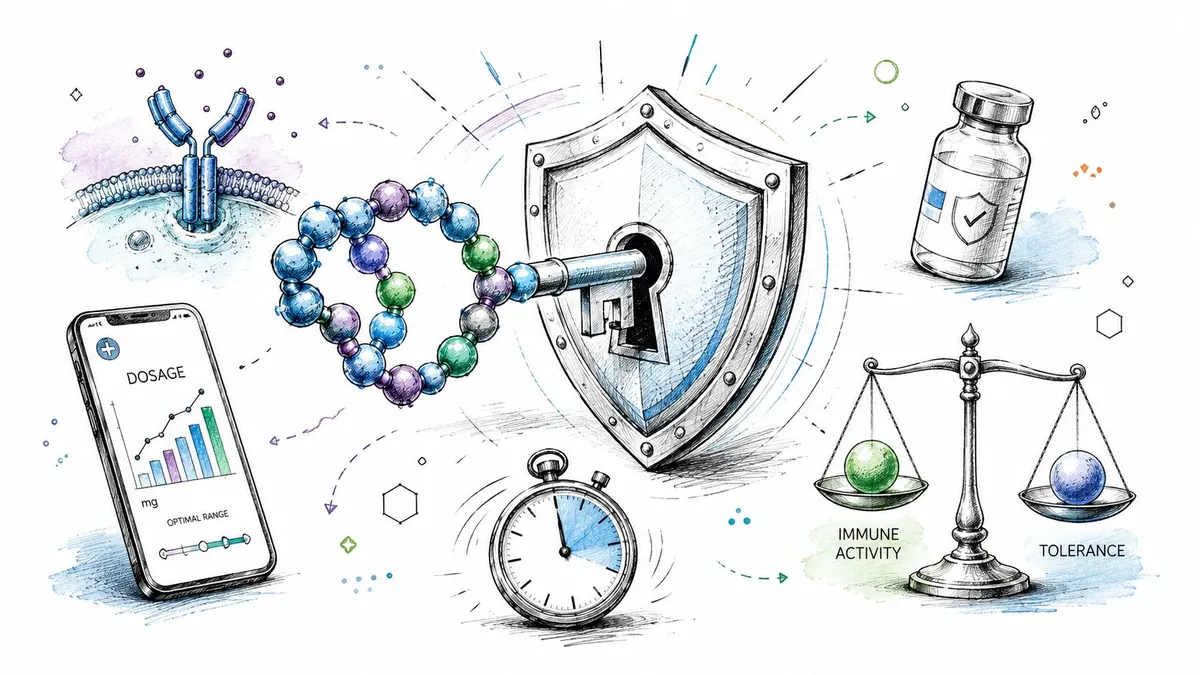
Most advice about peptides for immune support starts with the wrong goal. It tells you to “boost” immunity, as if more immune activity is always better.
That framing breaks down fast in practice. If someone already has chronic inflammation, an autoimmune condition, or a history of exaggerated immune reactions, indiscriminate stimulation may be the opposite of helpful. A resilient immune system isn’t just aggressive. It’s coordinated, proportionate, and able to calm down when the threat passes.
That’s why the more useful question isn’t “How do I boost my immune system?” It’s “How do I support immune balance?” Peptides sit right in that distinction. Some are being studied or used clinically not because they push the immune system harder, but because they help regulate signaling, inflammation, and recovery with more precision.
Table of Contents
- Rethinking Immune Support Beyond ‘Boosting’
- What Exactly Are Immune-Modulating Peptides
- Key Peptides for Immune System Regulation
- How These Peptides Work in Your Body
- Safety Legality and Working with a Professional
- How to Plan a Dosing Protocol with Precision
- Key Takeaways for Your Immune Health Journey
Rethinking Immune Support Beyond ‘Boosting’
“Immune boosting” sounds good because it’s simple. The problem is that biology usually isn’t.
Your immune system has to do two jobs at once. It must recognize and respond to threats, and it must avoid overreacting to harmless signals or your own tissues. When people talk loosely about boosting immunity, they flatten that complexity into one direction only: more. But more immune activity isn’t automatically better.
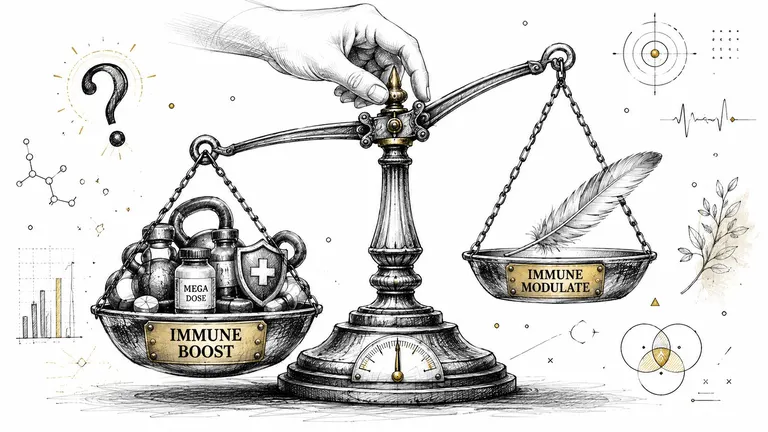
A better word is modulation. Modulation means helping the system respond appropriately. In one person, that may mean supporting underactive signaling after a difficult illness. In another, it may mean reducing excess inflammatory activity that keeps the body stuck in a stress state.
Why the language matters
This isn’t just a semantic debate. The distinction changes how people choose products, how clinicians think about protocols, and how safely a person approaches treatment.
If you picture the immune system as a thermostat, “boosting” is like forcing the heat higher no matter what the room feels like. Modulation is checking the room first, then adjusting in the right direction.
Practical rule: If a product or clinic claims it “supercharges” the immune system without discussing context, inflammation, or autoimmune risk, be careful.
Balance is the real target
Many people looking into peptides for immune support are doing so because something feels off. They may be dealing with repeated infections, slow recovery, ongoing fatigue, persistent inflammation, or a history of immune dysregulation. Those aren’t all the same problem, so they shouldn’t all get the same “boosting” answer.
That’s the central reframing for this topic. The most responsible use of immune-focused peptides starts with balance, not intensity. Once you adopt that lens, the science becomes easier to interpret and the safety questions become much clearer.
What Exactly Are Immune-Modulating Peptides
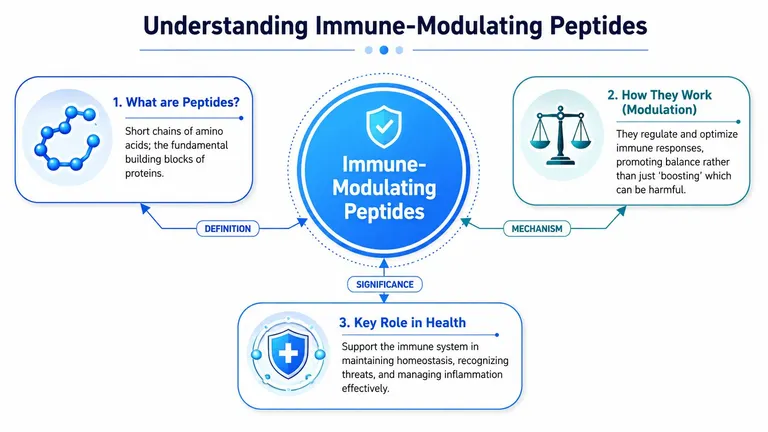
Peptides are short chains of amino acids, which are the same basic building blocks used to make proteins. You can think of them as small biological messages. Instead of acting like a broad command shouted across the body, many peptides work more like a text sent to a specific recipient.
That specificity matters. A peptide may bind to certain receptors or influence a signaling pathway tied to inflammation, immune cell behavior, or tissue repair. That doesn’t make all peptides precise in practice, and it doesn’t make them automatically safe. But it does explain why they’re so interesting in medicine and research.
Synthetic peptides aren’t a fringe category. They accounted for over 11% of FDA-approved drugs from 2016 to 2024, and 16% of all New Chemical Entities authorized in 2023, or 9 out of 55 NCEs, according to a 2025 review on therapeutic peptides. That doesn’t prove every peptide sold in wellness settings is effective, but it does show peptides are a serious pharmaceutical class.
Peptides as biological signals
A simple analogy helps here.
- Proteins are like large machines with many moving parts.
- Peptides are more like short instruction slips.
- Receptors are the locks those slips are designed to fit.
When the match is right, a peptide can influence what a cell does next. That may include helping immune cells communicate better, calming inflammatory signaling, or supporting recovery in stressed tissue.
Some readers get confused because peptides are often marketed beside hormones, supplements, and research compounds as if they’re all the same thing. They’re not. Peptides can act in hormone-like ways, but “peptide” describes a structural class, not a single effect.
Why modulation matters more than stimulation
The most important concept to keep in mind is that some immune-oriented peptides behave as bidirectional modulators, not simple stimulants. Clinical discussion of peptides such as Thymosin Alpha-1 emphasizes that they may enhance immune function when it’s compromised while damping excessive responses when inflammation is the main problem, as described in this overview of immune-supporting peptides.
That’s especially relevant for people with autoimmune issues or chronic inflammatory patterns. A protocol built around the word “boost” may miss the point entirely.
A well-regulated immune response is often safer and more useful than a stronger one.
Key Peptides for Immune System Regulation
The useful question is not which peptide “boosts” immunity the most. The safer question is which peptide, if any, matches the pattern in front of you: weak immune defense, excessive inflammation, poor tissue repair, or a mix of all three.
That distinction matters because these compounds sit in different parts of the biology. Some act closer to immune cell signaling. Others are discussed mainly because they calm inflammatory pathways or support repair, which can change the environment the immune system is reacting to.
Comparison of key immune-modulating peptides
| Peptide | Primary Mechanism | Primary Use Case (Research) | Evidence Level |
|---|---|---|---|
| Thymosin Alpha-1 | Immune modulation, including effects on T-cell function and antigen presentation | Clinical use in immunosuppression, infection-related settings, and selected immune-dysregulation contexts | Strongest clinical footing in this group |
| Thymosin Beta-4 | Tissue repair, wound healing, and inflammatory regulation | Recovery-focused and regenerative research, with indirect relevance to immune behavior | More mechanistic and translational than established immune use |
| BPC-157 | Cytokine modulation and healing support in injured tissue | Tissue repair and inflammation-related recovery contexts | Preclinical-heavy evidence base with growing review interest |
| GHK-Cu | Modulation of inflammatory signaling, including NF-kB-related pathways | Inflammation control and tissue support contexts | Mechanistic and early study support |
| KPV | Anti-inflammatory signaling in gut and skin research, including NF-kB-related effects | Inflammation-focused research settings | Mechanistic and preclinical support |
How to sort the main options
Thymosin Alpha-1 is the clearest example of immune modulation as a medical concept, not a marketing phrase. It has clinical use in several countries and has been studied in settings where the immune system is under strain, including infection and immunosuppression. It is usually discussed as a regulator of immune function rather than a generic stimulant.
Thymosin Beta-4 is easy to confuse with Thymosin Alpha-1 because the names sound similar. They are not interchangeable. Thymosin Beta-4 is better known for repair biology, cell migration, and wound-healing research than for direct immune use. For someone with chronic inflammation, that difference matters. A peptide that helps damaged tissue resolve and rebuild may influence immune behavior indirectly by changing the signals coming from the injured area, as described by researchers in this review of thymosin beta-4 in repair and regeneration.
BPC-157 belongs in this conversation for a similar reason. Its main reputation comes from injury recovery, gut support, and tissue healing research, yet those processes overlap with inflammatory control. If an irritated tissue keeps sending distress signals, the immune system often stays activated longer than needed. Reviews of BPC-157 describe anti-inflammatory effects alongside regenerative ones, which is why it fits better under “immune regulation through healing biology” than under “immune boosting” in this overview of BPC-157 research.
GHK-Cu and KPV are usually more relevant when the problem is inflammatory tone rather than low immune activity. A simple way to picture them is as tools for turning down excess alarm signaling. That does not mean they treat infections or replace standard care. It means they are often discussed in protocols aimed at reducing inflammatory noise so the system can regulate itself more normally. If you want a category-level comparison, this guide to the best peptides for inflammation is a useful companion.
One more point helps prevent confusion. A peptide can matter to immune health without acting like a classic immune drug. Some compounds work upstream by changing the tissue environment, some work closer to cytokine signaling, and some are being explored for neuroimmune effects. Celonyx Labs’ Selank scientific guide is helpful here because it shows how peptide discussions make more sense when organized by mechanism instead of hype.
Ask what needs regulating first. Overactive inflammation, impaired defense, and delayed healing are different problems, and they should not be treated as the same peptide decision.
None of these options should be treated as interchangeable, and none are self-prescribing shortcuts. The more complex the immune picture is, especially with autoimmunity, recurrent infections, or chronic inflammatory disease, the more important it is to work from diagnosis, labs, and clinical supervision rather than symptom guessing.
How These Peptides Work in Your Body
“Immune boosting” is a poor model for what many peptides are being used for. The more accurate model is signal control.
Your immune system depends on constant communication between cells. Those messages help decide when to react, how strongly to react, where to send immune cells, and when to stop. In chronic inflammation, injury, or post-infectious states, the problem is often not a weak system. The problem is messy signaling. Peptides being studied for immune support are usually discussed because they may influence that signaling, not because they merely make immunity stronger.
A thermostat is a useful comparison. If the room is overheating, adding more heat makes the problem worse. If the thermostat is misreading the room, correcting the signal helps more than forcing output. That distinction matters even more for people with autoimmune disease or persistent inflammatory symptoms, where “more immune activity” may be the wrong goal.
Inflammation pathways work like control circuits
One of the best-known inflammatory signaling hubs is NF-kB. When this pathway stays switched on, the body can keep producing inflammatory signals after the original trigger has passed. Researchers often discuss peptides such as GHK-Cu and KPV in this context because they appear to interact with pathways involved in inflammatory tone, barrier repair, and tissue recovery.
That does not mean they act like broad immunosuppressive drugs. It means they may affect parts of the signaling network that shape how intense and how prolonged an immune response becomes. For a reader trying to explore immune system viral defense, that background helps explain why modulation and defense are related but not identical.
Tissue repair changes immune behavior too
Immune regulation and tissue healing overlap more than people expect. Damaged tissue releases distress signals. Irritated tissue keeps recruiting inflammatory cells. A peptide discussed for repair, such as BPC-157, may therefore affect immune behavior indirectly by changing the environment the immune system is reacting to.
That is why peptide effects can look inconsistent from one person to another. One person may be dealing with gut barrier irritation. Another may have joint inflammation. Another may be recovering from repeated training stress or infection. The same compound can sit in a different biological context each time, which changes what “support” looks like.
Here is the practical way to read the mechanism:
- Low-quality signaling can lead to a poorly coordinated response.
- Excess signaling can prolong inflammation after it stops being useful.
- Stressed or damaged tissue can keep the immune system in a reactive loop.
- A modulating peptide may help by changing one part of that loop, not by forcing the whole immune system up or down.
This is also why product quality matters. If the goal is precise modulation, purity and dose accuracy are part of the mechanism, not a side issue. A mislabeled or contaminated vial changes the biological input. This guide to peptide purity testing and why it affects dosing confidence explains that piece well.
The safest mental model is simple. Peptides discussed for immune support are better understood as tools that may adjust immune signaling, inflammatory tone, and repair conditions under the right clinical circumstances.
Safety Legality and Working with a Professional
This is the part many peptide articles soften. They shouldn’t.
There’s a major difference between a peptide with established clinical use and a vial bought online from a seller that labels everything “for research use only.” People often treat those as interchangeable because the names are the same. They aren’t interchangeable when purity, dosing accuracy, contamination control, and clinical oversight are different.
Clinical use versus gray-market use
A good reality check is Thymosin Alpha-1. It isn’t just a wellness buzzword. It has been described as a 29-amino-acid peptide that’s clinically approved and used in over 35 countries for immunosuppression in patients with Hepatitis B, Hepatitis C, HIV, and various cancers in this clinical discussion of Thymosin Alpha-1. That tells you two things at once.
First, some peptides do have real medical legitimacy. Second, legitimacy depends on context, manufacturing, indication, and supervision. A clinically used peptide inside an established framework is not the same as a self-directed protocol assembled from internet advice.
If you’re trying to understand how clinics frame peptide care in a supervised setting, a page like peptide therapy in Easton, MD can at least show the kind of medical-service structure responsible providers tend to build around evaluation and follow-up.
What to ask before starting anything
Before using peptides for immune support, ask practical questions.
- What exactly is the target problem? Recurrent infections, post-viral recovery, autoimmune flares, and generalized “low immunity” are not the same.
- Who is supervising the plan? You want a licensed clinician who can review medications, health history, labs when appropriate, and red flags.
- How is product quality being verified? Don’t assume a label means purity. Learn what documentation exists and how it’s interpreted. This guide to peptide purity testing is a helpful place to understand what quality questions matter.
- What would count as a stop signal? Worsening inflammation, unusual symptoms, or changes in baseline health need a plan before the first dose, not after.
A cautious approach isn’t anti-peptide. It’s pro-reality. These compounds interact with systems that are already complicated, and immune dysregulation is exactly where oversimplified self-experimentation can backfire.
How to Plan a Dosing Protocol with Precision
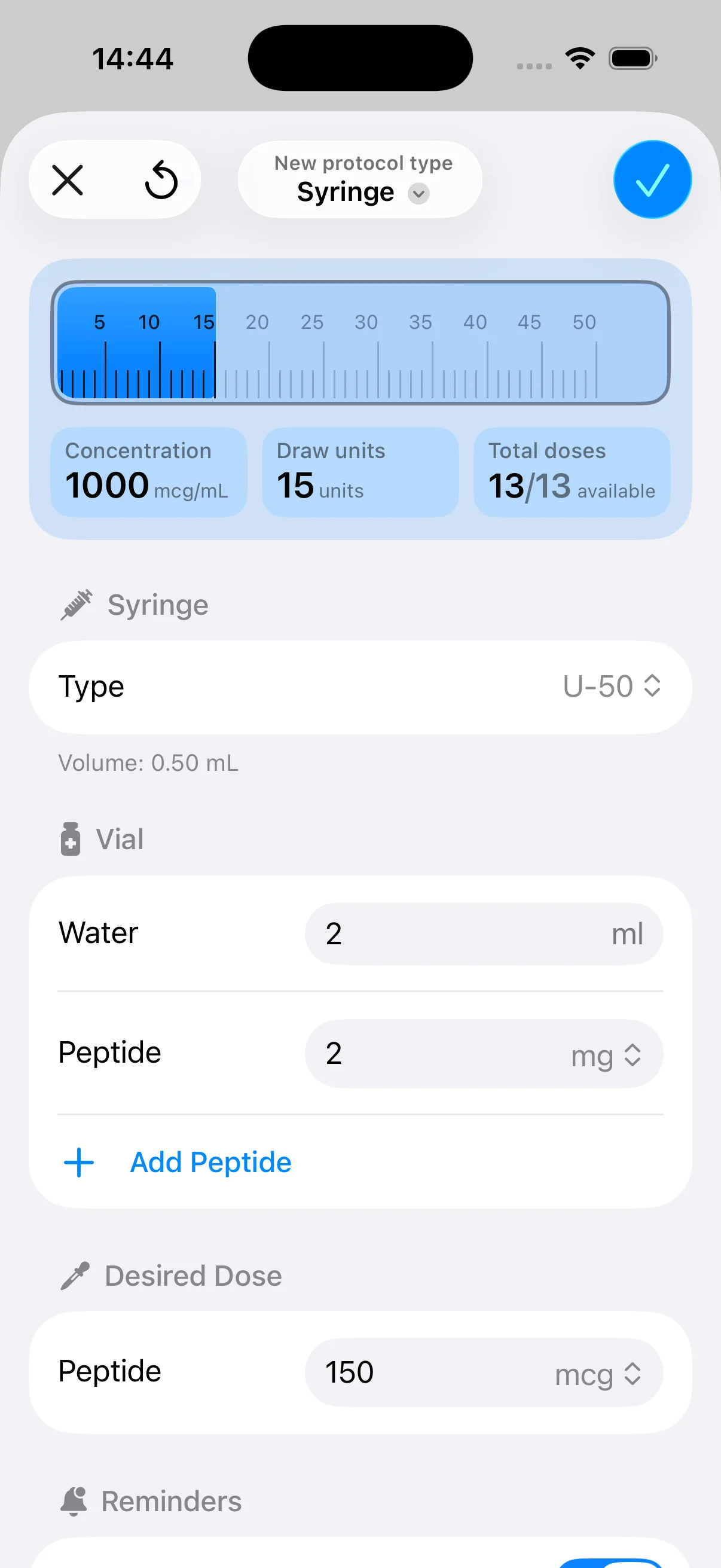
Precision starts before the first dose. For immune-modulating peptides, the goal is not to push the immune system harder. The goal is to expose it to the right amount, on the right schedule, for the right reason.
That distinction matters. A protocol for immune modulation is closer to adjusting a thermostat than stomping on a gas pedal. Small errors in concentration, timing, or cycle length can change the whole plan.
Start with the prescription not the syringe
The prescription defines the target. The syringe only measures how to deliver it.
To set up a dosing plan correctly, you need four pieces of information:
- The peptide amount in the vial
- The volume used to reconstitute it
- The prescribed dose
- The dosing schedule
People often reverse that order and look at syringe units first. That is how avoidable mistakes happen. If a clinician prescribes micrograms, you still have one more step before drawing anything up. You must calculate the concentration after reconstitution, then convert that concentration into a measurable volume.
If you want a step-by-step reference for that process, this peptide dosage guide for reconstitution and syringe calculations explains the sequence clearly.
The best protocol is one you can calculate correctly, label clearly, and follow the same way every time.
Build the schedule around real life, not good intentions
A technically correct dose can still fail in practice if the schedule is too confusing to maintain.
Immune-related peptide plans are often structured in cycles, with check-in points to assess response, tolerability, and whether the original goal still makes sense. That goal might be recovery support, reduction of inflammatory signaling, or better regulation after repeated illness. It should be specific. “Support immunity” is too vague to build a careful protocol around, especially for someone with autoimmunity or chronic inflammation.
A workable plan usually includes:
- A written calendar: exact days and timing
- A preparation record: vial strength, reconstitution volume, and the final dose volume
- A symptom log: changes in energy, illness frequency, inflammatory symptoms, sleep, or flare patterns
- A review date: a point when you and your clinician decide whether to continue, pause, adjust, or stop
One simple rule helps here. If the protocol only makes sense while you are looking directly at your notes, it needs to be simplified.
A visual walk-through can make this easier to grasp:
Tracking matters because immune modulation is not always dramatic. Sometimes the signal is subtle. Fewer setbacks. Less volatility. Better recovery after stress or infection. Without a written record, it becomes easy to misread noise as progress or overlook early signs that a protocol is not a good fit.
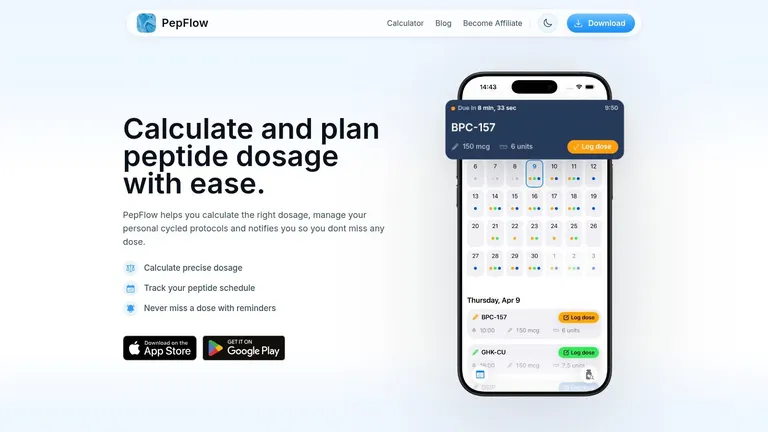
Tools can help with the practical side. Dose calculators, reminders, and cycle tracking reduce arithmetic errors and make the plan easier to follow consistently. That does not replace clinical judgment. It supports it by keeping the day-to-day execution accurate.
Key Takeaways for Your Immune Health Journey
The biggest upgrade in thinking is simple. Stop framing this topic as immune boosting. Start framing it as immune modulation.
That shift helps you ask better questions. Which signal is out of balance? Is the problem under-response, over-response, chronic inflammation, poor recovery, or a mix? Different peptides sit in different parts of that conversation, and the safest use depends on matching the tool to the problem.
It also helps you stay honest about risk. Some peptides have meaningful clinical or mechanistic support, but that doesn’t make self-prescribing a good idea. Product quality, legality, protocol design, and your own health history all matter. For immune-related use, professional oversight isn’t a nice extra. It’s part of using these compounds responsibly.
Finally, precision matters more than people expect. Clear calculations, a realistic schedule, and consistent tracking can be the difference between a thoughtful protocol and a confusing experiment.
If you want help staying organized once a clinician has given you a protocol, PepFlow makes the practical side easier. It helps you calculate doses from vial concentration, map out cycles, set reminders, and keep your schedule consistent without relying on handwritten notes or mental math.