You feel off, but your basic labs look “normal.” Sleep isn’t as restorative as it used to be. Recovery drags. Body composition changes even though your habits haven’t changed much. Mood and libido may be inconsistent. Nothing is dramatically wrong, but nothing feels fully right either.
That’s the situation that leads many people to look into peptides for hormone balance. Not because peptides are magic, and not because every vague symptom is hormonal, but because the body runs on signals. When those signals are mistimed, blunted, or noisy, you can feel the effects before a standard checkup gives you a satisfying explanation.
This gets especially relevant during transitional phases. If you’re dealing with shifting cycles, sleep disruption, or the layered symptoms that come with managing perimenopause symptoms, it helps to think beyond a single hormone number and look at the broader signaling system.
The useful question isn’t “Which peptide should I take?” It’s “What system am I trying to influence, how will I know if it’s working, and what should I track so I can adjust intelligently?”
Table of Contents
- The Modern Quest for Hormonal Harmony
- Understanding Peptides and the Endocrine System
- Key Hormonal Pathways Targeted by Peptides
- Common Peptides Profiled for Hormone Balance
- Designing a Safe and Effective Peptide Protocol
- Monitoring Progress and Adjusting Your Regimen
- Streamlining Protocols with Dosing and Scheduling Tools
- The Future of Personalized Hormone Optimization
The Modern Quest for Hormonal Harmony
A lot of hormone frustration starts with a mismatch between symptoms and simple answers.
Someone starts waking up tired. Their workouts feel flatter. They gain fat more easily or recover more slowly. Their clinician checks a few standard markers, nothing looks obviously broken, and they leave with the vague sense that maybe stress, aging, or “lifestyle” is the whole story. Sometimes that’s true. Sometimes the deeper issue is that hormonal balance is less like a fixed number and more like a live conversation inside the body.
Hormones are part of that conversation, but they aren’t acting alone. Tissues, glands, the brain, appetite signals, sleep rhythms, and recovery signals all interact. If you think of hormones as master switches, peptides are often more like targeted text messages sent between parts of the system.
That distinction matters. People often assume anything used for hormone support must work like replacement therapy. Many peptides don’t. They’re often used to influence signaling patterns rather than directly replacing a hormone the body would otherwise make itself.
Better hormone balance usually doesn’t mean “more hormone.” It means better timing, better signaling, and a clearer match between what the body needs and what it’s receiving.
This is why peptides attract attention from people who want a more precise approach. They’re often discussed in the context of sleep quality, appetite regulation, growth hormone signaling, metabolic health, recovery, and reproductive signaling. The appeal is specificity. The challenge is management.
If you’re considering peptides for hormone balance, the hard part usually isn’t finding a list of names. The hard part is deciding what to monitor, how long to stay on a protocol, and what counts as real progress rather than hopeful interpretation.
Understanding Peptides and the Endocrine System
Why peptide signaling matters
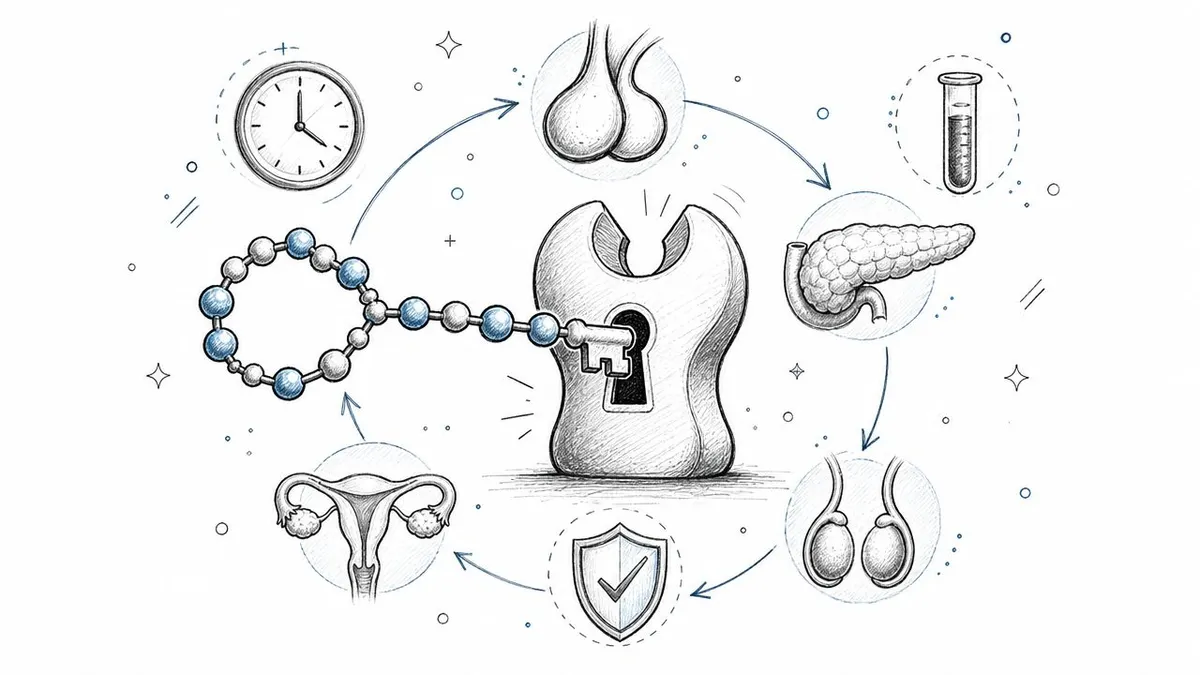
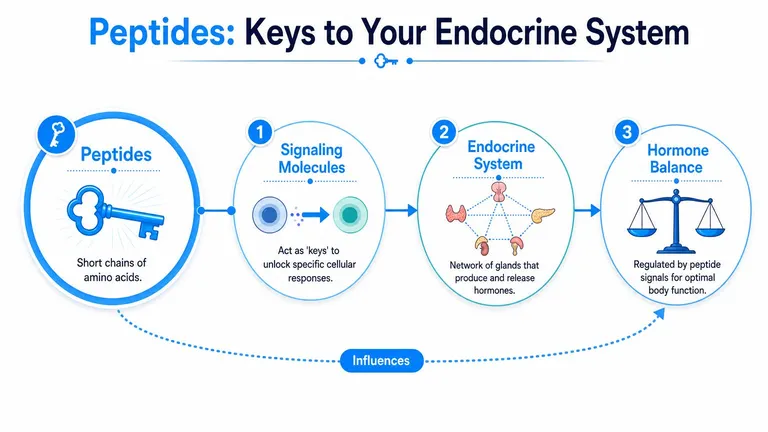
At the simplest level, peptides are short chains of amino acids. In practical hormone discussions, they matter because many of them act as signaling molecules. A useful analogy is a key-and-lock system. A peptide is the key. A receptor on or in a cell is the lock. If the key fits, the cell changes what it does.
That’s a different kind of influence from broad, system-wide interventions. It’s one reason peptides get framed as “fine-tuning” tools. They can affect appetite, energy handling, tissue repair, sleep-related recovery, or reproductive signaling depending on which receptor systems they interact with.
If you want a simple conceptual primer before going deeper, this guide to peptide basics is a helpful companion read. For a more applied overview, PepFlow also has a concise explainer on what peptides are.
A key historical point often gets missed. By the 2010s, peptide biology had become a major framework for understanding how the body coordinates hormones, energy, and recovery. A 2021 NIH review on peptide hormones describes peptide hormones as central regulators of metabolism, appetite, reproduction, and energy balance, and notes their interaction with tissues such as white and brown adipose tissue.
That matters because it moves peptides out of the “wellness trend” category. They’re part of the body’s core communication architecture.
A visual overview helps here:
Peptides versus hormone replacement
People often confuse peptide therapy with hormone replacement therapy. They overlap in goals sometimes, but they aren’t the same strategy.
Here’s the clean distinction:
- Hormone replacement supplies a hormone directly when the body isn’t making enough.
- Peptide signaling often tries to influence the body’s own pathways upstream or alongside those hormones.
- Clinical meaning changes based on that difference. One approach replaces. The other often prompts, nudges, or coordinates.
Think of hormone replacement as installing a stronger external power source. Think of certain peptides as improving the instructions sent through an existing control panel.
Practical rule: If you can’t name the pathway a peptide is intended to influence, you’re not ready to judge whether it fits your goals.
That’s why “peptides for hormone balance” is a real topic, but also a vague one unless you define which endocrine pathway you mean.
Key Hormonal Pathways Targeted by Peptides
Growth hormone signaling
One of the most discussed pathways involves the growth hormone axis. This is the signaling relationship between the brain, the pituitary, downstream mediators such as IGF-1, and the body’s recovery and repair processes.
In this context, some peptides are used not to replace growth hormone directly, but to encourage the body’s own release patterns. That distinction matters because the body normally releases growth hormone in pulses rather than as a flat, continuous stream. When people talk about preserving a more physiologic pattern, this is what they mean.
The practical appeal of this pathway is easy to understand. Sleep quality, training recovery, body composition, and general resilience are all tied to how well recovery signaling is functioning. But this is also where expectations can drift. A better protocol doesn’t always mean a stronger protocol. Sometimes it means one that matches natural timing better and is monitored carefully.
Metabolic and appetite signaling
Another major target is the metabolic system, especially the signals involved in appetite, energy balance, glucose handling, and fat storage.
Readers often get confused because metabolism sounds broad and vague. In reality, it’s a set of tightly coordinated messages. The brain receives information about hunger and satiety. The gut sends feedback about food intake. Adipose tissue isn’t just passive storage. It also participates in signaling. The endocrine system integrates all of it.
When a peptide affects this domain, the goal is usually not just “fat loss.” It may be one or more of the following:
- Appetite regulation: changing hunger intensity, meal timing comfort, or satiety signaling.
- Energy coordination: helping the body handle fuel availability more effectively.
- Recovery support: reducing the mismatch between training demand and metabolic resilience.
The reason this area gets so much interest is that fatigue, cravings, poor sleep, and body composition changes often travel together. People experience them as separate complaints, but the body may be processing them through overlapping metabolic signals.
Reproductive signaling
The reproductive axis is another area where peptide signaling can matter. This includes the communication loops that influence sex hormone function, menstrual cyclicity, libido, fertility-related signaling, and the broader interaction between stress, energy status, and reproduction.
This axis is especially sensitive to context. Poor sleep, under-fueling, high training load, chronic stress, and midlife hormonal transition can all alter how reproductive signaling is expressed. That’s one reason a person can have symptoms that feel “hormonal” even when one isolated lab value doesn’t tell the full story.
A useful way to think about reproductive peptides is that they don’t act in a vacuum. They enter a network that’s already responding to sleep, metabolic health, psychological stress, and body composition.
If sleep improves but libido worsens, or recovery improves while mood becomes unstable, that isn’t a side note. It’s feedback that the protocol may be helping one pathway while disrupting another.
Simplistic peptide lists frequently prove insufficient. The pertinent question is never solely “What peptide affects sex hormones?” It’s “How does this signaling choice interact with the rest of my endocrine picture?”
Common Peptides Profiled for Hormone Balance
Profile of Common Peptides for Hormone Balance
A comparison table is useful because it forces clarity. Not every peptide discussed online belongs in the same category, and not every goal points to the same pathway.
| Peptide | Target System | Primary Goal | Common Dosing Window |
|---|---|---|---|
| Sermorelin | Growth hormone signaling via pituitary stimulation | Support endogenous GH release patterns, recovery, and sleep-related hormone timing | Often timed at night |
| CJC-1295 | Growth hormone signaling | Support GH-related signaling | Varies by protocol and formulation |
| Ipamorelin | Growth hormone signaling | Support GH pulse-related goals with a targeted signaling approach | Often aligned with protocol timing |
| CJC-1295/Ipamorelin | Growth hormone signaling | Combined support for recovery, sleep, and body composition goals | Depends on the regimen being used |
| Kisspeptin | Reproductive signaling | Influence upstream reproductive hormone signaling | Determined by the specific clinical context |
For readers comparing growth hormone related options, PepFlow has a focused article on CJC-1295 and Ipamorelin that helps separate common use cases from common misunderstandings.
How to read the table
The most grounded example here is Sermorelin. It is described as a GHRH analog that stimulates the pituitary to release endogenous growth hormone rather than replacing growth hormone directly. It’s also commonly timed at night to align with natural sleep-associated GH peaks, with the aim of preserving more physiologic hormone patterns while improving markers such as IGF-1 and sleep quality, as described in this Sermorelin overview.
That single example teaches three useful principles.
First, the target isn’t always the final hormone. Sometimes the target is the signal that tells a gland what to do.
Second, timing matters. A peptide taken at a biologically mismatched time may not support the outcome you want, even if the compound itself is appropriate.
Third, a peptide name doesn’t tell you whether it fits your goal. Two compounds can sit in the same broad category but differ in how they’re used, how they’re stacked, and what you need to monitor.
Here’s a smarter way to evaluate any peptide under discussion:
- Match the pathway: Ask whether your main issue is recovery signaling, metabolic regulation, appetite control, or reproductive function.
- Match the metric: Decide what success would look like before starting. Better sleep, improved recovery, steadier appetite, and lab movement are not interchangeable.
- Match the burden: Some protocols are simple. Others require more scheduling, more decision-making, and tighter follow-up.
The table gives you orientation, not a prescription. That distinction keeps expectations realistic.
Designing a Safe and Effective Peptide Protocol
Start with the system, not the product
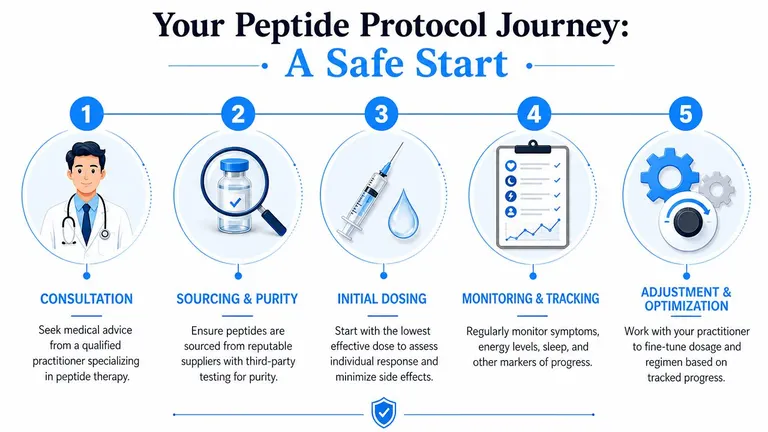
Most protocol mistakes happen before the first dose. People choose a peptide because the name keeps showing up online, then try to reverse-engineer a rationale afterward.
A better sequence is more disciplined:
- Define the problem clearly. Is the main complaint poor sleep, weak recovery, appetite dysregulation, menopausal transition, or stalled body composition progress?
- Identify the pathway you’re trying to influence.
- Decide how you’ll measure success before you begin.
- Choose a protocol structure that matches both the biology and your ability to follow it consistently.
Source quality and medical oversight belong in this early planning stage too. So does understanding the difference between prescribed therapy and loosely sold research products. Precision starts long before administration.
Why cycles matter
Many hormone-focused peptide regimens are built as cycles of 6–12 weeks, and visible outcomes don’t all arrive on the same schedule. A clinic guide discussing peptide protocol timing notes that many protocols run 6–12 weeks, with quicker subjective changes such as sleep quality sometimes appearing earlier, while effects like fat loss or anti-aging related changes may take 2–3 months.
That’s useful because it protects you from two common errors. The first is quitting too early because the scale didn’t move immediately. The second is staying on a protocol too long without a review because you felt a subtle early benefit.
A protocol should have a beginning, a monitoring plan, and a decision point. It shouldn’t drift indefinitely just because you started it.
Cycling also helps frame adherence. If you know the protocol has a defined run, you’re more likely to track it carefully, compare baseline to follow-up, and decide whether to continue, pause, or change strategy.
A practical protocol plan usually includes:
- A baseline phase: symptoms, sleep, training tolerance, and intended lab work recorded before starting.
- A live phase: structured dosing with consistent timing.
- A review phase: compare subjective changes with objective markers, then decide whether the current plan still makes sense.
Monitoring Progress and Adjusting Your Regimen
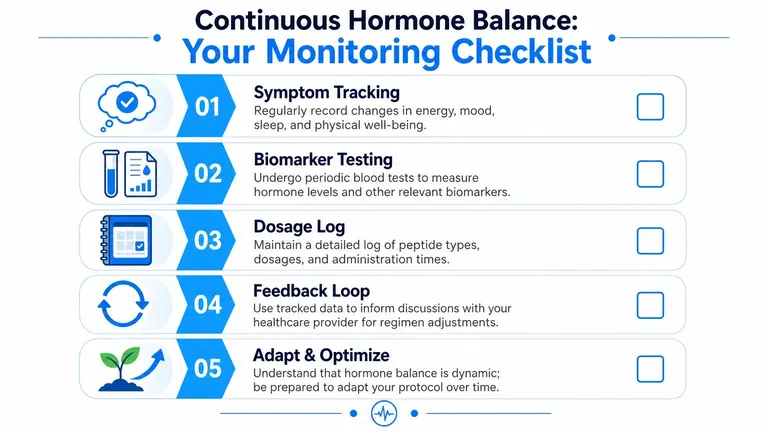
The biggest information gap in public peptide content isn’t what people take. It’s how they decide whether the protocol is helping.
A more nuanced clinical view is that success isn’t just feeling better for a week. It’s confirming that the protocol is improving endocrine function without pushing growth hormone, reproductive, or metabolic pathways too far. That gap is described well in this discussion of peptide monitoring and hormone imbalance.
What to track on paper
Start with symptoms, but don’t stop there. Subjective tracking is useful only if it’s specific.
Keep a simple log that includes:
- Sleep quality: time to fall asleep, night waking, and whether you wake restored.
- Energy pattern: not just “good” or “bad,” but whether energy is steady or jagged across the day.
- Mood and drive: motivation, irritability, stress tolerance, and libido.
- Recovery: soreness duration, workout tolerance, and how quickly you bounce back.
- Appetite and body feedback: hunger, cravings, fullness, bloating, and waistline trend.
This kind of record helps with mixed outcomes. A person may report better sleep and worse mood, or easier appetite control and lower training drive. Without a written log, those tradeoffs get blurred.
What to review with labs
Lab monitoring depends on the pathway being targeted. The exact markers should be chosen with a qualified clinician, but the principle is straightforward. Match the labs to the system you’re trying to influence.
For example:
- Growth hormone focused protocols: clinicians often look at downstream indicators such as IGF-1 alongside the symptom picture.
- Metabolic goals: fasting glucose and related metabolic markers may matter more than generic wellness impressions.
- Reproductive goals: sex hormone panels and cycle-related context matter more than isolated numbers read without timing.
The point isn’t to collect every possible biomarker. The point is to create a feedback loop between the intended mechanism and the observed effect.
Decision lens: If your symptoms improve but the tracked pathway looks increasingly stressed, the protocol may need to be adjusted, shortened, or stopped.
When to change or stop
You don’t need dramatic side effects to justify a change. A protocol may need revision when benefits plateau, when improvements arrive in one domain but deterioration shows up in another, or when adherence becomes too inconsistent to interpret the results.
Good protocol management asks practical questions:
- Is the original goal still the actual goal?
- Are the observed changes meaningful, not just noticeable?
- Does the current schedule still match sleep, meals, training, and daily life?
- Is the protocol creating more noise than clarity?
Stopping isn’t failure. Sometimes it’s the most evidence-based move available.
Streamlining Protocols with Dosing and Scheduling Tools
Complexity ruins otherwise reasonable plans. Not because the peptide is wrong, but because the execution gets sloppy.
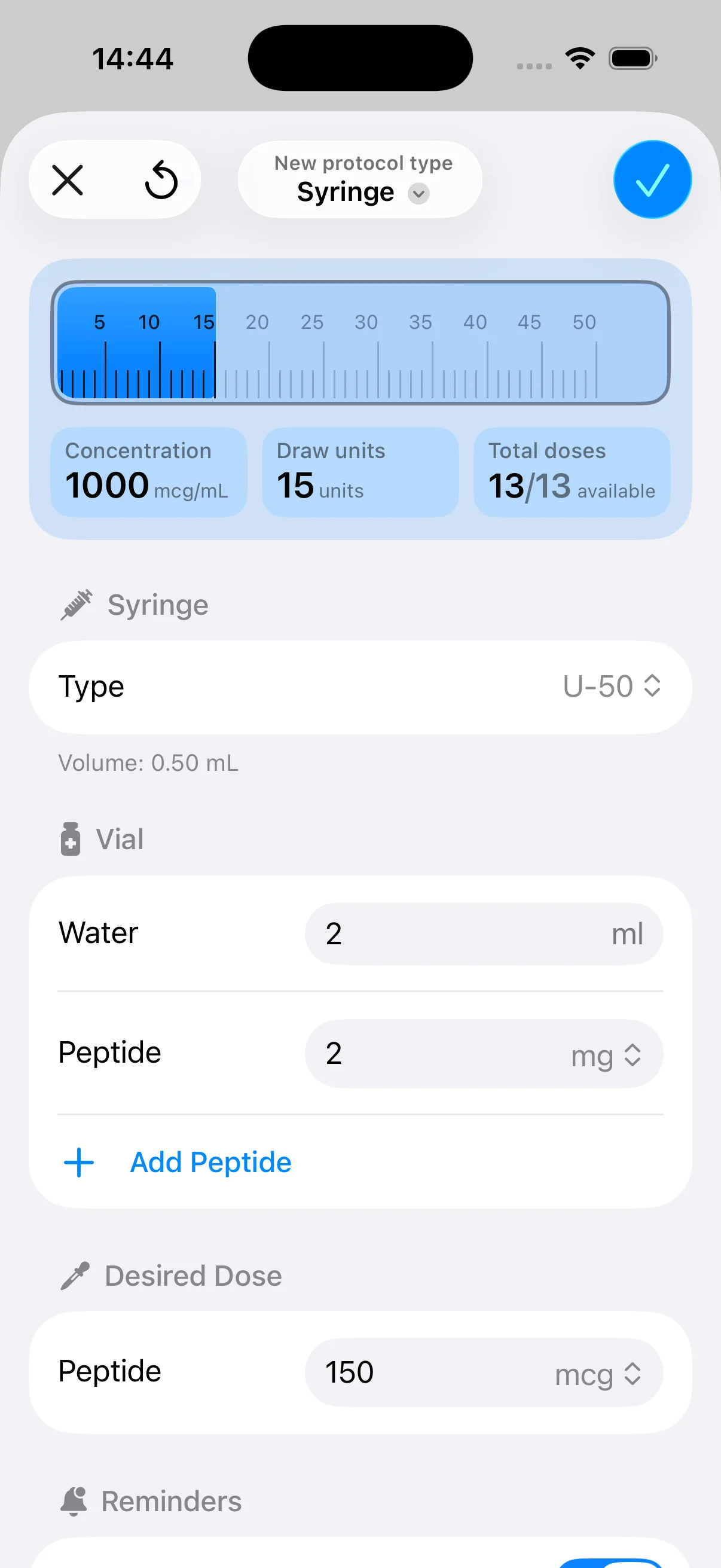
People miss doses. They lose track of cycle timing. They miscalculate vial concentrations. They forget whether they already administered today’s dose. Any of those errors can make a decent protocol look ineffective, or make an effective one hard to evaluate.
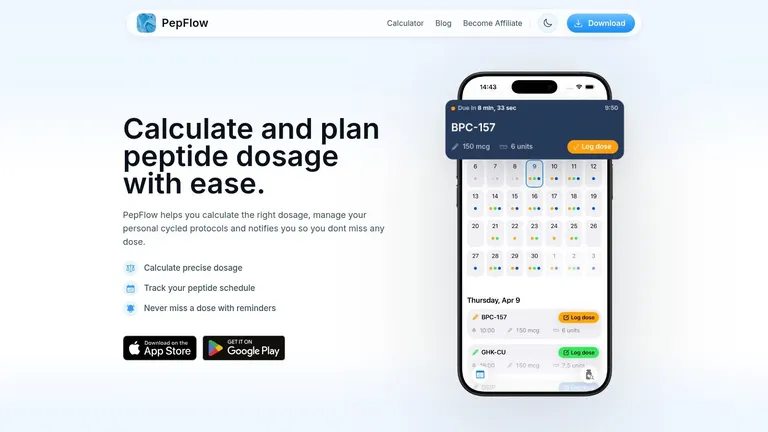
That’s why organizational tools matter. A dedicated calculator and scheduler reduces the friction around dose math, reminder timing, cycle structure, and logging. If you’re comparing options, this roundup of best peptide calculator apps is a practical place to start.
The key value isn’t convenience for its own sake. It’s consistency. When timing and dose tracking are cleaner, your symptom log and lab follow-up become easier to interpret. That gives you better decisions, not just a tidier routine.
The Future of Personalized Hormone Optimization
Peptides for hormone balance make the most sense when they’re treated as part of a personalized, data-aware process. Not a shortcut. Not a trend. A signaling strategy that has to be matched to a real goal, monitored with discipline, and revised when the feedback says it should be.
The people who get the most out of this approach usually do three things well. They respect the biology, they track what matters, and they avoid turning a promising tool into a guessing game.
If you’re following a structured peptide regimen and want fewer dosing mistakes, clearer schedules, and better adherence, PepFlow is built for exactly that job. It helps you calculate doses, organize cycles, set reminders, and log administration without turning your protocol into a spreadsheet project.