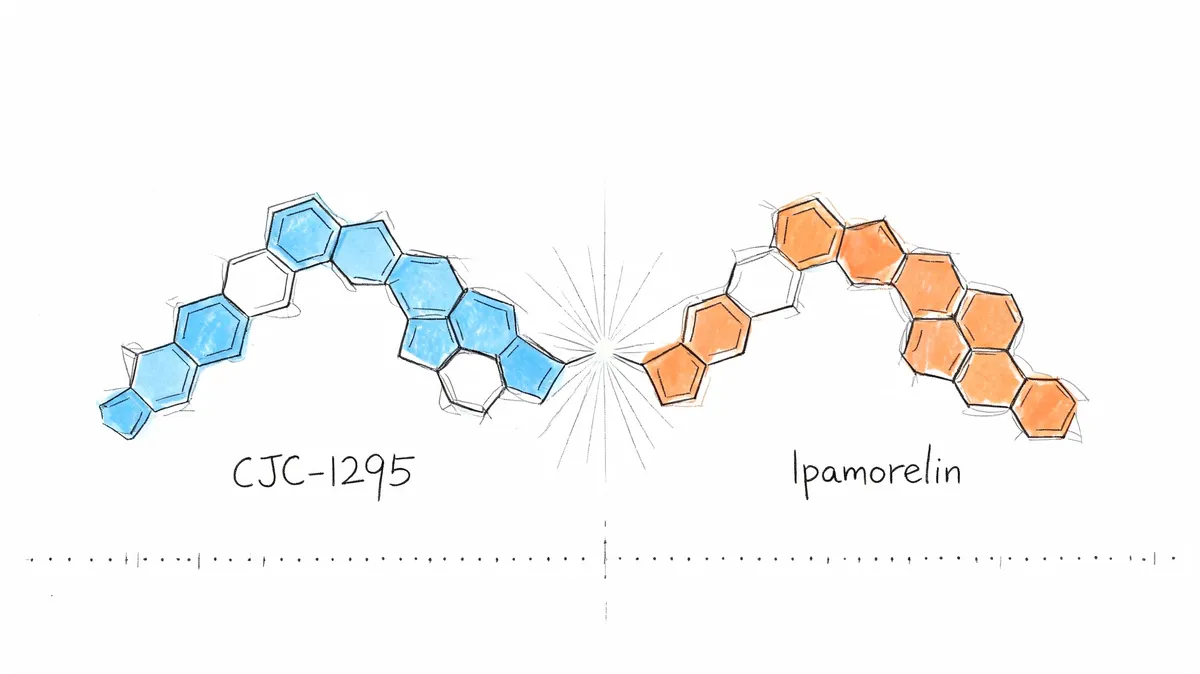
You’ve probably already done the frustrating part. You searched cjc 1295 ipamorelin, opened five tabs, read one clinic page, one forum thread, a Reddit argument, and then hit a wall of technical language about GHRH analogs, ghrelin mimetics, half-lives, and pulse amplitudes.
That’s a common hurdle. The science sounds important, but it doesn’t tell you what to practically do with the information. You still need to answer practical questions. What does each peptide do? Why are they paired? Why do some protocols use nightly dosing while others use weekly schedules? How do you keep the math and timing straight once a protocol gets more complicated than “take this every day”?
A useful guide has to do two jobs at once. It has to explain the biology in plain language, and it has to connect that biology to decisions people make when planning a regimen. That’s especially true with cjc 1295 ipamorelin, because this stack is popular precisely due to timing, synergy, and consistency. If you misunderstand any of those, the protocol quickly turns into guesswork.
Table of Contents
- Introduction Navigating the World of Peptide Stacks
- Understanding the Building Blocks CJC-1295 and Ipamorelin
- The Science of Synergy How They Work Together
- Potential Benefits and Managing Expectations
- Dosing Protocols and Cycle Examples
- Safe Handling Storage and Legal Considerations
- Managing Your Protocol with PepFlow
Introduction Navigating the World of Peptide Stacks
People rarely start researching peptide stacks from pure curiosity. Usually there’s a goal behind it. Better recovery. Better sleep. Less body fat. More support for training. Or a broader interest in performance and longevity.
The problem is that the information environment around peptides is messy. One source is too technical to follow. Another gives a shopping-list summary with no mechanism. Another leans heavily on anecdotes. That leaves motivated readers with pieces of the puzzle, but no clean picture of how the stack works.
cjc 1295 ipamorelin gets so much attention because it combines two different signaling routes involved in growth hormone release. That sounds simple on paper. In practice, it raises a lot of questions about forms, timing, cycles, and expectations. Someone reading about CJC-1295 with DAC may see weekly dosing mentioned, then find a separate discussion of modified GRF and nightly protocols, then wonder whether they’re even reading about the same thing.
Practical rule: If you don’t separate mechanism, timing, and protocol structure, peptide research gets confusing fast.
A better way to approach this topic is to think in layers:
- Start with the parts. What does CJC-1295 do by itself, and what does Ipamorelin do by itself?
- Then look at the interaction. Why does combining them create a different effect than using either alone?
- Then move to logistics. Dosing schedules, cycle structure, storage, reminders, and record-keeping are where many users make preventable mistakes.
That step-by-step approach matters because peptide protocols live or die on consistency. Even a well-designed plan becomes unreliable if the dose calculation is off, the reconstitution is sloppy, or the schedule drifts week to week.
Understanding the Building Blocks CJC-1295 and Ipamorelin
Before talking about synergy, it helps to treat these as two separate tools.
A simple analogy works well here. Think of growth hormone release like music played through a speaker. One control changes how long the sound continues. Another changes how loud the burst is. CJC-1295 and Ipamorelin influence different parts of that pattern.
What CJC-1295 does
CJC-1295 is a growth hormone-releasing hormone analog. Its role is to signal the pituitary in a way that supports growth hormone release over a longer window.
The form matters. CJC-1295 with DAC is the long-acting version. According to the CJC-1295 reference summary, CJC-1295 with Drug Affinity Complex can increase plasma growth hormone levels by 2- to 10-fold for 6 days or longer, and its 6 to 8 day half-life comes from albumin bioconjugation. That long duration is why it’s often used in 1 to 2 weekly doses rather than frequent daily injections.
That single detail clears up a lot of confusion. If someone talks about weekly planning, they’re usually discussing the DAC form. If they’re talking about shorter pulses and tighter timing control, they may be referring to a non-DAC version. If you want a deeper comparison of those forms, this breakdown of CJC-1295 DAC vs no DAC is useful.
What Ipamorelin does
Ipamorelin is a selective ghrelin mimetic, often grouped with growth hormone secretagogues. Its job is more immediate. It acts like a sharper prompt for growth hormone release rather than a long background signal.
That’s why people often describe it as the “pulse” side of the stack. It’s not there to stay around for days. It’s there to trigger a more direct release event.
A useful way to picture the difference is this:
- CJC-1295 helps keep the pituitary ready to sustain the signal
- Ipamorelin pushes for a faster release response
- Together, they shape the timing and intensity of the pulse
CJC-1295 vs. Ipamorelin At a Glance
| Characteristic | CJC-1295 (MOD GRF 1-29) | Ipamorelin |
|---|---|---|
| Primary category | GHRH analog | Ghrelin mimetic / GHS |
| Main role | Supports a longer GH signaling window | Triggers a more immediate GH release signal |
| How people describe it | Extends the pulse | Sharpens the pulse |
| Timing profile | Depends on form used | Shorter-acting and more immediate |
| Why it’s paired | Provides duration | Provides amplitude |
Think of CJC-1295 as the peptide that helps the signal last, while Ipamorelin helps the signal fire.
That distinction is the foundation for everything else. Without it, most protocol discussions sound arbitrary. With it, the stack starts making sense.
The Science of Synergy How They Work Together
A stack only makes sense if each part changes the same system in a different way. That is the case here.
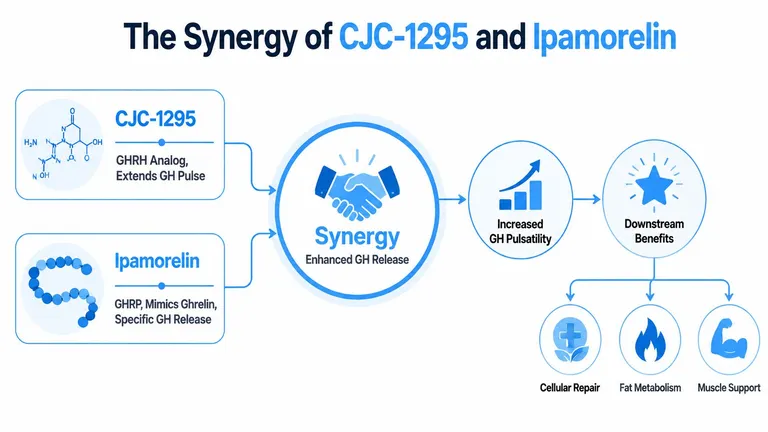
CJC-1295 and Ipamorelin both influence growth hormone signaling, but they do not press the same button. One helps keep the signaling window open longer. The other helps trigger a sharper release. Used together, they are trying to shape the pattern of the pulse rather than push in the same direction twice.
Duration and amplitude
One of the clearest summaries comes from the BHR Center overview of CJC-1295 and Ipamorelin. It describes CJC-1295 as extending the duration of growth hormone pulses and Ipamorelin as producing a more immediate GH release, while also noting Ipamorelin’s selectivity and its limited effect on cortisol or prolactin.
That gives you two practical variables to track:
- Duration, which CJC-1295 helps support
- Amplitude, which Ipamorelin helps increase
A simple analogy helps here. CJC-1295 works like keeping a door open longer. Ipamorelin works like knocking harder while the door is open. The result is not a flat, constant output. The result is a better-timed pulse.
That distinction matters for protocol management. If two compounds did the exact same job, stacking them would mostly add complexity. Here, the appeal is that they can shape different parts of the same release event.
Why the pulse pattern matters
Growth hormone is normally released in pulses, not as a steady drip. That is why timing discussions show up so often with cjc 1295 ipamorelin. The goal is usually to support the body’s existing rhythm, not override it with a constant signal.
A common stumbling block for many readers occurs here. They hear “higher GH” and assume the only question is dose. In practice, scheduling often matters just as much because pulse frequency, pulse size, and timing can change how a protocol feels and how it is managed day to day.
A useful way to frame it is this:
- Dose affects how strong the prompt may be
- Timing affects when that prompt happens
- Consistency affects whether the protocol follows a repeatable rhythm
That is also why people pay attention to evening use, meal timing, and recurring weekly structures. The science does not hand you one perfect schedule, but it does explain why random administration is harder to evaluate.
For someone using PepFlow to log injections, symptoms, and schedule adherence, this part becomes much easier to see in real life. You are not just recording milligrams or micrograms. You are tracking a rhythm. Once that clicks, the stack stops feeling abstract and starts feeling like a system you can configure and review.
Potential Benefits and Managing Expectations
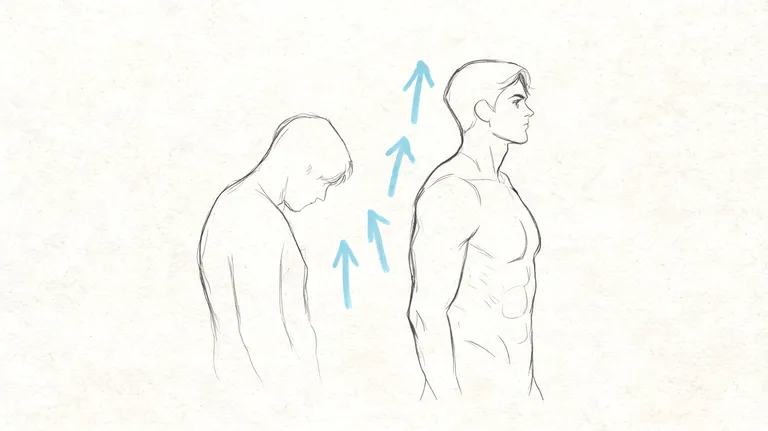
People usually come to cjc 1295 ipamorelin because they want changes they can feel or see. Better sleep. Better recovery. More support for body recomposition. Sometimes the interest is broader, such as healthier aging or maintaining training capacity.
What people are usually hoping to improve
Because the stack influences endogenous growth hormone signaling, the expected discussion usually centers on:
- Body composition support, especially lean mass retention and fat loss goals
- Recovery, including how a person feels after training
- Sleep quality, since many users care about deeper and more restorative sleep
- General resilience, which is why longevity-focused users also pay attention to it
Those goals don’t exist in isolation. A person trying to improve body composition also has to manage calories, protein intake, training quality, and sleep consistency. For readers working on that broader picture, BodyBuddy’s tips for changing body composition give useful non-peptide context that fits well alongside protocol planning.
Why results vary so much
Many peptide guides fail on this point. They list benefits as if they happen evenly for everyone.
A verified gap summary from MyBodyTonic’s discussion of CJC-1295 and Ipamorelin points out that common content rarely explains individual response variability, including why some people respond quickly while others plateau, or which baseline markers like IGF-1 levels or insulin sensitivity might help predict response.
That’s a major practical issue. Two people can run what looks like the same protocol on paper and experience different outcomes because they don’t start from the same baseline.
A few factors often shape expectations:
- Baseline health status affects how any protocol feels in practice
- Sleep quality matters because poor sleep can blur the benefits people hope to notice
- Training load changes how recovery improvements show up
- Diet consistency often determines whether body composition changes become visible
Don’t judge a peptide stack in a vacuum. Judge it in the context of sleep, training, food intake, and baseline labs.
This short explainer adds a visual overview before you make the topic more complicated than it needs to be:
A realistic mindset helps here. You’re not looking for instant transformation. You’re looking for whether a structured protocol, tracked over time, produces a pattern that matches your goal and your biology.
Dosing Protocols and Cycle Examples
A dosing plan often looks simple until the first practical question shows up. You have a vial, a syringe, a target dose in micrograms, and one small mistake can carry through every injection that follows.
That is why protocol management matters as much as peptide theory. The science explains why people pair CJC-1295 with Ipamorelin. The day-to-day result depends on whether the concentration is correct, the schedule is realistic, and the protocol is tracked well enough to spot drift early.
Reconstitution basics
Many research peptides arrive as lyophilized powder and need to be mixed with bacteriostatic water before use. The amount of water added sets the concentration. The concentration then determines how many syringe units equal the intended microgram dose.
A kitchen recipe works as a useful comparison here. If the recipe calls for one cup of concentrate diluted into four cups of water, every serving depends on that starting ratio. Peptide reconstitution works the same way. If the ratio is off at the beginning, the label on the syringe may look precise while the actual dose is not.
A careful setup usually includes:
- Confirm the vial label before mixing anything.
- Use clean handling technique and appropriate supplies.
- Add bacteriostatic water gently so the powder dissolves without rough shaking.
- Write down the final concentration immediately so the math is documented, not remembered.
If the concentration is unclear after reconstitution, the dose is unclear too.
Example protocol patterns
A common pattern people research is nightly co-administration on an empty stomach. Earlier references in this article noted that clinics and protocol guides often describe a starting range of 100 to 300 mcg of each peptide, with timing chosen to support consistency and align with natural overnight growth hormone rhythms.
That does not make one schedule correct for every user. It shows why this pattern appears so often. It is a repeatable structure, easy to remember, and simple to monitor.
Other examples focus less on the single dose and more on the weekly rhythm. Some protocols use 5 days on and 2 days off to create a recurring pattern that is easier to follow over several weeks. Others are planned around the difference between DAC and non-DAC forms of CJC-1295, because a longer-acting version changes the timing logic. That distinction causes a lot of confusion. Short-pulse planning and long-acting planning are not interchangeable.
Common structures people look into include:
- Nightly co-administration, often selected because it is easier to repeat consistently
- Weekly cycling patterns, such as five days on and two days off
- DAC-based planning, where timing is built around a longer-acting schedule rather than daily pulse timing
Where protocols usually break down
The biggest problems are usually procedural, not exotic biology.
- Unit confusion happens when the target is written in micrograms but the syringe is read in units.
- Schedule drift starts when a nightly protocol turns into an inconsistent one.
- Form confusion happens when someone applies non-DAC timing rules to a DAC product, or the reverse.
- Poor record keeping makes it hard to tell whether the protocol itself is weak or the execution is inconsistent.
This is the part many articles skip. They explain the peptide, then leave the reader alone with the arithmetic.
If you want help converting vial strength, reconstitution volume, and syringe units into a usable plan, this peptide calculator app guide shows the practical math. That is where the science-backed protocol becomes manageable in real life, especially if you are logging dose changes, timing, and adherence in PepFlow instead of trying to reconstruct everything from memory later.
A good protocol is one you can execute the same way next week, not just one that sounds smart on paper.
Safe Handling Storage and Legal Considerations
Enthusiasm makes people rush this part. They focus on dose timing and ignore the basics that protect peptide integrity.
Storage rules that matter
Before reconstitution, peptide vials are generally kept in a cool, dark place. After reconstitution, they become more fragile and should be refrigerated and handled carefully. Light, heat, contamination, and sloppy handling all work against stability.
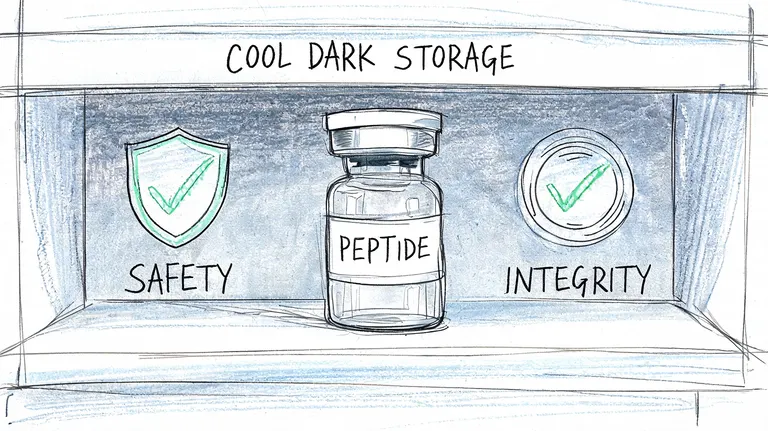
A practical storage routine usually includes:
- Keep labels readable so concentration and date mixed are obvious
- Avoid repeated unnecessary warming by taking out the vial only when needed
- Use sterile technique consistently each time the vial is accessed
- Discard anything suspicious if the solution looks cloudy or contaminated
For a focused walkthrough, this guide on how to store reconstituted peptides covers the handling side in more detail.
Legal and practical caution
The legal status of peptides can be confusing because availability and approval status aren’t the same thing. In many markets, compounds such as these may be sold for research purposes only or used in tightly specific medical contexts. That doesn’t automatically mean they are broadly approved for unsupervised use.
That gray area creates two responsibilities for the user. First, verify what applies in your location. Second, separate internet habit from medical legitimacy. A product being easy to find online doesn’t tell you anything about quality, regulatory status, or appropriateness.
Storage protects the compound. Record-keeping protects the protocol. Legal clarity protects you.
If someone skips all three, they’re not running an organized regimen. They’re improvising.
Managing Your Protocol with PepFlow
A common pattern looks like this. Someone reads about cjc 1295 ipamorelin, chooses a target dose, and feels ready to begin. Then real life steps in. The vial has a certain concentration, the syringe shows units instead of micrograms, the schedule may change across the week, and a missed entry makes it harder to tell what happened.
That gap between theory and execution matters more than many people expect. Peptide protocols are often less like following a single instruction and more like running a small lab notebook. If the notes are messy, the results are hard to interpret.
Why Protocol Management Is the Primary Challenge
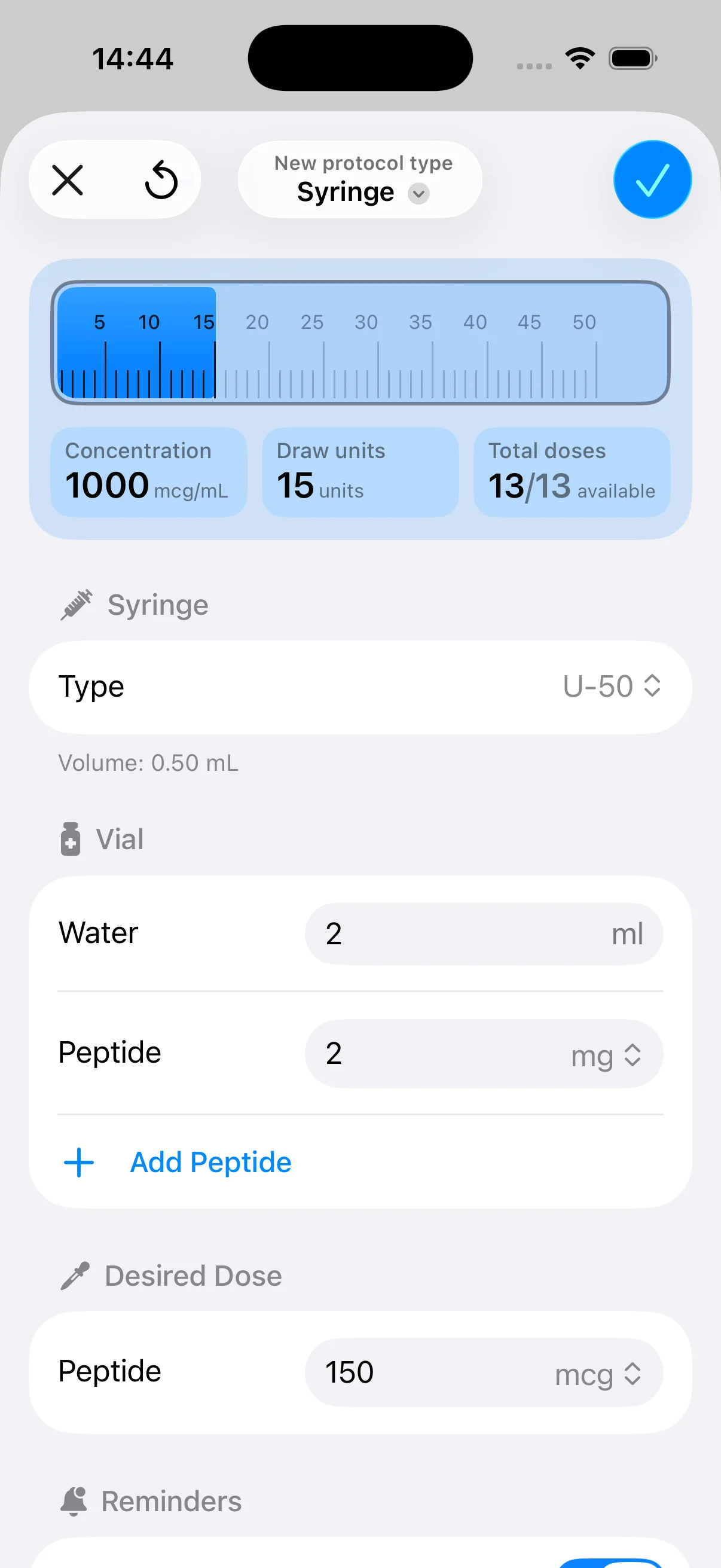
Once a plan leaves the article and enters a daily routine, small details start to carry more weight. Users need to track concentration after reconstitution, convert the intended dose into syringe units, remember timing, and log the dose taken rather than the dose originally planned.
Timing adds another layer of complexity. Some users follow fixed daily injections. Others use cycle structures such as scheduled on and off days, as noted earlier in the article. Neither approach is impossible. The problem is consistency. A paper note can be misplaced. A phone reminder can tell you it is time to inject, but not how much that translates to from the vial in your fridge.
One arithmetic mistake can ripple through a whole week.
Using tools to reduce avoidable errors
This is the practical side that PepFlow focuses on. The app for iOS is built to help users organize peptide protocols with less manual math. It lets users enter vial concentration and injection volume, converts microgram targets into syringe unit measurements, supports cycle-based schedules with reminders, and keeps a dose log over time.
That function is easier to appreciate with a simple analogy. The peptide is the ingredient. The protocol is the recipe. PepFlow acts like the measuring tool and kitchen timer. It does not change the ingredient itself, but it helps the user prepare and repeat the recipe the same way each time.
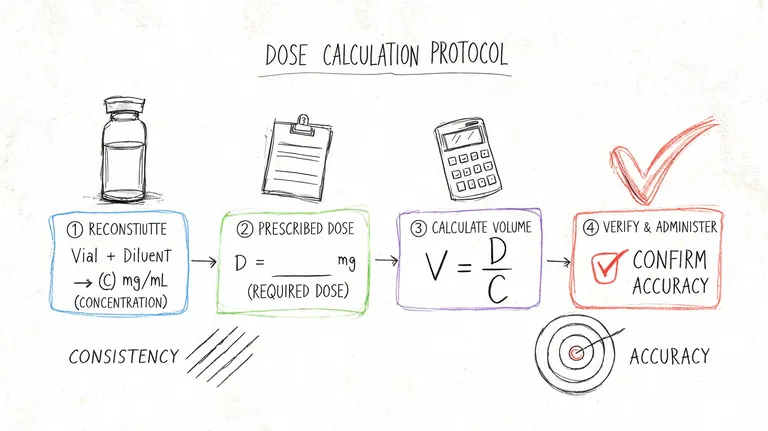
That distinction matters if the goal is to evaluate a protocol. When dosing math shifts from memory, reminders are inconsistent, or cycle days blur together, it becomes difficult to judge whether the plan itself is underperforming or whether the execution was inconsistent.
For users trying to improve adherence on more than one front, nutrition habits affect routine quality too. Track food-side consistency alongside the peptide schedule so changes in one do not obscure the results of the other.
If you want a simpler way to calculate doses, organize cycles, and keep your peptide schedule consistent, PepFlow is built for that job. It helps turn concentration math and timing plans into a routine you can follow.