
Most advice about peptides for energy starts with the wrong model. It treats them like a cleaner version of caffeine, something you take to feel more alert by the afternoon.
That framing usually misses what these compounds are discussed as doing. The more defensible explanation is slower and less glamorous. Many of the perceived “energy” effects are better understood as downstream changes in sleep, recovery, inflammation, fuel handling, and metabolic efficiency, not as a direct jolt minutes after a dose. If you’re new to the category, it helps to start with a basic primer on what peptides are and how they work, then separate that from the broader wellness marketing around “energy.”
That distinction matters because people searching for a way to boost energy, libido, and vitality often get lumped into a single audience, even though the underlying problems can be completely different. Poor sleep, overtraining, metabolic sluggishness, and inflammatory fatigue don’t look the same biologically, so they shouldn’t be discussed as if one peptide solves all of them.
Table of Contents
- Rethinking Energy What Peptides Really Do
- How Peptides Influence Cellular Energy Production
- Key Peptides Linked to Energy and Stamina
- The Evidence Gap Enthusiasm Versus Reality
- Understanding Safety Risks and Side Effects
- Managing Your Protocol Dosage Scheduling and Tracking
- Frequently Asked Questions About Energy Peptides
Rethinking Energy What Peptides Really Do
When people say they want more energy, they often mean one of two things. They either want more immediate alertness, or they want to stop feeling worn down all the time. Those aren’t the same problem.
The hype around peptides for energy tends to blur that distinction. A more grounded view is that many users expect an immediate lift, but the better-supported mechanisms are indirect. A clinical discussion highlighted that many reported “energy” benefits may come from better sleep, reduced inflammation, or improved metabolic efficiency over weeks, rather than a noticeable surge right after dosing, as discussed in this clinical commentary on peptide expectations.
Energy is not just alertness
Your body can feel low-energy for very different reasons:
- Sleep debt: You may need recovery more than stimulation.
- Training fatigue: You may be under-recovered, not under-caffeinated.
- Metabolic inefficiency: Your body may be handling fuel poorly.
- Inflammatory load: You may feel drained even if you’re sleeping enough.
That helps explain why the phrase peptides for energy can mislead people. The compounds most often discussed in this category are usually framed less like “go pills” and more like signals that may influence systems tied to recovery and energy use.
Practical rule: If you expect a same-day stimulant effect, you’re probably using the wrong benchmark.
A better question to ask
Instead of asking, “What peptide gives the biggest boost?” ask, “What kind of fatigue am I trying to solve?”
That changes the whole conversation. A person who wakes up exhausted despite sleeping long hours may need a very different discussion than someone who crashes after workouts or feels mentally flat during a calorie deficit. The useful frame isn’t “more output at any cost.” It’s better system function.
How Peptides Influence Cellular Energy Production
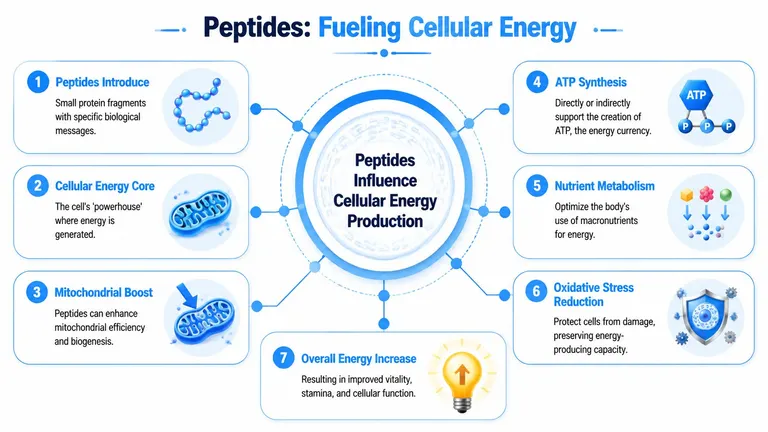
The easiest way to understand this is to stop thinking of peptides as fuel. They aren’t the gasoline. They’re closer to signals that may change how the engine runs.
Inside your cells, mitochondria are where ATP is produced. ATP is the cell’s usable energy currency. Some peptide strategies are discussed at this level, which is why the biology sounds very different from the biology of caffeine or other fast-acting stimulants.
Why mitochondria matter
If your cells are like cities, mitochondria are the power plants. When those power plants are inefficient, the result may show up as poor endurance, weak recovery, inconsistent appetite regulation, or a general sense that effort feels harder than it should.
A review in the nutrition and metabolism literature described mitochondria-targeted peptide signaling as one of the more plausible energy-related mechanisms because it acts where ATP is produced. The same review also noted that certain protein-derived peptides altered gut signals linked to energy regulation, including GLP-1 increasing ninefold in area-under-the-curve, PYY doubling, and GIP rising 21-fold, alongside up to a 21% increase in energy consumption in a protein-hydrolysate intervention, as reported in this review of peptide signaling and metabolism.
The conductor, not the battery
A good analogy is an orchestra conductor. A conductor doesn’t make music by being louder than everyone else. The conductor coordinates timing, balance, and response.
Peptides are often discussed the same way. They don’t “contain” energy. They may influence signals that affect:
- Mitochondrial function: How well cells produce usable energy
- Fuel selection: Whether the body leans more toward fat or glucose in a given context
- Satiety hormones: Signals tied to appetite and energy intake
- Recovery biology: The systems that determine how fast you bounce back
That last point is where readers often get confused. If a peptide improves recovery, and recovery improves your next day, it can feel like an energy effect. But that doesn’t mean the peptide acted like a stimulant.
Better energy can come from cleaner energy production, steadier fuel use, and less physiological drag.
This is why a lot of “energy peptide” marketing feels mismatched with the biology. The more accurate phrase is often metabolic regulator. That’s less flashy, but it’s closer to how many of these mechanisms are described.
Key Peptides Linked to Energy and Stamina
A generic “best peptides for energy” list doesn’t help much because fatigue isn’t one thing. A runner who can’t recover from training, someone with poor sleep and low drive, and someone dealing with inflammation-related exhaustion may all search the same phrase and need completely different answers.
A more useful approach maps the compound to the fatigue pattern. One recent clinical discussion framed the field this way: Thymosin Alpha-1 is considered when fatigue appears tied to chronic inflammation, NAD+ and glutathione are more often positioned around mitochondrial stress and oxidative stress, Sermorelin is discussed around sleep and recovery, and MOTS-c around metabolic signaling, as summarized in this mechanism-based overview of peptides for energy.
If your fatigue is largely training-related, sleep-related, or tied to recovery capacity, that lens is usually more helpful than a supplement-style ranking. The same goes for athletes trying to separate peptide talk from basics like sleep, nutrition, and progressive training load. If that’s your context, this guide to understanding progressive overload is a useful reality check because many “energy” complaints start with programming errors, not missing compounds.
For sport-specific context, PepFlow also has a practical overview of peptides commonly discussed by athletes.
Match the peptide to the fatigue pattern
Sermorelin and recovery-driven fatigue
Sermorelin is usually discussed less as a daytime energizer and more as part of a sleep and recovery conversation. If someone feels flat because recovery is poor, better nighttime restoration could show up later as improved daytime energy.
That matters because many users expect to feel something dramatic right away. A better expectation is often gradual change in recovery quality, if any change happens at all.
MOTS-c and metabolic signaling
MOTS-c is often framed around metabolic signaling. In plain language, that means it gets discussed in relation to how the body manages energy substrates and responds to metabolic stress, not as an instant wakefulness tool.
This is a common point of confusion. “Metabolic” sounds abstract, but it usually means the peptide is being talked about in terms of system regulation, not stimulation.
NAD+ and glutathione for mitochondrial stress
These are commonly grouped into conversations about mitochondrial function and oxidative stress. That doesn’t automatically mean they fix fatigue, and it doesn’t make every marketing claim credible. It does explain why they’re often discussed by people who describe feeling depleted rather than sleepy.
Also worth noting: not all items marketed alongside peptides are peptides. In practice, consumers often encounter mixed “energy” menus where true peptides sit beside non-peptide compounds.
Thymosin Alpha-1 and inflammatory fatigue
This category is most relevant when fatigue seems tied to ongoing inflammation or immune stress. That’s a narrower use case than general low motivation or afternoon tiredness, but it’s a useful example of why matching mechanism to symptom pattern matters.
Comparison of Common Peptides for Energy
| Peptide | Primary Proposed Mechanism | Potential Target | Evidence Level (Human Energy/Fatigue) |
|---|---|---|---|
| Sermorelin | Growth-hormone pathway support tied to sleep and recovery physiology | Poor recovery, sleep-linked fatigue | Limited and indirect for energy |
| MOTS-c | Metabolic signaling | Metabolic sluggishness, fuel-handling concerns | Limited for human energy outcomes |
| Thymosin Alpha-1 | Immune and inflammation-related signaling | Inflammation-driven fatigue patterns | Limited and context-specific |
| Glutathione | Oxidative-stress support | Mitochondrial stress, recovery burden | Discussed clinically, but broad energy claims remain variable |
| NAD+ | Cellular energy transfer context | Perceived depletion, mitochondrial stress | Commonly discussed, but energy claims vary and should be interpreted cautiously |
The right question isn’t “Which peptide is strongest?” It’s “Which mechanism actually matches the kind of fatigue I’m experiencing?”
The Evidence Gap Enthusiasm Versus Reality
The science around peptides is interesting. The marketing is often much more confident than the data.

By 2026, peer-reviewed coverage described peptides as a rapidly expanding category, with nearly 100 approved peptide drugs worldwide and many more peptide-based candidates moving through clinical development. That growth is real, but it does not mean every non-approved wellness use has strong human evidence, as summarized in this PubMed Central review of peptide-based drug development.
Why promising biology is not the same as proof
A mechanism can make sense and still fail in real-world human use.
That happens all the time in medicine. A compound might improve a biomarker, affect a pathway, or look impressive in a cell model, yet still not deliver meaningful fatigue relief, durable functional improvement, or acceptable safety in broader human populations.
Three common reasons explain the gap:
- Animal findings don’t automatically translate: Human physiology is more variable.
- Pilot studies are fragile: Early signals can disappear in larger trials.
- Energy is subjective: Feeling better can come from expectation, recovery, training changes, or sleep improvements.
How to read peptide claims more carefully
When you see a peptide marketed for energy, ask four questions:
- Is the claim about alertness or recovery?
- Is the evidence from animals, small human pilots, or larger trials?
- Is the mechanism direct, or is it a downstream effect?
- Would a simpler explanation fit the improvement?
A short video overview can help put that skepticism in context before you commit to any protocol.
Instead of more hype, a cleaner distinction is needed between biological plausibility and clinical proof.
Understanding Safety Risks and Side Effects
The fact that a peptide may influence energy metabolism isn’t automatically reassuring. It’s a reason to be careful.
A 2009 review in Diabetes described natriuretic peptides as regulators of body weight and energy metabolism, with mouse experiments showing lower total body fat, increased whole-body oxygen consumption, and higher fat oxidation under a high-fat diet, linked to increased expression of PGC-1α and PPAR-δ. The same line of evidence is a reminder that these are biologically active signals, not casual wellness add-ons, and much of the strongest evidence still comes from animal work rather than long-term human safety trials, as described in this review on natriuretic peptides and energy metabolism.
Why biological activity cuts both ways
People sometimes hear “natural signaling molecule” and assume “gentle” or “low risk.” That doesn’t follow.
If a compound can alter metabolism, recovery pathways, inflammation, or mitochondrial behavior, then it can also create unwanted effects, wrong-fit effects, or unknown long-term effects. The core issue isn’t whether a peptide sounds advanced. It’s whether the benefits, risks, and uncertainties are actually understood for the specific use case.
Quality and supervision matter
The safety conversation also includes what you’re taking and how you’re being monitored.
Pay attention to these practical issues:
- Source quality: Unregulated markets create obvious questions about purity, identity, and dose accuracy.
- Medical context: Existing conditions, medications, and treatment goals change the risk profile.
- Tracking adverse changes: New symptoms shouldn’t be brushed off as “part of the process.”
- Expectation control: Chasing stronger subjective effects can push people toward poor decisions.
A compound can be biologically sophisticated and still be the wrong fit for your situation.
If you’re considering peptides for energy, safety shouldn’t be the final checkbox. It should shape the entire decision from the start.
Managing Your Protocol Dosage Scheduling and Tracking
With peptides, more effort on one day usually matters less than repetition across many days. That’s why protocol management tends to matter more than people expect.
In practitioner-oriented dosing discussions, compounds marketed for energy are often described on a schedule, not as on-demand boosters. For example, Sermorelin is commonly described in the 100–500 mcg daily range, often taken before bed, while glutathione injections are commonly described at 200–400 mg and positioned around oxidative-stress support rather than fast stimulation. The practical message is that consistency, timing, and cycle structure matter, and reported “energy” effects are more likely to reflect recovery or metabolic changes over 2–4+ weeks than a quick rush, as summarized in this practitioner-oriented peptide dosing overview.
Why timing changes the experience
If a protocol is built around recovery physiology, bedtime timing makes sense. You’re not taking it because you want a surge before a meeting. You’re aligning it with the body process the protocol is trying to influence.
That difference changes how you judge results. Instead of asking, “Did I feel it in an hour?” you might ask:
- Was sleep more restorative over time?
- Did morning readiness improve?
- Did post-workout recovery feel steadier?
- Did energy become less erratic day to day?

What to track besides “more energy”
“Energy” is too vague to track well. A better approach is to monitor the inputs and outcomes most likely to change first.
Useful tracking points include:
- Sleep quality: Bedtime, wake time, and how restored you feel
- Recovery markers: Soreness, session readiness, and next-day fatigue
- Routine adherence: Whether doses were taken as scheduled
- Context factors: Training load, illness, travel, and calorie intake
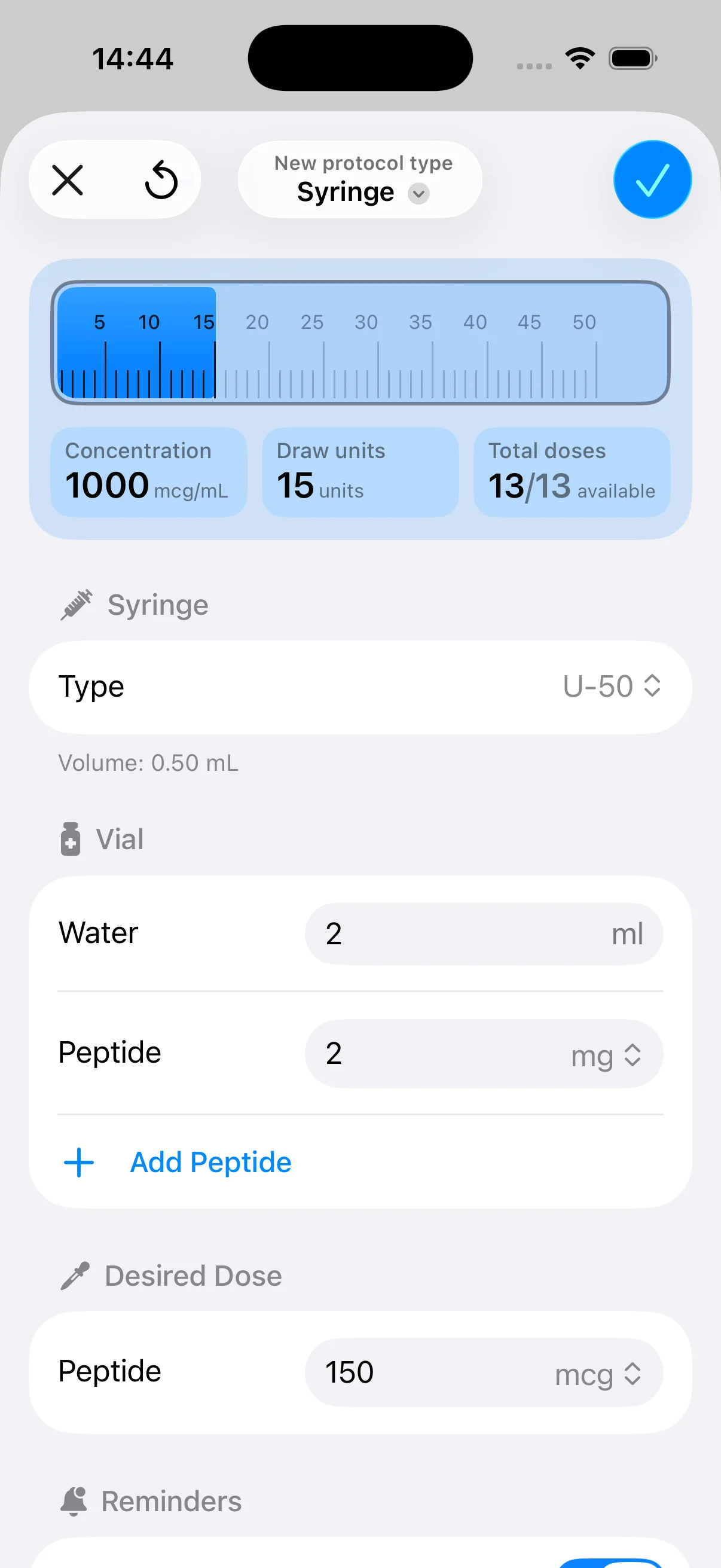
For people following structured regimens, a tool like PepFlow’s peptide dosage guide can help translate microgram targets into practical dosing steps and scheduling logic. The PepFlow app itself is designed for this kind of routine management. It calculates peptide doses, handles cyclical schedules, and tracks adherence with reminders. That’s operational help, not medical advice, but it addresses a real problem. Many protocols fail at the level of inconsistency long before anyone can judge whether the compound was useful.
Frequently Asked Questions About Energy Peptides
How fast do peptides for energy work
Usually not like caffeine. If someone expects a quick subjective lift, they’re often using the wrong comparison.
For many compounds discussed in this category, people are really talking about recovery, metabolic regulation, or reduced physiological drag, which may show up gradually. A better expectation is to watch for changes in sleep quality, training readiness, or steadier daily function before expecting a dramatic sense of “boost.”
Are these even peptides in every case
No. In consumer discussions, “energy peptides” often becomes a catch-all label. Some compounds grouped into that bucket are peptides, while others are discussed alongside peptides because they relate to mitochondrial function, oxidative stress, or recovery.
That makes careful labeling important. If you’re evaluating a protocol, ask what the compound is, what mechanism is being proposed, and whether the claim is about alertness, endurance, recovery, or fatigue reduction.
How do I choose a provider or protocol discussion
Look for someone who can explain why a specific compound matches your symptom pattern, what outcome you’re tracking, how long the trial window is, and what would count as a reason to stop.
You should also expect a realistic conversation about uncertainty. If you want broader habits that may enhance your daily energy, that kind of resource can be useful as a complement because peptides shouldn’t be treated as a substitute for sleep, nutrition, training management, or medical evaluation of persistent fatigue.
If you’re following a structured peptide schedule and want help with the practical side, PepFlow gives you a way to calculate doses, organize cycles, set reminders, and log adherence without doing the math manually each time.