
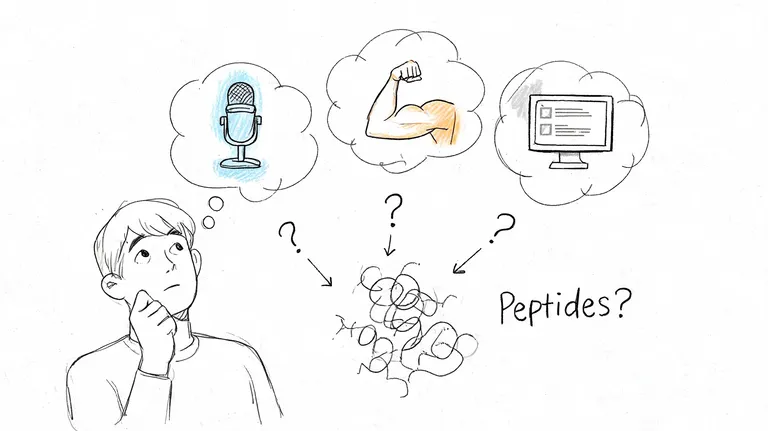
You’re probably here because peptides keep popping up everywhere. A gym friend mentions BPC-157. A podcast host talks about recovery and anti-aging. An online forum swears one protocol changed everything, while the next post warns that most products are unregulated and poorly understood.
That mix of promise and confusion is normal. A peptide supplement sits at an odd intersection of science, wellness, and self-experimentation. The science can be interesting. The day-to-day reality can be messy. And the obstacle is not the idea of peptides itself. It’s the practical work of using them consistently, preparing them correctly, and keeping their protocol organized over time.
Table of Contents
- The Rising Interest in Peptide Supplements
- What Exactly Is a Peptide Supplement
- Common Peptide Categories and Their Functions
- Evaluating the Evidence for Peptide Benefits
- Navigating Safety and Legal Considerations
- The Essentials of Peptide Protocol Management
- Solving the Adherence and Dosing Challenge
The Rising Interest in Peptide Supplements
A lot of interest in peptide supplements starts the same way. Someone isn’t looking for a chemistry lesson. They’re looking for better recovery, better skin, less pain, or a more structured approach to healthy aging. Then they find a flood of acronyms, claims, warnings, and product listings that all seem to assume they already know the rules.
That interest isn’t random. The peptide supplements market analysis from Future Market Insights says the global market was valued at USD 4.1 billion in 2025 and is projected to reach USD 11.2 billion by 2035, growing at a 10.4% CAGR. The same source notes that online retail accounts for 39.2% of sales.
Why people keep hearing about them
Three forces are pushing peptides into everyday wellness conversations:
- Preventive health interest: People want tools they can use before a problem becomes a crisis.
- Fitness culture: Recovery, body composition, and performance language spreads fast in training communities.
- Anti-aging curiosity: Many shoppers are drawn to anything that sounds more targeted than a generic supplement.
This creates a strange reading environment. One page talks about peptides like they’re the next frontier. Another treats them like a category you should avoid entirely. Both reactions miss something important.
Most problems with peptide use don’t start with motivation. They start with poor understanding and poor protocol management.
Why this topic feels harder than it should
A protein powder is simple. You buy it, scoop it, drink it. A peptide supplement often isn’t like that. Even before safety questions show up, users may have to think about product category, source quality, preparation, timing, storage, and dosing accuracy.
That’s why practical discipline matters so much here. If you’re curious about peptides, you don’t just need to know what they might do. You need to know how they’re organized, handled, and tracked in real life.
What Exactly Is a Peptide Supplement
The easiest way to understand peptides is to think in language.
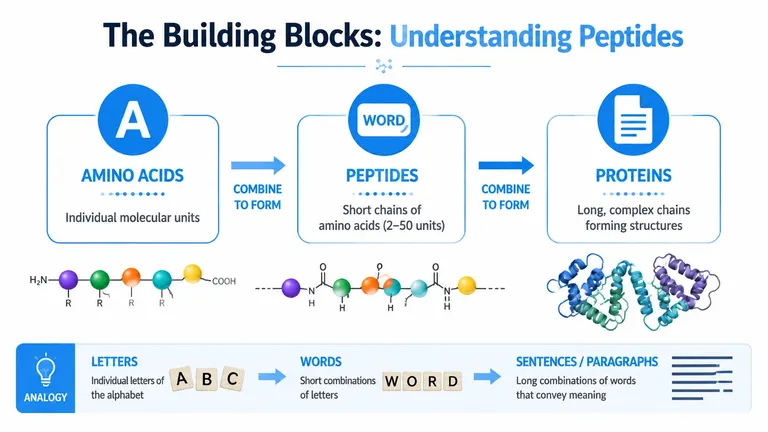
Amino acids are letters. Peptides are words. Proteins are full sentences.
A single letter doesn’t communicate much on its own. Put a few letters together, and you get a word with a specific meaning. Build a long chain with more structure, and you get a sentence that can do more complex work. Biology works in a similar way.
The basic idea
A peptide is a short chain of amino acids. Because it’s smaller than a full protein, it often behaves more like a targeted signal than a big structural component.
That’s where many beginners get confused. They hear “peptide” and assume it’s just another kind of protein powder. It isn’t. Protein powders mainly provide raw material for nutrition. Peptides are usually discussed for their specific biological signaling roles or for targeted uses in skincare, recovery, or wellness routines.
Why size matters
Smaller molecules can act with more precision in certain contexts. That doesn’t automatically make them better. It just means they may interact differently.
A useful mental model is this:
- Protein supplement: Think of bricks delivered to a construction site.
- Peptide supplement: Think of a text message telling workers where to focus.
Both matter. They do different jobs.
Practical rule: Don’t evaluate a peptide supplement the way you’d evaluate a standard nutrition product. Ask what function it’s supposed to influence, how strong the human evidence is, and what handling it requires.
Natural versus synthetic
Your body already makes many peptides on its own. That’s normal biology. The confusion starts when people move from natural body peptides to synthetic peptides sold in wellness channels.
Some peptide products, like collagen peptides, fit more comfortably into the supplement world. Others are sold in a more experimental way and may sit in a regulatory gray zone. That’s why two products can both be called peptides while having very different evidence standards and practical requirements.
A smart way to read peptide claims is to separate three questions:
- What is the molecule supposed to do?
- What kind of evidence supports that use?
- What level of handling and caution does the product demand?
If you keep those three questions in view, the category gets much less confusing.
Common Peptide Categories and Their Functions
Once you understand that peptides are short amino acid chains with targeted roles, the next challenge is decoding the names. A newcomer sees strings like GHK-Cu or BPC-157 and it can feel like entering a private club with no glossary.
The easiest way to stay oriented is to group them by the primary area of interest people usually associate with them. That doesn’t prove effectiveness. It gives you a map of the language people use.
A simple category map
| Category | Example Peptides | Primary Area of Interest |
|---|---|---|
| Recovery and tissue support | BPC-157, TB-500 | Tissue repair and recovery interest |
| Skin and collagen support | GHK-Cu, collagen peptides | Skin appearance and collagen-related interest |
| Metabolic function | GLP-1 related peptide therapies, insulin | Blood sugar and metabolic signaling |
| Immune and regulatory interest | Thymosin-related peptides | Immune modulation interest |
| Cosmetic and appearance-focused interest | Copper Tripeptide-1, soybean peptides, rice-derived peptides | Skin wellness and appearance-related goals |
How these categories are usually described
Recovery-focused peptides are often discussed as tools for supporting healing or returning to training after strain. In online communities, users often talk about them in the context of tendons, joints, or general recovery rhythms.
Skin-focused peptides tend to attract a different audience. These are the products people look at when they care about collagen, wound appearance, texture, or broader “healthy aging” goals.
Metabolic peptides are easier to understand because the concept of signaling is more intuitive in that context. The body constantly sends messages related to hunger, blood sugar, and energy use. Some peptides are part of that signaling environment.
Why the acronyms can mislead
Acronyms can make products sound more scientific than they really are in practice. The name itself tells you very little about quality, evidence, or safety. It only identifies a molecule or class.
That matters because people often move too quickly from “I’ve heard this acronym a lot” to “this must be established.” Those are very different things.
A peptide name is not a proof statement. It’s just a label. What matters is the evidence behind the use, the quality of the product, and the discipline of the protocol.
The most useful question to ask
Instead of asking, “Which peptide is best?” ask, “What is this category trying to influence, and how strong is the evidence for that specific use?”
That one question filters out a lot of hype. It also prepares you for the next step, which is learning to separate a peptide with meaningful human data from one that mostly lives in speculation, forums, and preclinical research.
Evaluating the Evidence for Peptide Benefits
The word “peptide” can make weak evidence sound advanced. That’s why evidence quality matters more here than marketing language.
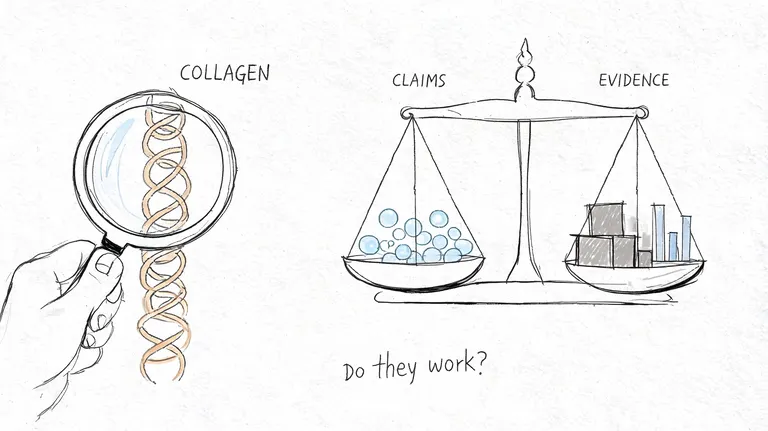
A good starting point is collagen peptides, because this is one of the clearer examples where human clinical research gives us something concrete to work with.
Collagen peptides as the clearest example
The collagen peptide clinical review in PubMed Central reports that 10 to 20 grams of collagen peptides daily for 6 to 9 months can significantly improve activities of daily living and reduce pain intensity. The same review notes that, for most other synthetic research peptides, human clinical evidence is limited, and long-term safety profiles remain unknown.
That’s useful because it shows what stronger evidence looks like. You have a defined type of peptide, a defined dose range, a defined time frame, and measured outcomes in humans. Even then, the findings are still specific. They don’t mean every peptide works for every goal.
How to judge claims you see online
When you read about a peptide supplement, sort the claim into one of these buckets:
- Human evidence with defined dosing: This is the most useful category for practical decision-making.
- Animal or lab evidence: Interesting, but not enough to assume real-world human benefit.
- Anecdotes: Potentially worth noting, but easy to overvalue.
A lot of online excitement comes from the second and third buckets.
Here’s a helpful way to think about it. If collagen peptides are like a product with an instruction manual and test data, many trendy research peptides are more like prototypes. People are talking about what they might do, not what has been clearly established in everyday human use.
For a quick explainer on how people discuss evidence and mechanisms, this video gives broader context before you make up your mind:
Stronger evidence doesn’t just tell you whether something might help. It tells you how specific your expectations should be.
That mindset protects you from two common mistakes. One is dismissing the whole category because some claims are exaggerated. The other is assuming all peptides deserve equal confidence because they share the same label.
Navigating Safety and Legal Considerations
Enthusiasm needs a brake pedal here. A peptide supplement may sound precise and modern, but a lot depends on whether you’re looking at an established medical use, a conventional supplement format, or an experimental product sold through less regulated channels.

Why the gray area matters
The review of peptide safety and regulation in PubMed Central states that high-quality, long-term safety data for combined peptide protocols in humans is severely lacking. It also notes that much of the evidence comes from lab or animal studies, leaving people uncertain about risks such as endocrine disruption or problems tied to unregulated sources, while regulators such as the FDA and TGA classify many as unapproved substances.
That has practical consequences. If a product is unapproved or sold in a research-oriented channel, you may not have the kind of confidence you’re used to with ordinary supplements. Purity, labeling accuracy, and consistency become central concerns, not side issues.
If you want a cleaner line between approved medical peptides and the broader wellness market, this overview of FDA approved peptide drugs helps clarify that distinction.
A simple risk filter
Before using any peptide product, ask yourself:
- What category is this in? Approved drug, standard supplement, or research product.
- What evidence supports human use? Not theory. Not forum stories. Human use.
- How much uncertainty am I accepting? Especially for long-term or combined protocols.
- Can I verify what I’m buying? If not, that uncertainty becomes part of the risk.
Stacking deserves extra caution
Many users do not stop at one peptide. They combine them, cycle them, pause them, restart them, and change variables along the way. That is exactly where the evidence gets thinner and the actual management gets harder.
If a single peptide already involves uncertainty, stacking multiple peptides multiplies the need for careful judgment and documentation.
A cautious approach isn’t fear-based. It’s just honest. When safety data is limited, you need tighter standards for sourcing, decision-making, and recordkeeping.
The Essentials of Peptide Protocol Management
A peptide protocol often succeeds or fails on mundane details. Not theory. Not motivation. Details.
That includes how the product is prepared, how it’s stored, how it’s injected, and whether the user can repeat the same routine accurately over time. Those tasks can feel boring compared with discussions about benefits, but they shape the actual outcome.
Handling changes the outcome
The practical guide to peptide reconstitution and injection explains that proper reconstitution requires bacteriostatic water, techniques that avoid bubbles, and a solution that remains clear. It also notes that subcutaneous injection sites should be rotated to reduce irritation, and that letting the peptide reach room temperature before injection can reduce adverse reactions.
Here’s the plain-language version. A peptide isn’t something you want to shake, guess at, or handle carelessly. Think of it less like mixing a sports drink and more like handling a delicate ingredient that can be compromised by poor technique.
A practical checklist helps:
- Use the right diluent: The guidance above specifically references bacteriostatic water.
- Inject slowly during reconstitution: That helps limit bubbles.
- Inspect the vial: If the solution looks cloudy or contains particles, that’s a warning sign.
- Rotate subcutaneous sites: Repeating the same location raises the chance of local irritation.
- Let it warm appropriately before injection: Room temperature can make administration easier on the body.
The discipline most guides skip
Many individuals who consider peptides already think about outcomes. Fewer think about workflow. But workflow is where consistency lives.
You need to know what day you reconstituted a vial. You need to remember which site you used last time. You need to know whether your schedule still matches your intended protocol. That’s not glamorous, but it’s the difference between a controlled routine and improvised guesswork.
This is also where broader nutrition context matters. Someone trying to support recovery with a peptide supplement still needs basics like training load, sleep, and enough dietary protein. If you lift seriously, a practical reference for protein intake for serious lifters can help you keep fundamentals in place instead of expecting a peptide to carry the whole plan.
For a more detailed walkthrough of preparation steps, this guide on how to reconstitute peptides is useful as a procedural reference.
Solving the Adherence and Dosing Challenge
The hardest part of a peptide protocol usually isn’t learning the names. It’s running the protocol without sloppy math, missed doses, or a half-finished note in your phone that no longer reflects what you’re doing.
Where self-managed protocols go wrong
The discussion of black market peptide risks and calculation errors points to a major practical problem: dosing errors from manual calculations are a significant and underserved risk in self-administered peptide protocols. Small mistakes in converting micrograms to units for different vial concentrations can lead to inefficacy or side effects.
That’s easy to underestimate until you try to manage a real schedule. You may need to track:
- Reconstitution details: What went into the vial and when.
- Dose conversions: The amount you want in micrograms versus the units you draw.
- Timing rules: Daily, alternating, cyclical, or paused periods.
- Injection history: Which site was used and when.
Each task seems manageable alone. Together, they create a system with lots of chances to drift.
Why digital organization helps
This is one area where a tool can solve a real problem instead of adding noise. A dedicated tracker or calculator reduces mental load by turning repeated manual steps into a consistent workflow.
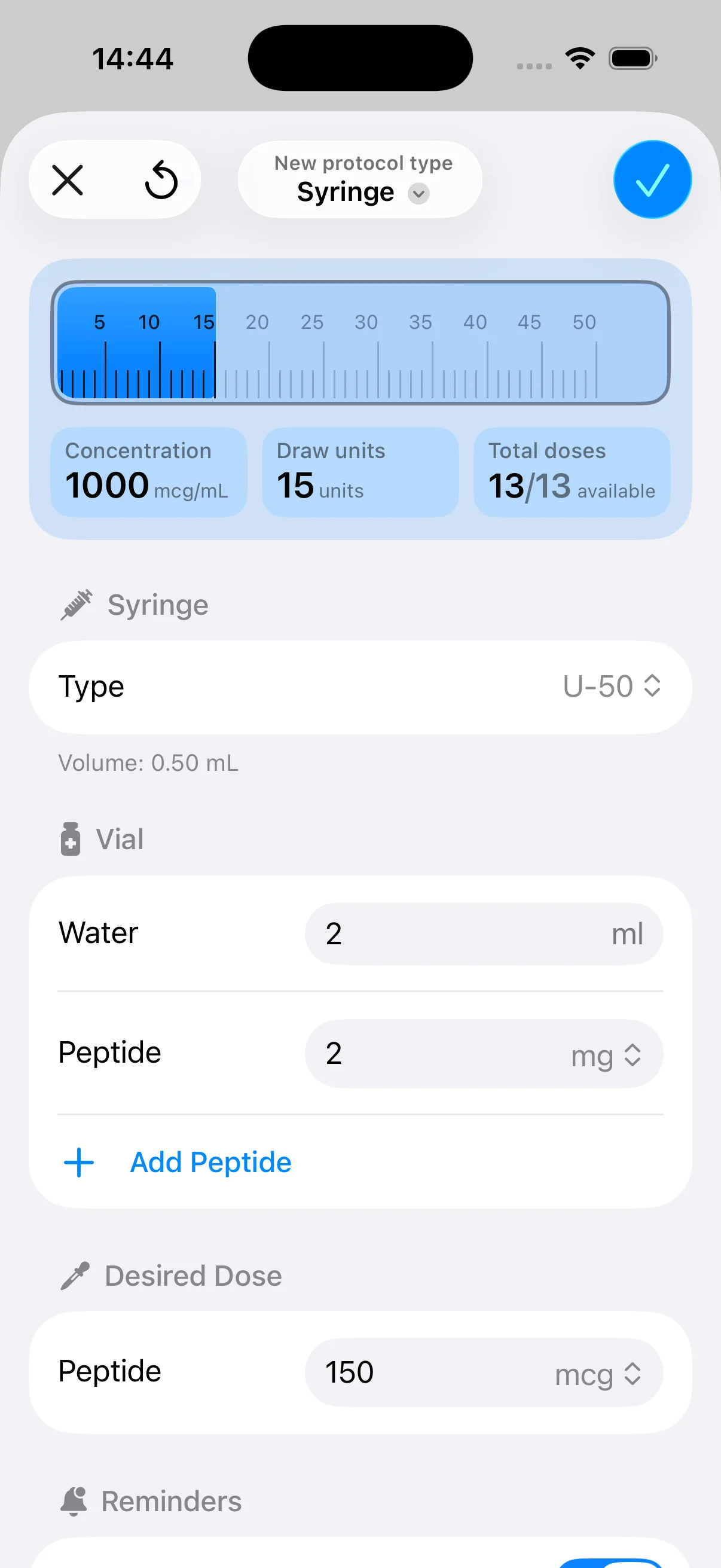
For example, PepFlow’s peptide calculator app is built around the practical issues users run into: converting desired microgram doses into syringe-friendly units based on vial amount and reconstitution volume, organizing cycled protocols, setting reminders, and keeping a usable history log. That kind of structure matters because accuracy and adherence are closely linked. If your notes are messy, your protocol usually is too.
Good protocol management is less about intensity and more about repeatability. Can you prepare, measure, schedule, and log the same way every time?
That question is more important than most benefit claims. A promising molecule still won’t help much if the plan around it is disorganized.
If you’re using a peptide supplement and want a cleaner way to manage dose calculations, schedules, and protocol history, PepFlow offers a focused planning tool for exactly that job. It won’t replace medical advice, but it can reduce manual math and help you stay organized enough to follow your routine the way you intended.