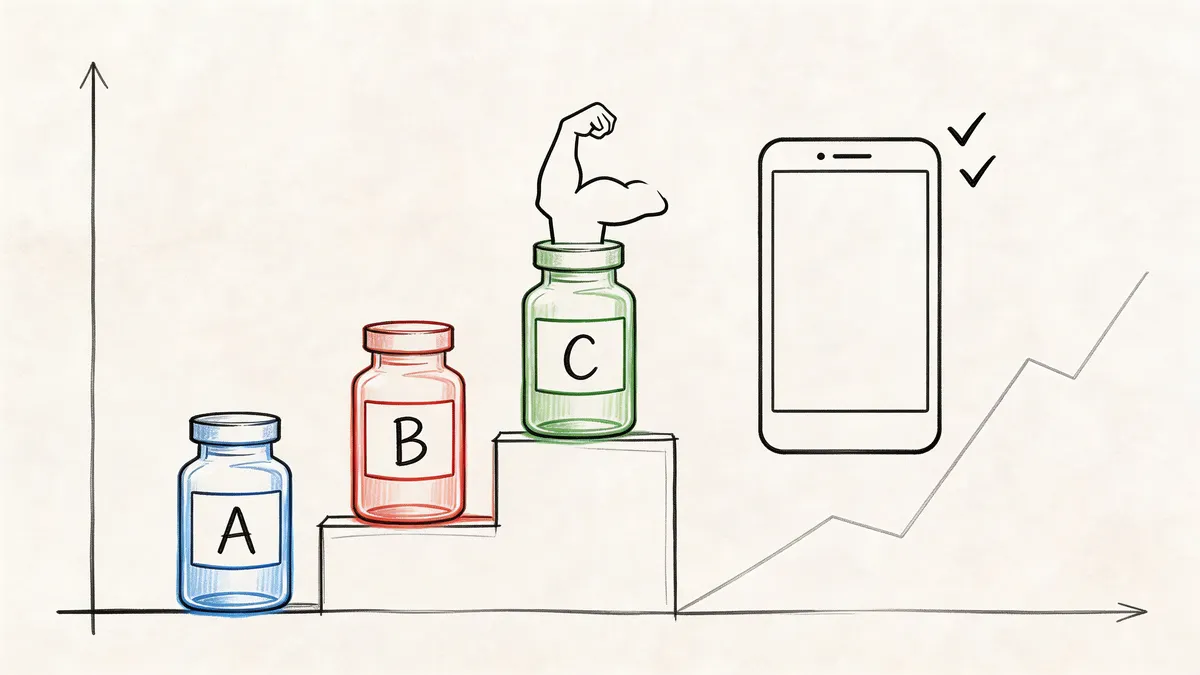
You’re probably in the same spot most first-time peptide users hit. You train hard, eat well, recover decently, but progress feels slower than it should. Then you start reading about a peptide stack for muscle growth, and the internet immediately turns into a mess of conflicting dose charts, vague forum advice, and syringe math that somehow gets harder the longer you look at it.
That’s where the typical user falters. Not because the compounds are automatically useless, but because the protocol is sloppy from the start. They pick peptides before they define the goal. They copy a dose meant for someone else. They miss injections, guess concentrations, and then claim the stack “didn’t work.”
A good protocol is boring on paper. It’s clear, repeatable, and easy to follow when life gets busy. That’s what produces useful feedback. You need to know what you’re taking, why you’re taking it, how long you’ll run it, how you’ll monitor it, and what would make you adjust or stop.
Table of Contents
- Starting Your Peptide Journey the Right Way
- Choosing Your Peptide Candidates for Muscle Growth
- Designing Your Protocol Dosing Cycling and Stacking
- Executing Your Plan Reconstitution Injection and Logging
- Master Your Protocol and Stay Consistent with PepFlow
- Monitoring Progress and Managing Side Effects
- Frequently Asked Questions About Peptide Stacks
Starting Your Peptide Journey the Right Way
The new user pattern is predictable. Someone wants more lean mass, better recovery, maybe some help preserving muscle while pushing training volume. They search for a peptide stack for muscle growth, open ten tabs, and end up with three totally different “standard” protocols.
One says daily injections. Another says twice weekly. A third throws in IGF-1 LR3 immediately and treats that like beginner territory. None of them explain why one option fits a first cycle better than another.
That confusion creates two bad habits.
- People chase compounds instead of outcomes. They ask which peptide is strongest before deciding whether the real target is lean mass, recovery, body recomposition, or preserving performance during a calorie deficit.
- People treat dosing like approximation. They round doses, eyeball syringe units, and assume being “close enough” is fine.
- People skip the schedule design. They focus on what to buy, not on whether they can execute the protocol consistently for the full cycle.
Practical rule: If you can’t explain your dosing, timing, cycle length, and stop conditions in one page of notes, you’re not ready to run the stack.
A structured approach fixes most of this. Pick the outcome first. Choose the simplest stack that matches that goal. Set a realistic cycle. Decide how you’ll track response. Only then does the actual compound selection make sense.
Peptides aren’t magic. They amplify a training and recovery environment. When the protocol is tight, you can evaluate whether the stack helped. When it’s messy, all you learn is that inconsistency hides results.
Choosing Your Peptide Candidates for Muscle Growth
A first cycle usually goes off course here. Someone picks the most aggressive stack they can find, ignores how often it needs to be dosed, then misses injections by week two and has no clean read on what was effective.
Choose candidates by mechanism and by how repeatable the protocol will be in real life.
For muscle growth, peptide options fall into a few practical buckets. The first is GH-support peptides, where compounds like CJC-1295, Ipamorelin, and sometimes Tesamorelin are used to increase growth-hormone signaling indirectly. The second is direct growth signaling, where IGF-1 LR3 pushes closer to the anabolic endpoint itself. A third category matters less for beginners but still shows up in research and advanced stacks, especially compounds discussed in PepFlow’s broader review of best peptides for muscle growth.
The difference matters because each category creates different management problems. GH secretagogues are usually easier to build into a repeatable first protocol. Direct anabolic peptides can be harder to evaluate cleanly because the upside, side effects, and dosing sensitivity all rise at the same time.
Start with mechanism and execution burden
CJC-1295 + Ipamorelin is the stack many first-time users should examine first. CJC-1295 acts as a GHRH analog. Ipamorelin is a selective GHRP. Used together, they are commonly chosen to support recovery, sleep quality, and lean-mass progress through increased GH signaling rather than through direct IGF-driven aggression. For a beginner, a key advantage is not hype. It is that the stack can be structured in a way that is easier to track, adjust, and repeat.
IGF-1 LR3 + Follistatin sits at the other end of the spectrum. IGF-1 LR3 extends IGF activity well beyond the native peptide’s short half-life, and Follistatin is used for its relationship to myostatin inhibition. Advanced users look at that pairing for more aggressive hypertrophy. It also raises the odds that you will misread the cycle if training, food intake, glucose control, or side effects are not logged tightly.
Ipamorelin + Tesamorelin can be a middle option for people who want a GH-oriented setup without jumping straight into a more aggressive anabolic stack. It still requires discipline, but the logic is simpler than trying to combine direct growth signaling with a first-cycle learning curve.
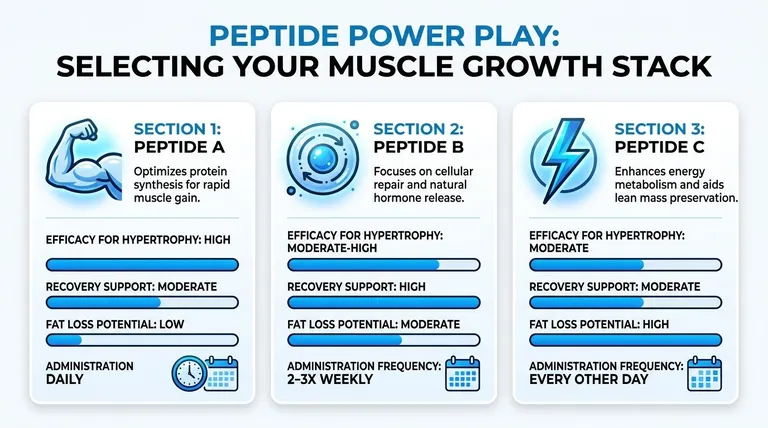
Comparison of Top Peptides for Muscle Growth
| Peptide | Primary Mechanism | Primary Benefit | Synergizes With |
|---|---|---|---|
| CJC-1295 | GHRH analog that supports sustained GH release | Recovery support, lean mass preservation, steady hormonal signaling | Ipamorelin |
| Ipamorelin | Selective GHRP that triggers GH pulses | Recovery, sleep support, GH pulse support with lower concern around cortisol response than older GHRPs | CJC-1295 |
| IGF-1 LR3 | Direct IGF-1 signaling with longer activity | Aggressive hypertrophy and tissue regeneration | Follistatin |
| Follistatin | Myostatin inhibition | Supports a more aggressive hypertrophy strategy | IGF-1 LR3 |
| Tesamorelin | GH-related support in blended protocols | Body composition and recovery-oriented support | Ipamorelin |
What usually works best for a first cycle
The best first choice is usually the peptide stack you can dose correctly for the full cycle, log consistently, and evaluate without guessing.
That usually pushes beginners toward a short candidate list:
- CJC-1295 + Ipamorelin: Strong first option for broad muscle-support goals, recovery support, and a protocol that can be repeated with discipline.
- Ipamorelin + Tesamorelin: Reasonable for someone who wants GH-focused support and is willing to keep timing consistent.
- IGF-1 LR3 + Follistatin: Better reserved for advanced users who already know how they respond to simpler protocols.
One detail changes the whole setup. CJC-1295 with DAC and without DAC creates very different scheduling demands, which is exactly the kind of issue people miss when they copy a stack from a forum. This guide on CJC-1295 DAC vs no DAC differences in real protocol design is worth reading before you choose your first GH-based stack.
A good candidate earns its place by fitting your goal and your schedule. If you cannot follow the dosing calendar without reminders, logging, and clear reconstitution notes, the stack is too complex for where you are right now. That is the point where PepFlow stops being optional and becomes the tool that keeps the protocol usable.
Designing Your Protocol Dosing Cycling and Stacking
Monday starts clean. By Thursday, the plan is already drifting. One dose got pushed because of dinner, one vial concentration was written down wrong, and now you are guessing whether the stack failed or the schedule did. That is how beginners waste a full cycle.
A usable protocol solves that before the first injection. The goal is not to copy a popular stack. The goal is to build a setup you can repeat, measure, and adjust without confusion.
Build from constraints, not hype
Start with the result you want, then check it against your real schedule.
Muscle gain protocols usually tempt beginners into overbuilding. More compounds, more frequent dosing, more room for error. A better first setup is the one you can execute for the full cycle with stable timing and clean notes. Earlier guidance in this article already covered common CJC-1295 and Ipamorelin dosing ranges. What matters here is how those numbers fit your week.
Write these decisions before day one:
- Primary outcome. Size, recovery, body composition, or a blend.
- One core stack. Keep the first cycle interpretable.
- Cycle length. Set the full on-cycle in advance.
- Dose frequency. Match it to your work, sleep, and training schedule.
- Timing rules. Decide exactly when doses happen.
- Stop rules. Define what triggers a dose reduction, pause, or end to the cycle.
That last point gets ignored too often. If there is no written rule for adjusting the protocol, beginners tend to react emotionally. They raise the dose when progress feels slow, or they keep pushing through side effects they should have addressed early.
Stacking only works when each compound has a job
Every peptide in the stack needs a reason to be there.
If CJC-1295 is there to support GH signaling and Ipamorelin is there to pair with it, the protocol stays coherent. If you add a third compound because a forum post promised faster growth, you create overlap, more dosing windows, and worse feedback. Then you cannot tell whether the results came from the stack, your training block, or simple water retention.
For a first cycle, two compounds is usually enough. One is simpler but may leave performance on the table. Three or more raises complexity fast. That is the trade-off.
A written protocol should include:
- Compound name
- Target dose
- Dose frequency
- Injection days
- Preferred injection time
- Training or meal timing notes
- Cycle start date
- Cycle end date
- Symptoms that trigger review
- Progress markers you will track
If any of those fields are still vague, the protocol is not ready.
A practical way to set the cycle
The cleanest first protocol is usually boring on purpose. Stable dose. Stable schedule. Enough time to evaluate.
For example, if you choose a CJC-1295 and Ipamorelin stack, decide whether you can manage the injection frequency before you commit. A protocol that asks for multiple touchpoints across the day can look manageable on paper and fall apart once work, meals, and training start competing with it. Consistency beats theoretical perfection.
Use a few simple rules:
- Start at the low end of the planned range if tolerability is unknown.
- Hold the setup long enough to judge it fairly.
- Change one variable at a time.
- Do not add a new compound mid-cycle unless there is a clear reason.
That is how you get usable feedback. You are not just running a stack. You are testing a repeatable system.
Cycling has to be planned before the cycle starts
Cycling is part of the protocol, not an afterthought.
Write down the start date, planned end date, and review points. Then decide what happens at the end. Will you stop fully, reassess labs and symptoms, or return later with the same stack at the same dosing pattern? If you do not answer that up front, cycles tend to stretch longer than intended and the data gets messy.
Beginners also underestimate schedule fatigue. A protocol that feels easy in week one may feel annoying by week six. That is one reason simpler stacks often outperform more aggressive ones in practice. The person who follows the plan precisely usually gets better results than the person who keeps improvising.
Dose math should be settled before the first vial goes into rotation
Do not leave concentration math to memory or late-night syringe math.
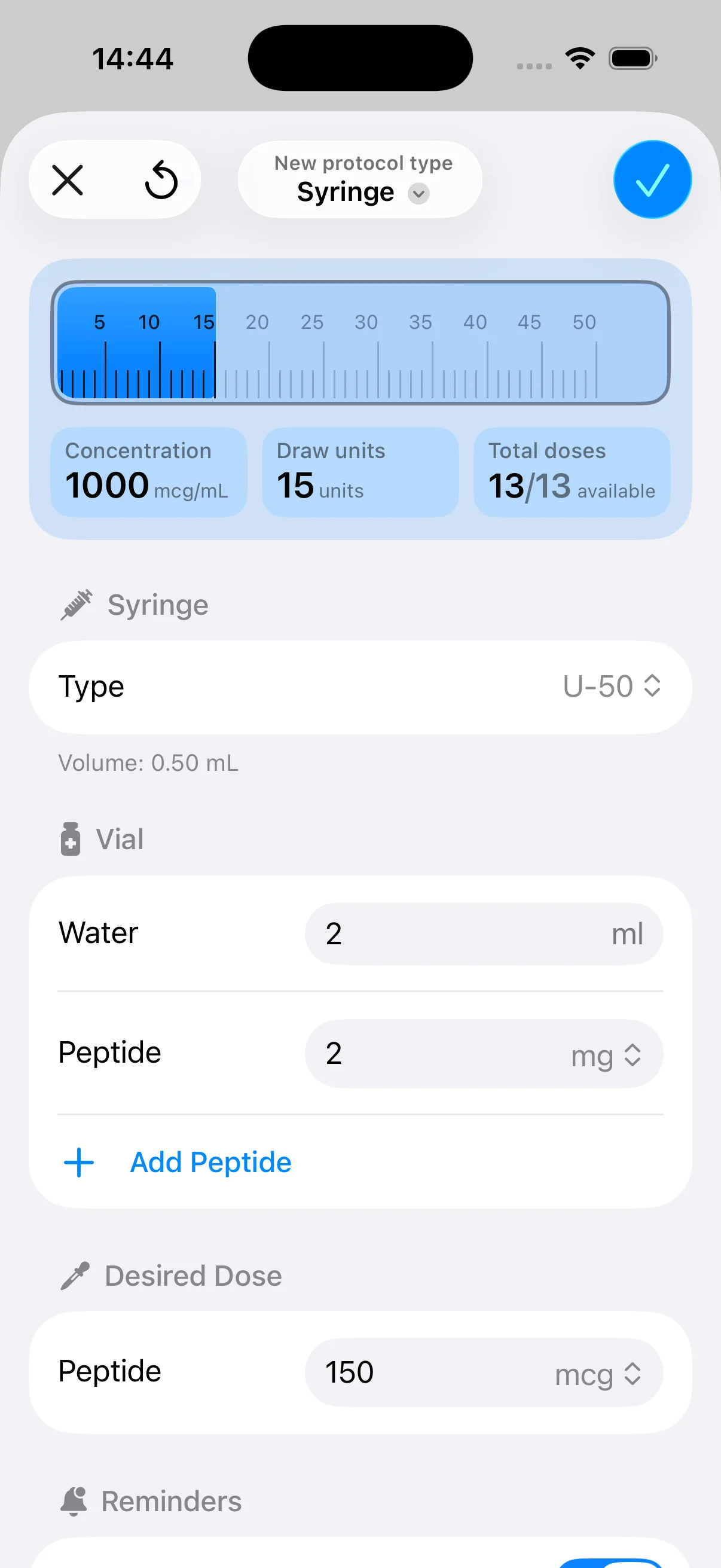
Map each vial to an exact draw amount before the cycle begins. If 2 compounds use different concentrations, write both out in plain language and save the calculation. The peptide dosage calculator for vial concentration and syringe draw amounts cuts down one of the most common beginner mistakes, which is running the right protocol on the wrong numbers.
PepFlow matters here because protocol quality is not just about choosing compounds. It is about getting daily execution right for eight or more weeks. Scheduled doses, saved reconstitution math, cycle dates, and logs are what turn a stack into a repeatable process instead of a loose plan in your notes app.
Common protocol failures
The usual breakdown points are predictable:
- Too many compounds too early
- Dose frequency that does not match real life
- No written off-cycle plan
- Mid-cycle changes based on impatience
- No log for symptoms, performance, or body composition
- Treating side effects as proof the stack is working
Water retention, appetite changes, or fatigue can mean the protocol needs adjustment. They are not trophies.
A good protocol feels strict on paper and easy in practice. That is the standard. If the stack already feels chaotic before the first week ends, redesign it before you push further.
Executing Your Plan Reconstitution Injection and Logging
A beginner usually does not ruin a cycle by choosing the wrong peptide. The failure point is usually operational. The vial gets mixed at the wrong volume, the syringe is pulled to the wrong mark, or the dose goes in without any record of what happened.

Reconstitution has to be exact
Reconstitution determines every dose that follows. If the concentration is off on day one, the whole cycle drifts off target.
Set the vial up so future injections are hard to mess up, not technically correct but annoying to use. A clean protocol uses numbers you can draw consistently when you are tired, traveling, or rushing after training.
A practical setup looks like this:
- Confirm the amount in the vial before adding bacteriostatic water. Read the label carefully and verify the unit.
- Pick a reconstitution volume that gives you easy syringe math. Cleaner draw amounts reduce mistakes.
- Write down the final concentration as soon as the vial is mixed. Do it before the vial goes back in storage.
- Label the vial clearly. Include the compound, concentration, and mix date.
If you need a refresher on storage, handling, and what changes once a lyophilized vial is mixed, read this guide on freeze-dried peptides and proper handling.
Injection technique matters more than beginners expect
Subcutaneous injections are simple, but simple does not mean forgiving.
Infection risk is significant when sterile handling gets lazy. Irritation, bruising, and avoidable soreness also increase when site rotation and prep quality are inconsistent. None of that helps muscle growth. It just makes adherence worse.
Use a clean surface. Wash your hands. Swab the vial top and the injection site. Use a new sterile syringe and needle each time. Rotate sites instead of hitting the same area over and over.
A few habits prevent a lot of problems:
- Set up your supplies before drawing the dose. Scrambling mid-prep creates mistakes.
- Verify the syringe mark before injecting. Small draw errors add up over a full cycle.
- Rotate injection sites on purpose. Better tissue tolerance makes long cycles easier to follow.
- Record the dose right after the injection. Waiting until later usually means missing details.
The mechanics are easier to understand when you watch someone walk through them. This video gives a useful visual reference:
Logging is what turns a stack into a usable protocol
A significant gap in peptide education is personalization. Generic instructions tell you what someone else ran. They do not tell you how your sleep, appetite, recovery, injection timing, and tolerance shift once the stack is live.
That is why logging matters. The first cycle is not just about adding size. It is about collecting enough clean data to build a repeatable protocol you can improve next time.
Track at least these items:
- Dose taken
- Time taken
- Injection site
- Training that day
- Body weight
- Immediate side effects
- Sleep quality
- Recovery feel over the next day
I tell first-time users to log like they expect to troubleshoot in week three, because they usually will. If appetite drops, sleep gets worse, or pumps improve while recovery does not, the log shows whether the issue is the compound, the dose, the timing, or inconsistent execution.
Without that record, you are guessing. PepFlow fixes the practical side of that problem by keeping reconstitution details, dose history, and injection logs in one place, so the protocol stays consistent enough to evaluate accurately.
Master Your Protocol and Stay Consistent with PepFlow
The hard part of peptide use usually isn’t motivation. It’s management.
A multi-week stack creates friction fast. You’re tracking vial strengths, reconstitution volumes, daily or weekly timing, pause periods, and all the little adjustments that happen when real life interrupts the perfect schedule. That complexity is why people miss doses, duplicate doses, or drift off protocol.
Why protocols fail in the real world
Most failures are operational.
Someone writes the protocol in a notes app, does the math once, and assumes they’ll remember it. Then a travel day happens. Then training time moves. Then one missed injection turns into two because there’s no active reminder system.
Longer-term planning is even harder. A schedule that lists compounds and doses but leaves out review points, pause periods, and what to do when plans change is difficult to follow. Clear next steps matter as much as day-to-day reminders; without them, adherence can slip.
A protocol you can’t manage isn’t a protocol. It’s a stack of intentions.
What a dedicated tool changes
PepFlow’s relevance lies here. It’s not replacing medical judgment. It’s replacing preventable execution errors.
A dedicated app solves problems that generic reminders and spreadsheet tabs don’t handle well:
- Dose conversion: You need the exact practical draw amount based on your vial configuration, not rough mental math.
- Cycle structure: Start dates, frequencies, and pause periods need to live in one system.
- Daily adherence: Push notifications, live activities, and quick logging reduce the chance that a missed dose becomes a broken week.
- History: You need a record of what was taken, not what you meant to take.
The key value is repeatability. If you can run the same protocol cleanly, you can compare cycles accurately. If every cycle is managed differently, you never build useful data.
For anyone serious about a peptide stack for muscle growth, organization is not optional. Precision isn’t just about safety. It’s how you tell whether the stack did what you hired it to do.
Monitoring Progress and Managing Side Effects
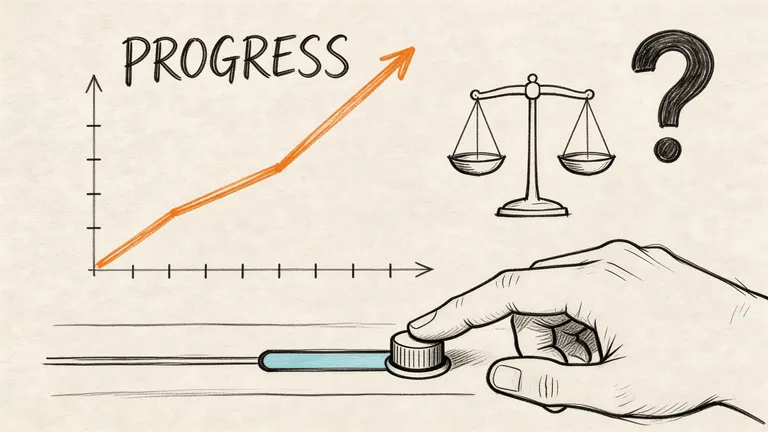
Progress tracking and side effect management should happen in the same system. If you separate them, you’ll miss the cause-and-effect pattern.
What to measure
The advanced side of peptide use gives a good example of why measurement matters. In the verified guidance on IGF-1 LR3 + Follistatin, users report 2-5 kg of lean mass gains and 15-25% improved recovery rates over an 8-week cycle, and IGF-1 levels can rise 2-3x from baseline according to Men’s Journal’s peptide overview. Those are exactly the kinds of markers that make a protocol testable.
That doesn’t mean your first cycle needs exotic tracking. Start with a short list:
- Body weight
- Waist and limb measurements
- Training performance
- Recovery quality
- Sleep
- Any lab markers your clinician wants monitored
If you’re building a lab checklist, this guide to specific blood tests for bodybuilders is a useful planning reference.
What side effects usually mean
Not every reaction means stop immediately. Some mean reassess the dose, timing, or stack complexity.
Common issues in GH-oriented protocols include water retention, headaches, and changes in glucose handling. The important question is whether the effect is transient and manageable, or persistent and disruptive.
A practical monitoring frame:
- Mild and early: Note it, keep tracking, and watch the pattern.
- Persistent or worsening: Review dose and schedule.
- Interfering with training, sleep, or daily function: Stop guessing and get medical input.
The mistake is treating every sensation as either harmless or catastrophic. Most of the time, you need better records before you need stronger opinions.
Frequently Asked Questions About Peptide Stacks
| Question | Answer |
|---|---|
| What’s the best first peptide stack for muscle growth? | For most beginners, a CJC-1295 + Ipamorelin approach makes the most sense because it’s widely used, mechanistically coherent, and easier to structure than more advanced direct-growth stacks. |
| Should beginners start with IGF-1 LR3? | Usually no. It’s better kept for later, after you’ve learned how your body responds to a simpler GH-oriented protocol and proven you can execute a cycle consistently. |
| How long should a first cycle run? | A common protocol window for CJC-1295/Ipamorelin in the verified guidance is 8-12 weeks. The key is committing to one clean cycle rather than changing the plan midway. |
| How do I know if my dose is right? | You don’t guess. You calculate the exact concentration after reconstitution, convert that into a syringe draw amount, and then log your response over time. |
| What matters more, stack choice or adherence? | Adherence. A good stack run inconsistently usually underperforms a simpler stack run with exact timing and accurate dosing. |
| Can I personalize a standard protocol? | Yes, but only if you’re tracking response. Standard protocols are starting points, not proof that your body will respond the same way as someone else’s. |
| What should I log each day? | Log dose, time, injection site, body weight, training, sleep, and any side effects. That gives you enough detail to spot useful patterns without turning the process into a second job. |
| When should I stop and reassess? | Reassess when side effects persist, performance drops, adherence slips, or your data stops matching the goal of the cycle. |
If you want a peptide stack for muscle growth to work effectively, remove as much guesswork as possible. PepFlow helps you calculate exact doses, organize full cycles with pause periods, and stay on schedule with reminders and quick logging. That’s the difference between running a protocol and just trying peptides.