You’re halfway through dinner, the dried porcini are still hard in the bowl, and the fastest solution seems obvious: pour boiling water over them and hope they soften before the pan is ready. That shortcut often produces mushrooms that are swollen on the outside, chewy in the center, and surrounded by grit.
Learning how to reconstitute dried mushrooms properly takes only a little more care. The right water, enough time, and a clean straining method bring back a supple texture while preserving the richly savory liquid that makes dried mushrooms so useful.
Table of Contents
- Why Your Mushroom Soaking Method Matters
- The Core Rehydration Workflow and Grit Removal
- Choosing the Right Water Temperature for Your Recipe
- Critical Food Safety Rules for Extended Soaking
- Maximizing Flavor and Using the Soaking Liquid
- Troubleshooting Common Texture and Grit Problems
Why Your Mushroom Soaking Method Matters
Dried mushrooms are concentrated pantry ingredients, not fresh mushrooms with their water removed. Their structure, aroma, and soaking liquid all depend on how moisture returns. Fresh mushrooms contain about 92% water, and the usual fresh-to-dried ratio is roughly 9:1. In practical terms, 1 ounce of dried mushrooms can correspond to about 9 ounces of fresh mushrooms after hydration (Alphafoodie’s mushroom-drying guide).
That ratio helps with portioning. A small handful of dried porcini can provide a substantial amount for risotto or sauce, provided the pieces hydrate evenly. Pouring boiling water over them while preparing onions may soften the surface quickly, while the dense center remains firm.
Wet isn’t the same as rehydrated
A mushroom may bend at the edges and still have a hard core. That uneven texture shows up in the finished dish, with a soft or slippery exterior surrounding a leathery center. Thick shiitake caps and dense porcini pieces are especially prone to this problem.
A controlled soak gives water time to travel through the mushroom rather than just wetting its surface. Allow 20 to 30 minutes in enough water to cover the pieces fully, then check the thickest section for softness and plumpness. A practical soaking guide from The Spruce Eats supports this general timing, though thicker pieces may need longer.
Practical rule: Judge readiness by the thickest part of the mushroom, not by the first soft edge.
The water also collects concentrated savory compounds, making it useful in broth, gravy, risotto, or pan sauce. Strain it carefully before adding it, since mushroom sediment can otherwise make a finished dish gritty.
The rushed method has a cost
Boiling water shortens the wait, but it can soften the exterior before the center has absorbed enough moisture. You may get a usable mushroom, yet lose some aroma and a clean, even texture. Warm water generally offers the most reliable balance for everyday cooking. Cold water takes longer, but its gentler pace can help retain delicate flavor.
Room-temperature soaking requires more care. Do not leave mushrooms sitting out indefinitely. If the soak will extend beyond the normal preparation window, refrigerate the bowl, keep the mushrooms covered, and use clean utensils. Temperature, time, submersion, and sediment control all affect the result, but they also determine whether the process remains safe.
The Core Rehydration Workflow and Grit Removal
A bowl of sandy porcini can ruin an otherwise careful sauce. The sequence below works for porcini, shiitake, wood ear, oyster mushrooms, and similar dried culinary varieties. Adjust the soaking time for thickness, but keep the handling order consistent.
Prepare the mushrooms
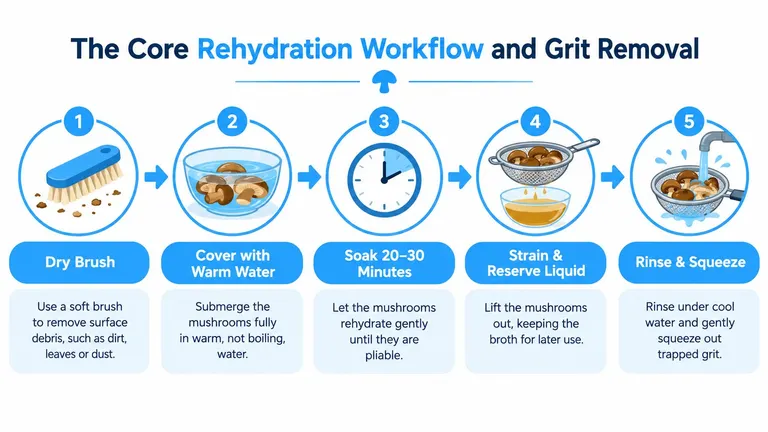
Give the pieces a brief rinse under cool running water. This removes loose dust before soaking. Handle thin or fragile mushrooms gently, since broken pieces are harder to lift cleanly from sediment later.
Place them in a bowl with room to expand. Add warm or room-temperature water until every piece is covered. A useful starting ratio is about 2 cups of water per 1/4 cup of dried mushrooms, a guideline also given by Food Above Gold. Use enough liquid to keep the pieces fully submerged without leaving them crowded.
Keep every piece submerged
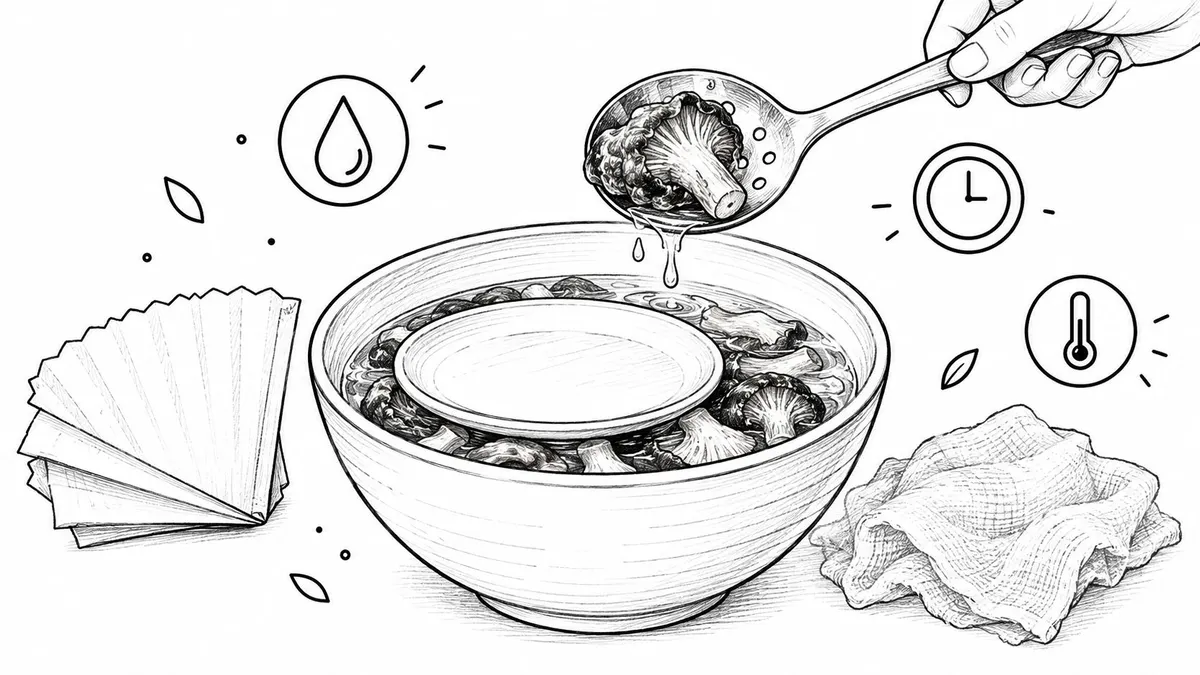
Wood ear and thin slices often float. Rest a small plate or another heat-safe weight on top to keep the mushrooms below the surface. Even contact helps the pieces rehydrate more uniformly, so the exposed tops do not stay tough while the lower portions soften.
For many varieties, 20 to 30 minutes is a practical starting point. Check the thickest piece rather than relying on the surface. Thin slices may finish sooner, while dense caps can need more time.
While the mushrooms soak, apply the broader kitchen tips from Ring Hot Water to keep utensils and work surfaces clean. Small handling choices matter when grit and food safety are both concerns.
Lift, don’t pour
Lift the softened mushrooms out with clean hands, tongs, or a slotted spoon. Don’t pour the bowl through a strainer, because sediment settled on the bottom can wash back over the mushrooms.
Set the mushrooms aside and filter the soaking liquid through a coffee filter, cheesecloth, or sieve lined with a paper towel. The Spruce Eats recommends this kind of careful straining to remove fine grit while preserving the seasoned liquid.
If the mushrooms still feel sandy, rinse them briefly, then squeeze gently. Remove excess water without crushing the pieces. Trim tough shiitake stems if needed, and use the caps whole, sliced, or chopped.
The reliable order is rinse, submerge, weight, lift, filter, and squeeze. That same discipline of measuring liquid, timing the soak, and filtering the result applies to precision rehydration workflows for dried powders, including laboratory-grade materials.
Choosing the Right Water Temperature for Your Recipe
A pot of dinner already on the stove changes the sensible choice. Water temperature controls more than softening speed. It affects how evenly the mushroom recovers, whether the center stays firm, and how much aroma ends up in the soaking liquid.
Cold water gives the gentlest extraction. It needs more time, but it helps preserve delicate aromas in porcini and morels. Choose it when you are planning ahead and want the mushrooms or their strained liquid to carry the main flavor of a broth or refined sauce.
Warm water is the practical everyday option. It speeds hydration without the harsher heat that can toughen the exterior or flatten some aromas. For shiitake, wood ear, and mixed batches, warm water usually offers the best balance between waiting time, texture, and flavor.
Hot water suits an urgent meal, but the trade-off is greater. It shortens the soak, while very hot or boiling water can make the outside soft before the center recovers and can reduce aromatic character. Umami Days also presents warm water as the middle ground, cold water as slower and gentler, and hot water as faster but less forgiving.
| Temperature | Estimated time | Best for | Flavor impact |
|---|---|---|---|
| Cold or room temperature | Longer soak, often 20 to 60 minutes or more depending on thickness | Delicate varieties and advance preparation | Best aroma retention, but slower |
| Warm, not boiling | A shorter soak for common varieties, with timing determined by thickness | Everyday shiitake, porcini, and mixed batches | Balanced speed, texture, and flavor |
| Hot, not actively boiling | Species and thickness vary | Urgent cooking | Faster hydration, with greater texture and aroma risk |
Match the method to the mushroom
Thin wood ear pieces can turn pliable quickly. Thick shiitake caps need longer, and porcini deserve gentler treatment because their aroma is a primary reason to buy them dried.
Use the table as a guide, not a rigid timer. Press the thickest piece between your fingers. It should bend without a hard center, while still holding its shape rather than feeling waterlogged or collapsing.
For readers who also handle measured liquid preparation outside cooking, this explanation of peptide reconstitution solutions describes why liquid choice and timing need to match the material. In the kitchen, the decision is simpler: use cold water for maximum gentleness, warm water for balance, and hot water only when speed matters more than peak texture. When uncertain, start warm, test the thickest piece, and keep boiling water as an emergency option.
Critical Food Safety Rules for Extended Soaking
Dried mushrooms are low-moisture foods, but that doesn’t mean they’re permanently protected from microbial growth. Once submerged, they become a hydrated food that needs deliberate temperature control.
The Hong Kong Centre for Food Safety advises that room-temperature soaking should generally last no more than two hours. Longer soaking should take place in the refrigerator (Hong Kong Centre for Food Safety).
That rule matters when a recipe says to soak mushrooms for a long period, or when you prepare them before leaving the kitchen. A bowl on the counter can seem harmless because the mushrooms started dry, but rehydration changes the conditions around them.
Use the refrigerator for long soaks
If the mushrooms aren’t ready when you need them, cover the bowl and move it into the refrigerator. Refrigeration slows unwanted growth while the mushrooms continue absorbing water, making it the responsible option for batch preparation.
Don’t leave a warm-water soak sitting beside the stove while you run errands or take a long break. If you don’t know how long the bowl has been standing at room temperature, discard it rather than trying to rescue it with cooking.
Treat rehydrated mushrooms as perishable
Lift and filter the mushrooms as soon as they reach the desired texture. Cook them promptly, or keep them covered and chilled rather than returning them to an unattended countertop soak.
A sour smell, slime, fizzing, or any other suspicious change is a reason to throw the batch away. Don’t taste questionable soaking liquid to decide whether it’s safe, and don’t assume a later simmer will correct poor handling.
For readers who work with other preparation processes where clean handling matters, this guide to sterile technique offers useful general context. It isn’t a substitute for food-safety guidance, but it reinforces the habit of controlling exposure, time, and storage rather than relying on appearance alone.
Maximizing Flavor and Using the Soaking Liquid
The liquid left after a mushroom soak is often the most concentrated part of the process. It carries color, aroma, and savory depth from the dried pieces, but it may also contain the dust and grit that settled during soaking.
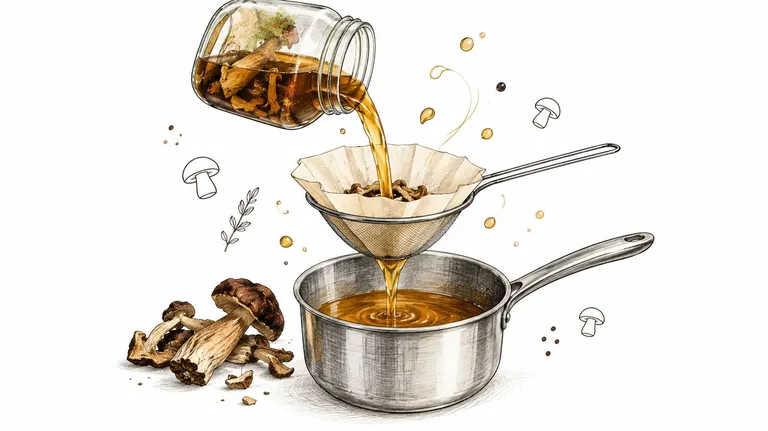
After lifting out the mushrooms, let the bowl stand briefly so sediment remains undisturbed. Pour the liquid slowly through a coffee filter, cheesecloth, or a paper-towel-lined sieve. Stop before the final sediment reaches the filter, then inspect the strained liquid before adding it to food.
Build the dish around the broth
Use the filtered liquid wherever a recipe needs water or stock. Add it gradually to risotto, whisk it into a pan sauce, or use it to deepen a braising liquid. A small amount can bring dried mushrooms into the background of a dish, while a larger amount makes them the central savory note.
Taste before salting. The liquid’s intensity varies with the mushroom variety and preparation, so adding your usual amount of salt immediately can leave the finished dish over-seasoned.
Cook the mushrooms for texture
Rehydrated mushrooms still benefit from direct cooking. Sauté them in oil until their edges take on color, fold them into a cream sauce, or simmer them in soup so the texture matches the rest of the dish.
For a risotto, use the filtered liquid alongside your regular stock and add the chopped mushrooms near the point where you want their texture to remain noticeable. For a braise, larger pieces can simmer longer and contribute a deeper, more integrated flavor.
The best results often come from using both components, not choosing between them. The mushrooms provide chew and substance, while the filtered broth carries their concentrated character throughout the dish.
Troubleshooting Common Texture and Grit Problems
The center is still tough. The soak was too short, the water was too cool for the schedule, or the mushroom pieces are unusually thick. Return them to warm water and check the thickest piece rather than relying on the clock.
The texture is rubbery. Very hot water may have softened the exterior too aggressively. Next time, choose warm water and give the pieces enough time to hydrate gradually.
The dish contains grit. Remove the mushrooms from the dish, let the liquid settle, and transfer the food into a clean pan without scraping the bottom. If possible, pass the remaining sauce through a coffee filter or paper-towel-lined sieve before combining everything again.
The soaking liquid looks cloudy. Cloudiness isn’t automatically a problem, but visible sediment means it needs filtering. Lift the mushrooms out first, then strain the liquid instead of pouring the entire bowl through a mesh strainer.
The mushrooms are bland. They may have been rinsed too aggressively after soaking, or the filtered liquid was discarded. Use the clean soaking broth in the sauce and season only after tasting.
Store unopened dried mushrooms in a cool, dry place, and protect opened pieces from moisture. For meal ideas that pair earthy mushrooms with a hearty main ingredient, browse these easy sausage mushroom meals, then apply the same lift-and-filter method to keep the finished dish clean.
If you value precise, repeatable routines beyond the kitchen, PepFlow helps calculate peptide reconstitution volumes and concentrations, then organizes schedules and reminders around your chosen protocol. Visit PepFlow to see how the app can reduce manual calculation and keep structured routines easier to follow.