
Most advice on Follistatin 344 side effects is backward. It starts with protocol chatter, then treats safety as a footnote. That approach misses the central issue. The short-term human record is limited, the long-term record is thinner still, and the mechanism that makes follistatin attractive is the same mechanism that creates uncertainty.
A careful reader shouldn’t ask only, “What side effects have been reported?” The better question is, “Which risks are documented, which are plausible but unproven, and where does the evidence stop?” That distinction matters with any experimental compound. It matters even more here because Follistatin 344 isn’t approved for human use, and much of the public discussion blends controlled observations with anecdote.
This is the frame I use when assessing novel compounds: separate observed adverse events, mechanism-based concerns, and unknowns caused by missing follow-up. If you apply the same standard to sleep supplements, stimulants, or recovery aids, you quickly see why many people start looking for alternatives for safer sleep when side effect tradeoffs feel poorly defined. The same evidence-first mindset is useful here, and it’s also why broader context from a resource on peptide side effects across compounds can help before you zoom in on one molecule.
Table of Contents
- Understanding the Real Risks of Follistatin 344
- How Follistatin Unlocks Muscle Growth and Its Risks
- Documented Side Effects in Clinical and Research Settings
- Theoretical Risks and Unanswered Long-Term Questions
- How Dose and Administration Influence Side Effects
- Strategies for Monitoring and Mitigating Risks
- Follistatin 344 Safety FAQs for 2026
Understanding the Real Risks of Follistatin 344
The common safety framing around Follistatin 344 is too reassuring in one direction and too speculative in the other. Published human discussion often points to limited short-term tolerability. User concern, by contrast, is usually about what may happen after repeated exposure, especially in tissues and systems that adapt slowly or are rarely monitored. That distinction matters more than any simple safe versus unsafe label.
A more accurate starting point is this: the evidence base is strongest for short observation windows and weakest where long-term users tend to focus their concern. The main uncertainty is not whether injection-site reactions can occur. It is whether repeated myostatin-pathway interference changes tendon loading tolerance, alters cardiac structure or function over time, or disrupts reproductive signaling in ways that short follow-up would miss.
This places Follistatin 344 in a familiar but uncomfortable category. Some compounds look acceptable during early use because the first measurable effects are local and obvious, while later risks involve connective tissue remodeling, endocrine feedback, or organ-level adaptation that unfolds more slowly. Readers comparing it with other peptide side effect profiles and safety tradeoffs should keep that timing gap in mind.
The evidence base is uneven
Two features define the current risk picture.
- Regulatory and clinical validation remain limited: Follistatin-344 is not an FDA-approved drug for human therapeutic use, and widely discussed use patterns are not based on established human dosing standards.
- Follow-up duration is narrow: Available reports and summaries do not provide the kind of long-horizon safety record needed to answer questions about cumulative exposure, repeated cycles, or delayed adverse effects.
That limitation changes how reassuring language should be interpreted.
“No serious adverse events reported” means no serious adverse events were reported within the populations observed, over the time they were observed, and using the outcomes they chose to track. It does not settle whether tendons and ligaments keep pace with muscle adaptation. It does not establish cardiac safety. It does not resolve whether FSH suppression or other reproductive effects normalize consistently after repeat use.
Those unanswered questions are not fringe concerns. They are the ones most relevant to people considering non-medical performance use, where visible hypertrophy can overshadow less visible structural risk. The practical consequence is straightforward: short-term tolerability should not be treated as a proxy for long-term safety.
For some readers, especially those exploring performance compounds while also trying to reduce other avoidable exposures, it makes sense to look for alternatives for safer sleep and recovery before adding a molecule with this many open safety questions.
How Follistatin Unlocks Muscle Growth and Its Risks
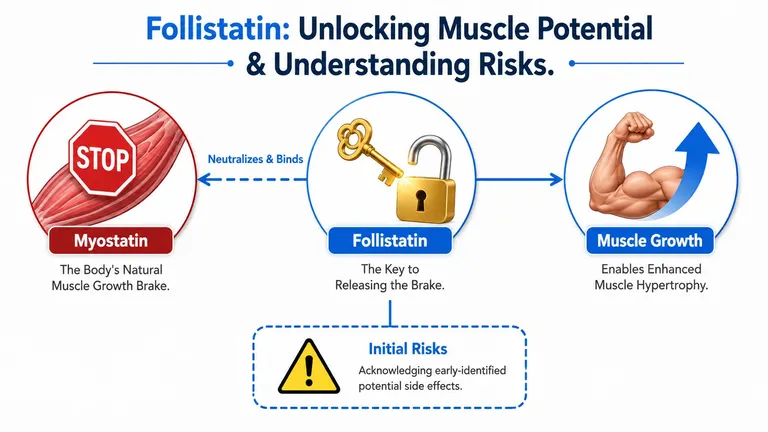
Follistatin makes sense only if you understand the brake it targets. Myostatin acts like a biological limiter on muscle growth. Follistatin binds to that pathway and helps release that brake. That’s why the compound gets attention from people interested in hypertrophy and recovery.
The safety issue begins at the same point as the appeal. Biological brakes usually exist for a reason. When you reduce a growth-limiting signal, you don’t just invite more muscle-related activity. You may also alter nearby signaling relationships that help keep other tissues in balance.
Why mechanism matters
A simple analogy helps. If myostatin is the brake pedal on skeletal muscle growth, follistatin is the hand that lifts pressure off that pedal. You can move faster once the restraint is reduced. But faster growth isn’t automatically coordinated growth.
Muscle tissue, tendons, ligaments, bone, and endocrine signaling don’t adapt at identical speeds. So the same intervention that promotes hypertrophy can create mismatch. In practice, that means a user may focus on visible muscular response while underestimating less visible structures that carry the load.
The upside and downside come from the same pathway
In this context, many online summaries become too casual. They discuss Follistatin 344 as if more muscle signaling were a contained event. It isn’t. Follistatin is discussed because it interacts with pathways tied to growth regulation. That creates a reasonable basis for caution even before a dramatic side effect appears on paper.
If someone wants lower-risk ways to improve training outcomes before considering experimental compounds, practical habits still matter more than most protocol threads admit. Basic training variables, recovery, and nutrition remain the foundation, and resources with science-backed muscle building tips are often more useful than another speculative cycle discussion.
Better muscle gain doesn’t always mean better tissue readiness. A stronger contractile system can outpace the structures attached to it.
Documented Side Effects in Clinical and Research Settings
The short-term record for Follistatin 344 is less dramatic than many users expect. That should not be confused with reassurance. The published evidence is narrow, heavily shaped by small cohorts and specialized disease settings, and better at detecting immediate tolerability problems than answering the questions long-term users care about.
What has been observed
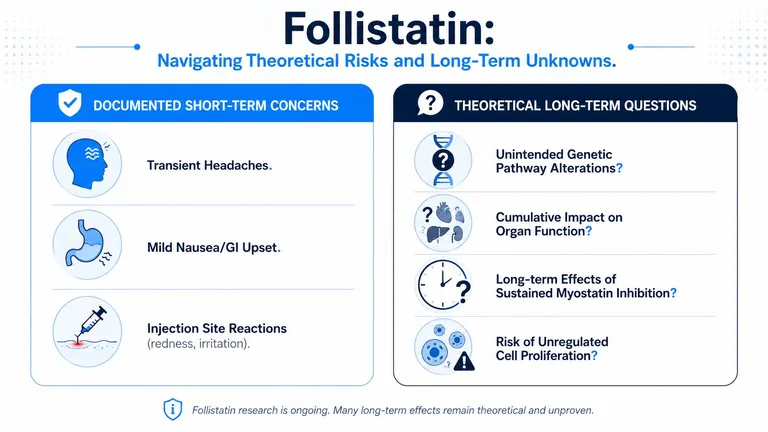
The clearest recurring adverse effect is injection-site irritation. Early safety reporting describes localized redness, firmness, and mild pain after administration, with reactions tending to be more common after intramuscular delivery than after subcutaneous use, and usually resolving over days to about a week in short-term follow-up. That distinction matters because route of administration changes the side-effect burden before broader systemic risks are even considered.
Published summaries of early human experience also describe transient fatigue, joint stiffness, and reversible endocrine effects, including temporary suppression of follicle-stimulating hormone that returned toward baseline after treatment stopped, as outlined in this early-phase safety profile review. Those findings point to a pattern that is easy to underestimate. The documented signal is not one of severe acute toxicity. It is a pattern of limited but biologically active effects in studies that were not designed to settle long-term safety.
For comparison, many readers evaluating performance-related compounds look to substances with a much deeper evidence base. A useful contrast is this guide to creatine for muscle and brain, where dose ranges, side effects, and monitoring questions have been studied far more extensively.
Summary of reported Follistatin 344 side effects
| Side Effect | Incidence Rate | Context & Duration |
|---|---|---|
| Injection-site reactions | Reported frequently | Subcutaneous use. Localized erythema, induration, and mild pain that generally resolved within days |
| Injection-site reactions | Reported more often than with subcutaneous delivery | Early-phase intramuscular administration. Typically resolved within about one week |
| Skin rash or urticaria | Reported | Observed in a small Becker Muscular Dystrophy trial |
| LDL cholesterol increase | Reported | Mild LDL increase described in gene therapy recipients |
| Liver enzyme elevation | Reported | Observed in a 2023 gene therapy muscular dystrophy trial |
What the short-term record can and cannot tell us
A small Becker Muscular Dystrophy study followed six patients for 12 to 18 months and reported rash or urticaria, with no observed changes in hormone levels and no detected cardiac, hepatic, renal, or reproductive function abnormalities within that controlled setting. Non-human primate work with AAV1-follistatin over 15 months likewise did not identify structural organ abnormalities or reproductive-organ findings in the reported follow-up period.
Those findings are useful, but they need context. A six-patient study can miss uncommon adverse events. Disease-specific cohorts may not predict what happens in healthy users or in people seeking physique or performance effects. Gene-therapy studies also differ from peptide use in exposure pattern, tissue targeting, and duration of expression, so they inform safety questions without resolving them.
The same literature includes signals that deserve more attention than they usually get. A 2023 gene therapy trial reported liver enzyme elevations in two participants, and mild LDL cholesterol increases were also described in treated patients, as noted earlier in the article. Those are not proof of major hepatic or cardiovascular harm, but they weaken any claim that the documented record is uniformly benign.
The restrained conclusion is this. Published short-term studies do not show a clear pattern of catastrophic acute toxicity. They also do not provide enough breadth or duration to answer the harder questions about tissue quality, cardiac safety, fertility, or cumulative effects after repeated exposure.
Theoretical Risks and Unanswered Long-Term Questions
The reassuring part of the Follistatin 344 story is easy to overstate. Short-term human studies have not shown a clear pattern of severe acute toxicity. That is not the question long-term users care about. Their real concern is whether repeated or sustained myostatin inhibition changes tissue quality, cardiac structure, or reproductive function in ways that short follow-up cannot detect.
Connective tissue may not adapt as fast as muscle
Tendon and ligament integrity deserves more attention than it gets. The basic concern is straightforward. If muscle strength rises faster than connective tissue remodeling, force output can outpace the capacity of tendons and ligaments to tolerate load. That risk has been raised in commentary discussing tendon and ligament weakening with myostatin inhibition. The mechanism is plausible, but human verification remains limited.
That distinction matters. A plausible mechanism is not proof of inevitable injury. It is a reason to treat rapid performance gains with caution, especially in users who increase loading, training frequency, or exercise intensity before connective tissue has had time to adapt.
This is one of the main gaps between anecdotal feedback and real risk assessment. Early self-reports often focus on visible or felt effects such as fullness, recovery, or gym performance. Tendon problems develop differently. The first sign may be a strain, tendinopathy flare, or sudden overload injury rather than an abnormal blood test.
Practical rule: If muscular performance rises faster than tissue resilience, the first warning may be an overload injury, not an abnormal lab value.
Other unresolved concerns sit in the same category. Preclinical findings have raised questions about bone and reproductive effects after exposure ends, as noted earlier. Those observations do not establish that the same pattern occurs in humans using Follistatin 344, but they make it harder to argue that long-term safety is settled. Anyone extrapolating from short cycles should understand how weak the evidence base remains, especially when people rely on non-validated protocols discussed in public peptide dosage guidance for self-experimenters.
Cardiac and reproductive safety remain open questions
Cardiac safety is still unresolved. The absence of a signal in brief follow-up is not the same as evidence that sustained myostatin inhibition has no effect on the heart. Mechanistically, the concern is not limited to arrhythmia or acute toxicity. It includes the possibility of maladaptive growth or remodeling if anabolic signaling is altered over longer periods.
Reproductive safety is equally uncertain. Some early reports suggested reversible changes in reproductive hormone signaling, while other controlled settings did not detect meaningful hormone abnormalities over the study window. Those findings are not mutually exclusive. They reflect different populations, different exposure models, and different follow-up periods. None closes the question of whether repeated cycles affect fertility, sperm parameters, menstrual function, or endocrine recovery over time.
A non-obvious implication follows from that uncertainty. The people at highest theoretical risk may not be first-time users. They may be repeat users who treat tolerability during one short cycle as evidence that yearly or multi-cycle use is low risk. For Follistatin 344, that inference goes beyond the evidence. The short-term record gives limited reassurance about immediate toxicity. It gives very little confidence about cumulative cardiac, connective-tissue, or reproductive effects years later.
How Dose and Administration Influence Side Effects
Protocol design changes the side effect profile, even when the underlying uncertainty remains. That doesn’t make dosing “solved.” It means some risks are strongly shaped by how the compound is delivered.

Route changes the local burden
The clearest example is route of administration. As covered earlier, local reactions differ meaningfully between subcutaneous and intramuscular use. That pattern fits what clinicians would expect from tissue-specific irritation. A route that places the compound deeper into muscle can create a different local inflammatory experience than one delivered into subcutaneous tissue.
But users often overinterpret this kind of distinction. Lower local irritation doesn’t automatically mean lower overall biological risk. It means the visible, near-term burden may be lower. That’s useful, but incomplete.
The larger problem is that Follistatin-344 is not approved by the FDA for human use, and dosing conventions in public circulation come from preclinical animal work and anecdotal self-experimentation rather than validated human protocols, as stated in this human dosing limitations overview. Anyone trying to map a “safe dose” from online discussion is building on a weak foundation.
Protocol design matters more than people admit
Several choices shape the risk picture:
- Dose size: Larger exposures may increase the intensity of local reactions or systemic uncertainty, even if public discussions present them casually.
- Frequency: More frequent administration can reduce time for local tissue recovery.
- Cycle length: Longer use extends time under altered signaling, which matters when long-term safety is still unsettled.
- Repeat cycles: A major unknown isn’t only one cycle. It’s cumulative exposure over multiple cycles.
A helpful way to think about this is that protocol variables don’t just determine convenience. They determine the shape of uncertainty. If you alter route, frequency, and duration all at once, it becomes harder to interpret what a symptom means and easier to miss a slow-building problem.
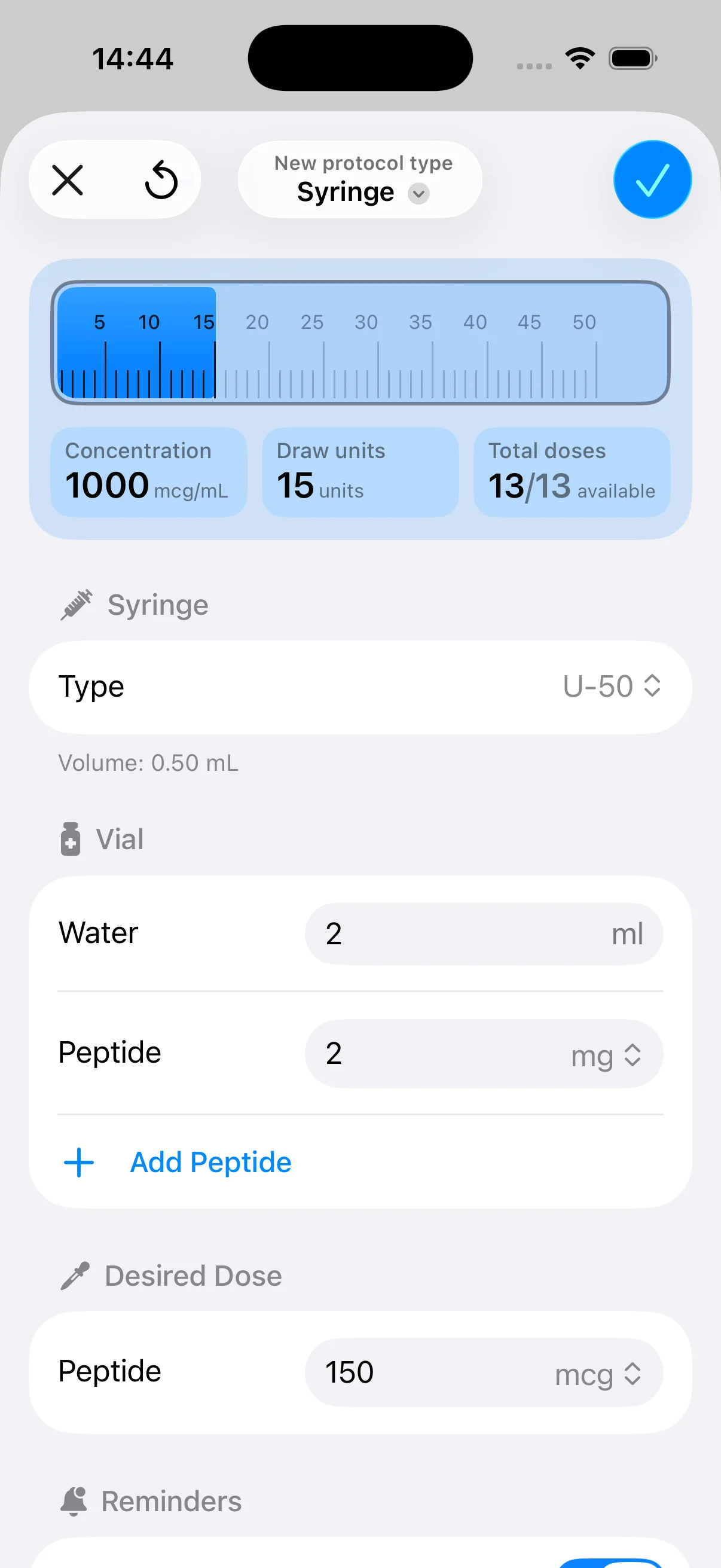
A practical reference for the arithmetic side of protocol planning is this peptide dosage guide, which can at least reduce basic measurement errors. That doesn’t solve the evidence gap, but it does remove one common source of preventable mistakes.
For readers who prefer a visual walkthrough before making any calculations, this explainer is useful context:
The key analytical point is simple. People often discuss side effects as if they belong to the molecule alone. In practice, they belong to the interaction between molecule, route, dose pattern, and the person using it.
Strategies for Monitoring and Mitigating Risks
The main mistake is to monitor what is easiest to notice. With Follistatin 344, redness, soreness, or a clean-looking injection site can dominate attention, while the harder questions involve tissues and organ systems that do not announce themselves early. That gap matters because the short-term human record is limited, and the concerns users care about often involve delayed injury, cardiac tolerance, and reproductive effects after exposure has stopped.
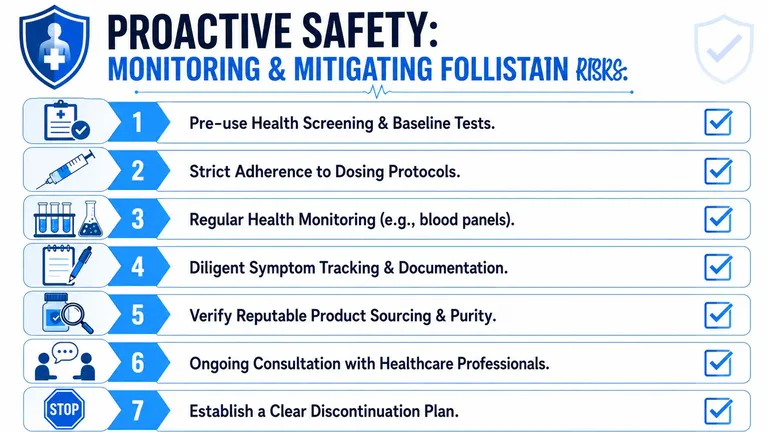
A useful framework starts before the first dose and continues after the last one. The goal is not to create a false sense of control. It is to improve the odds of catching a pattern early enough to stop.
A practical monitoring framework
Begin with baseline measurements. If later symptoms or lab shifts appear, interpretation depends on having a pre-exposure reference point. Basic labs such as liver enzymes, lipids, and relevant reproductive hormone markers are reasonable to discuss with a clinician because follistatin signaling intersects with more than skeletal muscle.
Then monitor three domains at the same time:
- Local tolerability: Injection-site reactions have been the most visible issue in early reporting. Track redness, swelling, warmth, pain duration, and whether reactions are becoming more frequent or more intense.
- Connective tissue stress: Record strength gains alongside tendon pain, stiffness near insertions, reduced range of motion, or a new mismatch between muscle output and joint comfort; a user can interpret faster performance gains as success while connective tissue adaptation may be lagging behind.
- Systemic and recovery signals: Fatigue, unexplained exercise intolerance, libido changes, menstrual disruption, or other hormone-related symptoms deserve attention even if they seem nonspecific. Short-term reversibility in early work is somewhat reassuring, but it does not settle what happens with longer use or repeated cycles.
The connective tissue point is often under-discussed. If muscle performance rises faster than tendon capacity, the practical risk is not just soreness. It is a higher chance of overload injury during a period when the user feels stronger.
When stopping becomes the rational choice
Objective data and symptom tracking need to agree often enough to be useful. If they diverge, the safer interpretation is usually the one that assumes uncertainty rather than control.
Local comfort is a weak proxy for whole-body safety.
A reasonable threshold to stop and reassess includes persistent injection-site worsening, tendon pain that appears as strength is increasing, unexplained drops in exercise tolerance, new palpitations or chest symptoms, or lab changes that do not have an obvious alternative explanation. Cardiac and reproductive safety remain areas where confidence is limited, so waiting for a severe event is a poor strategy.
Technique still matters because preventable handling errors can blur the picture. A structured injection safety checklist for sterile handling and site rotation can reduce procedural mistakes that might otherwise be confused with drug effects.
Some groups should set a higher bar before exposure. That includes athletes subject to anti-doping rules, people with prior tendon problems, anyone with unresolved cardiovascular symptoms, and anyone concerned about fertility or endocrine stability. For these users, the unanswered questions are not side issues. They are the core safety problem.
Follistatin 344 Safety FAQs for 2026
Short-term reassurance is easy to overread. That is the main error in many discussions of follistatin 344 safety. The published human material is limited, early, and narrow. Users usually care about a different question: what happens after repeated exposure, harder training, and enough time for connective tissue, cardiac tissue, or reproductive effects to appear.
Is FSH suppression permanent
Current early-phase reporting does not show persistent FSH suppression after treatment stops. In the short follow-up described earlier in the article, suppression appeared to reverse after cessation.
That finding has limits. It supports reversibility in the settings studied. It does not establish reproductive safety after repeated cycles, higher cumulative exposure, or use in people with pre-existing endocrine or fertility concerns. For anyone asking whether follistatin 344 side effects could include lasting reproductive disruption, the evidence is still too thin to give a confident no.
Can it make tendons or ligaments weaker
This concern deserves more attention than it usually gets. The mechanism is plausible, and the practical risk is not confined to tissue fragility on a scan or in a lab model. If muscle performance improves faster than tendon adaptation, injury risk can rise during training even if the user feels better in the short term.
Human clinical confirmation is limited. Still, the concern is reasonable because connective tissue does not remodel on the same timeline as muscle. A user who becomes stronger before tendons and ligaments are ready may face a higher chance of overload injury, especially under rapid progression in load or volume.
What does the WADA position mean for athletes
For tested athletes, the anti-doping position is clearer than the medical literature. Follistatin is prohibited under current WADA rules, including categories relevant to peptide hormones and gene-doping related approaches, as noted earlier in the article.
That means the decision is not just about side effects or performance. It also includes eligibility, sanctions, and the risk that an experimental compound with uncertain long-term safety offers no defensible margin for a tested competitor.
Is cardiac hypertrophy a known side effect
Cardiac hypertrophy has not been established as a documented short-term clinical side effect in the limited human material available. It remains an unresolved concern because long-duration human follow-up is lacking, not because cardiac safety has been established.
That distinction matters. Absence of proof is a function of sparse data here, not proof of absence. The same logic applies to reproductive endpoints and other organ systems that may only show problems after prolonged exposure.
A careful reading of the evidence supports a narrower conclusion than many promotional summaries imply. Local reactions and short-term tolerability may look acceptable in small, controlled settings. The risks that matter most to long-term users, tendon mismatch, cardiac remodeling, and reproductive uncertainty, remain only partly characterized.
If you’re managing complex peptide schedules and want fewer calculation mistakes, PepFlow can help organize dosing math, cycle timing, reminders, and logs in one place. It won’t replace medical judgment, but it can reduce the avoidable errors that happen when people try to track experimental protocols manually.