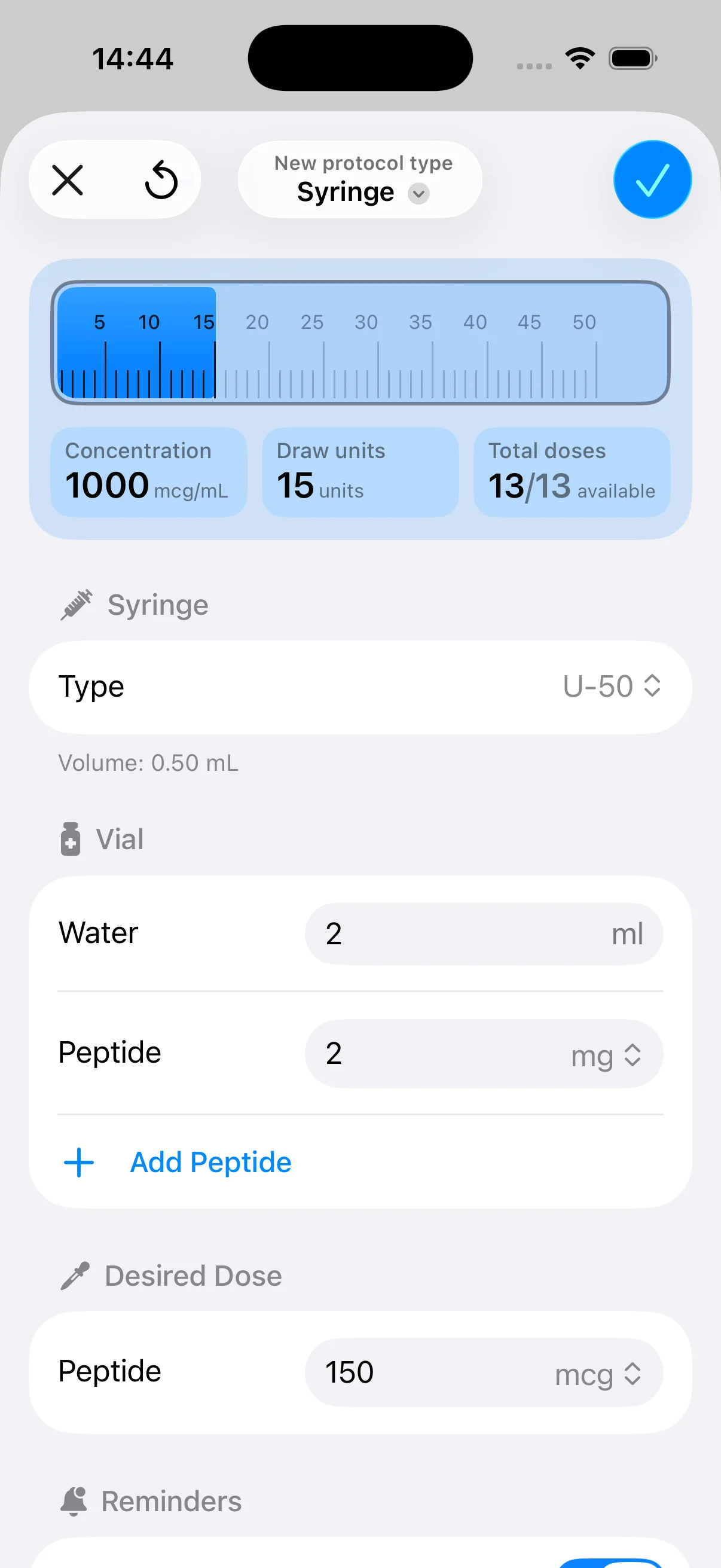

You probably didn’t expect your hands to feel puffy, your rings tighter, or your face slightly flushed after starting a CJC-1295 with DAC protocol. That kind of change can be unsettling because it’s easy to wonder whether it’s a harmless adjustment or the first sign that something’s off. With CJC-1295 with DAC side effects, the difference matters, because the DAC form keeps growth-hormone signaling heightened for days, which changes both the type of side effects and the way they can build over time.
This guide breaks down the science in plain language, then turns it into a practical safety lens. You’ll see what tends to happen early, what can accumulate with repeated exposure, who should be especially cautious, and how monitoring should work when the compound is used continuously. The safety story for this peptide isn’t just about one injection. It’s about the pattern that follows.
For a clear primer on what the DAC extension does, see this explanation of DAC in peptides.
Table of Contents
- Introduction to CJC-1295 With DAC Side Effects
- Mechanism of Action of CJC-1295 With DAC
- Common and Rare CJC-1295 With DAC Side Effects
- Risk Factors and Contraindications for CJC-1295 With DAC
- Interactions, Dosing Considerations and Examples
- Monitoring and Harm Reduction Strategies
- Conclusion and When to Seek Medical Help
Introduction to CJC-1295 With DAC Side Effects
A person starts a peptide protocol hoping for steadier recovery and better sleep. A few days later, the first thing they notice isn’t performance. It’s swelling in the hands, a heavier feeling in the ankles, or a headache that shows up when they didn’t expect it. That reaction can feel minor in the moment, but with a long-acting peptide, small changes can become a pattern if nobody is watching the trend.
CJC-1295 with DAC is different from short-acting growth-hormone releasing peptides because it doesn’t just create a brief pulse. The DAC form sustains GH and IGF-1 signaling over days, so side effects can look less like a short post-injection nuisance and more like a slow shift in fluid balance, glucose handling, or nerve compression. The distinction matters because a side effect that appears mild on day one can become more relevant after repeated exposure.
The clinical record also matters. In the FDA’s later materials, the 2006 12-week Phase II trial in 192 HIV patients reported no serious adverse reactions in the study summary, yet still documented one myocardial infarction death during the trial period (FDA trial summary). That doesn’t prove causation, but it does show why long-term reassurance should never come from a single snapshot.
Readers who want to compare the long-acting form with the short-acting version can use this DAC versus non-DAC comparison. The difference isn’t academic. It shapes side effects, monitoring, and how quickly problems may reverse once dosing changes.
Mechanism of Action of CJC-1295 With DAC
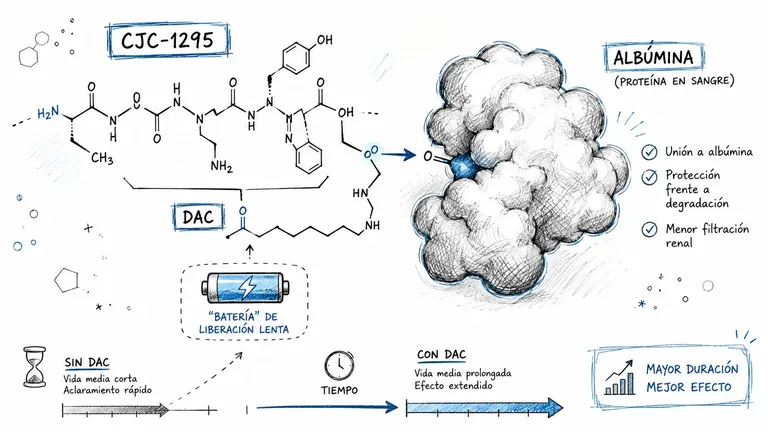
Think of DAC as a slow-release battery pack attached to the peptide. Instead of delivering a quick burst and fading, it stays in circulation longer, which means the pituitary keeps receiving a growth-hormone signal over a much wider window. That extended signal is the reason the safety conversation changes, because the body doesn’t just respond to one pulse, it responds to repeated stimulation.
The practical consequence is simple. When GH and IGF-1 remain at higher levels longer, the side effects that matter most are often the ones tied to fluid retention, glucose regulation, and compressive symptoms. In controlled human studies, the compound was described as safe and relatively well tolerated, with no serious adverse events in short-duration trials, but the common events still included injection-site erythema, swelling, tenderness, flushing, headache, fatigue, and occasional nausea (clinical summary). That combination is why the drug can look mild at first and still create a meaningful monitoring burden later.
A useful way to think about it is to separate immediate reactions from downstream effects. Immediate reactions tend to show up where the injection happened or soon after dosing. Downstream effects emerge from the biology the peptide is trying to influence. One technical signal of that downstream risk is the appearance of carpal tunnel-like symptoms in 2 of 46 participants (4.3%) at higher exposure, with improvement after dose reduction (technical summary).
Practical rule: if a reaction feels more like swelling, tingling, or pressure than a brief sting, treat it as a signal to reassess the protocol, not as a routine nuisance.
For a plain-language contrast between the long-acting design and the short-acting form, this DAC comparison is a helpful reference point.
Common and Rare CJC-1295 With DAC Side Effects
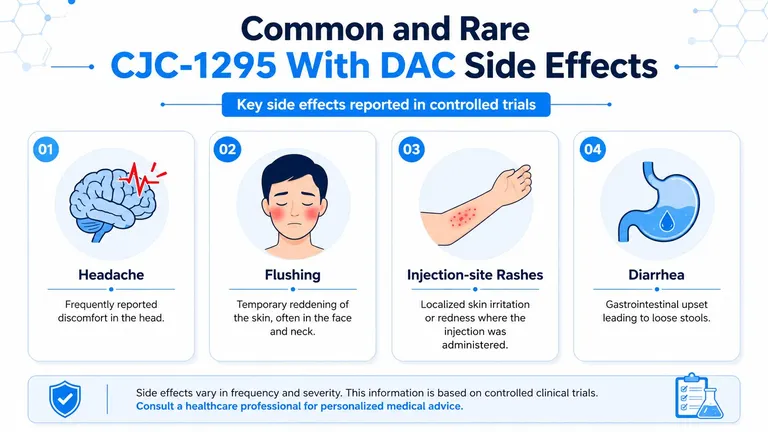
The strongest pattern in early clinical data is that cjc 1295 with dac side effects were not random one-off complaints. They clustered in predictable ways, and some became more common as exposure increased. That’s the key point most casual summaries miss. The issue isn’t just whether a side effect exists, it’s whether the side effect becomes more likely as the dose gets higher or the exposure lasts longer.
In the FDA’s 2024 pharmacy-compounding advisory materials, headache occurred in 63% of participants in the CJC-1295 DAC group versus 14% in placebo, diarrhea was reported in 43% of the CJC-1295 DAC group, and flushing with transient hypotension occurred in 30% of the group (FDA advisory materials). The same summary noted that injection-site urticarial rashes occurred in almost 30% of subjects and were not dose related, which is useful because it separates a local skin reaction from a systemic dose-dependent effect.
What the common pattern looks like
The most frequent complaints tend to fall into four buckets. Headache can reflect vascular changes or fluid shifts. Flushing often feels like heat in the face or neck. Diarrhea points to gastrointestinal sensitivity. Injection-site irritation usually stays local, but it still matters because repeated local inflammation can make adherence harder and can obscure other issues.
If you’re trying to interpret symptoms in real time, the most useful question isn’t “Is this severe?” It’s “Is this recurring?” A recurring headache after each dose, or repeated loose stools when the dose rises, is more informative than a single mild episode. That distinction helps separate coincidence from a reproducible response.
The less common reactions that deserve more attention
Transient hypotension can feel like lightheadedness or a brief dip in steadiness. Urticarial rashes can look dramatic even when they’re localized. Those reactions aren’t the most frequent, but they matter because they show the body is reacting beyond a simple injection sting. The FDA’s dose-response pattern also makes one thing clear, adverse effects became more frequent at higher doses, so “more peptide” isn’t a neutral adjustment (FDA advisory materials).
For readers looking for a broad consumer-oriented symptom reference, 10 Rx Home’s patient side effect resources can help with general symptom recognition, but the dose-response pattern here still needs peptide-specific judgment.
The practical takeaway is that local irritation and systemic GH/IGF-1 effects are not the same problem. If symptoms are mild but repetitive, that repetition is still a signal worth tracking rather than brushing off.
Risk Factors and Contraindications for CJC-1295 With DAC
Some people are starting from a higher-risk baseline. That matters because CJC-1295 with DAC amplifies signals that can be helpful in some settings but problematic in others. If a person already has metabolic vulnerability, cardiovascular strain, or a cancer history, prolonged IGF-1 elevation isn’t a minor detail. It changes the risk calculation.
Who should be cautious
The clearest caution group includes people with active malignancy or a prior cancer history, because high IGF-1 levels are flagged as a concern in those settings (risk review). People with prediabetes or early insulin resistance should also be cautious, because prolonged GH signaling can make glucose handling harder to predict. Those with baseline edema, blood-pressure instability, or broader cardiovascular risk deserve special attention as well, since fluid retention and transient hypotension can complicate an already sensitive system.
There’s also a regulatory layer that many readers overlook. The same source notes WADA’s 2026 prohibition under S2, which means the risk isn’t only medical, it can also be professional or eligibility-related for athletes subject to anti-doping rules (WADA-related summary). That distinction matters because an athlete may tolerate the side effects well and still face career consequences.
Why the DAC form changes the conversation
Short-acting peptides tend to create brief pulses. The DAC form creates a longer endocrine signal, so any adverse biological pattern has more time to show up. That makes pre-existing conditions more relevant, not less. A person who already struggles with swelling, glucose swings, or unexplained fatigue may not notice the connection right away, especially if the reaction unfolds gradually.
Caution point: if the main reason for use is cosmetic or performance-driven, the threshold for accepting prolonged endocrine risk should be very high.
A reasonable self-check is to ask whether the protocol would still seem worth it if monitoring showed persistent lab drift or swelling. If the answer is no, that’s usually the wrong risk profile to begin with.
Interactions, Dosing Considerations and Examples
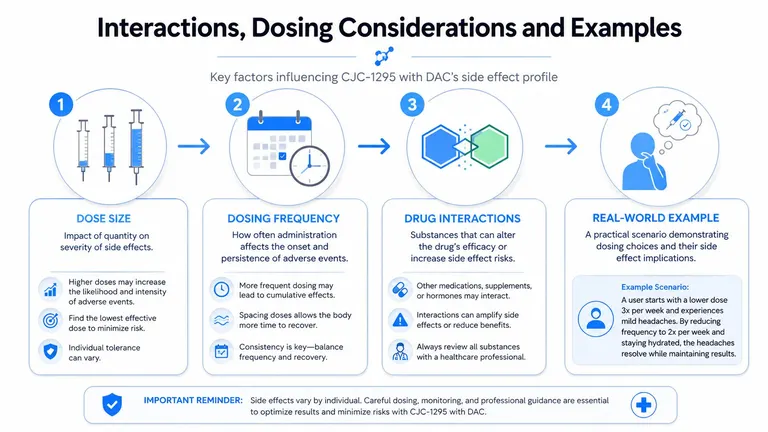
The simplest way to think about dose is this. More exposure usually means more opportunity for side effects to appear, and the long-acting DAC form gives those effects time to pile up. That doesn’t mean every larger dose causes trouble, but it does mean the margin for error shrinks as frequency and amount increase. The FDA’s summary already showed a dose-response pattern in several adverse events, which is why dose changes deserve respect, not casual experimentation (FDA advisory materials).
Why timing matters
A long-acting peptide can be harder to “outrun” if a side effect starts. With a short-acting compound, symptoms may settle sooner once dosing changes. With DAC, the body keeps feeling the signal for longer, so a mistake in timing or quantity can linger. That’s why people often misread the first few days as evidence that the protocol is tolerable, only to notice swelling or tingling later.
A practical example helps. If someone notices repeat headaches after a dose increase, the useful response isn’t to add more variables. It’s to step back and ask whether the higher exposure is necessary. If symptoms ease after reducing exposure, that pattern is more informative than trying to push through.
Interactions that can confuse the picture
The literature around this peptide emphasizes endocrine monitoring more than classic drug-drug interactions, but real-world use rarely happens in isolation. Someone taking glucose-lowering agents, anti-inflammatory drugs, or other hormones may have a harder time separating the peptide’s effects from everything else going on. The danger is not just a direct chemical clash, it’s diagnostic confusion. A side effect can get mislabeled as dehydration, training stress, or diet when it’s really the cumulative peptide signal showing up.
Here’s the cleanest way to think about combinations:
- Dose size influences how strongly the GH axis is pushed.
- Frequency influences how long the body stays in that increased state.
- Co-administered compounds can blur symptom interpretation, especially when they also affect energy, inflammation, fluid balance, or glucose.
- Symptom timing tells you more than guessing does.
If a new symptom appears only after the peptide protocol changes, treat that temporal link as clinically meaningful until proven otherwise.
For people who prefer a structured workflow for protocol planning, this injection safety checklist is a useful companion because technique errors can muddy the picture when you’re trying to interpret side effects.
Monitoring and Harm Reduction Strategies
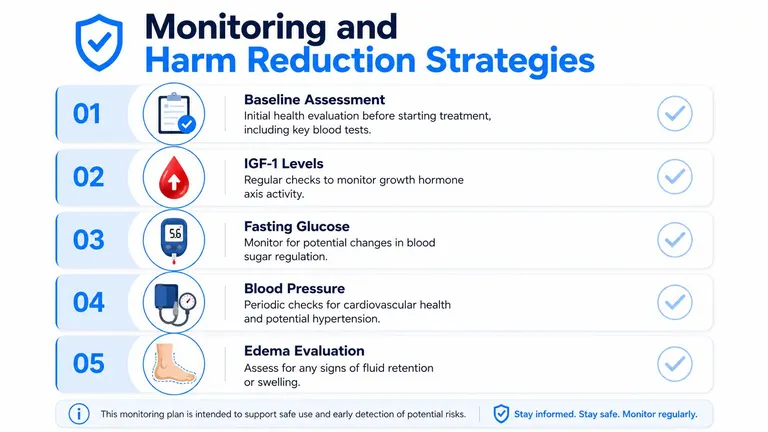
Long-acting exposure is where safety gets won or lost. The DAC form raises GH and IGF-1 for roughly 6 to 8 days per dose, which means the body doesn’t reset quickly between injections, and repeated use can produce cumulative effects (monitoring review). That’s exactly why monitoring should be scheduled, not improvised.
A practical monitoring rhythm
Start with a baseline assessment before the first dose. That means documenting existing swelling, blood pressure tendencies, glucose status, and any history of numbness or tingling. Once treatment begins, check IGF-1 and fasting glucose on a regular cadence, because those are the cleanest markers of whether the growth-hormone axis is staying within a tolerable range. Add blood pressure and a simple edema check at the same time so fluid-related shifts don’t get missed.
If symptoms are stable, keep the rhythm consistent. If swelling, headaches, or tingling increase, shorten the interval between checks rather than waiting for the next routine review. The point is not to chase perfection. It’s to catch drift early, before the pattern becomes hard to reverse.
What should trigger a pause
Persistent swelling in the hands, feet, or face deserves attention. So does tingling that starts to resemble a compressive nerve issue, especially if it’s worse at night or after repeated dosing. A fasting glucose trend that starts moving the wrong way is another warning sign, because the long-acting signal is doing exactly what the mechanism predicts, even if the symptom set still feels subtle.
The monitoring question should always be, “Is the body tolerating this signal over time?” If the answer becomes uncertain, reduce exposure or stop and reassess rather than waiting for the problem to declare itself more clearly.
For a technical setup mindset, this injection safety checklist can help keep the administration process clean, and for broader symptom awareness, many users also track heart-rate trends with tools like Apple Watch heart data for POTS as a way to notice unusual cardiovascular drift, even though that doesn’t replace clinical evaluation.
A simple harm-reduction mindset
- Document before you change: write down weight, swelling, blood pressure, and any tingling before altering the protocol.
- Adjust one variable at a time: changing dose, frequency, and timing all at once makes side effects impossible to interpret.
- Respect the long half-life: symptoms may not settle immediately after a change, so don’t judge too fast.
- Use patterns, not guesses: recurring headaches, edema, or glucose drift mean something, even if each episode feels modest.
Conclusion and When to Seek Medical Help
The core safety issue with CJC-1295 with DAC side effects is cumulative exposure. The DAC form isn’t just a different label, it creates a longer GH and IGF-1 signal, so fluid retention, glucose drift, headache, flushing, and compressive symptoms deserve more respect than they’d get with a short-acting peptide. The safest approach is simple. Know your baseline, monitor consistently, and treat repeated symptoms as data, not noise.
Seek medical help promptly if you develop persistent hypotension, severe or worsening edema, chest pain, shortness of breath, new neurological symptoms, or swelling and tingling that don’t settle after exposure is reduced. People with cancer history, prediabetes, or cardiovascular risk should be especially careful before using this kind of GH-axis stimulation. When a protocol changes the body’s endocrine rhythm for days at a time, oversight isn’t optional.
A CTA for PepFlow.