The loudest advice around BPC-157 tendonitis treats a research peptide like a finished treatment. That’s backwards. The human evidence is still sparse, the diagnosis label often gets blurred into generic tendon pain, and the strongest claims still come from animal models, not clinical trials in people.
If you want a serious read on this topic, you have to separate acute tendon injury, chronic tendinopathy, and the broader “sports recovery” marketing cloud around them. That distinction changes how you interpret the data, what you expect from a protocol, and how you decide whether anything is helping.
For readers comparing conservative options while they evaluate peptide research, effective shockwave therapy in Shawnee is a useful reminder that tendon care still has established, non-peptide pathways worth understanding. If you’re also tracking the wider peptide field, the broader framework in peptides for tissue repair helps put BPC-157 in context without pretending it’s the only variable that matters.
Table of Contents
- Why BPC 157 Tendonitis Claims Need a Reality Check
- What BPC 157 Is and How It May Support Tendon Repair
- Animal Models Versus Human Evidence for Tendonitis
- Commonly Reported Research Dosing and Administration Methods
- Safety Considerations and Regulatory Realities
- Planning and Tracking Peptide Protocols with PepFlow
- Realistic Expectations and Frequently Asked Questions
Why BPC 157 Tendonitis Claims Need a Reality Check
The main problem with BPC 157 tendonitis content is that it often skips the hardest question first. It assumes the peptide already works in humans, then argues about route, stack, or timing. The evidence base does not support that leap.
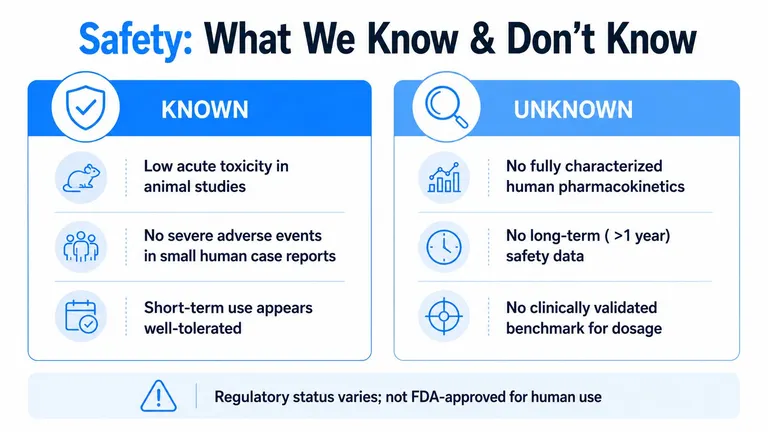
A 2025 narrative review found, to its knowledge, only three published human studies on BPC-157 in tendonitis or tendon injury, and one retrospective knee-injection study contacted just 16 patients at 6 months to 1 year after treatment. In that report, 14 of 16 patients, or 87.5%, said they had significant pain relief after intra-articular injections containing BPC-157, but the review also stressed the major limits, including the small sample size, lack of a control group, and lack of a common diagnosis. The same review also noted that long-term safety, optimal dosing, and pharmacokinetic profiles are not yet fully characterized in humans. You can read that summary in the review itself on PMC.
Tendon pain is not one problem
“Tendonitis” gets used as a catch-all, but that wording can hide very different biology. A painful Achilles after a sudden training spike, a chronically irritated patellar tendon, and a partially torn tendon are not the same clinical situation, so a peptide signal that looks interesting in one setting does not automatically transfer to another. The literature itself often bundles tendons, ligaments, muscle tears, and “sports injuries” together, which makes the marketing feel broader than the evidence really is.
That matters if you are trying to plan a research protocol or interpret your own response. Pain can improve while tissue quality does not, or loading tolerance can improve without any dramatic short-term symptom change. In tendon work, those are not equivalent outcomes.
Practical rule: if a claim does not specify the exact tendon problem, the time course, and the outcome being measured, treat it as weak evidence.
For anyone comparing tendon strategies, the difference between a recovery tool and a true disease-modifying treatment is the core issue. A peptide can look promising in a narrow report and still fail to answer whether it helps your tendon problem in a durable way. If you are also comparing how different peptides are framed in tissue repair, the broader framework in peptides for tissue repair helps place BPC-157 in context. A practical protocol also needs a way to record what changes, and when. That is where tracking details matter more than claims. People pairing research peptides with conservative care sometimes compare them with options such as effective shockwave therapy in Shawnee, which gives a useful reminder that symptom improvement and tissue recovery are not the same endpoint.
What BPC 157 Is and How It May Support Tendon Repair
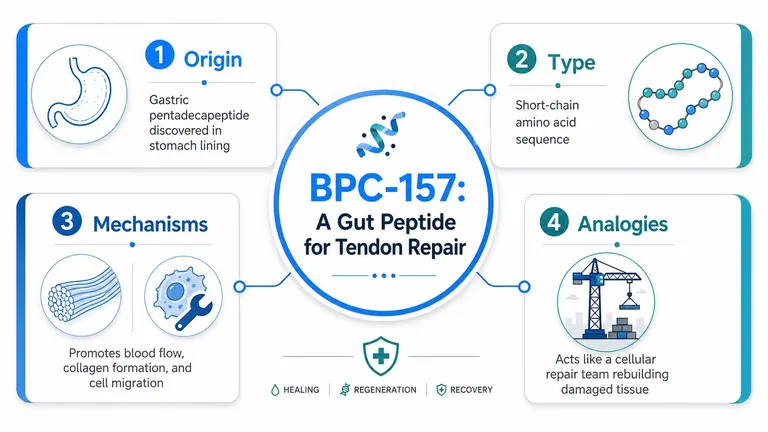
BPC-157 is a gastric pentadecapeptide, a short peptide sequence first explored for tissue-protective effects. Researchers became interested because it appeared to influence repair-related signaling, not because it was established as a finished tendonitis drug. A tendon-specific paper described accelerated healing of transected Achilles tendon and stimulated tendocyte growth in vitro, which helps explain why it attracts attention in recovery circles as reported in the tendon-focused study.
The appeal comes from the mechanism pattern. Across later reviews, BPC-157 is associated with cell survival, cell migration, angiogenesis, and extracellular matrix rebuilding. Those are the kinds of processes you would want if tendon tissue is trying to move from disruption toward organized repair, especially because tendon structure depends on aligned collagen and usable blood supply. That is still a mechanistic story, not proof that people with tendonitis will improve in the same way.
Why fibroblasts and collagen keep coming up
Fibroblasts build and remodel connective tissue. In tendon biology, they matter because they are part of the machinery that lays down collagen and helps organize the matrix after injury. In rat and explant work, BPC-157 has been tied to better fibroblast outgrowth and improved collagen appearance, which is why it is often framed as a repair aid rather than only an anti-inflammatory compound.
The ex vivo tendon explant study shows how early the evidence still is. It reported fibroblast outgrowth in 5 of 10 explants on day 2 versus 2 of 10 controls, which is a meaningful preclinical signal, but it is not a clinical endpoint. It does not show what happens in a living human tendon under real-world loading, rehab, and symptom variability, as discussed in the preclinical review above.
A useful way to frame the peptide is as a biologic signal amplifier. It may make the tissue environment more permissive to repair. That still leaves the hard questions of dose, route, duration, and whether human tendon pain responds the way an animal model does. For a broader overview of peptide framing, the peptide treatments guide 2024 keeps the discussion on process, not hype. A more detailed overview of related repair logic is also available in BPC-157 for wound healing.
Animal Models Versus Human Evidence for Tendonitis
The strongest BPC-157 signal still comes from animal Achilles tendon models, not human trials. That matters because many online summaries blur the line between tendon repair signals in animals and proof that the same effect occurs in people. The two are not interchangeable.
What the rat studies actually showed
In a rat Achilles detachment study, BPC-157 was tested at days 1, 4, 7, 10, 14, and 21, and the paper reported improved healing outcomes, including higher load to failure, greater stiffness, improved Young’s modulus, better collagen organization, and a more favorable vascular appearance. Earlier rat work on transected Achilles tendon also described complete recovery, and the same line of research included tendon explant findings that favored fibroblast outgrowth PubMed record.
Those findings are real and worth attention. They point to a tendon repair phenotype, not just a broad anti-inflammatory effect, which helps explain why the peptide keeps appearing in sports recovery discussions.
| Evidence Type | Model | Key Outcomes | Limitations |
|---|---|---|---|
| Preclinical | Rat Achilles detachment | Higher load to failure, greater stiffness, improved Young’s modulus, better collagen organization and vascular appearance | Animal tissue, not human tendonitis |
| Preclinical | Rat transected Achilles tendon | Reported complete recovery | Direct translation to humans is unproven |
| Preclinical | Tendon explant culture | Fibroblast outgrowth favored BPC-157 | Ex vivo model, not whole-body healing |
| Human | Retrospective knee-injection report | 14 of 16 patients, or 87.5%, reported significant pain relief | Small sample, no control group, mixed diagnosis |
Why that still doesn’t answer tendonitis in people
A rat tendon does not capture the full messiness of human tendon pain. Training load, movement patterns, age, chronicity, prior injections, and rehab adherence all shape the clinical picture. Promising biomechanics in animals can coexist with very thin human evidence because the biological context is different, and because symptom relief is not the same thing as tissue remodeling. The clearest reminder is the 2025 review that found only three published human studies human evidence review.
The most responsible interpretation is straightforward. BPC-157 has biologically interesting preclinical support for tendon repair, but human tendonitis data remain sparse, diagnosis quality is inconsistent, and the literature still cannot tell you whether the peptide helps acute tendon injury, chronic tendinopathy, or both. The broader repair narrative is also easy to overextend, so a focused review such as BPC-157 for wound healing is useful for seeing how tendon claims are often folded into a wider tissue-repair story.
Commonly Reported Research Dosing and Administration Methods
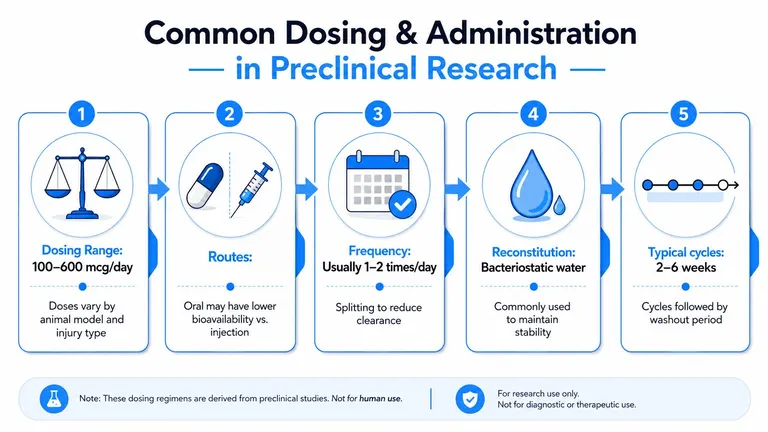
Forum discussions often make BPC 157 tendonitis dosing sound standardized. It is not. The human benchmark has not been validated, so any protocol discussion is a research-planning exercise, not a prescription.
Route matters more than people admit
Research-oriented conversations usually focus on subcutaneous and intramuscular injection because users assume more local delivery could matter for tendon pain. Oral use also comes up, but the logic is different because oral absorption and tissue targeting have not been established at the level people want them to be. The defensible reading is simple. Route choice is still a hypothesis, not a proven advantage.
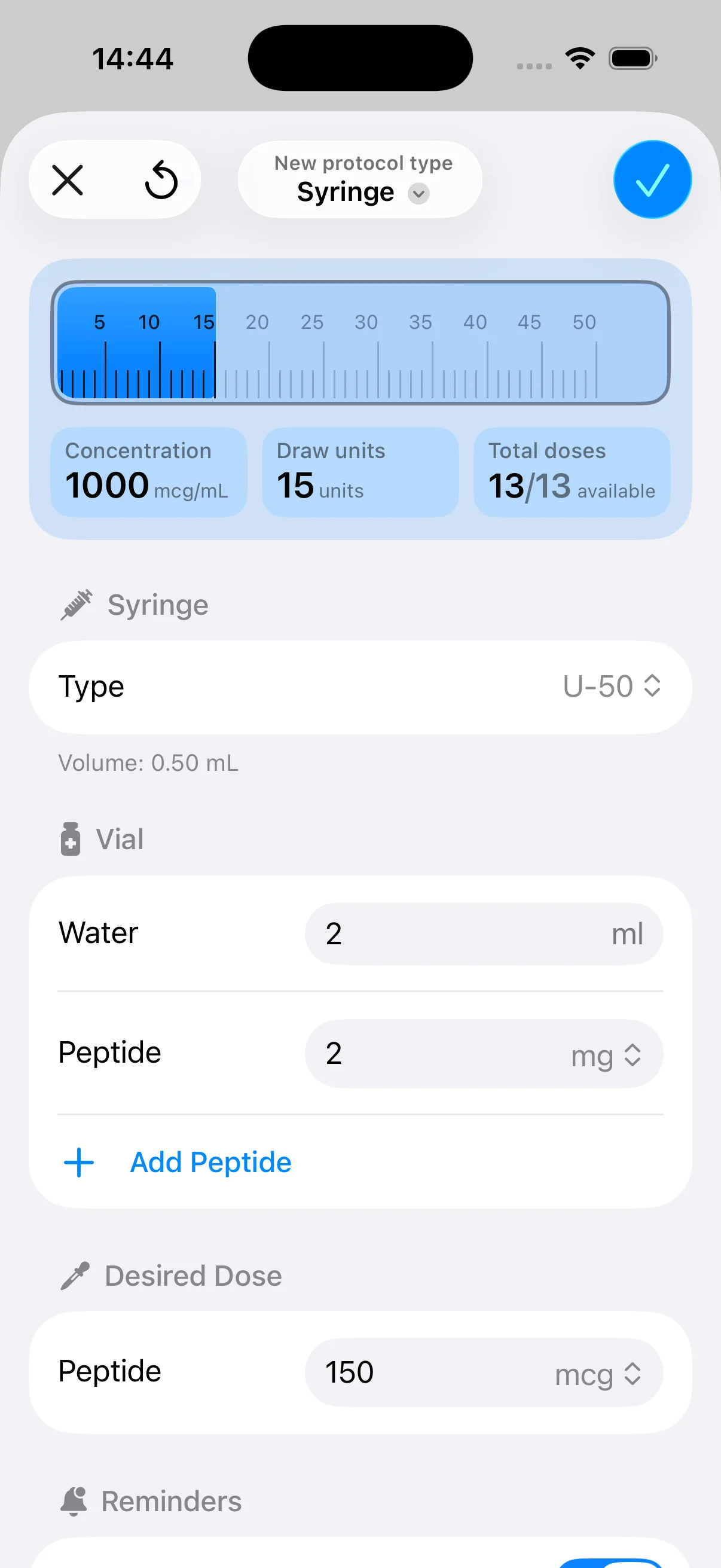
The arithmetic gets messy fast when people skip the basics. Concentration, vial size, reconstitution volume, and the actual microgram target all interact. A dose that sounds straightforward in a forum post can become wrong if the vial concentration is misunderstood.
Practical rule: write down the target amount, the vial concentration, and the injection volume before you touch the syringe.
Why cycle planning is still uncertain
Frequency and cycle length are the other recurring topics, but they are pattern observations, not human standards. Animal and off-label discussions often treat timing as if it were part of the peptide’s identity. In reality, the best schedule is still undefined for tendonitis in people, and, as noted in the 2025 review cited earlier, long-term safety and pharmacokinetics are not fully characterized in humans.
A practical planning mindset works better than a rigid rule set:
- Confirm the intended route: decide whether the protocol is being discussed as injection-based or oral, because the assumptions are different.
- Match concentration to math: the concentration in the vial changes the volume you would need for any target amount.
- Track the cycle, not just the dose: tendon work is slow, so start dates, pause periods, and reminders matter as much as the nominal amount.
- Log response against loading: if symptoms change but training also changed, do not attribute the whole shift to the peptide.
For users who want a structured way to handle those moving parts, a protocol tool can reduce arithmetic errors and missed entries. PepFlow’s peptide dosage guide is a useful reference point for the calculation logic behind microgram-to-volume planning, even though it is not a substitute for medical guidance.
Safety Considerations and Regulatory Realities
Safety is where enthusiasm meets a harder question. The human literature is still too thin to give a clinically validated benchmark for tendonitis, and as the 2025 review documented, long-term safety and pharmacokinetics are not fully characterized in people. Anyone planning a protocol is working with uncertainty, not a finished therapy.
What is known, and what isn’t
The preclinical literature explains why interest persists. It suggests the peptide has been studied without dramatic acute toxicity signals in animals, and the small human reports so far have not produced a large adverse-event signal. That still leaves a wide gap between “appears tolerated in limited reports” and “safe for repeated real-world use,” especially for people with complex medical histories or overlapping musculoskeletal problems.
The regulatory picture is straightforward. BPC-157 is not approved as a medication for tendonitis in most settings, so sourcing and quality control matter as much as the biologic question. If a product is sold as a research chemical, the buyer is also accepting uncertainty about manufacturing consistency, purity, and labeling accuracy.
No protocol is rational if the product identity itself is unclear.
A practical risk framework
The cleanest way to think about risk is to separate three questions.
- Is the diagnosis clear? Tendon pain can reflect irritation, degeneration, or partial injury, and those do not all justify the same approach.
- Is the product traceable? Without reliable sourcing, the protocol may not even be the protocol you think you are using.
- Is the plan observable? If you cannot track symptoms, load tolerance, and timing, you cannot tell whether anything changed.
The point is not to be alarmist. It is to avoid self-deception. A peptide can be biologically interesting and still not be a sensible choice for a specific person, especially if the tendon issue has not been properly identified first.
Planning and Tracking Peptide Protocols with PepFlow
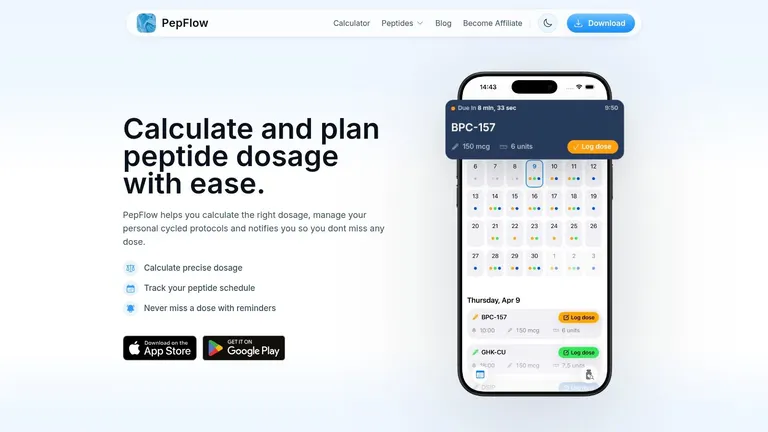
Protocol math is where many people lose the thread. They may understand the rough idea of micrograms, but they still need to convert a target amount into a usable volume, keep the vial concentration straight, and remember whether a cycle is active, paused, or finished. That’s where a planning tool can be useful.
PepFlow handles that sort of workflow by turning dose targets into practical unit measurements, while letting users configure vials, concentrations, and cyclical schedules. It also supports reminders, live activities, widgets, and quick log-dose actions, which matter when the core problem isn’t motivation, it’s consistency. For a compound like BPC-157, where the evidence is unsettled and the protocol details can get messy, that structure can reduce manual errors.
What structured tracking changes
When you’re dealing with a research peptide, the issue is rarely just “did I take it?” It’s whether the timing, spacing, and recording were consistent enough to make the data useful to you. If the schedule drifts, if the concentration changes, or if doses are guessed from memory, the result becomes harder to interpret.
A good protocol log should let you see:
- Dose timing: When each entry happened relative to the planned schedule.
- Cycle state: Whether you’re in an active block, a pause, or a washout period.
- Historical pattern: Whether symptoms changed in parallel with training load or rehab changes.
- Measurement clarity: Whether the recorded amount matches the intended amount.
That’s the point of using software instead of scraps of notes. It’s not about turning a research peptide into a diagnosis tool. It’s about making the tracking honest enough that you can tell signal from noise.
Realistic Expectations and Frequently Asked Questions
The most honest expectation for BPC-157 tendonitis is modest, not dramatic. If someone has a clearly defined tendon problem, any change should be judged against load tolerance, symptom stability, and rehab consistency, not against internet stories about rapid transformation. The human evidence is still too thin to promise a specific result for acute tendon injury or chronic tendinopathy.
Can BPC-157 help chronic tendon pain more than an acute injury
There isn’t enough human data to answer that cleanly. The literature keeps mixing tendons, ligaments, muscle strain, and sports injuries, so the chronic-versus-acute comparison remains a gap rather than a settled question, as the human evidence review noted. If a protocol appears to help, the more useful question is whether pain reduction is accompanied by better function and better loading tolerance.
How do I know if a protocol is working
Look for a pattern, not a single good day. Better sleep, less flare-up after rehab, more stable movement under load, and fewer symptom spikes are more useful than a one-off feeling of relief. If you cannot separate the peptide from changes in training, rest, or physical therapy, the signal is not clean enough to trust.
Does it replace rehab or loading work
No. Tendons respond to progressive loading and careful management, and a peptide signal does not erase that basic reality. Any use of a research peptide should sit inside a broader recovery plan, not replace diagnosis, rehab, or clinical judgment.
Is it the same as other peptides for tendon pain
People often group peptides together, but BPC-157 is discussed differently because its tendon-focused preclinical story is unusually strong while the human data are still thin. That mix makes it interesting, but it also makes overconfidence easy.
If you want a cleaner way to organize a research peptide protocol, track cycles, and keep dosing math visible, use PepFlow to build the structure around your notes instead of guessing from memory. It will not replace a clinician, but it can help you stay consistent, record what happened, and make your BPC-157 tendonitis research easier to evaluate.