Beyond Melatonin: A Practical Guide to Peptides for Sleep
You’ve cleaned up your bedtime routine. The room is dark. The phone is out of reach. You’ve tried magnesium, glycine, melatonin, and the usual stack of sleep supplements. But you still wake up too often, lie there with a busy nervous system, or get plenty of hours without waking refreshed.
That’s usually the point where people start looking for more targeted tools. Peptides sit in that category. They aren’t generic sleep aids. They’re signaling molecules that can influence the systems behind sleep itself, including sleep pressure, stress response, circadian timing, and deep sleep physiology. That’s why they’ve become part of the discussion around the best peptides for sleep, especially for people who care about recovery, performance, and measurable results.
The practical problem is that most content stops at mechanism. It tells you what a peptide may do, then leaves you guessing on protocol design, timing, and how to track whether anything is working. That gap matters. A sleep protocol only helps if you can follow it consistently, log it accurately, and connect it to what happened that night.
This guide keeps the list simple and useful. You’ll get the leading sleep-related peptides, the key trade-offs, and a practical way to plan them inside a structured routine using a tool like PepFlow so you can stop winging your schedule and start seeing patterns.
Table of Contents
- 1. Delta Sleep-Inducing Peptide DSIP
- 2. Semorelin
- 3. Melanin-Concentrating Hormone MCH
- 4. Galanin
- 5. Arginine-Vasopressin AVP
- 6. Hypocretin Orexin Antagonists
- 7. Cortistatin
- Top 7 Sleep Peptides Comparison
- Your Blueprint for Better Sleep Planning and Tracking Your Protocol
1. Delta Sleep-Inducing Peptide DSIP
You see this pattern all the time. Someone is exhausted by 10 p.m., falls asleep fast, then wakes at 1:40, 3:10, and 4:50 with a busy mind and a flat recovery score the next morning. That is the kind of case where DSIP usually deserves an early look.
DSIP stays near the top of sleep peptide discussions because it has a long research history tied to sleep regulation rather than general relaxation. It was first isolated from rabbit cerebral venous blood in the 1970s and has remained a recurring reference point in sleep peptide writing, as described in this DSIP sleep research overview.
What makes it useful in practice is the pattern of effects people are usually chasing. Faster sleep onset, fewer disruptive awakenings, and better overnight recovery. Early human work and later insomnia-related research have linked DSIP with improvements across sleep continuity and sleep-stage quality, including slow-wave and REM-related measures, as noted earlier.
Why DSIP stays near the top
DSIP is often more interesting for stress-driven sleep problems than for simple bedtime drowsiness. If the actual issue is high nighttime arousal, another sedating compound may get someone sleepy without fixing the reason they keep popping awake. DSIP gets attention because it has also been discussed in relation to ACTH and cortisol response under chronic stress conditions.
That trade-off matters. A person in a hard training phase, a founder under sustained work stress, or a shift worker trying to normalize sleep often reports the same thing: they are tired, but their nervous system does not downshift cleanly.
In that situation, DSIP is usually stronger as a structured test than as a random add-on.
Practical rule: Use DSIP when the target is fragmented, stress-linked sleep. Do not judge it only by whether it makes you feel sedated at lights out.
How to implement it without guessing
The weak point with DSIP is not interest. It is execution. A lot of content covers potential benefits, but very little helps people choose a repeatable timing window, hold variables steady, and judge whether the peptide is helping or just getting mixed into a messy evening routine. That problem is called out in this discussion of sleep peptide dosing blind spots.
The fix is boring, and it works. Run DSIP like a protocol.
Set one administration window before bed and keep it fixed for at least several nights. Log the exact dose, the timing, caffeine cutoff, alcohol intake, heavy late meals, and whether training ran unusually late. Then track the outcomes that matter: sleep latency, number of awakenings, time awake after sleep onset, morning readiness, and deep sleep trend lines from the same wearable, not three different devices.
If you are still learning the basics, this primer on what peptides are is a good place to start. If you are comparing DSIP against recovery-oriented options, it also helps to understand how Sermorelin dosing is typically approached in body composition protocols, because the scheduling logic is different and that affects how you plan testing blocks.
A simple implementation checklist works well:
- Keep timing consistent: Use the same pre-bed window each night so your notes reflect DSIP, not schedule drift.
- Track a small set of metrics: Sleep onset, night wakings, perceived restoration, and one wearable-based sleep score are enough to spot a pattern.
- Change one variable at a time: Do not adjust magnesium, apigenin, caffeine timing, and DSIP all in the same week.
- Review by block, not by night: One rough night does not invalidate a protocol. Look for trends across a defined run.
This is the part many people skip. They try DSIP twice, change three other things, then conclude it did nothing. A dedicated tracker like PepFlow helps because it gives you one place to schedule doses, record nightly variables, and compare symptom trends without relying on memory. That is how you turn a peptide trial into a decision instead of a guess.
2. Semorelin
Sermorelin is often overlooked in sleep discussions because people associate it with growth hormone support first. That’s a mistake. For the right user, especially someone focused on recovery, body composition, and nighttime restoration, it can be one of the more practical options.
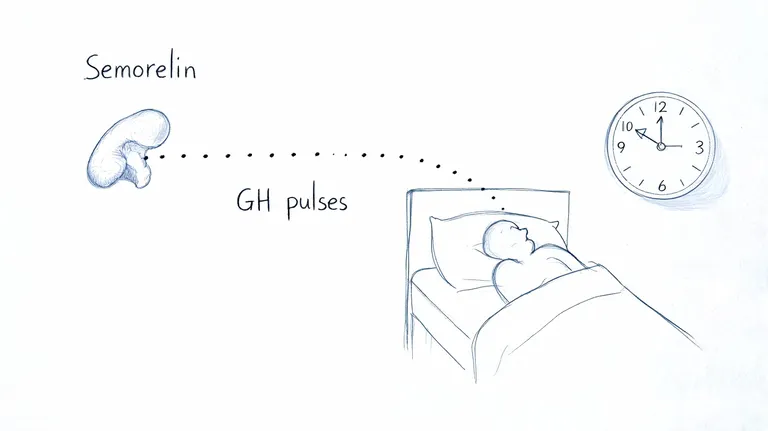
The reason is straightforward. Growth hormone and deep sleep are tightly linked. The primary GH pulse of the day occurs during slow-wave sleep, and growth hormone-releasing peptides such as CJC-1295 and Ipamorelin are commonly used at bedtime to deepen that phase, reinforcing the relationship between GH secretion and sleep architecture, according to this overview of sleep peptides and GH-related timing. Sermorelin belongs in that same practical conversation because it supports the GH axis rather than forcing sedation.
Where Sermorelin fits
Sermorelin makes the most sense when poor sleep and poor recovery show up together. Think of the person who sleeps “enough” but wakes sore, flat, and under-recovered, or the aging adult whose deep sleep quality seems to have slipped along with training capacity.
This isn’t usually the first pick for someone whose main issue is anxious bedtime rumination. It’s better matched to people who want to support the physiology around deep sleep and overnight repair.
What works in practice
The common mistake with Sermorelin is inconsistency. People remember the dose, then ignore scheduling. That defeats the point. Bedtime-related peptides only tell you something useful when the routine is repeatable.
If you’re trying to make Sermorelin practical instead of theoretical, build the protocol around adherence:
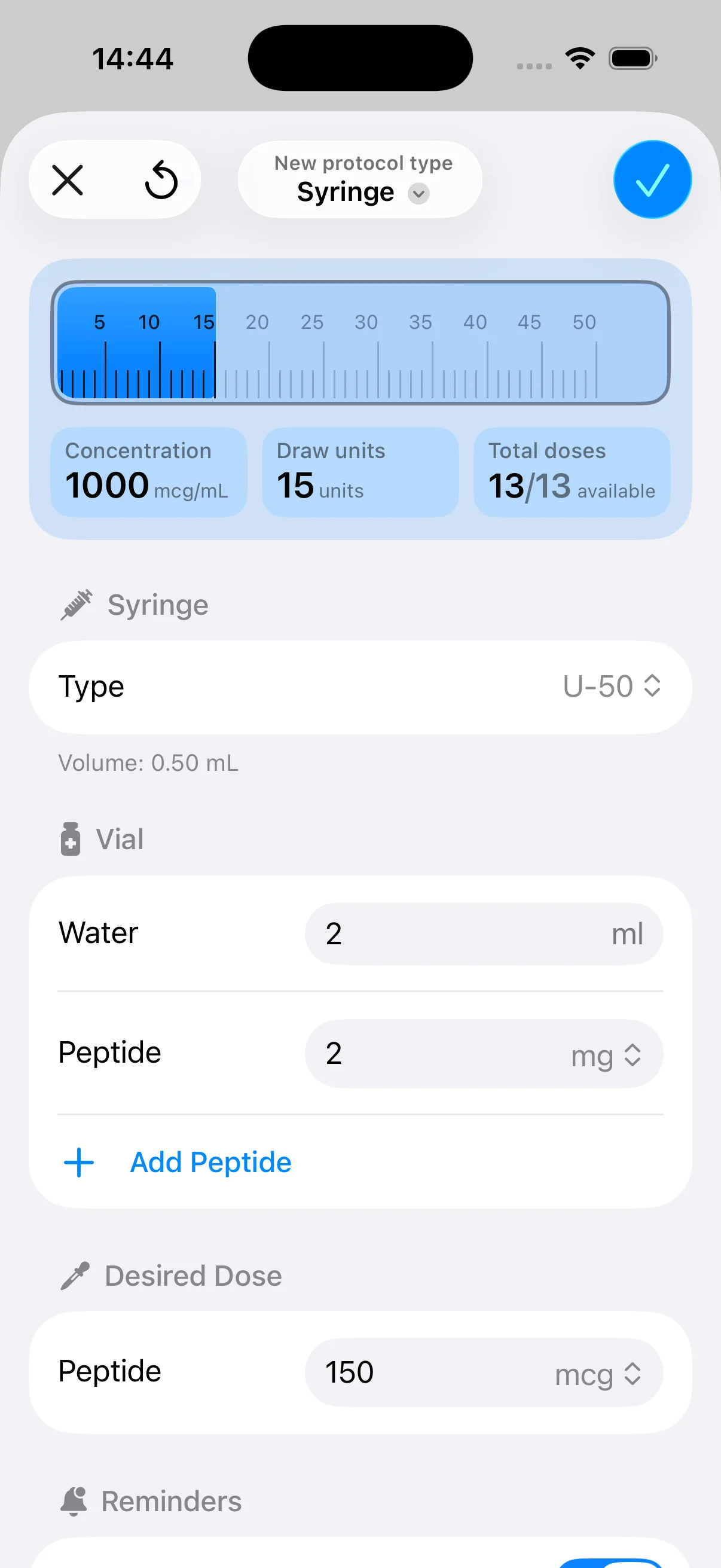
- Use a dose calculator: Converting micrograms into a real injection volume is where people make avoidable mistakes. This Sermorelin dosage guide is relevant for understanding practical dosing setup.
- Anchor the schedule: Keep administration at the same evening slot rather than floating it around your social calendar.
- Track recovery with sleep: Log sleep quality beside training output, soreness, and morning readiness so you can see whether the protocol is helping overnight restoration.
Better sleep from a GH-supporting peptide usually shows up as better recovery first, not just “I felt sleepy.”
Sermorelin isn’t the most direct sleep peptide on this list. It is one of the more useful options when sleep quality, recovery quality, and aging-related decline in nighttime restoration are all part of the same problem.
3. Melanin-Concentrating Hormone MCH
MCH is interesting because it pushes the conversation beyond “How fast did you fall asleep?” and into “What kind of sleep are you getting?” That matters more than is commonly understood. You can sleep through the night and still wake up mentally foggy if your sleep architecture is off.

MCH is usually discussed in relation to REM regulation and hypothalamic signaling. That gives it a different profile from peptides chosen mainly for deep sleep or stress modulation. In practical terms, I think of MCH as a more architecture-focused option, especially for people who feel cognitively under-recovered even when their total sleep duration looks acceptable.
Why MCH gets attention
A common use case is the person under heavy mental load. Students during exams, founders during launch cycles, and knowledge workers who keep waking with a sense that their brain never really shut off often care less about total hours and more about mental reset.
That’s where MCH becomes conceptually useful. If dream intensity, dream recall, or the subjective sense of “processing” overnight shifts alongside improved sleep quality, MCH may deserve more attention in a personalized protocol than another generic calming agent.
How to test it intelligently
Because MCH is more nuanced, sloppy tracking ruins the experiment fast. If your bedtime swings by hours, your wearable data is noisy, and your caffeine intake changes daily, you won’t know whether MCH is helping or whether your routine is unstable.
A better approach is to narrow the test window and pay attention to REM-related outcomes.
- Pick one variable: Don’t introduce MCH at the same time you change your wake time, training load, and evening meal size.
- Track next-day cognition: Note dream recall, memory retention, mood stability, and mental sharpness rather than only “hours slept.”
- Use enough runway: Neural and sleep-architecture effects can take some consistency before the pattern becomes obvious.
Some peptides help you feel sedated. Others improve the structure of sleep itself. MCH belongs in the second category.
MCH won’t be everyone’s first-line choice. But for users who already know their issue isn’t solely “can’t get drowsy,” it can be one of the more interesting entries on a best peptides for sleep list.
4. Galanin
Galanin is a strong candidate when the main problem is the handoff from wakefulness to sleep. Some people don’t have a deep sleep problem or a recovery problem first. They have a transition problem. Their body is in bed, but the nervous system hasn’t gotten the message.
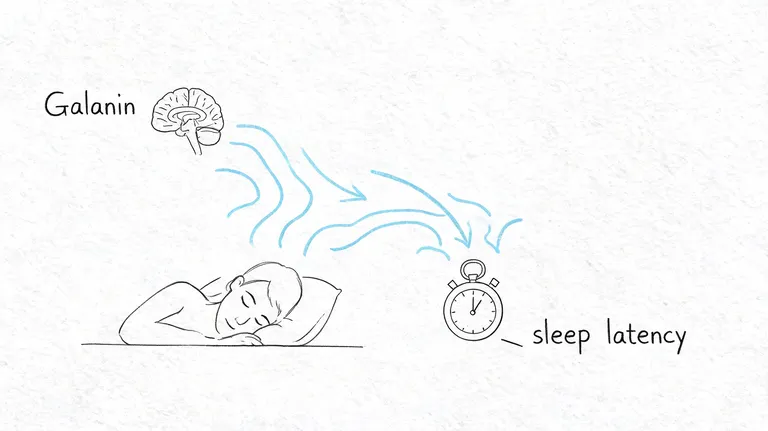
That’s where Galanin fits. It’s tied to sleep-promoting signaling and the reduction of wake-promoting tone. In practical coaching terms, I look at it for the person who says, “I’m exhausted all day, then alert the second my head hits the pillow.”
Best use case for Galanin
This can show up in high-stress professionals, shift workers, and anyone whose wake-promoting chemistry tends to stay high into the evening. Galanin is less about broad recovery support and more about helping the system downshift.
It’s also a better conceptual fit when sleep onset is the repeated bottleneck. If someone falls asleep quickly but wakes too often at night, I’d usually think harder before centering the whole protocol around Galanin.
What to track
Galanin requires basic discipline. If you don’t measure sleep latency, you won’t know if it’s doing the job you chose it for.
Use a simple tracking framework:
- Record lights-out time: The clock starts when you attempt sleep, not when you finish your last email.
- Note perceived sleep onset: Estimate how long it took to fall asleep using the same method every night.
- Watch stress spillover: Add one line about evening stress level, because Galanin often looks better when the issue is nighttime overactivation.
One practical scenario where Galanin can help is travel-heavy work. A client can be physically drained from flights yet mentally overstimulated from compressed schedules and late-night problem solving. In that setting, a peptide aimed at the transition into sleep may make more sense than one aimed mostly at hormonal recovery.
5. Arginine-Vasopressin AVP
AVP is the outlier on this list because it doesn’t fit the usual bedtime-peptide pattern. That’s exactly why it’s useful to discuss. Not every sleep issue should be attacked at night. Some should be corrected by strengthening daytime circadian signals.
AVP is associated with circadian rhythm regulation and sleep-wake timing. That makes it a more strategic tool for people whose sleep is inconsistent because their internal timing is inconsistent. If someone keeps drifting later, naps unpredictably, or struggles after travel or rotating shifts, AVP becomes more relevant than a peptide picked solely for sedation or deep sleep support.
When AVP makes sense
The best candidate is usually not the classic insomniac. It’s the person whose routine keeps colliding with biology. Think shift workers, frequent travelers, or people whose sleep timing is unstable enough that bedtime interventions alone never seem to stick.
That distinction matters. A peptide can’t rescue a broken clock if the underlying timing cues stay chaotic.
If your sleep problem starts in the morning and unfolds all day, don’t expect a bedtime-only protocol to solve it.
Implementation notes
AVP protocols need a different mindset. Instead of asking, “Did this make me sleepy tonight?” ask, “Did this improve timing, alertness rhythm, and sleep consolidation over repeated days?”
The practical metrics are different too:
- Track sleep timing: Note bedtime, wake time, and whether your schedule is drifting.
- Log daytime alertness: Midday crashes and random naps can tell you as much as nighttime data.
- Protect the morning routine: If AVP is part of the plan, inconsistent wake times can undermine the whole point.
In real-world use, AVP is less appealing to people who want an immediate nighttime effect. It’s more valuable for the person willing to build circadian structure and let the payoff come from stronger alignment over time.
6. Hypocretin Orexin Antagonists
Orexin-targeted compounds work from the opposite direction of many sleep aids. Instead of trying to push sleep harder, they reduce the wakefulness signal. For some users, that’s a much cleaner framework. The issue isn’t that their body forgot how to sleep. It’s that wake-promoting tone stays too high too late.
A different mechanism entirely
This category is especially relevant for frequent night awakenings and bedtime alertness that feels “on” rather than anxious. People often describe it as being physically tired but neurologically awake. That’s the profile where orexin-related strategies become interesting.
Because the mechanism is timing-sensitive, sloppiness shows up fast. If administration time drifts too much, your results can drift with it.
Protocol discipline matters more here
Planning tools matter a lot in this context. You want the protocol to be boringly consistent so the mechanism has a fair test. If you’re handling reconstitution yourself, accuracy matters before timing even begins. This guide on how to reconstitute peptides is relevant because poor prep can distort the whole protocol.
The people who do best with orexin-related approaches usually do three things well:
- Keep administration precise: This category is less forgiving of random timing.
- Match it with a stable bedtime: Orexin signaling interacts with schedule, so bedtime chaos blunts feedback.
- Track awakenings, not just sleep onset: Some users don’t notice the value until they see fewer middle-of-the-night disruptions.
A practical example is the athlete or founder who gets to sleep reasonably well but wakes repeatedly with a “switch flipped on” feeling. In that situation, reducing wake drive can be more sensible than piling on compounds designed only to make sleep start faster.
7. Cortistatin
Cortistatin sits in the more advanced part of the conversation. It’s related structurally to somatostatin and is tied to sleep-wake regulation, but it’s not usually the first peptide I’d bring up for a beginner. It’s better suited to someone who already knows what kind of sleep issue they have and has enough tracking discipline to notice architecture-level changes.
Why advanced users look at Cortistatin
Cortistatin tends to attract people focused on deeper neural recovery, not just sedation. That includes heavy cognitive performers, advanced biohackers, and practitioners trying to refine an already-structured sleep stack rather than fix an obvious hygiene problem.
The appeal is that it sits closer to the regulation of sleep-promoting and wake-promoting pathways than to the blunt “knock me out” mentality many people bring to sleep.
How to approach a developing protocol
Since protocols in this field remain fluid, approaching them with humility is essential. Avoid forcing a level of precision that the current literature and practical guidance do not yet support. Many individuals face difficulties by replicating another person’s stack without identifying the specific variable they intend to influence.
A smarter approach looks like this:
- Start with a defined objective: Are you trying to improve deep sleep feel, overnight recovery, or morning cognition?
- Use one stable schedule: Don’t keep shifting timing if you want to know whether Cortistatin fits your physiology.
- Review data in blocks: Looking night by night can create noise. Short trend reviews are more useful.
The more sophisticated the peptide, the less room there is for casual experimentation.
Cortistatin can be attractive because it sounds advanced. That’s not a good enough reason to use it. It belongs in a protocol when you have a clear target, clean tracking, and a reason to go beyond more established sleep-support options.
Top 7 Sleep Peptides Comparison
| Item | 🔄 Implementation Complexity | ⚡ Resource Requirements | ⭐📊 Expected Outcomes | 💡 Ideal Use Cases | Key Advantages |
|---|---|---|---|---|---|
| Delta Sleep-Inducing Peptide (DSIP) | Moderate, nightly subQ/IM injections; consistent timing | Low–Moderate, peptide supply, syringes, sleep tracker | ⭐⭐⭐, increased slow-wave sleep, reduced latency in 1–2 weeks; measurable continuity gains | General sleep optimization, athletes, biohackers seeking deeper sleep | Enhances deep sleep, non-addictive, well-documented research |
| Semorelin | Moderate, daily evening injections; cyclical protocols | Moderate, peptide, dosing calculator, medical oversight recommended | ⭐⭐⭐⭐, boosts endogenous GH over 4–6 weeks; improved recovery and sleep consolidation | Aging adults, performance athletes, recovery-focused protocols | Stimulates natural GH pulses; metabolic and recovery benefits |
| Melanin-Concentrating Hormone (MCH) | Moderate, evening injections; emerging timing refinement | Moderate, peptide, REM-tracking wearables | ⭐⭐⭐, targets REM increase (2–3 weeks onset); improved dream/memory consolidation | Cognitive enhancement, students, REM-focused optimization | Specifically promotes REM sleep and sleep-dependent memory |
| Galanin | Low–Moderate, short pre-sleep window (30–45 min) for best effect | Low, peptide, simple injection routine, timing reminders | ⭐⭐⭐, reliably reduces sleep latency; benefits often seen within 1–2 weeks | Individuals with sleep initiation difficulties, stress-related insomnia | Strong latency reduction, may reduce anxiety without next-day impairment |
| Arginine-Vasopressin (AVP) | Moderate, morning dosing for circadian entrainment; multi-week adaptation | Moderate, peptide, circadian monitoring tools, medical oversight if comorbidities | ⭐⭐⭐, improves circadian alignment and sleep consolidation over 2–4+ weeks | Shift workers, travelers with jet lag, circadian-disrupted individuals | Direct circadian regulation; improves nighttime sleep and daytime alertness |
| Hypocretin/Orexin Antagonists (Peptide-based) | High, precision timing (≈1 hour pre-sleep) and compound-dependent dosing | High, specialized peptides, strict scheduling, close monitoring | ⭐⭐⭐⭐, promotes sleep onset/maintenance with minimal next‑day grogginess; 1–2 week adjustment | Resistant insomnia, frequent night awakenings, advanced sleep interventions | Novel wake-signal blockade; preserves natural sleep architecture |
| Cortistatin | High, emerging protocols, nuanced timing (1–2 hr pre-sleep) | High, limited availability, advanced monitoring for slow-wave sleep | ⭐⭐⭐⭐, increases slow-wave sleep and consolidation over 3–4 weeks; potential neuroprotective effects | Deep-sleep enhancement, cognitive consolidation, neuroprotection-focused users | Targets multiple sleep pathways; strong slow‑wave sleep enhancement |
Your Blueprint for Better Sleep Planning and Tracking Your Protocol
Selecting the best peptides for sleep is merely the first step. The part that changes outcomes is execution. Sleep peptides are easy to misunderstand because people expect a dramatic first-night effect, then judge everything too quickly. In practice, the difference usually comes from consistent timing, accurate preparation, and enough clean data to see whether a peptide is improving sleep onset, sleep continuity, deep sleep quality, or next-day recovery.
That’s why I push people to stop treating sleep protocols like a loose collection of ideas. Build one plan, run it cleanly, and measure what matters. If DSIP is your lead peptide, track sleep latency, awakenings, and deep sleep trends. If Sermorelin is the better fit, pair sleep data with recovery markers and morning readiness. If AVP is the play, look harder at schedule stability, alertness timing, and whether your sleep window becomes more predictable.
The weak point in most peptide routines isn’t motivation. It’s adherence. People forget doses, miscalculate reconstitution, drift their timing, or stack too many variables at once. That’s exactly where a structured tool can help. PepFlow is built for planning and organization. It helps users calculate doses, create cycled protocols, schedule reminders, and log what they are doing so the protocol is something they can follow, not just something they intended to follow.
There’s also value in staying grounded. Better sleep still depends on basics. Light exposure, meal timing, stimulant control, and a repeatable bedtime rhythm still matter. Peptides can support physiology, but they won’t rescue a schedule that changes wildly every night. If you want a broader non-peptide angle alongside your protocol, the New Zealand Bed Company natural remedies guide is a reasonable complement.
The win isn’t finding the most exotic compound. The win is finding the right match for your bottleneck, then running the protocol with enough precision to know whether it’s working. Pick the peptide that matches the problem. Keep the schedule tight. Log every dose. Review the trend instead of reacting emotionally to one bad night. That’s how sleep optimization stops being guesswork and becomes a repeatable system.
If you want a simpler way to manage peptide schedules without doing manual math every time, PepFlow can help you calculate doses, organize cycled protocols, set reminders, and keep a clean history log so your sleep protocol stays consistent.