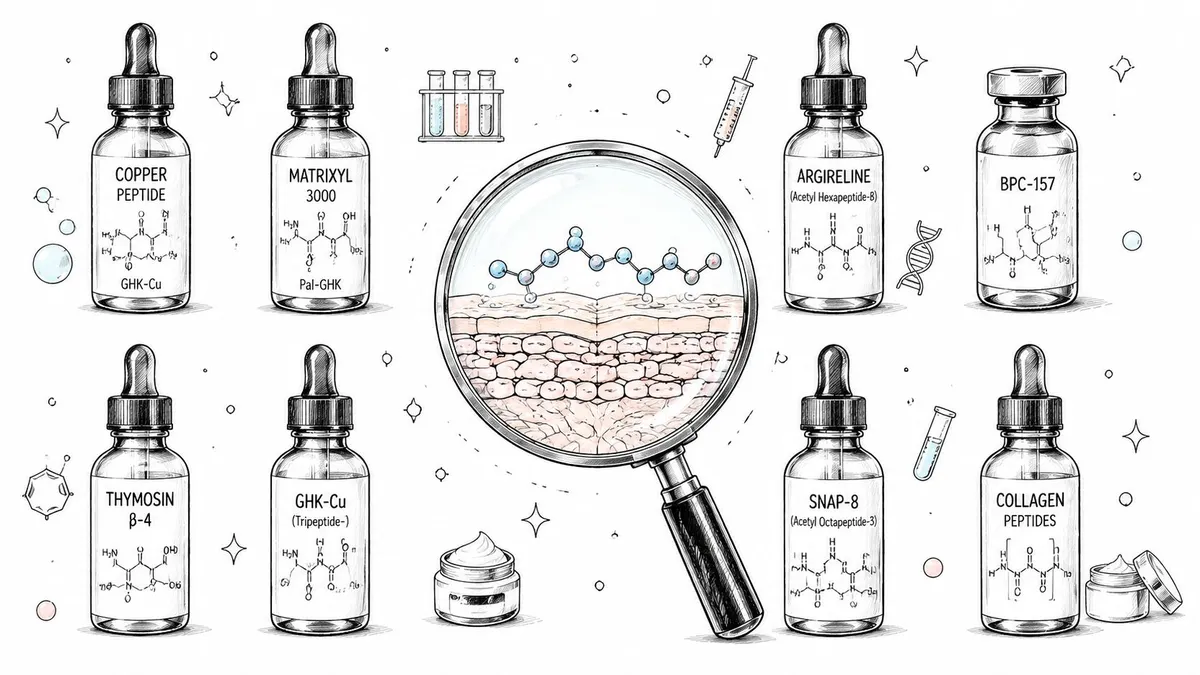
If peptides show up in everything from drugstore serums to high-end clinic products, why do so few articles explain which ones are worth using, and when they’re not? This highlights a significant gap. Most skincare content treats peptides like one ingredient class with one predictable result, when in practice they do very different jobs depending on the peptide, the formula, and the skin concern you’re trying to solve.
Peptides are short chains of amino acids that act like signals. Some nudge skin toward better hydration. Some aim to soften expression lines. Others are used for barrier support, repair, or a broader rejuvenation strategy. A recent systematic review and meta-analysis of peptide trials for skin aging found 19 randomized controlled trials with 1,341 participants and reported significant improvements in hydration and brightness, while wrinkle improvement was present but more modest overall. That’s useful because it puts peptides in the right lane. They can help, but they aren’t magic.
This guide focuses on the best peptides for skin with a more practical lens. It covers over-the-counter topical options, touches the edge of more advanced regenerative categories, and shows how to choose based on goal, not hype. If you want a broader primer first, this breakdown of peptides in skincare is a solid companion.
Table of Contents
- 1. Matrixyl (Palmitoyl Pentapeptide-4)
- 2. Argireline (Acetyl Hexapeptide-8)
- 3. Copper Peptides (GHK-Cu)
- 4. Snap-8 (Acetyl Octapeptide-3)
- 5. Dipeptide Diaminobutyroyl Benzylamide Diacetate (Syn-Coll)
- 6. Epidermal Growth Factor (EGF)
- 7. Palmitoyl Tetrapeptide-7 (Matrixyl 3000)
- 8. Pentapeptide-18 (Leuphasyl/Peptide-3)
- Top 8 Skin Peptides Comparison
- Choosing Your Peptide Protocol A Strategic Approach
1. Matrixyl (Palmitoyl Pentapeptide-4)
Matrixyl earns its place because it’s one of the most usable collagen-support peptides for everyday skincare. It’s not flashy. It doesn’t create the instant tight feeling some products use to signal “results.” What it does well is fit into long-term routines aimed at fine lines, rough texture, and gradual loss of firmness.
You’ll see Matrixyl or closely related Matrixyl-family peptides in products like Olay Regenerist serums, some RoC Retinol Correxion products, multi-peptide formulas from The Ordinary, and professional lines such as SkinMedica. That broad adoption matters. Brands keep using it because it’s easy to formulate into leave-on products and easy for consumers to tolerate.
Why Matrixyl stays in so many routines
Matrixyl makes the most sense for people who already have the basics in place. If you skip sunscreen and expect a peptide serum to carry the whole anti-aging routine, you’ll be disappointed. If you already use sunscreen, moisturizer, and maybe a retinoid, Matrixyl can be a sensible support ingredient.
Practical rule: Use Matrixyl for steady improvement, not dramatic turnaround.
A good application pattern is simple. Put it on clean skin before thicker creams, and keep the routine boring enough that you’ll follow it. Twice-daily use is common in real-world routines, especially when the formula is gentle and layers well under moisturizer or sunscreen.
A few ways to get more out of it:
- Apply early in the routine: Lightweight peptide serums usually go on before creams and facial oils.
- Pair it with proven basics: Matrixyl works better as a support player beside sunscreen, moisturizer, retinoids, or vitamin C.
- Protect the formula: Heat, sunlight, and sloppy storage can shorten the life of delicate actives.
- Track consistency: If you’re also managing broader peptide use, this guide to peptide supplements for skin helps connect topical use with the bigger picture.
Matrixyl is one of the best peptides for skin if your goal is simple. Better texture, softer lines, and a routine you can maintain for months instead of a week.
2. Argireline (Acetyl Hexapeptide-8)
Argireline is the peptide people usually want when they say they’re trying to target forehead lines without jumping straight to procedures. It’s a topical peptide associated with expression-line care, especially across the forehead, around crow’s feet, and between the brows.
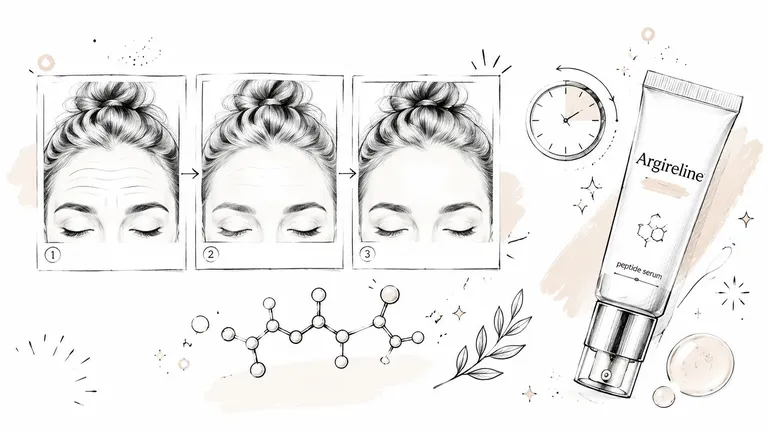
Its appeal is obvious. Instead of broadly promising “anti-aging,” it targets a visible problem people can identify in the mirror. The trade-off is that it tends to work best on dynamic lines, not deeper etched-in wrinkles caused by years of sun exposure and collagen loss.
Where Argireline makes the most sense
There is actual ingredient-specific data behind this category. In one placebo-controlled trial, 10% acetyl hexapeptide-8 showed a 20% decrease in wrinkle depth by day 15 and 30% by day 30. That doesn’t mean every Argireline serum performs the same way, but it does tell you the mechanism isn’t just marketing copy.
Use it where your face moves most. A targeted application around the forehead or glabellar area usually makes more sense than smearing it everywhere. Let it dry before layering heavier products so you’re not diluting a treatment meant for a specific zone.
A practical setup looks like this:
- Morning use: Dab onto expression-line areas, then follow with moisturizer and sunscreen.
- Evening use: Reapply on the same zones, especially if you’re using retinol on alternate nights.
- Manage expectations: Argireline may soften movement-related lines. It won’t replace procedures for deeper folds.
For a more foundational explainer on this ingredient class, PepFlow’s article on what peptides are in skin care is worth reading before you start stacking multiple serums.
Here’s a useful visual walkthrough before you buy into the hype.
Argireline is one of the best peptides for skin if your main complaint is repetitive-expression wrinkling and you want a topical, non-invasive option that’s easy to test.
3. Copper Peptides (GHK-Cu)
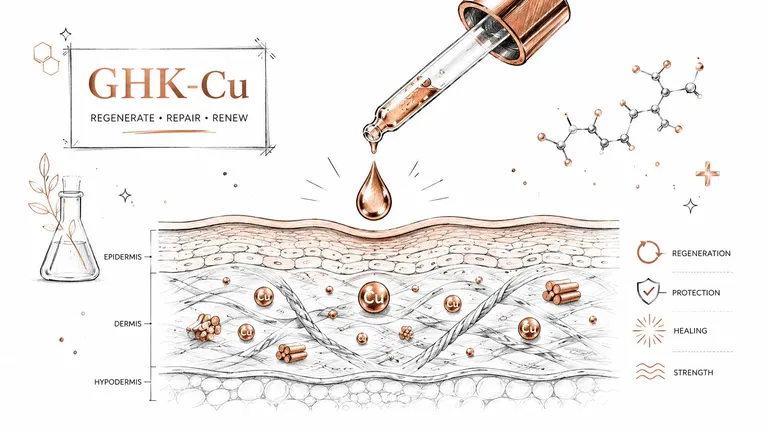
Copper peptides sit in a different category from line-softening peptides. They’re usually chosen by people who want skin to look healthier overall, not just smoother in one spot. GHK-Cu shows up in regenerative skincare conversations because it’s associated with repair, dermal support, and a more resilient skin feel over time.
You’ll find copper peptides in products from Skin Biology, SkinMedica, Olay Professional, and similar recovery-focused serum lines. They’re especially popular with people who are dealing with dullness, compromised barrier function, or skin that looks tired after overuse of stronger actives.
How to use copper peptides without overcomplicating things
Copper peptides are often over-discussed and underused. People get so focused on pairing rules that they stop being consistent. In practice, the best approach is usually to give them their own slot in the routine, commonly at night, and avoid layering them directly with more reactive acids in the same step.
Copper peptides make the most sense when your skin needs support, not punishment.
That’s why they often work well after someone has pushed too hard with exfoliants, high-strength retinoids, or too many active serums at once. A copper peptide serum can become the “reset” product in a routine that feels inflamed or fragile.
A few practical habits help:
- Start simple: Use one copper peptide product rather than combining multiple regenerative serums at once.
- Apply to dry skin: This reduces pilling and gives the formula a better chance to sit evenly.
- Separate from low-pH acids: Not because skincare has to be fussy, but because simplified routines are easier to tolerate.
- Log it separately: If you’re also using more advanced peptide protocols, track topical copper peptide use independently so you can see what’s helping.
Copper peptides are one of the best peptides for skin when your goal is broader rejuvenation, recovery support, and gradual improvement in skin quality rather than a fast cosmetic effect.
4. Snap-8 (Acetyl Octapeptide-3)
Snap-8 usually enters the conversation after someone has already tried Argireline or wants a formula positioned as a more advanced wrinkle-relaxing peptide. It belongs in the same general family of expression-line targeting products, but it’s usually marketed with a more premium, next-step feel.
That doesn’t automatically make it better. It makes it more specific. If your main issue is animated forehead movement and the lines that come with it, Snap-8 can be a sensible option. If your issue is dehydration, sun damage, or laxity, it’s the wrong peptide to prioritize first.
Who should choose Snap-8 over Argireline
Choose Snap-8 when you want a wrinkle-focused peptide but prefer the texture and finish of the serum it comes in, or when a brand has built a formula around it that your skin tolerates well. In practice, the vehicle often matters as much as the headline ingredient. A mediocre formula with a popular peptide can underperform a well-built formula with a less famous one.
Snap-8 tends to fit well into routines for people who:
- Target the upper face first: Forehead lines and crow’s feet are the usual focus.
- Don’t want a harsh active: Some people want wrinkle support without jumping to stronger exfoliating or prescription-style routines.
- Like precision: This is often a spot-treatment peptide rather than an all-over-face product.
If you’re comparing wrinkle-oriented options, PepFlow’s guide to the best peptides for anti-aging is useful for sorting support peptides from more focused line-smoothing ones.
My practical take is simple. Snap-8 is rarely the first peptide I’d recommend for a beginner, but it can be a strong second step for someone who already knows their skin tolerates targeted actives and wants a dedicated expression-line serum.
5. Dipeptide Diaminobutyroyl Benzylamide Diacetate (Syn-Coll)
Syn-Coll appeals to people who care more about firmness than wrinkle “freezing.” It’s usually discussed as a collagen-support peptide, which makes it more useful for skin that’s starting to look less springy, less dense, or a little slack around the cheeks and lower face.
This is also where branding gets messy. Some consumers think every peptide for aging should visibly relax lines right away. Syn-Coll isn’t that kind of ingredient. It belongs in routines built around structure, texture, and a more gradual tightening effect.
Best fit for firmness-focused routines
If someone is already using a retinoid and sunscreen but still feels their skin looks thin or less resilient, a peptide like Syn-Coll can make sense as a support layer. You’ll often see it in premium night serums, European anti-aging formulas, and products positioned around lifting or re-densifying.
What usually works best is pairing it with a realistic routine:
- Use it morning and night: A collagen-support peptide only helps if it stays in the routine.
- Layer with hydration: Skin that’s dry often looks looser than it really is. Hydration helps you judge results more fairly.
- Alternate with stronger actives: If you use retinol, many people do better alternating rather than piling everything together.
Clinical reality: Peptides are generally more convincing as support ingredients than as stand-alone replacements for sunscreen, retinoids, or vitamin C.
That’s especially true here. Syn-Coll can be a good addition, but it isn’t the product that rescues a neglected routine. The people who tend to like it most are already doing the basics well and want one more tool aimed at firmness rather than irritation.
Among the best peptides for skin, Syn-Coll is the one I’d place in “understated usefulness” territory. Less dramatic marketing. Better fit for patient users.
6. Epidermal Growth Factor (EGF)
EGF sits at the more advanced end of skincare peptide discussions. It’s often grouped with peptides because it’s a protein signal involved in cellular communication, renewal, and repair, but consumers usually encounter it in a different context from standard peptide serums. It shows up in post-procedure routines, premium clinic lines, and formulas designed to support visible renewal.
That positioning makes sense. EGF products tend to be chosen by people who want more than “general anti-aging.” They want a formula that feels tied to recovery, resurfacing support, or higher-touch skincare.
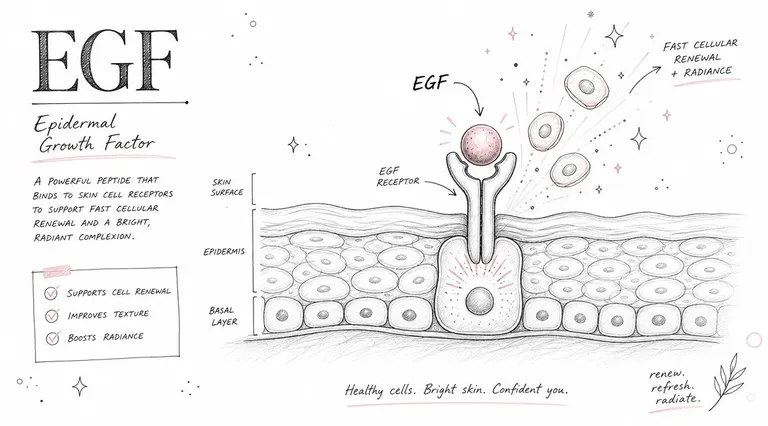
Why EGF feels different from standard peptide serums
In practice, EGF is less of a casual add-on and more of a protocol ingredient. It often works best in a restrained routine where the formula has room to do its job. If someone is using multiple acids, scrubs, retinoids, and spot treatments in the same week, they usually can’t tell what the EGF product is contributing.
That’s why clinic-style brands often keep the instructions simple. Cleanse, apply, moisturize, protect. Not because simplicity sounds elegant, but because crowded routines make advanced products harder to evaluate.
EGF tends to fit best for:
- Post-procedure support: Under professional guidance, some people use it around periods of intensified skin recovery.
- Reactive routines: It can make sense for someone who wants renewal support without a strongly exfoliating product.
- Premium minimalist routines: If you prefer fewer products with more specialized positioning, EGF fits that style.
The trade-off is cost and uncertainty. Growth-factor-style products are often expensive, and formulation quality matters a lot. If your budget is limited, I’d still place sunscreen, moisturizer, and a proven active ahead of EGF in most routines.
7. Palmitoyl Tetrapeptide-7 (Matrixyl 3000)
Matrixyl 3000 is often where peptide skincare starts to look more strategic. Instead of relying on a single peptide story, these formulas usually combine signals meant to support skin matrix quality more broadly. That’s why they tend to show up in mature-skin products, recovery-oriented serums, and formulas marketed around texture, elasticity, and overall anti-aging maintenance.
It’s especially common in products from brands like Olay, RoC, and professional anti-aging lines. If the product label talks about multi-peptide technology, there’s a good chance you’re in Matrixyl 3000 territory or something similar.
How to judge a multi-peptide formula
Don’t buy Matrixyl 3000 just because the product says “peptide complex.” Buy it if the overall formula makes sense for your routine. That means the texture suits your skin type, the product layers well with your moisturizer or sunscreen, and the brand hasn’t overloaded the formula with unnecessary irritants.
This kind of peptide usually works best for people with more than one concern at once. Fine lines, some roughness, creeping laxity, and sun-related texture changes all respond better to broad support than to a one-trick ingredient.
A practical way to use it:
- Choose it as your core peptide serum: Then avoid buying three more peptide products that do the same job.
- Pair it with retinoids thoughtfully: Many people do well using Matrixyl-style products in the morning or on non-retinoid nights.
- Give it enough time: Matrix-support routines reward consistency more than intensity.
One caution matters here. Cleveland Clinic’s guidance on whether peptides are worth it in skincare frames peptides as helpful, not heroic, and notes that they can be pricey relative to better-proven options. That’s the right mindset for Matrixyl 3000 too. It can be a strong support ingredient, but it should sit behind basics and proven actives, not replace them.
8. Pentapeptide-18 (Leuphasyl/Peptide-3)
Pentapeptide-18 is the peptide I think is most underappreciated by people with sensitive or reactive skin. It doesn’t get the same attention as Argireline or copper peptides because it doesn’t fit neatly into the loudest skincare narratives. It’s not the “Botox-like” peptide. It’s not the regenerative copper story. It’s a quieter option.
That’s exactly why it deserves a place on this list. Some skin does better with gentler, lower-drama ingredients used steadily over time.
The quiet value of gentler peptides
If your skin gets irritated easily, or if stronger anti-aging products push you into redness and barrier problems, Pentapeptide-18 can be a smart base peptide. It often fits well in calming routines built around niacinamide, centella, bland moisturizers, and limited exfoliation.
There’s also a practical consumer point here. Many people sabotage their routines by chasing the most aggressive active they can tolerate for four days, instead of the moderate active they can tolerate for four months. Pentapeptide-18 suits the second group.
A useful comparison:
- Choose Pentapeptide-18 if: You want a lower-risk peptide in a daily routine and your skin dislikes aggressive products.
- Choose Argireline or Snap-8 if: Your main concern is dynamic expression lines and you want a more targeted wrinkle strategy.
- Choose Matrixyl-family peptides if: Your priority is broader firmness and texture support.
The best peptides for skin aren’t always the strongest-sounding ones. Sometimes the best choice is the peptide you’ll keep using because it doesn’t make your face angry.
Top 8 Skin Peptides Comparison
| Peptide | Implementation complexity 🔄 | Resource requirements ⚡ | Expected outcomes 📊⭐ | Ideal use cases 💡 | Key advantages ⭐ |
|---|---|---|---|---|---|
| Matrixyl (Palmitoyl Pentapeptide-4) | Low–Moderate; stable in many formulations if protected from heat/pH | Moderate cost; effective at ~3–5% topical, daily use | Stimulates collagen & GAGs; reduces fine lines and firms skin in 4–8 weeks ⭐⭐⭐⭐ | General anti-aging, improved firmness, sensitive skin | Well-researched, well-tolerated, synergizes with other actives |
| Argireline (Acetyl Hexapeptide-8) | Moderate; topical neuromuscular target, brand quality varies | Low–Moderate cost; daily application, concentration varies by brand | Reduces dynamic expression lines gradually (2–4 weeks); temporary effect if stopped ⭐⭐⭐ | Forehead lines, crow’s feet, preventative use in younger skin | Non-invasive “Botox-like” action; easy to layer |
| Copper Peptides (GHK-Cu) | Moderate–High; pH and stability sensitive, potential irritation at high doses | Higher cost; specialized formulations, night use often recommended | Regenerative: boosts collagen/elastin, anti-inflammatory, scar/healing benefits in 8–12 weeks ⭐⭐⭐⭐ | Aging, scar repair, skin recovery and regenerative protocols | Broad tissue-regeneration, anti-inflammatory, supports barrier |
| Snap-8 (Acetyl Octapeptide-3) | Moderate; improved stability and penetration vs Argireline | Moderate–High cost; daily use for cumulative benefits | Stronger reduction of dynamic wrinkles; visible 2–3 weeks; cumulative ⭐⭐⭐⭐ | Progressive anti-wrinkle protocols, dynamic expression lines | More potent and bioavailable than Argireline; better stability |
| Syn‑Coll (Dipeptide Diaminobutyroyl Benzylamide Diacetate) | Moderate; small molecule with good penetration | Moderate cost; effective at ~2–5% concentrations | Promotes collagen synthesis and matrix strengthening; lifting/firming in 2–4 weeks ⭐⭐⭐⭐ | Firmness, texture smoothing, complement to muscle-relaxing peptides | Targets collagen via alternate pathway; non-invasive lifting effect |
| Epidermal Growth Factor (EGF) | High; large peptide needs encapsulation/delivery tech for penetration | High cost; specialized storage and formulation required | Potent cellular regeneration: faster turnover, collagen/elastin boost; effects seen 1–2 weeks with well-formulated products ⭐⭐⭐⭐⭐ | Post-procedure recovery, advanced aging, regenerative treatments | Highest-level growth-factor signaling; strong regenerative impact |
| Palmitoyl Tetrapeptide‑7 / Matrixyl 3000 | Moderate; dual-peptide complex requires stabilization | Moderate–High cost; proper concentration and protection from oxidation | Dual-pathway collagen & HA stimulation; improved firmness and texture in 4–6 weeks ⭐⭐⭐⭐ | Mature, sun-damaged skin, multifactor anti-aging routines | Dual-mechanism gives broader efficacy than single Matrixyl |
| Pentapeptide‑18 (Leuphasyl/Peptide‑3) | Low; gentle peptide with straightforward formulation | Low–Moderate cost; daily use safe for sensitive skin | Gentle collagen support and anti-inflammatory effects; subtle firming in 4–8 weeks ⭐⭐⭐ | Sensitive/reactive skin, foundational multi-peptide routines | Gentle, anti-inflammatory, highly compatible with other actives |
Choosing Your Peptide Protocol A Strategic Approach
Choosing the right peptide is less about finding the single “best” ingredient and more about matching the peptide to the job. That’s where a common misunderstanding occurs. Many users purchase a serum because the word peptide sounds advanced, then expect one bottle to smooth expression lines, rebuild firmness, repair barrier function, and replace the rest of their routine. It won’t.
A better approach starts with one question. What are you trying to change? If the answer is forehead lines or crow’s feet caused by repetitive movement, Argireline or Snap-8 makes more sense than a collagen-focused peptide. If your concern is firmness, texture, and slow structural decline, Matrixyl or Matrixyl 3000 is usually the more logical first pick. If your skin looks stressed, overworked, or compromised, copper peptides often fit better than anything marketed as “instant wrinkle correction.”
That strategic lens matters because peptides tend to be supportive ingredients. The broad clinical picture backs that up. The 2026 review cited earlier found stronger evidence for hydration and brightness than for dramatic wrinkle change, and also noted that adverse events were minimal in clinical trials. That’s encouraging, but it also reinforces the practical-world hierarchy. Sunscreen still matters more. A solid moisturizer still matters more. Proven actives like retinoids or vitamin C still carry more weight in many anti-aging routines.
Start with one or two targeted peptides. Don’t build a crowded routine you can’t follow.
Consistency decides whether peptide skincare has any chance to work. Most peptide products aren’t the kind of formulas you use three times, judge in the mirror, and abandon. They reward repetition. Morning and evening use, predictable layering, and enough time to observe your skin without constant product switching matter more than buying the most expensive serum in the category.
I’d structure a routine like this. Pick one peptide for your main concern and one support product if needed. For example, Argireline for expression lines plus a Matrixyl serum for broader maintenance, or copper peptides paired with a plain moisturizer for a barrier-repair phase. Keep the rest of the routine stable. Then watch what your skin does over time, not overnight.
If you’re combining topical skincare with a broader wellness or recovery protocol, tracking becomes surprisingly useful. A lightweight schedule helps you remember what you used, when you used it, and whether your skin improved or just had a few good days. That’s especially helpful when you’re rotating peptide serums, spacing stronger actives, or coordinating topical products alongside more advanced peptide planning.
PepFlow can help you stay consistent when your routine goes beyond “apply whenever you remember.” The PepFlow app is built for people who want structure around peptide protocols, with dosing calculations, schedule planning, reminders, logging, and simple protocol management that reduces guesswork. If you’re already thinking strategically about peptides instead of chasing hype, it’s a practical tool for keeping the plan consistent.