What’s usually missing from conversations about the best peptides for longevity? Not the names. Many individuals can rattle off BPC-157, GHK-Cu, or one of the growth-hormone secretagogues in a minute. The gap is judgment. Which compounds have real human evidence, which ones mostly live in animal work and patents, which ones are legally murky, and which ones create more protocol complexity than benefit for most healthy adults?
That’s the problem worth solving. The longevity-peptide world is crowded, marketed aggressively, and still thin on rigorous human outcome data. A 2024 AgingBase paper cataloged 282 experimentally validated anti-aging peptides from 54 research articles and 236 patents, and framed the database as the first extensive collection in the field, which tells you two things at once: interest is broad, and the evidence base is still fragmented and early-stage in many areas (AgingBase longevity peptide database study). This guide focuses on the compounds and categories people commonly ask about, with a practitioner’s lens on trade-offs, scheduling, and safety.
If you want a broader market overview before choosing a protocol, this 2026 guide to longevity peptides is a useful companion read.
This article is for educational purposes only and isn’t medical advice. Always consult a qualified healthcare professional before starting any peptide or compound protocol.
Table of Contents
- 1. Senolytics (Dasatinib + Quercetin Protocol)
- 2. GHK-Cu (Copper Peptide)
- 3. NAD+ Boosters (NMN, NR, Nicotinamide)
- 4. BPC-157 (Body Protection Compound-157)
- 5. TB-500 (Thymosin Beta-4)
- 6. TA-65 (Telomerase Activator)
- 7. KPV (Lysine-Proline-Valine Tripeptide)
- 8. AOD-9604 (Fragment of Human Growth Hormone)
- Top 8 Longevity Peptides Comparison
- Navigating Your Longevity Journey Safely and Effectively
1. Senolytics (Dasatinib + Quercetin Protocol)
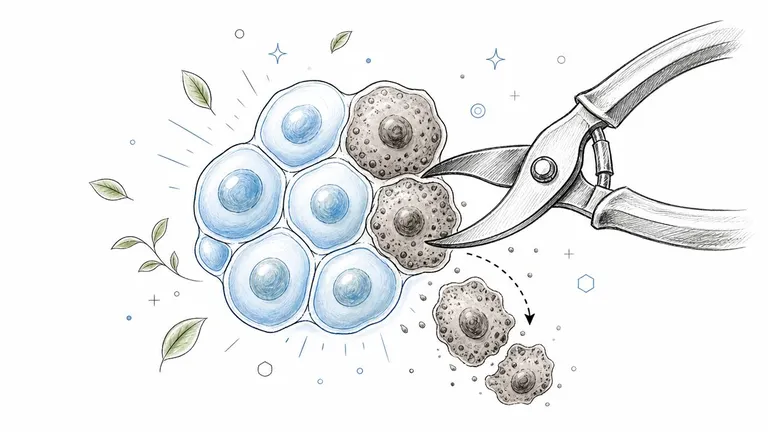
Senolytics earn their place on this list because they target one of the most compelling ideas in aging biology: clearing senescent cells that stop functioning well but keep signaling inflammation and tissue dysfunction. In practice, people usually discuss the dasatinib plus quercetin combination as a pulse protocol rather than a daily wellness routine.
That pulse approach is the first practical distinction. This is not the kind of protocol you casually stack onto everything else. Dasatinib is a prescription drug with real risk, real interactions, and a much higher bar for supervision than cosmetic or recovery-oriented peptides.
Where it fits
If someone is already running a dense protocol with recovery peptides, sleep compounds, and metabolic agents, senolytics usually don’t belong in the same “more is better” mindset. They fit better as distinct windows with clear intent, often scheduled during lower-stress periods rather than during heavy training blocks, travel, or illness recovery.
A common real-world scenario is the experienced user who feels tempted to layer D+Q on top of a musculoskeletal repair cycle. That’s usually where judgment matters most. A simpler plan, with fewer moving parts and clear observation periods, gives you a better shot at noticing benefit or side effects.
Practical rule: If you can’t clearly explain why a senolytic window is being used, what will be monitored, and what other compounds will be paused, you’re not ready to run it.
Practical cautions
The main mistake is treating senolytics like a general anti-aging supplement. They aren’t. They’re closer to an intervention that needs timing, medication review, and a clinician who understands bleeding risk, immune effects, and drug interactions.
A few ground rules help:
- Separate the cycle: Don’t overlap a D+Q window with a new peptide start, because you won’t know what caused what.
- Track recovery context: Athletes often do better placing these windows in deload periods, not peak output weeks.
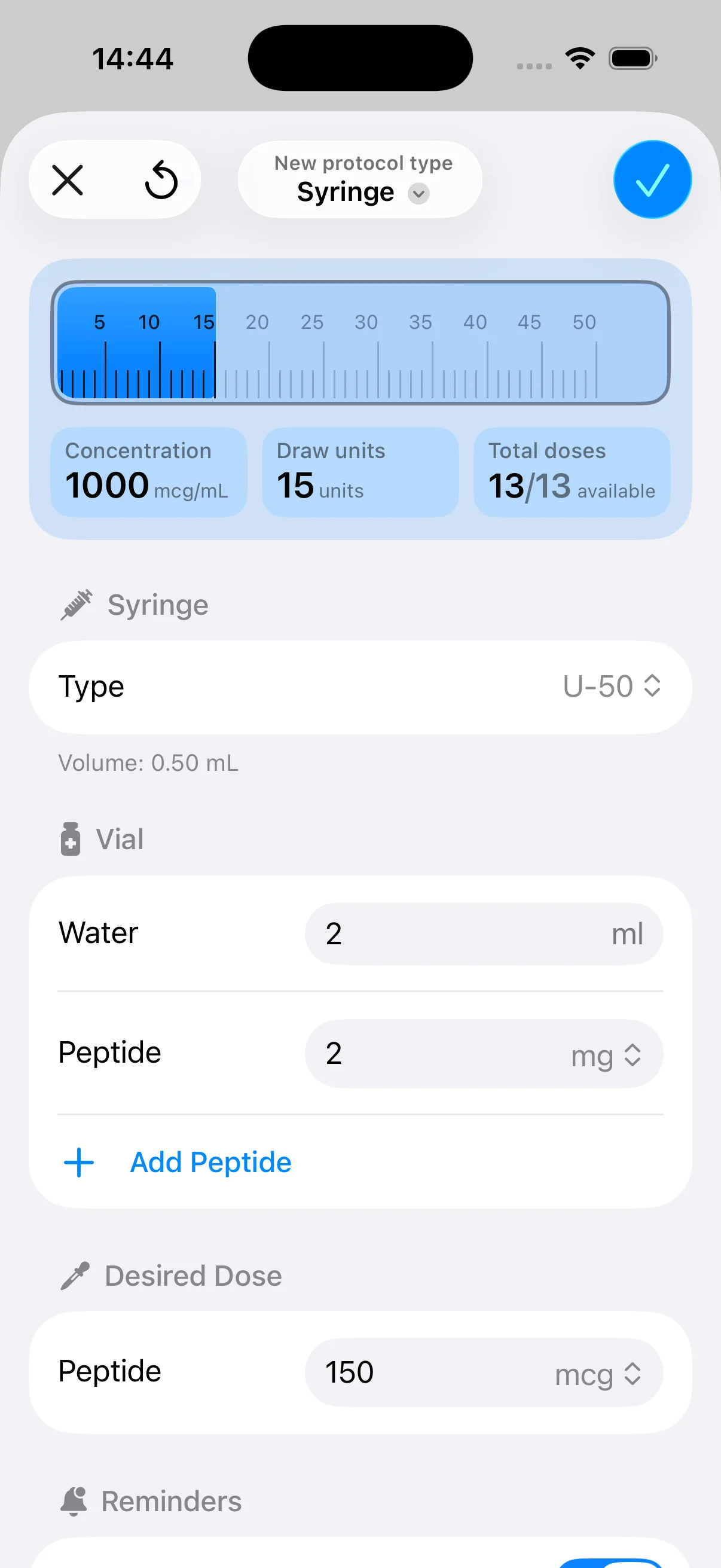
- Use a scheduler: If you’re coordinating pulse compounds with recurring peptide cycles, a protocol app such as PepFlow can reduce timing errors and missed pauses.
- Judge slowly: One aggressive cycle tells you very little. Consistency of response matters more than excitement after day one.
For longevity, senolytics are interesting. For self-experimentation without supervision, they’re often a poor fit.
2. GHK-Cu (Copper Peptide)
GHK-Cu is one of the few compounds in this space that makes immediate practical sense even when you strip away longevity marketing. If your goal is skin quality, wound support, connective tissue resilience, or better-looking recovery, this is often one of the cleaner starting points.
It also has a simpler risk-benefit profile than many injectables people jump to too quickly. That doesn’t mean it’s trivial. It means the use case is clearer.
Best use case
GHK-Cu often works best when the objective is visible and local. Think skin texture, barrier support, post-procedure healing, or connective tissue maintenance. Dermatology-minded users often start topically because it’s easier to tolerate, easier to stop, and easier to evaluate clearly.
People chasing “whole-body longevity” can overcomplicate this compound. A better frame is that GHK-Cu may support tissue quality and repair processes, which can matter with aging, but it isn’t a proven human anti-aging therapy. If you want a more practical anti-aging overview built around this compound, PepFlow’s guide to anti-aging peptide options including GHK-Cu is a useful planning reference.
How to think about scheduling
This is where many articles fail. They list GHK-Cu and stop there. Real use requires deciding on route, consistency, and evaluation windows. Topical routines are easier to sustain. Injectable or intranasal interest is common in enthusiast circles, but complexity rises fast, especially if you’re already using other compounds.
A sensible real-world pattern is to keep one goal per block. If someone is using topical GHK-Cu for skin and scar support, I’d rather see them run that consistently than mix it with multiple new regenerative compounds at once.
Better outcomes usually come from boring consistency, not from stacking five “repair” agents and hoping the combination is smarter than the plan.
Helpful guardrails:
- Start conservatively: Topical use gives you a low-friction way to assess irritation and adherence.
- Pick one metric: Skin hydration, texture, redness, or healing time. Don’t use ten subjective endpoints.
- Give it enough time: Tissue remodeling isn’t a same-week project.
- Avoid copper confusion: More isn’t automatically better, especially when people start mixing multiple copper-containing products.
Among the best peptides for longevity discussions, GHK-Cu stands out because the everyday use case is more believable than the bigger marketing claims.
3. NAD+ Boosters (NMN, NR, Nicotinamide)
NAD+ boosters aren’t peptides, but they belong in this conversation because they often form the “base layer” of a longevity stack. People use NMN, NR, or nicotinamide to support energy metabolism and recovery capacity, then add peptides on top.
That stacking logic is understandable. Whether it’s necessary is another question.
Why people pair them with peptides
When someone is using BPC-157 for recovery, GHK-Cu for tissue quality, or a metabolic peptide for body-composition goals, NAD+ support often gets added as the all-purpose cellular engine. The problem is that “foundational” can turn into “unquestioned.” Many people keep taking one because it sounds intelligent, not because they can tell what it’s doing.
There’s also a commercial angle here worth understanding. The strongest demand in the broader peptide economy is still concentrated in regulated therapeutic categories, not anti-aging use in healthy adults. One market overview projects the global peptide therapeutics market at $140.86 billion in 2025, rising to $163.98 billion in 2026 and $294.58 billion by 2033, while the cosmetic peptide segment is projected at $2.62 billion in 2025 and $8.28 billion by 2035 (projected peptide therapeutics and cosmetic peptide market growth). That matters because it reminds users that commercial scale doesn’t equal human anti-aging proof.
For a skin-aging angle tied to cellular energy support, this piece on understanding NAD+ for skin health gives useful context.
What tends to work better in practice
The cleanest way to use NAD+ boosters is not as a “feel everything” supplement. It’s as a single-variable support tool. Morning use is common because some users report better adherence and fewer sleep complaints that way. Beyond that, simplicity wins.
A good example is the busy professional already juggling training, sleep goals, and travel. A once-daily NAD+ routine is far easier to maintain than a complicated multi-dose stack with rotating injections and vague expectations.
- Keep the goal narrow: Energy consistency, recovery tolerance, or general metabolic support.
- Watch sleep: If a compound seems stimulating, don’t force late-day timing.
- Don’t credit everything to the capsule: Better sleep, food quality, and training changes often explain more than users think.
NAD+ boosters can be useful. They’re just rarely the magic center of a longevity protocol.
4. BPC-157 (Body Protection Compound-157)
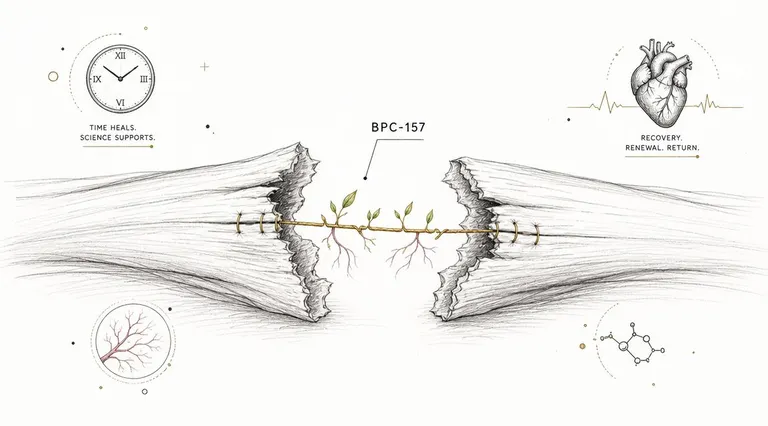
BPC-157 is one of the most discussed compounds in the whole field because it sits at the intersection of two things people want badly: faster repair and broader anti-inflammatory support. In real-world use, that usually means tendon pain, nagging soft-tissue issues, gut complaints, or a general attempt to recover from training faster.
This is also where hype regularly outruns evidence.
Atria Health’s 2024 review specifically names BPC-157 among peptides commonly sold online as “research peptides” and states that none of those commonly promoted compounds have been proven effective as anti-aging therapies in rigorous human studies (Atria review of peptides marketed for longevity). That doesn’t make BPC-157 useless. It means you should stop calling it proven longevity medicine.
For many users, the appeal starts with injury and recovery.
Why it stays popular
BPC-157 is easy to understand at a practical level. Someone has a stubborn tendon issue, poor tissue tolerance under load, or GI stress that keeps recurring. A compound marketed around healing becomes attractive fast.
In coaching and wellness circles, it’s often paired with better rehab habits rather than used alone. That’s the right instinct. If a runner is using BPC-157 while still ignoring load management, sleep, and mobility work, the peptide becomes a distraction instead of support.
One area where BPC-157 shows up often is inflammation-focused recovery planning. PepFlow’s article on peptides used in inflammation protocols is helpful for organizing that type of schedule without turning it into guesswork.
The reality check
The best use of BPC-157 is usually specific, temporary, and goal-based. Not indefinite. Not “because longevity.” The people most likely to get disappointed are the ones expecting a full-body anti-aging effect from vague use.
Common mistakes include:
- Using it without a target problem: If you can’t name the tissue, symptom pattern, or recovery goal, wait.
- Changing too many variables: Starting BPC-157, TB-500, and a new lifting block together makes interpretation messy.
- Ignoring legal status: “Research peptide” labeling is a warning, not a badge of sophistication.
A later-stage discussion often helps people use it more responsibly:
Among the best peptides for longevity, BPC-157 is better viewed as a repair-oriented tool that some people place inside a broader healthspan plan, not as a proven lifespan intervention.
5. TB-500 (Thymosin Beta-4)
TB-500 usually enters the conversation after BPC-157. The pattern is familiar. Someone wants something “stronger,” more systemic, or better suited to soft-tissue healing across multiple areas at once.
That’s exactly why restraint matters here.
Where it can make sense
TB-500 tends to appeal to athletes, physically demanding workers, and people coming back from surgery or cumulative overuse. The attraction is its reputation for systemic recovery support rather than one-site symptom management.
The strongest real-world case for TB-500 is when recovery capacity is the bottleneck and the user already has the basics handled. That means rehab is in place, protein intake is sensible, sleep is protected, and training load is being managed. If those pieces are missing, TB-500 often becomes expensive optimism.
A peptide can support a good recovery plan. It can’t rescue a bad one.
Protocol design matters
This is one of those compounds where scheduling discipline matters almost as much as the compound itself. Many users don’t struggle because the product “doesn’t work.” They struggle because they’re inconsistent, they overlap it with several new interventions, or they don’t track anything except hope.
A practical example is the masters athlete managing shoulder irritation and poor sleep from high-volume training. A cleaner protocol would isolate TB-500 in a defined block, keep training more submaximal, and monitor joint tolerance and recovery quality instead of chasing instant performance gains.
Useful rules:
- Use a fixed block: Decide in advance when the cycle starts and stops.
- Pair it with rehab: Mobility, tendon loading, and return-to-play decisions still matter.
- Don’t assess too early: Tissue response is usually slower than users want.
- Keep expectations grounded: Better recovery is plausible. Broad longevity claims are much less settled.
TB-500 can be helpful in the right context. It’s a poor substitute for actual tissue management.
6. TA-65 (Telomerase Activator)
TA-65 attracts a different kind of user. Less injury-focused, more age-management focused. People who choose it are often thinking about cellular aging, immune resilience, and whether telomere-related interventions belong in a long-range healthspan strategy.
That makes it interesting, but also easy to oversell.
What draws people to it
The pitch is straightforward. Telomeres are associated with cellular aging, so a telomerase activator sounds like a direct route to something fundamental. That elegance is part of the appeal. It feels upstream.
In real life, TA-65 tends to fit users who prefer oral, long-duration routines over injectable complexity. Someone who wants a lower-friction, less visibly medical protocol may choose TA-65 over a rotating stack of recovery peptides, even if the effects are less obvious day to day.
How to judge whether it belongs in your stack
This is not a compound for people who need fast feedback. It’s more suitable for users comfortable with longer horizons and uncertain payoff. That doesn’t make it weak. It makes it less satisfying for people who need immediate signal.
A practical decision framework helps:
- Choose it for patience, not excitement: If you need to feel something quickly, this probably isn’t your first move.
- Don’t let it replace basics: Sleep, exercise, blood pressure control, and nutrition still do more heavy lifting.
- Budget attention as well as money: Long protocols often fail from inconsistency, not from theoretical flaws.
The right user for TA-65 is usually organized, consistent, and not expecting miracles. The wrong user is the person adding it impulsively to an already cluttered stack because “telomeres sound important.”
7. KPV (Lysine-Proline-Valine Tripeptide)
KPV deserves more attention than it gets because inflammation control is one of the few themes that keeps showing up across nearly every aging conversation. If your digestive tract, skin, or recovery profile is chronically irritated, the most glamorous peptide in the world may matter less than a calmer inflammatory baseline.
That’s where KPV becomes interesting.
Best role in a longevity plan
KPV often makes more sense as a quality-of-life peptide than as a headline longevity play. People explore it for gut irritation, skin flare patterns, or the kind of low-grade inflammatory noise that makes recovery, sleep, and training feel worse than they should.
That matters because longevity isn’t only about lifespan theory. It’s also about whether a person can train, eat, digest, sleep, and recover consistently for years. A peptide that helps reduce day-to-day inflammatory friction can have practical value even if it never deserves a grand anti-aging label.
What users often get wrong
KPV is easy to misuse conceptually. People assume “anti-inflammatory” means they should notice a dramatic effect quickly, everywhere, all at once. More often, the meaningful signs are smaller: less gut reactivity, calmer skin, fewer symptom spikes, better tolerance to food or training.
There’s another issue. Protocol clutter. KPV is often added alongside elimination diets, probiotics, prebiotic fiber, and several other compounds. Then nobody knows what helped.
If you’re testing KPV, keep the rest of the experiment boring enough that the result means something.
A realistic scenario is the person with recurrent GI irritation who wants to improve training consistency. KPV may belong there as part of a narrow plan. It’s less compelling as a random addition to an already crowded anti-aging stack.
8. AOD-9604 (Fragment of Human Growth Hormone)
AOD-9604 gets attention because it promises something people love: some of the metabolic or tissue-support appeal of growth-hormone-related therapy without the full baggage of growth hormone itself. That makes it sound like a compromise solution.
Sometimes that’s exactly what users want. Sometimes it’s just another way to back into the same overhyped category.
Why it gets attention
Users usually come to AOD-9604 through body composition, recovery, or collagen-related goals. The idealized version is simple: support fat loss, keep the risk profile cleaner than full HGH, and fold it into a broader longevity plan.
That logic can be reasonable if the actual goal is modest. It becomes much less reasonable when people start treating any growth-hormone-adjacent compound as longevity by default. Atria’s review raises an important concern here. Many peptides promoted for longevity act by increasing growth hormone or IGF-1, while lower signaling in those pathways has repeatedly been linked with longer lifespan in animal data, which should make anyone cautious about broad anti-aging claims.
For people trying to organize measurement conversions and recurring schedules before they make mistakes, PepFlow’s guide on how much peptides to take is one of the more practical tools available.
Legal and safety perspective
AOD-9604 sits in the zone where users often blur three separate questions: is it legal to buy, is it appropriate to use, and is it evidence-based for longevity? Those are not the same question.
The most important practical point is this: if a compound is entering your plan because you want easier fat loss, be honest about that. Don’t rename a physique goal as a longevity protocol to make it sound more scientific.
Useful filters:
- Match the compound to the goal: Metabolic support and longevity are related, but they aren’t interchangeable.
- Watch stack creep: Growth-hormone-adjacent compounds can multiply uncertainty fast.
- Use professional oversight: Especially if other endocrine, metabolic, or performance compounds are involved.
AOD-9604 is interesting. It’s not a free pass.
Top 8 Longevity Peptides Comparison
| Item | Implementation Complexity 🔄 | Resource Requirements ⚡ | Expected Outcomes 📊⭐ | Ideal Use Cases 💡 | Key Advantages ⭐ |
|---|---|---|---|---|---|
| Senolytics (Dasatinib + Quercetin) | Moderate–High: prescription drug oversight; timed cycles; clinical coordination 🔄 | Requires prescription dasatinib, standardized quercetin, periodic labs; short monthly treatment windows ⚡ | Reduced senescent cell burden, lower systemic inflammation; early human data, strong preclinical evidence 📊 | Target inflammaging, improve physical function, integrate with peptide stacks for rejuvenation 💡 | Periodic dosing, broad tissue effects, mechanistic backing ⭐ |
| GHK‑Cu (Copper peptide) | Low–Medium: topical simple; injections/intranasal require sterile technique 🔄 | Widely available; topical cheaper; injectables need supply, storage and technique ⚡ | Stimulates collagen synthesis, tissue remodeling, wound healing; visible skin benefits in weeks 📊 | Skin aging, wound repair, connective tissue support, adjunct to other repair peptides 💡 | Multiple delivery routes, strong cosmetic/clinical evidence, well-tolerated ⭐ |
| NAD+ Boosters (NMN, NR, Nicotinamide) | Low: oral supplementation; straightforward daily dosing 🔄 | Daily pharmaceutical‑grade precursors, moderate ongoing cost, optional biomarker monitoring ⚡ | Restores NAD+ pools, improves mitochondrial function and DNA repair; growing clinical support 📊 | Systemic metabolic/cognitive support, exercise/fasting synergies, foundational longevity stacks 💡 | Oral convenience, broad systemic effects, measurable biomarkers ⭐ |
| BPC‑157 | Medium: multiple routes (oral/intranasal/injectable); injection handling for best effect 🔄 | Peptide supply, cold storage for some forms; dosing schedules (days–weeks) ⚡ | Accelerates tissue and gut healing, angiogenesis, neuroprotection; mostly preclinical, increasing human reports 📊 | Tendon/ligament repair, gut barrier restoration, post‑injury recovery, athletic rehab 💡 | Broad tissue range, good tolerability, synergizes with other repair peptides ⭐ |
| TB‑500 (Thymosin Beta‑4) | Medium–High: injectable protocols, variable loading/maintenance schedules 🔄 | Requires peptide sourcing, storage, scheduled injections; monitoring recovery metrics ⚡ | Promotes cell migration, angiogenesis and rapid wound/joint recovery; strong preclinical/veterinary evidence 📊 | Musculoskeletal healing, post‑surgical recovery, athletic recovery stacks (with BPC‑157) 💡 | Potent regulator of repair and inflammation resolution; systemic recovery benefits ⭐ |
| TA‑65 (Telomerase activator) | Low: daily oral supplementation; straightforward administration 🔄 | Ongoing cost for continuous use; optional telomere and immune monitoring ⚡ | Telomere length increases reported in trials, immune function improvements; long‑term safety data limited 📊 | Immune resilience, telomere‑focused longevity protocols, adjunct to NAD+ and lifestyle interventions 💡 | Targets fundamental aging mechanism (telomeres), oral and clinically characterized ⭐ |
| KPV (Lys‑Pro‑Val tripeptide) | Low–Medium: oral/sublingual easy; dosing and formulation choice matters 🔄 | Peptide supply, flexible dosing (sublingual/oral), short‑term monitoring of inflammatory markers ⚡ | Rapid anti‑inflammatory effects, improved mucosal barrier function; growing clinical evidence in GI disorders 📊 | Inflammaging mitigation, IBS/IBD support, autoimmune modulation, training inflammation control 💡 | Selective immune modulation with good tolerability; targets chronic inflammation ⭐ |
| AOD‑9604 (HGH fragment) | Medium: injectable administration; requires handling and dosing protocols 🔄 | Peptide sourcing, storage, injection supplies; integrate with diet/exercise for best effect ⚡ | Promotes lipolysis, improved body composition and collagen support; limited human data vs full HGH 📊 | Metabolic optimization, fat‑loss + tissue repair stacks, body composition protocols 💡 | Designed to retain lipolytic/regenerative benefits with lower HGH‑like risks ⭐ |
Navigating Your Longevity Journey Safely and Effectively
If you’ve made it this far, the main takeaway should be clear. The best peptides for longevity are not merely the most famous ones. They’re the ones that match a real goal, fit a realistic protocol, and can be used without lying to yourself about the strength of the evidence.
That last point matters more than most buyers want to admit. Some compounds on this list are better understood as recovery tools, tissue-support tools, or symptom-management tools that people place inside a longevity lifestyle. That’s different from saying they’ve been proven to extend human lifespan or function as validated anti-aging therapies. In fact, much of the field is still early, fragmented, and poorly standardized. One reason this remains so confusing is that peptide coverage often names compounds without helping people think through cycling, repeatable scheduling, or translating tiny dose targets into routines they can follow. That gap has been highlighted as a real content need in practical anti-aging peptide discussions (practical protocol and dosing gap in longevity peptide use).
That’s where disciplined planning helps. If someone is running a simple topical GHK-Cu routine, that may only require a consistent daily reminder and one symptom log. If they’re rotating BPC-157, a recovery block, and a separate pulse protocol, the chance of user error rises fast. Missed doses, mistaken unit conversions, overlapping cycles, and poor note-taking are common reasons people can’t tell what’s helping and what isn’t.
A good longevity protocol should feel boring enough to repeat. It should have a start date, a stop date if appropriate, a reason for being used, and a short list of markers to watch. It should also survive ordinary life. Travel, work stress, training changes, and family obligations tend to break fragile routines. That’s why lightweight scheduling tools can be more valuable than another bottle in the cabinet.
The bigger picture still matters most. Peptides don’t replace sleep, resistance training, aerobic fitness, nutrition quality, body-composition management, or medical screening. They may support those efforts. They won’t substitute for them. If your foundation is weak, adding more compounds usually adds confusion before it adds benefit.
Professional guidance is still the safest route, especially for compounds sold as research products or for stacks involving endocrine, immune, or prescription-level effects. And if your goal overlaps with body composition or medication-assisted weight loss, protecting lean mass stays critical. This article on maintaining muscle while on GLP-1 is a useful reminder that healthspan depends on preserving function, not just chasing biomarkers or scale changes.
The best peptides for longevity are the ones used carefully, responsibly, and in service of a larger plan you can sustain.
If you’re using peptides and want fewer dosing mistakes, cleaner schedules, and a simpler way to manage cycles, PepFlow is built for exactly that. It helps you calculate practical doses from vial strength and target micrograms, organize repeating protocols, set reminders, and stay consistent without spreadsheet chaos. It won’t replace a clinician, but it can make a complicated routine much easier to run correctly.