
Follistatin is a secreted glycoprotein encoded by the FST gene that binds and neutralizes TGF-β family ligands, especially activin and myostatin, outside the cell. In 1987, researchers first described it as a follicle-stimulating hormone, or FSH, inhibiting substance in ovarian follicular fluid, and that early label still shows up in a lot of confusing online explanations (source).
You’ve probably seen it mentioned next to myostatin and wondered whether it’s a muscle-building shortcut, a hormone, or just another research buzzword. The clean answer is that follistatin is a real human protein with a much broader biological job than the fitness world usually gives it credit for, and the details matter if you want to understand why it appears in endocrinology, muscle biology, and peptide marketing at the same time (source).
Table of Contents
- A Practical Working Definition of Follistatin
- How Follistatin Binds Activin and Myostatin
- The Two Main Isoforms FS288 and FS315
- Biological Roles From Muscle to Reproduction
- Therapeutic Research and Experimental Use
- Safety Profile, Risks, and Regulatory Status
- Practical Takeaways for Protocol Planners
- Frequently Asked Questions About Follistatin
A Practical Working Definition of Follistatin
A lot of people arrive here after comparing follistatin with myostatin in a peptide forum or a bodybuilding thread. The simplest accurate answer is this, follistatin is a secreted glycoprotein encoded by the FST gene, and it acts outside the cell by binding ligands in the TGF-β family, especially activin and myostatin (DrugBank).
Think of it as a binding protein, not a classic hormone
That distinction matters. Follistatin is not a peptide in the casual fitness sense, and it is not a classical hormone that travels to a single receptor and switches on one clean signal. It’s a regulatory protein that works by sequestering ligands, which means it catches signaling molecules before they can reach their receptors.
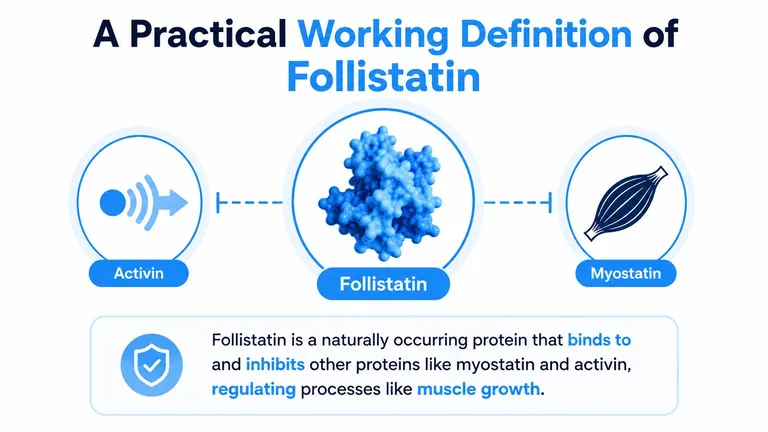
That makes follistatin easier to picture if you use a plain mental model. It acts like a molecular gatekeeper, not a switch. It doesn’t create a new signal on its own, it changes what other signals can get through.
If you’ve ever had to decode fitness jargon, a glossary helps. A good starting point for that kind of language is this fitness terminology explained resource, because follistatin sits right at the boundary between technical biology and gym talk.
Practical rule: if a page calls follistatin a “myostatin blocker” and stops there, it’s leaving out the bigger biology.
Why the working definition should stay broad
The literature keeps follistatin in a wider frame for a reason. It’s a multi-isoform TGF-β antagonist, it’s expressed in almost all tissues, and it shows up in developmental biology as well as adult physiology (PubMed). That means a good definition has to include both the mechanism and the context.
So the useful first-pass description is simple. Follistatin is a secreted FST-encoded regulatory protein that binds activin and myostatin outside the cell and reduces their signaling. Once you’ve got that, the rest of the topic becomes much easier to sort through.
How Follistatin Binds Activin and Myostatin
The cleanest way to understand follistatin is to treat it like a molecular sponge. Activin and myostatin are signaling ligands that normally need to reach their receptors to do anything, and follistatin binds them first, which keeps those ligands from activating downstream pathways (DrugBank).
What happens outside the cell
This is an extracellular story. Follistatin binds activin and myostatin outside the cell and blocks their type II receptor-binding sites, so the ligands can’t dock where they normally would (DrugBank). Once that binding site is occupied, the signaling route is interrupted before it starts.
That matters because activin and myostatin do different jobs in different tissues. Activin helps regulate reproductive hormone release, especially FSH signaling in the pituitary, while myostatin acts as a brake on skeletal muscle growth (DrugBank). Follistatin therefore has a dual effect, it can soften a reproductive signal and also relieve a muscle-growth brake.
Why the downstream signaling changes
The mechanism doesn’t end at ligand capture. By preventing activin from reaching its receptor, follistatin alters the pathway that normally controls hormone release and cell behavior. By preventing myostatin from signaling, it removes an inhibitory constraint on muscle protein synthesis and myogenesis (Nature Scientific Reports).
DrugBank also notes that follistatin can affect SMAD3/AKT/mTOR-related signaling in some contexts, which helps explain why muscle-fiber growth can change when the ligand environment shifts (DrugBank). The exact biology is not a one-line story, but the principle is straightforward.
Follistatin doesn’t “build muscle” directly. It changes which messages the cell is allowed to hear.
For a visual step-by-step view, this mechanism pairs well with the video below.
The Two Main Isoforms FS288 and FS315
The biggest mistake in casual follistatin content is talking about it as if there’s only one version. There isn’t. The FST gene produces at least two principal isoforms, FS288 and FS315, and the difference matters because it affects where the protein tends to stay and how it behaves in circulation (ScienceDirect topic overview).
Why isoforms change the biology
FS288 is the more tissue-associated form. It has stronger affinity for local binding partners, so it tends to stay closer to cell surfaces and extracellular matrices. FS315 is the more circulating form, so it’s the one people usually mean when they talk about follistatin moving through the blood (ScienceDirect topic overview).
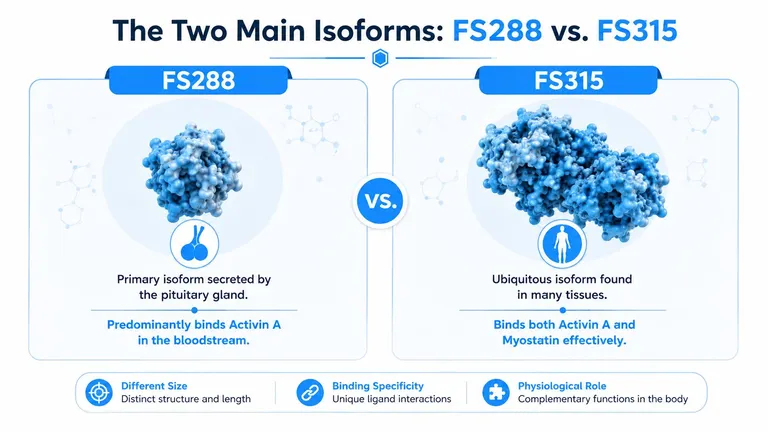
That distinction is not just academic. A protocol, assay, or paper that says “follistatin” without naming the isoform is leaving out a critical part of the picture. If you’re interpreting a biomarker result or trying to understand a research product, the isoform can change what the number means.
Why “follistatin” is an oversimplified label
Consumer and fitness content often collapses everything into one phrase, “follistatin boosts muscle.” That’s too blunt. The literature frames follistatin as a broader TGF-β family binding protein with multiple isoforms and tissue-specific behavior, not as a single-purpose muscle agent (ScienceDirect topic overview).
Useful shorthand: FS288 is more local, FS315 is more circulating, and both belong to the same broader regulatory family.
That’s the cleanest way to keep the discussion precise. When somebody says follistatin, the next question should always be, which isoform are they talking about?
Biological Roles From Muscle to Reproduction
A molecule like follistatin can look simple at first glance, then start behaving like a switchboard when you trace where it acts. In skeletal muscle, reproductive hormone control, development, and metabolism, it functions as a broad regulator, which is why the protein fits biology better than the narrow “fitness molecule” label (PubMed).
Muscle, reproduction, and normal development
In preclinical models, raising follistatin activity has been associated with skeletal muscle hypertrophy, one reason the protein drew attention in muscle-wasting research (Nature Scientific Reports). That muscle effect is only part of the story. Follistatin also helps control FSH by binding activin, so its influence reaches reproductive endocrinology as well (DrugBank).
The developmental role is harder to miss. Mouse gene-targeting work showed that follistatin is required for normal development, because mice lacking it die soon after birth and show insufficient muscle development and skeletal abnormalities (PubMed). That finding matters because it places follistatin in basic organism development, not just in muscle signaling. For readers comparing muscle pathways, a muscle fiber testing guide can help separate structural muscle questions from signaling questions.
What the broader tissue map tells you
Follistatin is expressed in almost all tissues, so the best mental model is a globally relevant regulatory protein, not a tissue-restricted factor (PubMed). That broad distribution helps explain why its effects can show up in more than one biological system.
Human research has also linked higher circulating follistatin levels with increased risk of type 2 diabetes in a 2021 Nature Communications study, which adds metabolic regulation to the picture. The same wider view also helps separate established biology from how follistatin is discussed in research-peptide circles, where it is often framed mainly as a muscle product.
| Biological context | Why follistatin matters |
|---|---|
| Muscle tissue | Relieves inhibitory signaling that can limit growth |
| Reproductive axis | Modulates activin-driven FSH control |
| Development | Required for normal embryonic and neonatal biology |
| Metabolism | Linked to circulating biomarker research |
The key mental model is simple. Follistatin is not a muscle-only protein. It acts across muscle, hormones, development, and metabolism in different contexts.
Therapeutic Research and Experimental Use
Follistatin has attracted research interest because blocking activin-family signaling can produce clear biological effects in animals. That does not mean a marketed product is established therapy, and it doesn’t mean the same findings translate cleanly into human use (Nature Scientific Reports).
What the experimental work is actually trying to do
In preclinical models, researchers have explored follistatin gene delivery and overexpression to increase muscle mass in atrophy settings and other muscle-wasting contexts (Nature Scientific Reports). The logic is easy to follow, if activin and myostatin act like brakes, then reducing their signaling may help preserve or increase muscle size.
That idea is scientifically useful, but it’s still a research strategy. It sits in the category of experimental biology, not routine clinical care. The difference matters because a mechanism that works in animals doesn’t automatically become a safe or approved treatment in humans.
How marketing gets ahead of the evidence
The language can be complex. Some research-peptide circles speak as if follistatin is a ready-made performance product, but the literature frames it more cautiously, as a naturally occurring protein that is being studied for specific applications and delivery methods (PMC review). A smart recovery framework should always separate the biological idea from the commercial wrapper, which is also true when reviewing a smart recovery supplement plan that tries to organize recovery inputs without pretending they’re all equivalent.
Bottom line: the signal you can study in a lab is not the same thing as a product you can assume is validated for human performance.
The strongest takeaway is that follistatin research is promising because it is mechanistically coherent, not because it has already crossed the line into settled therapeutic use. That distinction protects readers from confusing early-stage science with proven protocols.
Safety Profile, Risks, and Regulatory Status
The biggest misconception around follistatin is that a protein linked to muscle growth must be a straightforward fitness aid. It isn’t. Because follistatin alters the activin-inhibin axis, changing its levels can have systemic endocrine consequences beyond muscle tissue (Nature Scientific Reports).
Why safety questions are not optional
Activin signaling isn’t just a nuisance pathway that limits muscle. It also helps regulate reproductive hormone control, which means broad suppression can affect physiology in places the user didn’t intend (DrugBank). That is why a molecule that looks attractive in a bodybuilding conversation needs a much more careful safety lens in a real biological discussion.
Long-term human safety data for chronic follistatin manipulation are not established in the source material here. That alone should make anyone cautious about treating it like a solved problem. When a product changes a core signaling axis, the burden of proof shifts hard toward safety, not hype.
Endogenous protein versus marketed product
Another confusion point is category. Endogenous follistatin is a normal human protein, while research-use products or clinic-promoted interventions are a separate matter entirely. The fact that the body makes follistatin does not tell you anything about whether a particular supplement, injection, or protocol is approved or appropriate.
At least one major sports-oriented source says products marketed for muscle growth are prohibited in sport and not FDA-approved for human use, which is exactly the kind of regulatory boundary readers need to notice (PMC review). That doesn’t settle every legal or medical question, but it does make one thing clear, marketed use and established biology are not the same category.
For readers comparing commercial claims with actual side-effect discussions, a focused explainer like follistatin 344 side effects becomes more useful than promotional language.
Caution point: the more a claim sounds like a shortcut, the more carefully the regulatory status needs to be checked.
Practical Takeaways for Protocol Planners
A protocol can look precise on paper and still be unclear at the molecular level. Follistatin is a good example, because the label alone does not tell you which form is in play, and FS288 and FS315 do not behave the same way in the body (ScienceDirect topic overview).
A short verification checklist
- Confirm the isoform name. If a source says only “follistatin,” first ask whether it means FS288, FS315, or another construct.
- Check the source description. The label should match peer-reviewed biology, not a sales page or a forum summary.
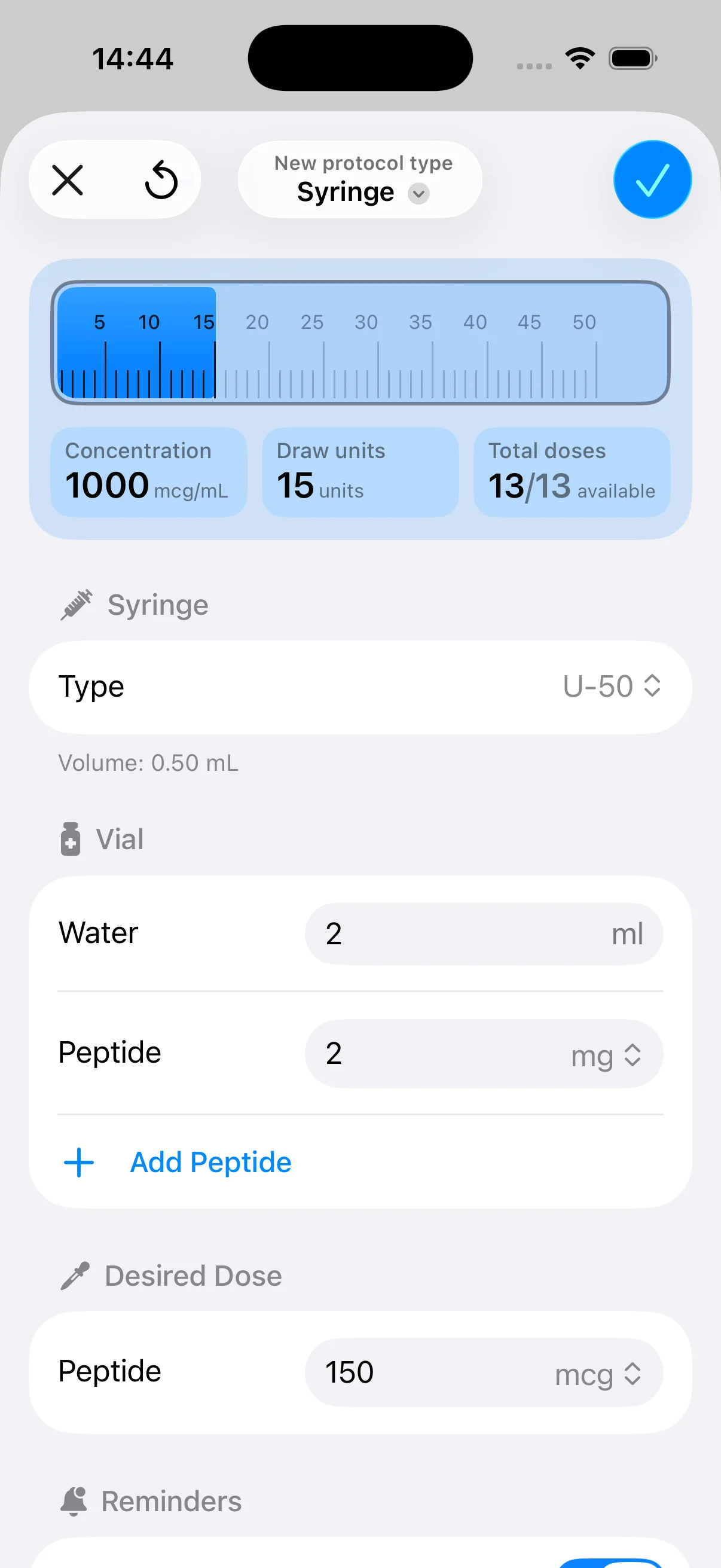
- Look for concentration details. Dose math only works when vial size and concentration are stated clearly.
- Treat cycle structure as experimental. If a product is being used in a cycling framework, the plan should stay reversible and well documented.
- Separate biology from marketing. Endogenous protein research, therapeutic experiments, and commercial products are different categories.
- Use dosage-planning tools for arithmetic, not judgment. A planner such as follistatin 344 dosage can help organize amounts and timing, but it does not resolve the biological question of whether the material is well defined.
Documentation is the main discipline here. Record what the vial says, what the source claims, and what the literature supports. That habit keeps a marketing term from being mistaken for a scientifically defined intervention.
What careful planning really means
The safest mental model is simple. Start with the protein identity, then check whether the source is describing a native isoform, a research-use material, or a commercial claim. If those categories blur together, the protocol becomes hard to interpret and harder to defend.
If the product label is vague, the protocol will be vague too.
That is why the planning mindset should stay conservative. Verify first, calculate second, and keep the experimental question separate from the marketing story.
Frequently Asked Questions About Follistatin
Is follistatin the same as myostatin? No. Follistatin is the binding protein, while myostatin is one of the ligands it can neutralize. In plain terms, follistatin can reduce myostatin’s ability to signal, but they are not the same molecule (DrugBank).
Is follistatin a peptide? In casual fitness language, people may lump it in with peptides, but the more accurate description is secreted glycoprotein encoded by the FST gene (DrugBank).
How do FS288 and FS315 differ? They are the main isoforms of follistatin. FS288 is more tissue-associated, while FS315 is more circulating, so they’re not interchangeable when you’re interpreting biology or product labeling (ScienceDirect topic overview).
Can circulating follistatin levels be useful as a biomarker? Yes, but only in context. Because follistatin is expressed in almost all tissues and has links to metabolism, development, and hormone regulation, a blood level by itself doesn’t tell the whole story (PubMed).
Follistatin is easiest to understand when you keep three ideas together, it’s a normal human protein, it acts as a broad TGF-β family antagonist, and the most visible commercial claims around it are not the same thing as established clinical biology.
If you’re building peptide schedules or trying to make sense of dosing language around research compounds, PepFlow gives you a way to handle the math and the calendar without losing track of the details. Visit PepFlow if you want a cleaner way to organize protocols while you keep biology, labeling, and safety in view.