
Pitocin generic name is oxytocin, a synthetic version of the hormone your body naturally releases to trigger uterine contractions. In a hospital chart, though, that simple answer is only the start of the story, because the name, the dose, and the way it’s given all matter for care.
Table of Contents
- The Pitocin Generic Name Explained
- How Oxytocin Works in the Body
- Clinical Uses in Labor and Postpartum Care
- Brand Versus Generic Formulations
- Understanding Dosing and Administration
- Safety Considerations and Common Concerns
- Key Takeaways and Next Steps
The Pitocin Generic Name Explained
Have you ever wondered why one medication can have two names, and why both names matter in labor and delivery?
Pitocin is the brand name, and oxytocin is the generic name. The distinction is practical, not just academic. The brand name identifies the specific commercial product on the label, while the generic name identifies the active ingredient inside the vial.
Oxytocin is a synthetic nonapeptide hormone used in obstetrics to induce or strengthen uterine contractions and to control postpartum bleeding. It is handled as a hospital medication because it is an injectable drug with a tightly controlled effect on the uterus, rather than a routine outpatient medicine.
Why the name distinction matters
The brand-versus-generic split helps clinicians speak clearly about the drug, the route, and the treatment goal. In labor and delivery, that goal may be induction, augmentation, or control of bleeding after birth. Major references identify Pitocin as the proprietary name and oxytocin as the generic name, and they describe the same obstetric uses for both terms (RxList).
The difference also reflects how the medication is made. Pitocin represents the move from older pituitary extracts to standardized synthetic hormone therapy. That matters in obstetric care because a predictable product is easier to dose and monitor when the goal is to influence uterine activity on purpose.
Oxytocin is also dosed in units, not milligrams. That can feel unusual at first, but the reason is simple. With hormones like this, a unit-based dose is a way to describe biological activity, much like measuring how strongly a key fits a lock rather than just how heavy the key is. In hospital practice, that makes the order easier to interpret when staff are adjusting the infusion in small steps.
Its short half-life shapes the way hospitals use it. A drug that leaves the body quickly can be started, adjusted, or stopped with close monitoring, which is one reason labor units rely on titration protocols instead of large one-time doses. That approach helps clinicians match the infusion to the uterus’s response instead of guessing how the body will react.
Practical rule: if you see Pitocin in a labor chart, think oxytocin. If you see oxytocin on a medication list, it is the same drug being named by its generic term, with the same clinical purpose in obstetric care.
How Oxytocin Works in the Body

How does oxytocin make the uterus contract? The answer starts with a receptor. Oxytocin binds to oxytocin receptors on uterine myofibrils, then triggers a chain reaction inside the muscle cells. Calcium moves into the cells, prostaglandin activity rises, and the uterus becomes more able to contract in a coordinated way. For a plain-language overview of the hormone itself, see Read more about oxytocin basics.
Why hospitals use titration instead of a single big dose
Oxytocin is not given like a one-time push. Hospital staff usually use low-dose IV titration so the uterus is guided into an effective contraction pattern without being pushed into hyperstimulation, where contractions come too often or too strongly. That stepwise approach lets clinicians make small changes based on how the uterus responds, rather than guessing with a large upfront dose.
Its pharmacokinetics explain why that method works well. One reference lists a half-life of 1 to 6 minutes, a 0.3 L/kg volume of distribution, and metabolism in the liver and plasma (Medscape). Because the drug leaves the body quickly, it behaves more like a fast-adjusting control knob than a slow, lingering medication.
That short half-life also shapes bedside monitoring. If the infusion rate changes, the effect can shift quickly, so staff watch the tracing and the uterine pattern closely and adjust in real time. In practical terms, this is one reason oxytocin protocols are built around careful observation, gradual dose changes, and repeated reassessment rather than a single fixed dose.
The dosing unit also fits that approach. Oxytocin is ordered in units, not milligrams, because the goal is to measure biological activity, not just weight. In obstetric care, that makes the order more useful when the infusion needs to be fine-tuned in small steps, and it helps explain why the brand name, the generic name, and the dose format all matter at the bedside.
Clinical Uses in Labor and Postpartum Care
Why do clinicians reach for oxytocin in the first place? In practice, it is used when the uterus needs a clear signal to contract, either to begin labor or to make labor contractions more effective. Induction starts labor, while augmentation strengthens labor that has already begun but is not progressing well.
What it looks like in real care
In an induction, the medication helps the uterus establish a contraction pattern that can move labor forward. In augmentation, the same medication is used when contractions are present but not doing enough work, so the uterus needs a steadier rhythm to help labor progress safely. The clinical team watches fetal response closely because the goal is effective labor without putting the baby under unnecessary stress, as described in the Momotaro Apotheca pregnancy guide.
After birth, oxytocin has a different job. It helps the uterus clamp down, which supports postpartum bleeding control and lowers the risk of hemorrhage. That is why it comes up both in labor rooms and in the immediate period after delivery.
Some references also describe use in incomplete miscarriage management, which reflects the same basic physiologic effect, helping the uterus contract for a specific medical purpose. Across all of these settings, the core idea stays the same. Oxytocin is being used to guide uterine contraction in a controlled way, not just to make the uterus work harder.
The dosing details match that purpose. Oxytocin is ordered in units, not milligrams, because clinicians are measuring biologic activity rather than only drug weight, which matters when the infusion is adjusted in small steps. Its short half-life also helps explain hospital protocols, since the effect can change quickly when the infusion rate changes, so staff can fine-tune the dose in real time instead of waiting for a slow, lingering response.
Brand Versus Generic Formulations
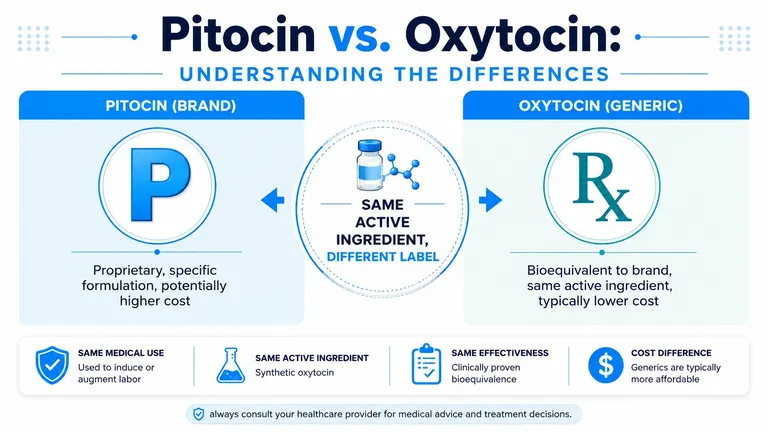
Pitocin and oxytocin are the same active medication. The difference usually comes from the label, the manufacturer, and how a hospital sources the product for use in clinical care.
Why substitution is more complicated than it sounds
This is not a simple shelf-side swap. Oxytocin is a sterile injectable medication, so the hospital has to pay attention to formulation, storage, and how the product is prepared before it reaches the bedside. Manufacturer descriptions note that Pitocin uses preservatives or buffers to maintain a target pH of 3.5, and that the product may contain up to 16% total impurities while still meeting standards for injection (Drugs.com).
That is why brand versus generic questions in obstetrics involve more than price alone. A hospital may choose between a brand label, a generic label, or a product sold under a different international name, but the decision also includes formulary rules, supply availability, and whether the product fits local protocol. In practice, the name on the vial matters less than whether the sterile injectable oxytocin product is available and handled correctly for labor or postpartum use.
Some drug comparisons are about consumer choice. Oxytocin in obstetrics is about protocol, storage, route, and clinical supervision, much like a prescription discussion such as Viagra vs sildenafil in the UK, where the brand and generic names point to the same core medicine but the setting shapes how it is prescribed and used. Oxytocin is treated even more carefully because it is used in labor and postpartum care, not as a routine self-directed treatment (GoodRx).
Understanding Dosing and Administration
Why does oxytocin use units or milliunits per minute instead of milligrams? The short answer is that clinicians are judging biologic effect, not just the amount of powder in the vial. In obstetric care, that matters because the goal is a specific uterine response, the same way a thermostat is set to reach a target room temperature rather than to use a certain number of batteries.
That approach also fits how oxytocin behaves in the body. Its action is brief, so hospital teams adjust the infusion in small steps and watch the contraction pattern closely. A medication with a short half-life does not give much room for guesswork, which is why labor protocols are built around frequent reassessment and careful titration.
How clinicians start and adjust the infusion
A dosing summary describes continuous infusions that may begin around 0.5 to 2 mU/min, then rise by 1 to 2 mU/min every 15 to 60 minutes until contractions are adequate. The slow pace is deliberate. Clinicians are trying to find the lowest effective dose that supports labor without pushing the uterus too hard.
That is also why oxytocin is handled differently depending on the setting. For postpartum bleeding control, it may be given by intramuscular injection or as an IV dose in clinical care, while induction and augmentation usually rely on a carefully controlled continuous infusion. The route changes the speed of effect and the amount of adjustment the team can make, which is why labor dosing feels more like fine-tuning a machine than giving a one-time tablet.
| Oxytocin Dosing Overview | |||
|---|---|---|---|
| Clinical Use | Route | Typical Starting Dose | Titration Approach |
| Labor induction | IV infusion | 0.5 to 2 mU/min | Increase by 1 to 2 mU/min every 15 to 60 minutes |
| Labor augmentation | IV infusion | 0.5 to 2 mU/min | Increase by 1 to 2 mU/min every 15 to 60 minutes |
| Postpartum bleeding control | IM or IV | Standardized clinical dosing | Adjusted to uterine response and setting |
| Incomplete miscarriage management | Clinical use varies | Protocol-based | Adjusted to response |
For a dosing-focused reference that explains peptide math and practical preparation, see the PepFlow peptide dosage guide.
Safety Considerations and Common Concerns
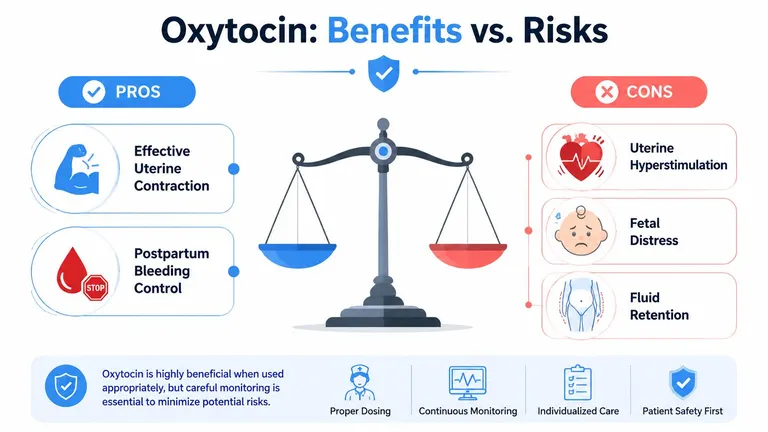
What makes oxytocin safe in practice is also what makes it demanding: it works quickly, and the uterus can respond quickly too. If contractions become too frequent or too strong, the baby has less time to recover between them, so clinicians watch closely for uterine hyperstimulation and related fetal concerns. Because the drug acts fast and clears fast, the care team has to stay alert from the start of the infusion through every dose change.
Why monitoring is built into the process
That short action window is the reason monitoring is part of the treatment plan, not an extra precaution. A continuous infusion can be adjusted in real time, but only if staff are tracking contraction patterns and the fetal heart rate at the same time. Oxytocin behaves like a control knob on a machine, small changes can shift the response, so the setting and the watchfulness matter as much as the medicine itself.
Another concern is water intoxication. Oxytocin can have antidiuretic effects, so fluid retention and low sodium can become a problem when it is used inappropriately or alongside a large fluid load. The complication is uncommon in well-managed obstetric care, yet clinicians still pay attention to fluid balance because the risk rises when the overall treatment context is not tightly controlled.
Common reactions can include nausea, vomiting, headache, flushing, and abdominal cramping. More serious complications can include uterine rupture, fetal distress, and severe fluid-related problems, which is why side effect discussions should stay practical and specific. A helpful overview of peptide side effects can make that broader safety picture easier to compare with other injectable compounds.
Doctronic describes the same general pattern seen in clinical references, common effects are usually temporary, while serious complications are tied to excessive response or poor monitoring. The main takeaway is straightforward. Oxytocin is not casual medication, it is a powerful obstetric drug that depends on careful supervision, clear dosing, and timely adjustments.
Key Takeaways and Next Steps
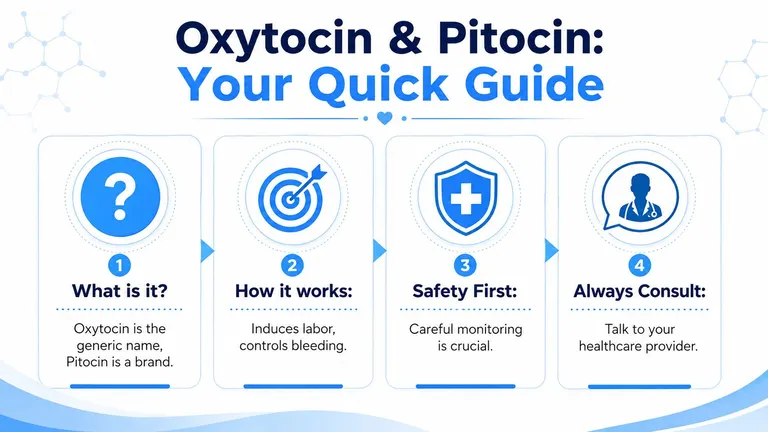
What should you remember first? The pitocin generic name is oxytocin. The brand name exists because the product is a standardized synthetic injection used in obstetric care, while the medicine itself is the same hormone your body already uses for uterine contractions and milk letdown. Its short half-life, receptor-based action, and careful dose titration are why clinicians give it in closely watched settings, not like an everyday take-at-home drug. That is also why oxytocin is measured in units instead of milligrams, since the goal is to control biologic effect rather than to count mass, much like adjusting a faucet by flow instead of by the weight of the pipe.
If you are a patient, the most useful questions are practical ones. Ask why oxytocin is being recommended, which route will be used, and how the team will watch for signs that the dose needs to change. If you are a student, focus on how brand name, generic name, units-based dosing, and continuous monitoring fit together in obstetric care. The brand tells you which product is on the label, but the generic name tells you what medicine is being given.
A good working model is simple. Pitocin is the name you may see in the hospital, and oxytocin is the medicine inside it. Because the drug leaves the body quickly, the care team has to adjust it in real time, watching both the uterus and the patient rather than relying on a fixed dose. That is the practical difference between brand and generic in labor care, the name may change, but the active hormone and the need for careful supervision do not.
If you want a simple companion for understanding dosing math, protocol planning, and structured regimen tracking, visit PepFlow. It is built to reduce dosing confusion and help you stay organized, which matches the same idea behind safer oxytocin use, clear numbers, careful timing, and reliable tracking.