You’ve cleaned up your diet. You’re training consistently. You’ve probably even tightened sleep, steps, protein, and meal timing. Then your progress slows anyway.
That’s the point where a lot of people start looking at a peptide stack for weight loss. Not because they want a shortcut, but because they want something that works on biological pathways that food and training don’t fully control. Appetite signaling, fat metabolism, recovery, lean mass retention, growth hormone signaling. Those are the levers people are trying to influence.
The problem is that most guides stop at lists. They tell you which peptides are “for fat loss” or “for recovery,” then leave out the part that causes mistakes: dose math, vial concentration, injection timing, cycle structure, and adherence. If you get those wrong, the stack can become confusing fast.
That’s why a smart starting point is still the basics. If you want to review the foundation first, these science-backed weight loss strategies are useful context before moving into advanced tools.
Table of Contents
- The Next Frontier in Weight Management
- How Do Peptide Stacks Work for Weight Loss
- Key Peptides Used for Weight Loss Stacks
- Example Stacking Protocols and Scheduling
- How to Manage Dosing Calculations and Schedules
- Safety Side Effects and Legal Status
- Frequently Asked Questions About Peptide Stacks
The Next Frontier in Weight Management
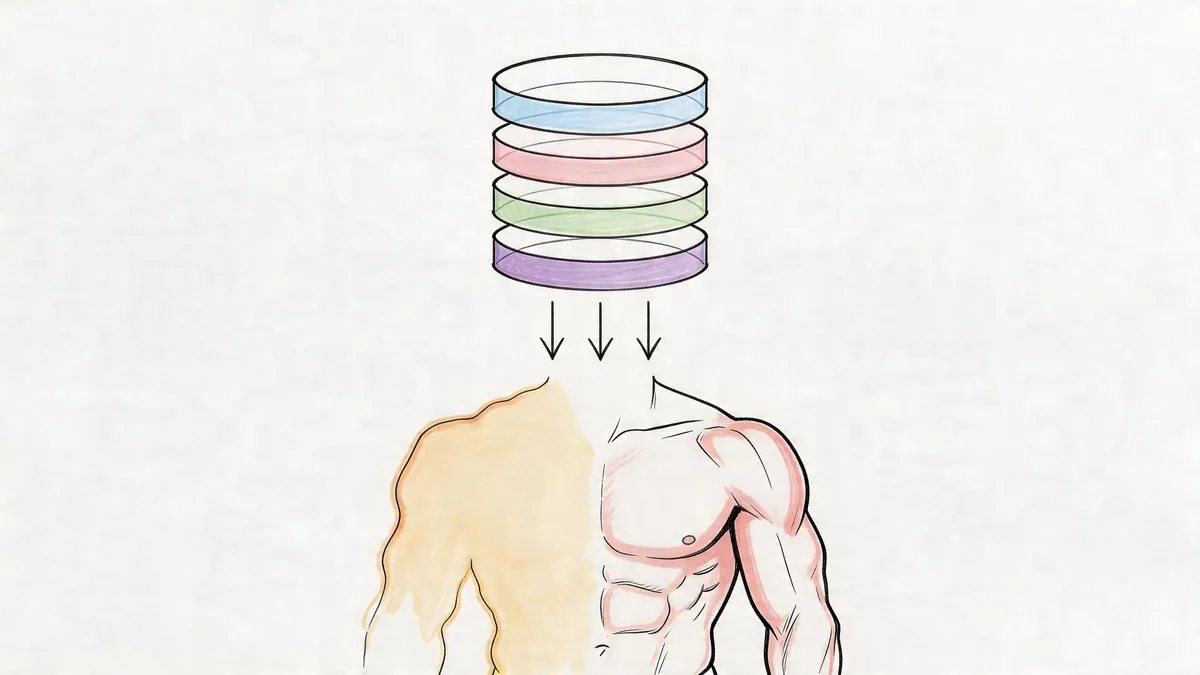
A peptide stack sits in the space between basic lifestyle work and full medical treatment. That’s why it gets so much attention from people who feel stuck. They’re no longer asking, “What should I eat?” They’re asking, “What pathway am I not addressing?”
In plain language, a peptide stack means combining multiple peptides so each one handles a different part of the problem. One may influence appetite. Another may support lipolysis. Another may help preserve lean tissue during a calorie deficit. The idea is to create a more complete protocol than a single compound can offer alone.
That sounds clean on paper. Real life is messier.
A new user usually doesn’t fail because they don’t know the peptide names. They fail because the protocol becomes hard to manage. One vial is measured in milligrams, the dose target is in micrograms, one injection is daily, another is weekly, and the cycle includes off-periods. When that stack lives in screenshots, notes apps, and half-remembered forum advice, errors creep in.
Practical rule: The more moving parts a protocol has, the less forgiving it becomes.
There’s also an evidence gap you need to respect. Some peptide medications have strong clinical validation. Many stacks do not. That doesn’t mean every stack is useless. It means you should think of them as very different categories. One category includes established prescription drugs. The other includes experimental combinations that may be mechanistically interesting but need tighter oversight.
If you’re exploring a peptide stack for weight loss, the useful mindset isn’t “Which compound burns fat fastest?” It’s “Which goal am I solving, what evidence supports it, and can I execute the plan precisely enough to do it safely?”
How Do Peptide Stacks Work for Weight Loss
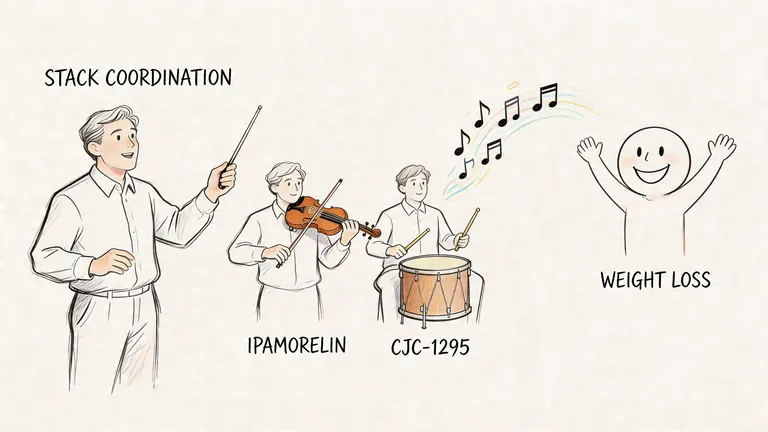
Think of a stack like an orchestra. A single violin can carry a melody. An orchestra can produce something larger because each section handles a different role. Peptides work the same way. One compound may affect appetite, another may influence growth hormone signaling, and another may be chosen for fat-targeting or recovery support.
Multiple pathways, one outcome
Weight loss isn’t one process. It’s several processes happening at once:
- Appetite regulation: Some peptides reduce hunger and make calorie control easier.
- Fat mobilization: Some are selected because they’re thought to support lipolysis.
- Lean mass preservation: Some stacks aim to help you hold onto muscle while dieting.
- Recovery and sleep support: Better recovery can improve training consistency during a deficit.
When people talk about “synergy,” they mean those effects may complement each other.
In peptide stacking, synergy means combining compounds that act on different pathways so the overall protocol may do more than either peptide alone.
A commonly discussed example is pairing GH-stimulating peptides like CJC-1295 with fat-targeting peptides like AOD-9604 so a user is trying to support growth hormone signaling while also targeting lipolysis, as described in this overview of peptide stacking and synergistic pathways. That same source also makes an important point: anecdotal success is common, but extensive clinical studies on most stacks remain rare.
Why beginners get confused
People often lump all peptides into one bucket. That creates bad decisions.
A GLP-1 medication works very differently from a growth hormone secretagogue. A fat-targeting fragment is not the same thing as a recovery peptide. If you don’t separate mechanism from marketing, everything starts to sound interchangeable.
Use this simple model:
| Stack role | What it tries to influence | Common reason it’s included |
|---|---|---|
| Appetite control | Food intake and satiety | Helps maintain a calorie deficit |
| GH-axis support | Growth hormone signaling | Often used in body recomposition plans |
| Fat targeting | Lipolysis or fat metabolism | Added for stubborn fat goals |
| Recovery support | Training tolerance and tissue support | Helps maintain routine under deficit stress |
The big limitation
A stack can look smart biologically and still be hard to justify clinically. That’s especially true when two compounds are chosen because they sound complementary but haven’t been well studied together.
That’s why the best way to think about a peptide stack for weight loss is not as a magic blend. It’s a protocol with tradeoffs. You’re balancing mechanism, evidence, side effects, and your ability to follow the schedule accurately.
Key Peptides Used for Weight Loss Stacks
A beginner usually hits the same wall here. The peptide names pile up fast, each one sounds promising, and the main question gets lost: what role is this compound supposed to play inside the stack?
That role-first view matters because a weight loss stack is closer to a small system than a shopping list. One peptide may affect hunger. Another may be discussed for body recomposition. A third may be added only because the user wants to keep training hard while eating less. If you mix those categories together, planning gets sloppy and adherence usually falls apart.
Growth hormone secretagogues
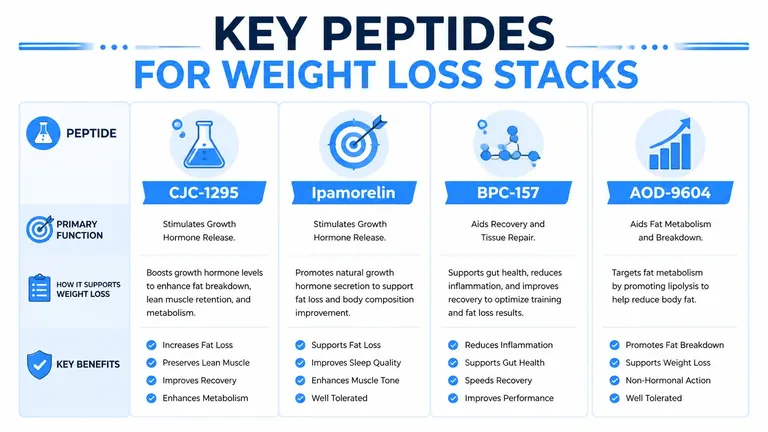
CJC-1295 and Ipamorelin often show up as a pair because they stimulate the growth hormone axis through different signaling routes. CJC-1295 acts as a GHRH analog. Ipamorelin acts as a GHRP. Users usually discuss that pairing in the context of recomposition, recovery, and preserving lean tissue quality during a calorie deficit, not as a direct appetite-control strategy.
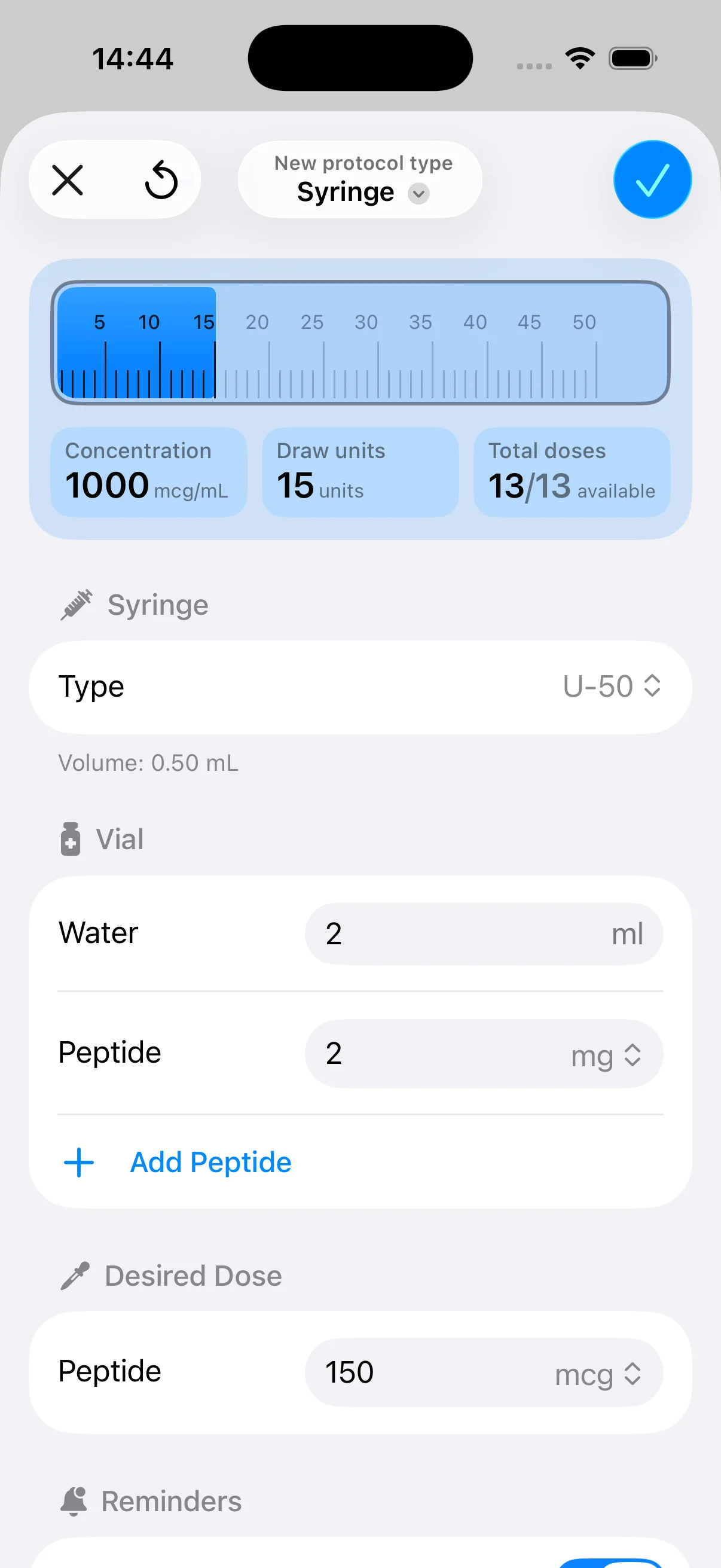
The practical challenge starts after someone chooses the pair. They now have ratio decisions, bodyweight-based dosing math, injection timing, and weekly scheduling to manage accurately. That is the part many guides skip. A stack can make sense on paper and still fail in real life if the user miscalculates mcg dosing, changes timing every few days, or loses track of what was taken. Tools like PepFlow help by turning that messy protocol into a clear schedule with dose records and fewer avoidable mistakes.
GLP-1 and GIP agonists
This category has the strongest clinical footing.
Tirzepatide and Semaglutide are discussed less as “stack pieces” and more as primary drivers of weight loss because they directly affect appetite regulation and food intake. Research summaries in this review of peptides for weight loss explain why they set the benchmark many people compare everything else against. If you want more context on preserving body composition while using this category, this guide on GLP-1 peptides for weight loss and muscle protection is a useful companion read.
That benchmark helps clear up a common misunderstanding. Experimental peptide combinations and FDA-approved obesity medications do not sit at the same evidence level. A person building a stack should know which compound is carrying the main fat-loss effect and which compounds are being added for secondary goals.
For readers sorting through the broader terminology, this overview of peptides commonly discussed for fat loss is a good reference point.
Direct fat mobilizers and support peptides
AOD-9604 comes up in fat-loss discussions because it is framed as a fat-targeting peptide. In online stack planning, it is often paired with GH-axis compounds or mentioned alongside Tesamorelin by users who want a protocol aimed at body composition details rather than appetite suppression alone.
BPC-157 fills a different role. People usually mention it for recovery support, training tolerance, or gut-related reasons. That makes it a support peptide in many stacks, not a primary driver of scale weight reduction.
A simple way to separate these compounds is to ask one question: what problem is the peptide supposed to solve?
- AOD-9604: Usually discussed for fat metabolism signaling
- Tesamorelin: Commonly associated with visceral fat discussions
- BPC-157: More often included for recovery support than direct fat loss
That distinction keeps stack design cleaner. A well-managed protocol does not require every peptide to chase the same outcome. Some compounds are chosen to reduce food intake. Some are chosen to support body composition. Some are included because poor recovery can break consistency, and consistency is what determines whether a plan survives past the first few weeks.
Example Stacking Protocols and Scheduling
A stack can look logical on paper and still fail in real life.
Someone starts with good intentions, then week two gets messy. One injection is daily, another follows a different rhythm, and the original plan is now a screenshot, a notes app entry, and a half-remembered conversation from a forum. That is usually where progress gets harder to judge. Poor scheduling hides what the protocol is achieving.
These examples are educational illustrations, not instructions to self-prescribe. Their value is in showing how people organize a peptide stack for weight loss around a specific goal, then keep the plan tight enough to review and adjust responsibly.
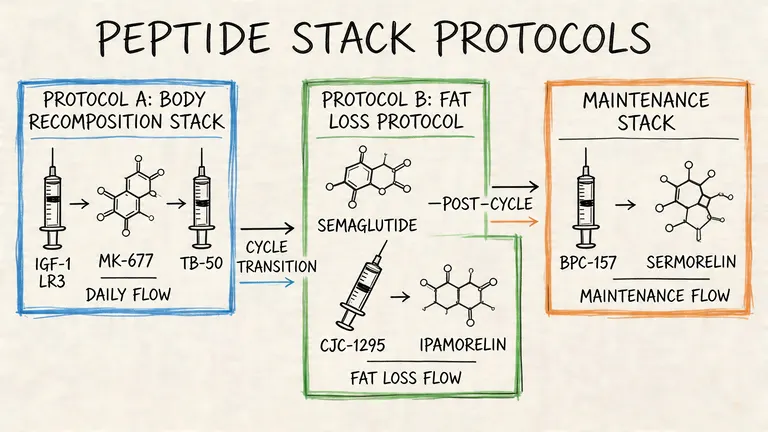
Body recomposition focus
A common example is CJC-1295 + Ipamorelin.
People group these together because they are discussed as GH-axis peptides that act through different signaling routes. The practical appeal is simple. A user is not only chasing a lower body weight. They are trying to diet without feeling flat, under-recovered, or visibly smaller from muscle loss.
Many example protocols pair them in a 1:1 ratio, often framed around body-weight-based dosing for each peptide per administration. The exact numbers matter less here than the management principle. Once a stack uses weight-based dosing, precision becomes part of the protocol itself. If body weight changes, or vial concentrations differ from one order to the next, the math can shift with it. A peptide reconstitution calculator for converting dose targets into usable injection amounts helps reduce that error before it turns into a dosing habit.
A schedule framework for this kind of stack usually includes:
- Fixed timing: Injections are anchored to the same daily window.
- A repeatable weekly pattern: The user can state the plan clearly without guessing.
- A defined review point: The protocol has a start, an active block, and a date to reassess response and tolerability.
That structure matters because recomposition stacks rarely fail from theory alone. They fail from drift. Monday’s dose becomes “later tonight,” then Thursday gets skipped, then the user changes timing and frequency in the same week and loses any clean read on what happened.
Targeted fat loss focus
Another common online concept is AOD-9604 + Tesamorelin.
The appeal here is narrower. Instead of a broad recomposition goal, the stack is usually framed around body-fat targeting and midsection-focused outcomes. That framing attracts newer users because it sounds highly specific. The trap is that specific marketing language can create false confidence. A protocol can sound precise while the execution is still sloppy.
This is the category where clean scheduling matters most. If someone changes dose, frequency, meal timing, and training volume at the same time, the stack becomes impossible to interpret. Was appetite different because of the compound, the calorie deficit, or the fact that sleep dropped for four nights? Without a stable schedule, the answer is guesswork.
Here’s a useful visual overview before you go deeper:
A better approach is to treat the schedule like a lab notebook. One plan. One timing pattern. One reason for each compound.
Appetite control plus composition support
A more advanced setup appears when someone wants an appetite-control medication plus a GH-axis peptide.
That is less a single protocol and more a coordination problem. One part of the stack may be aimed at calorie intake, while the second is being considered for recovery, muscle retention, or body-composition quality. The challenge is not naming the compounds. The challenge is keeping the whole plan organized enough to monitor side effects, adherence, and outcome signals without mixing everything together.
Clinical mindset: Add one variable for a specific reason. Do not build a stack just because each peptide sounds useful on its own.
Before a user thinks about syringes or reconstitution, the protocol should fit into four columns: compound, goal, frequency, and pause plan. That simple grid works like a flight checklist. If one field is vague, the plan is not ready. Tools like PepFlow help keep that checklist usable over time by centralizing schedule details, logging actual doses, and reducing the small administrative mistakes that often derail an otherwise careful stack.
How to Manage Dosing Calculations and Schedules
The biggest gap in peptide education isn’t what compounds exist. It’s execution.
Most articles tell you what a peptide allegedly does, then stop before the hard part. They don’t show you how to convert a microgram target into syringe units, how to handle multiple vial concentrations, or how to keep a cycle organized when one peptide is taken on a different rhythm from another. That gap is one reason users make avoidable mistakes, as noted in this discussion of peptide stacking math and protocol management.

Where people usually get lost
The confusion usually starts with unit conversion.
A vial may be labeled in mg. Your intended dose may be in mcg. The syringe uses units based on volume, not peptide amount. If you’re stacking, you might be doing that math for two compounds with different concentrations and different frequencies. That’s a lot of room for error.
Then scheduling makes it worse:
- Different frequencies: One peptide may be taken daily, another weekly.
- Cycle pauses: Some protocols include on-periods and rest periods.
- Timing rules: Certain stacks are tied to meals, training, or bedtime.
- History tracking: If you miss a dose, you need to know whether to resume, delay, or reset the sequence.
What a structured system should handle
Tools prove practical rather than optional. A dedicated calculator and schedule tracker can remove the mental load that causes inconsistency.
One example is PepFlow, which focuses on dose conversion, protocol building, reminders, countdowns, and history tracking for peptide routines. That kind of setup is useful because it takes abstract dosing plans and turns them into daily actions. If you want to understand the underlying math before relying on any tool, this guide to a peptide reconstitution calculator is worth reading.
Use a simple checklist before any injection:
- Confirm the target dose in mcg or mg.
- Verify vial concentration after reconstitution.
- Translate the dose into volume or units before drawing.
- Check the day in the cycle so you don’t accidentally inject during a pause period.
- Log the dose immediately so the next decision is based on facts, not memory.
Sloppy tracking doesn’t just lower adherence. It makes side effects and outcomes harder to interpret.
For many users, that’s the core value of structure. It reduces guesswork. And with peptide stacks, guesswork is where trouble starts.
Safety Side Effects and Legal Status
If you’re considering a peptide stack for weight loss, safety has to come before enthusiasm. Stacking increases complexity. More compounds mean more chances for overlap, more chances for sourcing problems, and more chances that a side effect gets blamed on the wrong thing.
Why stacking raises the risk ceiling
Long-term sustainability and side effect management are poorly covered in most peptide content. That matters because stacks may create synergy, but they may also create more side effects without proven durable fat loss compared with single agents, and proper cycling with pause periods is important to reduce downregulation and rebound concerns, as discussed in this review of popular peptide stacks and their evidence limits.
That point is easy to underestimate. A user may feel fine early, then run into problems later because the protocol never included a break, a reassessment point, or a rule for when to stop.
Watch for practical risk signals:
- Injection-site issues: Redness, irritation, or recurring soreness.
- Protocol creep: Adding new compounds before understanding response to the first.
- Poor source quality: Unclear labeling, questionable purity, or inconsistent supply.
- No pause plan: Running compounds continuously with no cycling strategy.
Approved drugs versus research compounds
Not all peptides live under the same legal or medical umbrella.
Some, like FDA-approved prescription medications for weight loss, have gone through formal review for specific uses. Others are sold as research compounds or discussed in off-label settings. Those categories are not equivalent. If a compound is not FDA-approved for your indication, you should treat it as higher uncertainty by default.
For a cleaner overview of which peptide medications are in the approved category, this list of FDA-approved peptide drugs is a helpful reference.
If you can’t clearly answer “What is this approved for?” and “Who is supervising this?”, you’re not ready to treat the protocol as routine.
Medical oversight matters most when the stack is complex, experimental, or being combined with prescription therapy. A peptide plan should never rest on forum confidence alone.
Frequently Asked Questions About Peptide Stacks
How long does it take to see results from a peptide stack
It depends on the type of stack and the goal. Appetite-focused medications, GH-axis stacks, and support peptides all work on different timelines. What matters more than chasing a fast signal is whether the plan is measurable and consistent enough to judge fairly.
Can I stack research peptides with FDA-approved drugs like Wegovy or Zepbound
People do discuss that approach, but it’s not something to treat casually. Once you combine an approved medication with a research or off-label peptide, the supervision requirement goes up. You’re dealing with more variables, more interaction questions, and a tougher side-effect picture.
What happens when I stop using a peptide stack
That depends on what the stack was doing for you. If it helped appetite control, recovery, or body composition support, some of those effects may fade after discontinuation. That’s one reason cycling, transition planning, and tracking matter. Stopping without a plan can make it hard to tell whether you’re seeing rebound, normal baseline return, or just poor post-cycle habits.
Are stacks better than single peptides
Not automatically. Sometimes a simpler protocol is easier to evaluate, easier to tolerate, and easier to manage. A stack only makes sense when each compound has a clear job and the user can execute the schedule precisely.
Peptide stacks are advanced tools. They’re not beginner-friendly by default, and they’re not forgiving when the math or schedule is sloppy. The people who do best with them usually aren’t the most aggressive users. They’re the most organized ones.
If you’re following a structured peptide routine and want less guesswork around dose math, cycle planning, and reminders, PepFlow is a practical way to organize the process. It’s built for calculating doses, managing protocol schedules, tracking history, and keeping daily adherence simple. It doesn’t replace medical guidance, but it can make execution much more consistent.