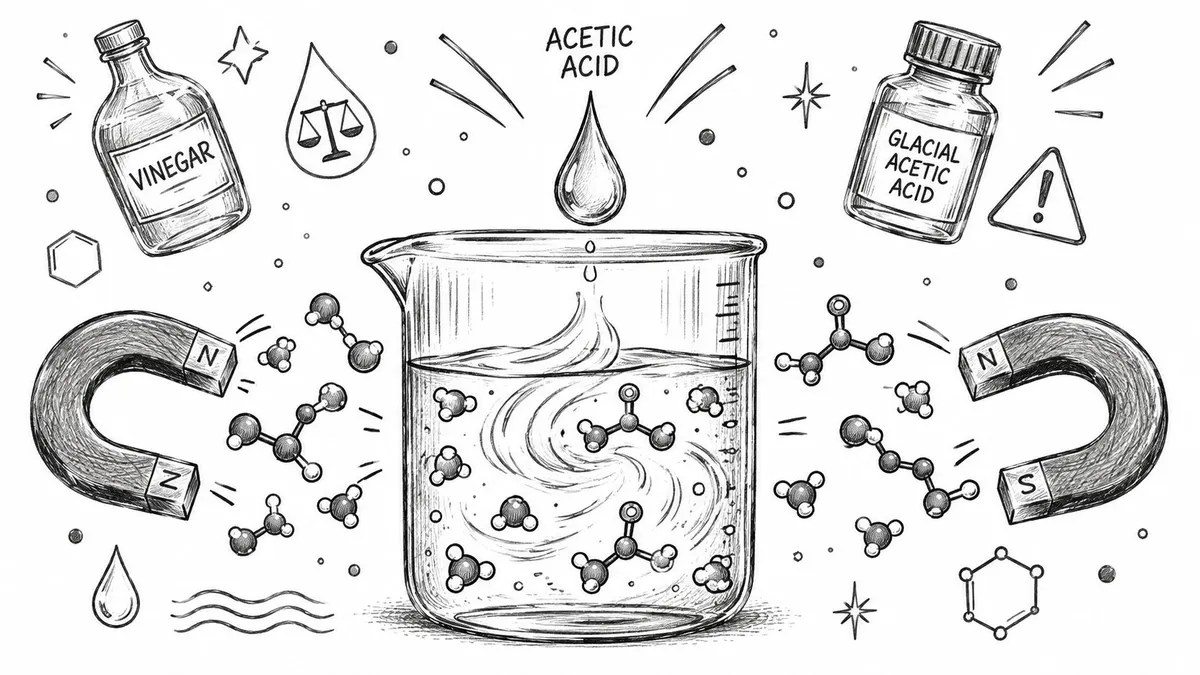
Yes, acetic acid is completely water soluble, and at ordinary conditions it is miscible with water. In practice, that means it doesn’t just “dissolve a little,” it forms a single homogeneous liquid phase with water across typical concentrations.
That matters a lot more on a peptide bench than it does in a kitchen. If you’re reconstituting a vial, preparing a dilute working solution, or handling glacial acetic acid, the chemistry is simple, but the handling is not, and the difference between a neat acid and a water-rich mixture changes how you measure, mix, and stay safe.
Table of Contents
- Yes, Acetic Acid Is Completely Water Soluble
- Understanding Soluble Versus Miscible
- The Science Behind Why Acetic Acid Dissolves in Water
- Vinegar, Glacial Acetic Acid, and Everyday Examples
- Practical Implications for Peptide Preparation and Lab Work
- Safety Considerations When Mixing Acetic Acid with Water
Yes, Acetic Acid Is Completely Water Soluble
The first time someone mixes acetic acid for peptide work, the reaction looks almost too easy. The liquid disappears into water without a stubborn layer, clumps, or residue, and that’s exactly the point. Acetic acid is completely water soluble, and Sigma-Aldrich describes it as “infinitely miscible in water,” while PubChem lists it as “miscible with water” and gives a water solubility value of 1,000,000 mg/L at 25 °C, which is 1,000 g/L. Sigma-Aldrich product data PubChem Acetic Acid record
For anyone preparing peptide solutions, that answer is useful because it tells you what won’t happen. You don’t need to wait for a separate phase to clear, and you don’t need to worry about acetic acid sitting on top of water like a partially soluble solvent. In ordinary consumer, laboratory, and industrial use, acetic acid forms a single homogeneous phase with water. That’s why household vinegar, a familiar example of an aqueous acetic acid mixture, is typically about 5% acetic acid and 95% water by composition, even though the underlying chemistry allows much higher aqueous compatibility. Sigma-Aldrich product data
Why that answer changes how you work
In peptide prep, “fully soluble” is not trivia. It affects how confidently you can dose from a stock, how you judge whether a vial has been properly mixed, and how you think about concentration consistency from one container to the next. If a reagent is miscible, the practical risk isn’t undissolved material, it’s inaccurate handling of volume and concentration.
Practical rule: if acetic acid and water are in the same vessel, the chemistry gives you one liquid phase, not two. Your real job is measuring correctly and mixing safely.
That distinction matters even more once you move from kitchen-strength vinegar to stronger lab material. A dilute aqueous solution behaves very differently from glacial acetic acid, even though both rely on the same water-mixing behavior. For a plain-English comparison of how water treatment terms can be misread in practice, Woder explained for homeowners is a useful example of why labels and real behavior aren’t always the same thing.
Understanding Soluble Versus Miscible
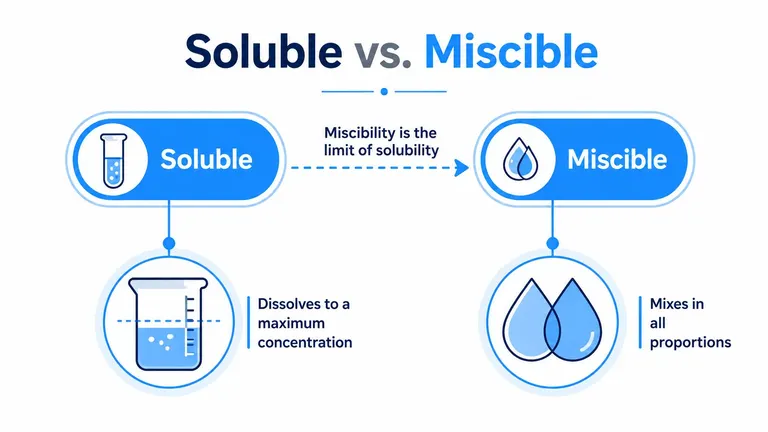
People often use soluble and miscible as if they mean the same thing, but in the lab they point to different limits. A substance can be soluble to some degree and still stop at a maximum concentration. Miscible means the two liquids mix in all proportions and remain one phase. That’s the better term for acetic acid in water, because it doesn’t merely dissolve, it blends completely across the practical range people use. PubChem Acetic Acid record
What the terms mean in a peptide workflow
If you’re preparing a vial, the difference shows up in the way the liquid behaves after addition. A soluble solid might need time, stirring, or warming before it disappears. A miscible liquid should distribute immediately and evenly if you’ve added it in a reasonable way and the solution is otherwise compatible.
That’s why this question matters for dosing accuracy. When the solvent is miscible with water, the concentration you think you made is much closer to the concentration that exists throughout the vial, assuming your measuring technique is sound. The fluid won’t separate into an acid-rich bottom layer and a water-rich top layer.
For a deeper workflow discussion around peptide measurements, Woder explained for homeowners is a simple reminder that the term on the label often matters less than the behavior in the container.
Why miscibility is the useful mental model
The molecular reason is straightforward enough to keep in mind without turning it into a full chemistry lecture. Water is polar, acetic acid is polar, and polar molecules tend to interact well with each other. Once those interactions dominate, the liquid stays mixed instead of separating.
Acetic acid in water doesn’t behave like oil in water. It behaves like one compatible liquid meeting another compatible liquid.
That’s the model worth carrying into peptide prep, because it explains why acetic acid is easy to disperse but still needs careful handling.
The Science Behind Why Acetic Acid Dissolves in Water
Acetic acid dissolves in water because its carboxyl group is strongly polar and forms hydrogen bonding interactions with water. Water molecules are always rearranging their own hydrogen bonds, and acetic acid fits into that network without much resistance. In practice, that means the mixture strongly favors the aqueous phase instead of separating out. NIST provides temperature-dependent Henry’s law data for acetic acid in water, and in dilute aqueous solution the compound shows a very low Henry’s law constant, which points to a strong preference for the liquid phase. NIST acetic acid thermodynamic data
For peptide users, that matters because a solvent that stays uniformly mixed is easier to dose with confidence. If the acid is already evenly dispersed, you are not fighting a hidden gradient inside the vial. The controls are dose size, the order of addition, and how much heat the mix throws off while you work.
Why vinegar behaves the way it does
Household vinegar is the easiest example to recognize. It is already an acetic-acid-in-water system, so the liquid you pour in the kitchen is the same chemistry you rely on at the bench, just far less concentrated than glacial material. Because acetic acid and water are so compatible, the mixture stays uniform instead of separating into layers.
That uniformity is useful in peptide handling because it keeps the solvent behavior predictable. You are not guessing where the acid ended up after mixing. You still need to control the amount you add, the order you add it in, and the heat that can build during dilution.
Why the dilution step deserves respect
The same interactions that make acetic acid easy to mix also mean the process can give off heat. NOAA explicitly warns that dissolving acetic acid generates some heat, so the mixing step is chemically straightforward but not thermally neutral. That matters in a small container, where a temperature shift can be easier to feel than to measure. NOAA CAMEO Chemicals acetic acid entry
That is also why basic titration principles matter before you start mixing concentrated acid with water. In peptide prep, the question is not only whether the liquid will mix. It is whether you can control the concentration you intended, keep the final volume honest, and avoid a hot spot that makes the vial harder to handle.
The following video illustrates how hydrogen bonding drives this mixing behavior at the molecular level.
When you look at the liquid at this level, the behavior is easy to explain. Polar molecules recognize each other, hydrogen bonds form, and the aqueous phase wins. That is why acetic acid is dependable in laboratory dilution, and why careless pouring still creates real risk.
Vinegar, Glacial Acetic Acid, and Everyday Examples
Vinegar is the familiar face of acetic acid, but it can hide how concentrated reagent behaves. In the kitchen, the liquid is already mostly water, so it feels mild and easy to pour. In the lab, glacial acetic acid is near the opposite end of the spectrum, and that changes the handling profile even though the water solubility stays the same.
The concentration changes the workflow
With vinegar, the water is already doing most of the mixing work for you. With glacial acetic acid, you’re starting with a much more concentrated acid that still mixes completely with water, but the addition step is more consequential because the thermal and exposure risks are higher. The chemistry doesn’t change, the practical stakes do.
That’s the main point peptide users should keep in mind. You’re not asking whether acetic acid will dissolve. You already know it will. You’re asking whether the concentration you’re preparing is accurate, whether your final volume is correct, and whether the mixing order keeps the solution manageable.
What usually works and what doesn’t
A few habits help, and a few create avoidable problems.
- Works well: measure the water phase first, then add the acid slowly while mixing.
- Works well: use the final homogeneous solution, not the momentary appearance of the liquid, as your guide to readiness.
- Doesn’t work well: assuming a stronger acid will behave like vinegar just because both are acetic acid.
- Doesn’t work well: eyeballing volume after a warm mixing step and treating that as final concentration.
The reason this matters in peptide prep is simple. You want repeatable solvent conditions from vial to vial, and the starting concentration of acetic acid changes how much acid you’re delivering.
If you use acetic acid around research peptides, the practical framing in this peptide-specific acetic acid guide is worth reading because it connects the chemistry to common prep choices without turning it into abstract theory.
Practical Implications for Peptide Preparation and Lab Work
When acetic acid is used in peptide work, miscibility is a feature you can rely on. Once the acid is in the water phase, it distributes evenly through the solution, so there aren’t pockets of undissolved liquid waiting to surprise you later. That makes concentration control much more predictable than with solvents that separate or dissolve slowly.
Dosing accuracy starts with complete mixing
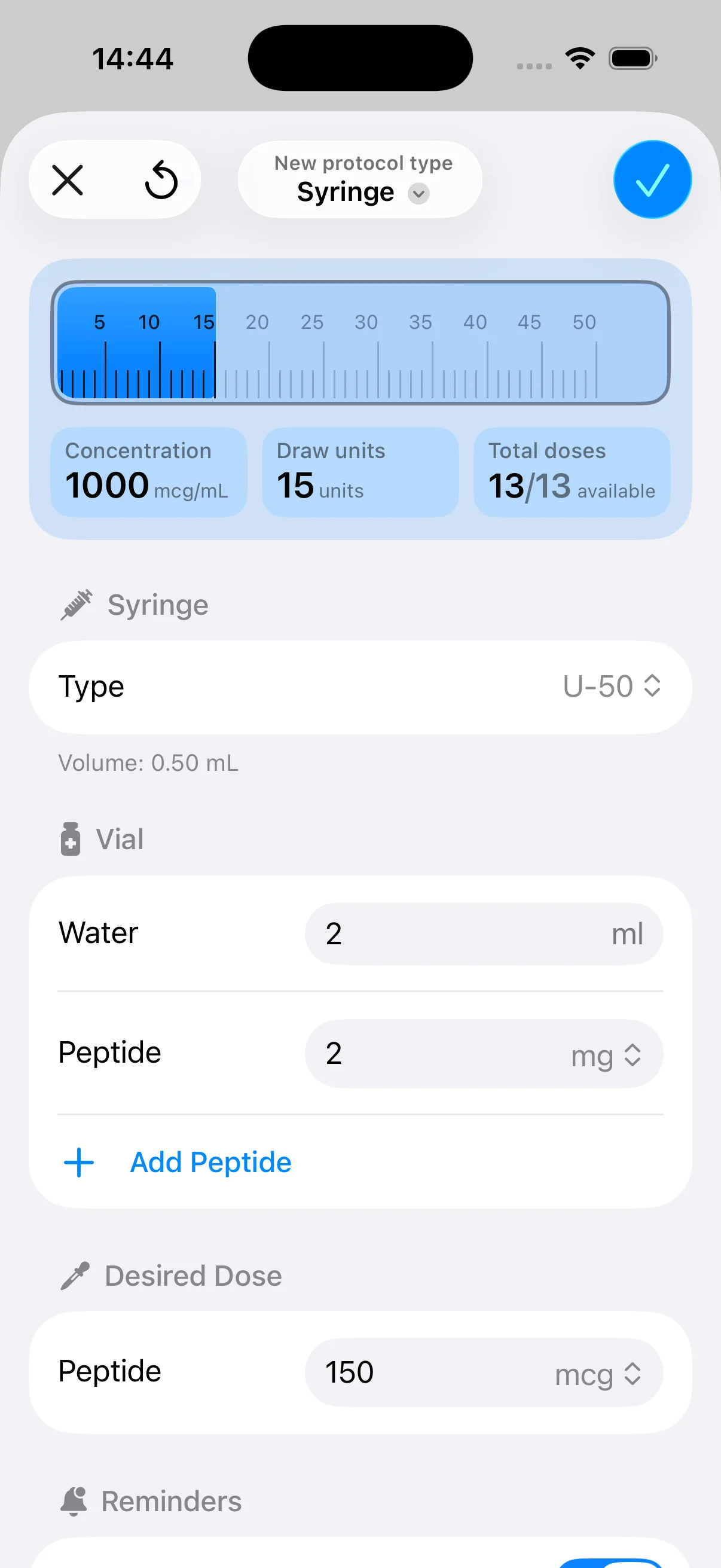
For peptide reconstitution, that even distribution matters because a uniform solvent gives you a more reliable concentration throughout the vial. If you add your solvent carefully and mix until the liquid is fully homogeneous, your calculated dose is far less likely to be distorted by local concentration differences. That’s especially relevant when you’re planning an injection volume from a calculated concentration rather than guessing by appearance.
Practical insight: with acetic acid, the common error is not poor solubility, it’s poor measurement. If your volume is off, the whole prep is off, even when the liquid looks perfectly mixed.
A reliable peptide workflow also benefits from consistency in the solvent itself. If one vial uses a weak acetic acid solution and another uses a much stronger one, the handling and final concentration won’t match, even if both look clear. A tool like the solubility guide for research peptides can be helpful when you’re organizing solvent strength and working volume before you start.
Heat and volume deserve attention
The other practical issue is temperature. NOAA notes that dissolution generates some heat, and that matters in small-volume work because a warm solution can expand slightly and make the immediate volume look different from the cooled final state. If you measure right after mixing and don’t account for that, your numbers can drift.
| Common Acetic Acid Solutions and Their Characteristics | |||
|---|---|---|---|
| Solution Type | Acetic Acid Concentration | Typical Use | Key Handling Note |
| Vinegar | About 5% acetic acid | Kitchen and general household use | Already water-rich, so it mixes easily |
| Dilute laboratory solution | Lower than glacial acid | Peptide and bench prep | Add slowly and mix until fully homogeneous |
| Glacial acetic acid | Near 100% acetic acid | Concentrated lab and industrial use | Stronger heat and exposure risk during dilution |
For peptide users, the practical link between solvent choice and preparation logic is covered well in this acetic acid and peptide guide. It’s a good reminder that the right liquid still has to be measured and mixed correctly to be useful.
Safety Considerations When Mixing Acetic Acid with Water
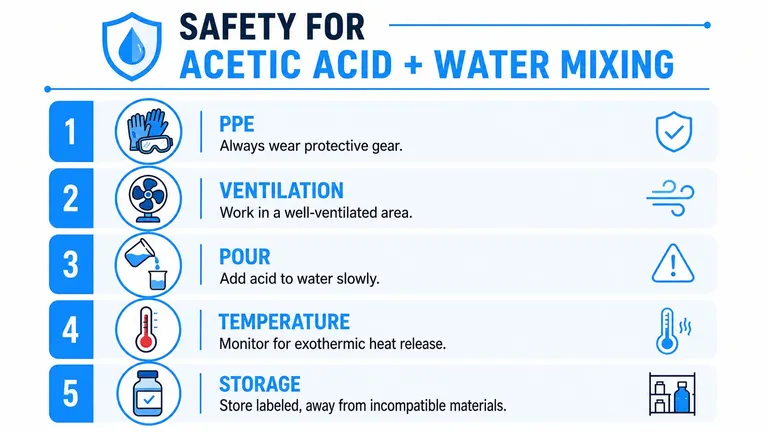
Because acetic acid and water mix completely, the hazard isn’t separation, it’s heat release and splash control. If you add water to concentrated acetic acid too quickly, the local heating can make the liquid surge or spit. That’s why the standard rule still applies, add acid to water, never water to acid.
The mixing order really matters
This is the part people gloss over when they’ve only handled vinegar. Glacial acetic acid is still miscible with water, but miscible doesn’t mean harmless. It means the two liquids will combine readily, and if the addition is poorly controlled, the energy from dilution has to go somewhere.
Use protective gear, work in ventilation, and keep the addition slow. A measured stream into a larger water volume is much easier to control than a reverse pour. The goal is a calm, uniform solution, not a sudden temperature spike or splash event.
A few habits that reduce risk
- Wear PPE: gloves and goggles are the minimum when handling concentrated acid.
- Use ventilation: acetic acid has a sharp odor, and good airflow keeps the bench more comfortable.
- Add slowly: a controlled pour reduces splashing and local overheating.
- Watch the container: if the vessel feels warm, pause and let it settle before continuing.
- Label clearly: mixed solutions should be stored with concentration and date visible.
That last point matters in peptide prep because a labeled solvent prevents later confusion about what concentration is in the vial. If you’re also using bacteriostatic water in your workflow, this guide to bacteriostatic water use is a good companion read for keeping your prep logic clean and consistent.
Store the final solution away from incompatible materials and keep the container sealed and identified. The chemistry is forgiving when handled correctly, but it won’t forgive casual pouring.
If you want a cleaner peptide prep routine, PepFlow helps you turn concentration math into practical dosing and scheduling decisions without guessing. Visit PepFlow to keep your vial preparation, dose tracking, and routine more accurate from the first mix to the last reminder.