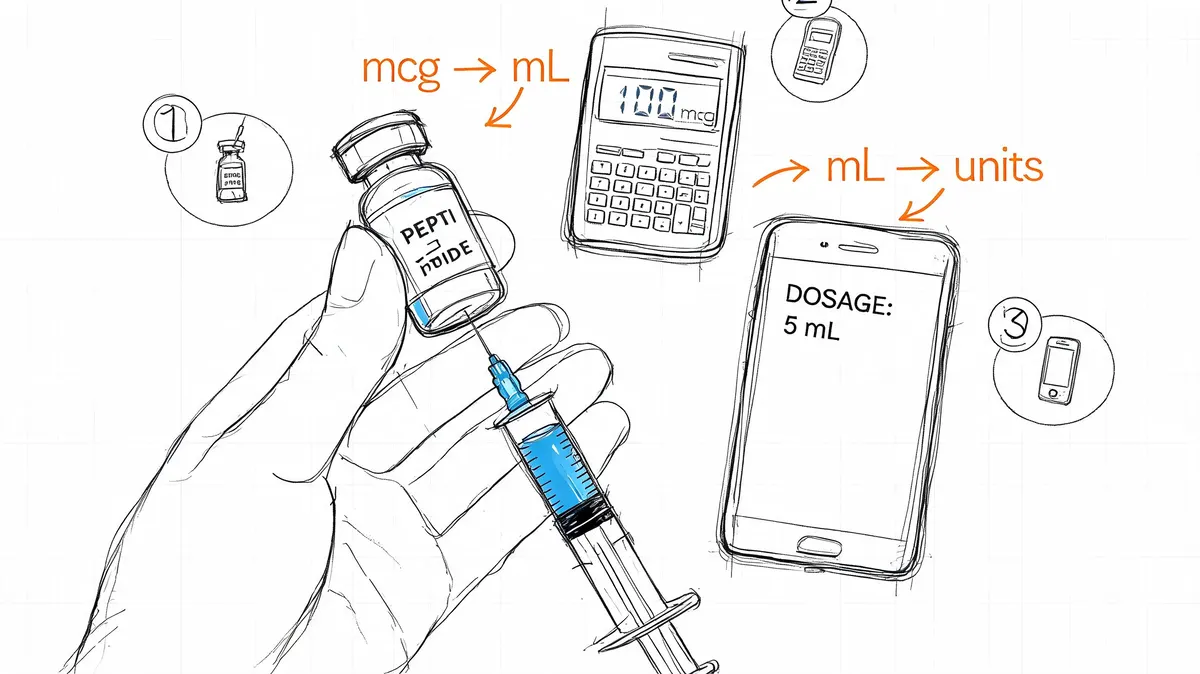
You’re probably staring at a vial, a syringe, and a note with your target dose written in mg or mcg, and the part that feels least clear is the one that matters most. The math looks simple until you realize a small conversion mistake changes what goes into the syringe.
That’s why a good ghk-cu dosage calculator matters. It doesn’t just save time. It helps you turn a powder amount, a reconstitution volume, and a target dose into something you can repeat confidently. The best users aren’t the ones who memorize formulas. They’re the ones who understand what the numbers mean, then build a workflow that keeps those numbers consistent every time.
Table of Contents
- Your Guide to Accurate GHK-Cu Dosing
- The Foundation of Accurate Dosing Concepts Explained
- How to Manually Calculate Your GHK-Cu Dose
- GHK-Cu Dosing in Practice Real-World Examples
- Common Mistakes in GHK-Cu Dosing and How to Avoid Them
- From Manual Math to Automated Precision with PepFlow
- Conclusion Your Path to Confident Dosing
Your Guide to Accurate GHK-Cu Dosing
You reconstitute a vial, look at the syringe, and realize the hard part is not the injection. It is knowing whether the volume you are about to draw matches the dose you intended. The common mistakes start earlier: mixing up mg and mcg, using syringe units as if they equal peptide mass, or changing the water volume without understanding what that does to concentration.
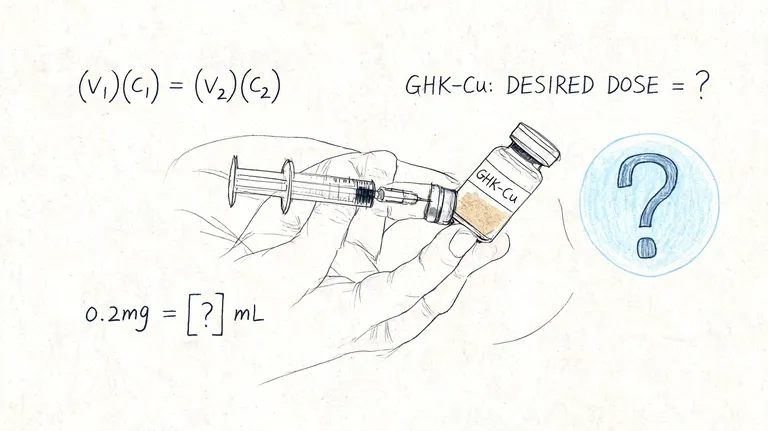
That is why a ghk-cu dosage calculator matters. The calculator is not magic. It converts a real setup, vial size, diluent volume, target dose, into a measurable amount you can draw consistently. If the inputs are wrong, the answer is wrong. If the concentration is right, dosing gets much simpler.
The practical gap is easy to miss. You never inject “5 mg in a vial.” You inject a specific volume from a mixed solution. Change the amount of diluent, and you change how much GHK-Cu sits in each mL. That single change affects every syringe mark that follows.
Practical rule: Do not draw a dose until you can state the concentration of the solution in front of you in mg/mL or mcg/mL.
This is the part many quick guides skip. They show a formula, but not the reason behind it. Once you understand concentration and dilution, the math stops feeling random. You can check your own numbers, catch setup errors before they become dosing errors, and build a prep routine you can repeat without guessing.
The mindset is the same one used in training and nutrition. If you want to find your exact protein needs for growth, you start with accurate inputs, not estimates. GHK-Cu dosing works the same way. Precise inputs produce a dose you can trust.
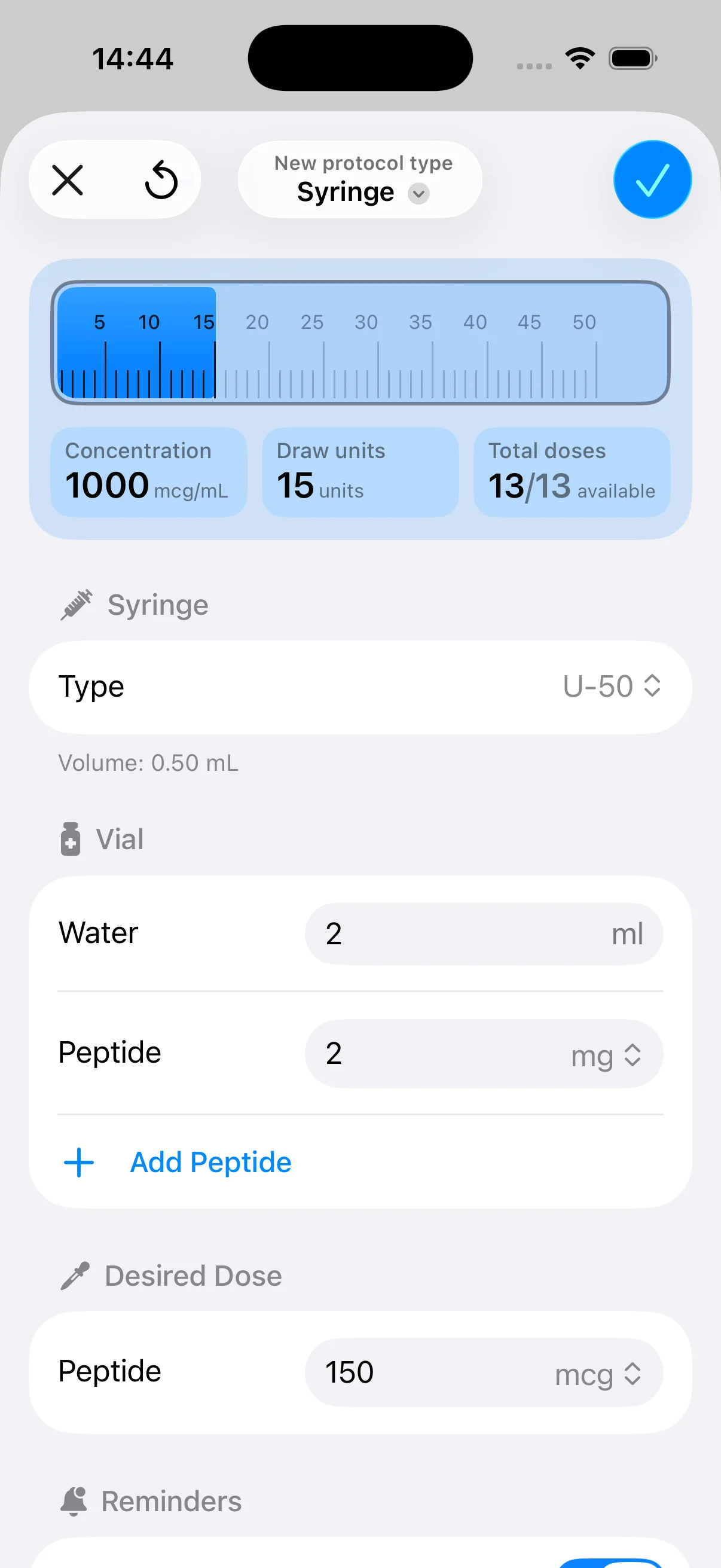
Manual calculation still has value because it teaches you what the numbers mean. In real use, though, people rush, transpose decimals, or forget a unit conversion. That is where a tool like PepFlow helps. It turns the raw math into a practical workflow, so the answer on the screen matches the dose in the syringe.
The Foundation of Accurate Dosing Concepts Explained
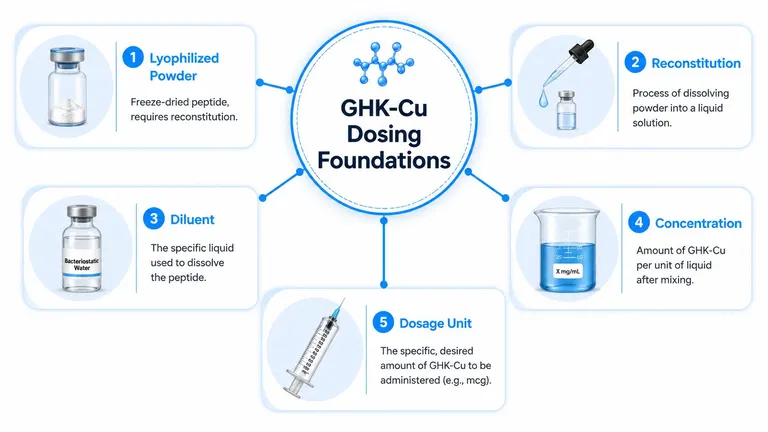
A dosing calculator only helps if you understand what it is calculating. In practice, every GHK-Cu dose comes down to four inputs you can verify: how much peptide is in the vial, how much diluent you added, what concentration that creates, and what syringe volume matches your target dose.
Lyophilized powder, diluent, and reconstitution
GHK-Cu usually arrives as lyophilized powder in a vial. Before you can measure a usable dose, you add a diluent, often bacteriostatic water, and dissolve the powder. That step is reconstitution.
The key point is simple. Reconstitution changes the concentration, not the total amount of peptide in the vial. A 5 mg vial still contains 5 mg after mixing. What changes is how much of that 5 mg is packed into each mL of liquid.
That distinction matters because you never administer “a vial.” You administer a measured volume from the solution you prepared.
Why concentration controls the dose
Concentration is the working number behind every accurate draw. If a vial contains 5 mg of GHK-Cu and you add 2 mL of diluent, the concentration becomes 2.5 mg/mL, which is 2,500 mcg/mL. Guidance from PeptideDocs on peptide reconstitution and concentration math follows the same principle. Total peptide stays fixed. Strength per milliliter changes based on reconstitution volume.
Use less diluent, and each mL contains more peptide. Use more diluent, and each mL contains less.
This is why raw syringe units mean nothing on their own. Twenty units can be a reasonable dose in one vial setup and the wrong dose in another, because the concentration changed during mixing. If you want a practical walkthrough of that setup process, a peptide reconstitution calculator guide helps connect the formula to the actual prep workflow.
A clean syringe draw does not guarantee a correct dose. The concentration has to be right first.
mg, mcg, mL, and units are different measurements
Dosing errors usually start when people treat peptide amount, liquid volume, and syringe markings as if they are interchangeable. They are not.
- mg measures peptide mass.
- mcg measures the same thing at a smaller scale.
- mL measures liquid volume.
- Units on a U-100 insulin syringe are volume markings, where 100 units equals 1 mL.
Once those categories stay separate, the math gets easier to check.
For example, if your concentration is 2.5 mg/mL, then 0.1 mL contains 0.25 mg, or 250 mcg, of GHK-Cu. On a U-100 syringe, 0.1 mL = 10 units. In the same setup, 1 mg would require 0.4 mL, which equals 40 units. NanoPep’s peptide calculator explainer lays out the same unit relationship from a dosing perspective.
Why understanding beats blind calculation
A calculator gives you a number. Understanding tells you whether that number makes sense.
That is the key difference between copying a formula and running a repeatable protocol. If you know how concentration is created, you can catch bad inputs before they turn into bad injections. If a result says a tiny syringe volume contains a large dose, or a large draw gives a very small dose, you know to stop and recheck the vial strength, reconstitution volume, and unit conversion.
That confidence matters more than speed. The best workflow is not just fast. It is consistent, easy to verify, and hard to mess up under real-world conditions.
How to Manually Calculate Your GHK-Cu Dose
You reconstitute a vial, set out a U-100 syringe, and then hit the point where small mistakes matter. A decimal in the wrong place can turn a reasonable protocol into a bad draw. That is why manual calculation still matters, even if you plan to use an app every time. You need to know what the number means before you trust it.
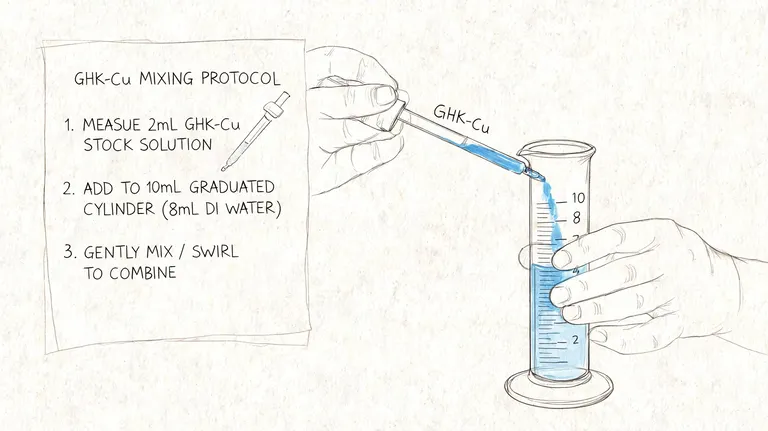
Good dosing starts with concentration. The target dose only makes sense after you know how much GHK-Cu is present in each mL of solution. That single number is what connects the powder in the vial to the line on the syringe.
Calculate concentration first
Use the same order every time:
-
Convert the vial amount into mcg
A 5 mg vial contains 5,000 mcg. -
Divide by the total liquid added
If you added 2 mL of bacteriostatic water, the concentration is 5,000 mcg ÷ 2 mL = 2,500 mcg/mL. -
Write that concentration down immediately
Put it on the vial, your protocol log, or your notes app.
This is the part that determines every dose that follows. If the concentration is off, the syringe draw will be off too. In practice, concentration errors usually come from one of three places: misreading the vial strength, forgetting the exact reconstitution volume, or switching between mg and mcg halfway through the math.
Work backward from the dose you want
A lot of people try to start with syringe units. That is where errors creep in. The cleaner workflow is:
- determine mcg per mL
- divide your target dose by that concentration
- convert the result from mL to syringe units
For a standard example:
- vial amount = 5 mg
- reconstitution volume = 2 mL
- concentration = 2,500 mcg/mL
- target dose = 1,000 mcg
Now do the only calculation that matters for the draw:
1,000 mcg ÷ 2,500 mcg/mL = 0.4 mL
That gives the volume to inject. Once that number looks reasonable, convert it to syringe markings. If you want a clearer framework for checking concentration before you draw, this guide to peptide reconstitution math and setup is a useful companion.
Convert volume into syringe units
On a U-100 insulin syringe, 1 mL = 100 units.
So:
- 0.1 mL = 10 units
- 0.2 mL = 20 units
- 0.4 mL = 40 units
In the example above, 0.4 mL means 40 units.
That is the full chain. Vial strength to concentration. Concentration to injection volume. Injection volume to syringe units. If you keep those steps separate, you can check each one before you inject.
A second example makes the trade-off clearer. If a 50 mg vial is reconstituted with 10 mL, the concentration is 5 mg/mL, or 5,000 mcg/mL. A 1,000 mcg dose then requires 0.2 mL, which equals 20 units on a U-100 syringe. That setup produces smaller injection volumes, which some users prefer, but it also gives you less room for error if you are trying to measure very small changes in dose.
Here’s a visual refresher before your next manual calculation:
Build a repeatable workflow, not just a correct formula
The formula is simple. Real-world consistency is harder.
Use one reconstitution approach for the same vial size whenever possible. That makes your dose math familiar, which makes bad numbers easier to spot. Label the vial as soon as it is mixed. Use the same syringe type every time. Confirm the concentration first, then the mL draw, then the unit marking.
That sequence matters because it bridges the gap between raw calculation and an actual repeatable protocol. A calculator can produce an answer in seconds. A good workflow helps you catch whether the answer makes sense before the syringe ever touches the vial. PepFlow is useful for that reason. It automates the calculation, but its main value is that it removes the small human mistakes that show up when you are tired, rushing, or working from memory.
GHK-Cu Dosing in Practice Real-World Examples
You reconstitute a vial, pull up what looks like the right amount, then stop and wonder whether that syringe mark matches the dose you intended. That moment is exactly why practice examples matter. The goal is not to memorize numbers. The goal is to understand why the numbers change, so you can repeat the process accurately with different vial sizes, concentrations, and dose targets.
Example one flat dosing with a practical concentration
A common starting point for injectable GHK-Cu is a flat daily dose, then adjusting based on response and tolerance, as noted earlier. What matters in practice is less the protocol label and more whether your reconstitution makes the dose easy to measure without crowding the syringe or forcing tiny, error-prone draws.
Use a 10 mg vial reconstituted with 2 mL of bacteriostatic water:
- total peptide = 10 mg
- total volume = 2 mL
- concentration = 5 mg/mL
For a 1 mg dose:
- 1 mg ÷ 5 mg/mL = 0.2 mL
- on a U-100 syringe, 0.2 mL = 20 units
That setup works well because the math stays clean and the syringe reading is easy to verify at a glance. In practical applications, that matters. A dose that lands on a clear marking is easier to repeat than one that forces you to estimate between lines.
Example two lower-dose use when you want more control
Now change the goal, not the process.
Say the target is 500 mcg from a 5 mg vial reconstituted with 2 mL. The concentration becomes 2.5 mg/mL, or 2,500 mcg/mL.
The calculation:
- target dose = 500 mcg
- concentration = 2,500 mcg/mL
- draw volume = 500 ÷ 2,500 = 0.2 mL
- U-100 conversion = 20 units
Same syringe draw. Different concentration. Different peptide amount.
That is the key principle many people miss. Syringe units only tell you volume. The actual dose depends on the concentration you created when you mixed the vial. If that part is fuzzy, review how freeze-dried peptides are prepared and handled before relying on any calculator result.
Example three weight-based dosing for a more tailored target
Flat dosing is easy to run. Weight-based dosing is often easier to justify.
Clinical discussions of GHK-Cu have described daily systemic use in the low milligram range and local or cosmetic use at lower exposures, depending on route and goal. The broader peptide literature also supports weight-based reasoning as a way to scale exposure more logically across body sizes, including standard dose calculations outlined by the National Cancer Institute’s drug dictionary and dosing references used in clinical settings.
For a practical example, take a user at 82 kg and choose 20 mcg/kg as the target:
- 82 × 20 mcg = 1,640 mcg
- 1,640 mcg = 1.64 mg
Using a 5 mg vial + 2 mL setup:
- concentration = 2.5 mg/mL
- 1.64 mg ÷ 2.5 mg/mL = 0.656 mL
On a U-100 syringe, that is about 66 units after rounding to a usable marking.
That result shows the trade-off clearly. Weight-based dosing can be more personalized, but it often creates awkward syringe numbers unless you choose a reconstitution volume that fits your usual target range. Good dosing is not just mathematically correct. It also needs to be practical enough to repeat.
Sample GHK-Cu Dosing Chart (5mg Vial with 2mL Water)
| Target Dose (mcg) | Target Dose (mg) | Injection Volume (mL) | Syringe Units (on U-100) |
|---|---|---|---|
| 125 | 0.125 | 0.05 | 5 |
| 250 | 0.25 | 0.1 | 10 |
| 500 | 0.5 | 0.2 | 20 |
| 1000 | 1.0 | 0.4 | 40 |
Use a table like this as a checkpoint, not a substitute for understanding the setup behind it. Once you know the concentration, the calculator becomes much more than a formula tool. It becomes a way to confirm that your plan, your vial, and your syringe all match before you dose.
Common Mistakes in GHK-Cu Dosing and How to Avoid Them
You reconstitute a new vial, draw the same syringe units you used last time, and assume nothing changed. That is how dosing errors happen. The math may look familiar while the concentration is completely different.
Most GHK-Cu mistakes are not complicated. They come from breaking the link between three numbers that always have to match: vial strength, reconstitution volume, and target dose. If one changes, the syringe number changes with it.
The errors that look small but change the dose
These are the mistakes I see most often in practice:
- Changing reconstitution volume without updating the calculation: A 5 mg vial mixed with 2 mL does not behave like a 5 mg vial mixed with 1 mL. Same vial. Different concentration.
- Confusing mg with mcg: This is one of the fastest ways to overshoot or undershoot by a wide margin.
- Treating syringe units like a dose: U-100 units measure volume only. They do not tell you the peptide amount unless the concentration is already known.
- Reusing an old dose number from a previous vial setup: The number may have been right before. It may be wrong now.
- Relying on memory instead of a written setup: If you did not log the vial amount, added water, and intended dose, you are guessing.
Body size also matters. As noted earlier, weight-based dosing helps keep exposure more consistent across different users, while flat dosing is simpler but less individualized. That trade-off is easy to ignore until two people use the same nominal dose and get very different practical results.
Where flat dosing loses precision
A flat 1 mg dose can be perfectly reasonable for a stable routine. It also hides variation. A smaller user may be running relatively high for body size, while a larger user may be getting less than intended.
The problem is not that flat dosing is wrong. The problem is that people often treat it as exact when it is only approximate.
| Situation | What usually holds up | What tends to cause trouble |
|---|---|---|
| Same goal, same routine | Keeping one concentration consistent across vials | Changing water volume based on convenience |
| Early use or sensitivity checks | Starting with a clearly defined lower dose and logging response | Adjusting loosely by feel |
| Very small or very large body size | Using a weight-based calculation as a reference point | Assuming one flat number fits everyone |
| Small injection volumes | Double-checking concentration and syringe markings | Treating tiny draws like they are forgiving |
Small-volume dosing exposes every weak step in your process. A minor reading error matters more when the draw is tiny.
The fix is a repeatable workflow. Write down the vial size. Write down exactly how much bacteriostatic water was added. Convert the intended dose into mL first, then into syringe units if needed. If you want to reduce arithmetic mistakes during actual use, a GHK-Cu peptide calculator that converts dose into mL and syringe units helps keep the process consistent from one vial to the next.
Safer dosing comes from making each step clear and repeatable, which removes guesswork and reduces rushed decisions.
From Manual Math to Automated Precision with PepFlow
Once you’ve done the manual process a few times, the weak points become obvious. The formula itself isn’t hard. The problem is repetition, timing, and inconsistency.
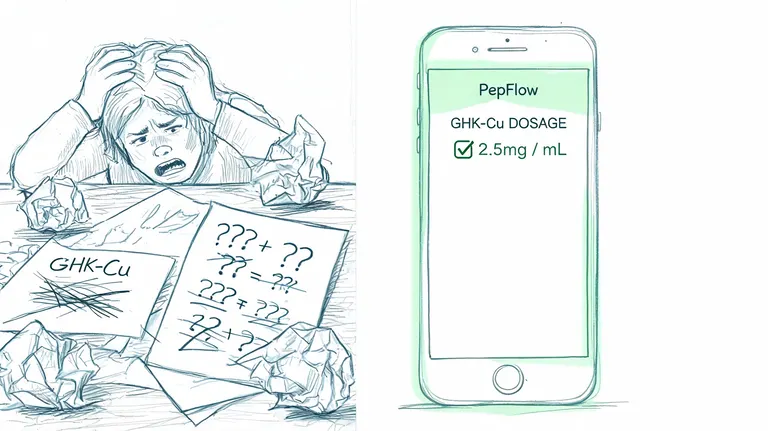
Why automation helps
A calculator app removes the part humans are worst at. Repeating the same conversions accurately when they’re distracted, rushed, or halfway through a cycle and relying on memory.
With a tool like PepFlow’s peptide calculator, you enter the vial amount, reconstitution volume, and target dose, then get the practical output in mL and U-100 units. That closes the gap between “I know the formula” and “I know exactly what to draw.”
What a dosing app should actually handle
A useful app shouldn’t stop at one calculation. It should support the workflow around the dose.
That means:
- Vial configuration: You need to save the exact setup you used.
- Dose translation: mg or mcg should convert into syringe-ready volume.
- Protocol scheduling: On days and off days matter when you’re following a structured cycle.
- History tracking: Logging helps you catch drift before it becomes a pattern.
Manual math teaches judgment. Automation protects consistency. The best setup uses both.
Conclusion Your Path to Confident Dosing
Confident dosing comes from three things. Understanding concentration, following a repeatable process, and respecting the limits of memory. If any one of those drops out, the odds of a mistake go up.
A ghk-cu dosage calculator is useful because it turns a raw peptide setup into an action you can repeat. But the calculator works best when you understand why the answer makes sense. That’s what keeps you from accepting a bad output, misreading a syringe, or carrying over old unit numbers into a new vial setup.
The no-nonsense approach is simple. Keep the reconstitution consistent. Write down the concentration. Convert the target dose into mL first, then into units. If the math feels even slightly uncertain, stop and verify it.
That’s how dosing gets safer. Not by rushing. By making each step clear enough that you can repeat it without guesswork.
PepFlow helps turn all of that into a practical routine. If you want a simple way to calculate peptide doses, save vial setups, and stay on schedule with your protocol, PepFlow gives you a cleaner workflow than doing every conversion by hand.