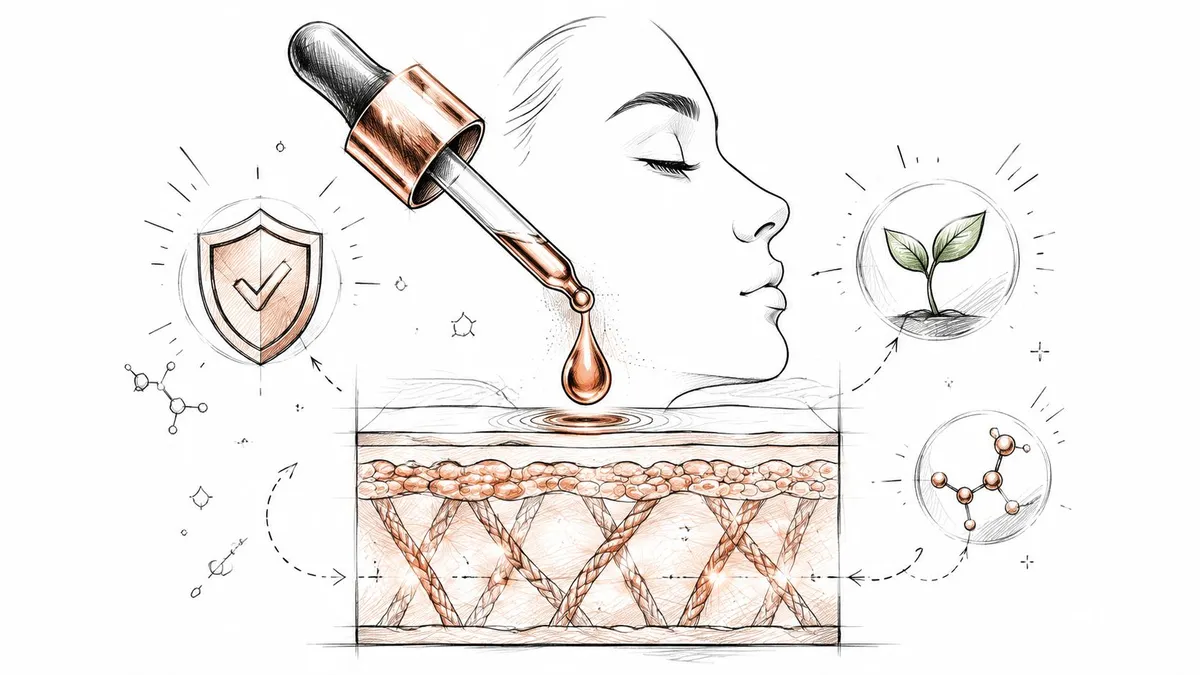
If an ingredient can build collagen, soften wrinkles, and support repair, the primary question isn’t only whether it works. It’s whether you can use it well enough to get the upside without drifting into irritation, confusion, or expensive trial and error.
That gap matters with copper peptides. Most skincare content treats them like a simple yes or no decision. They’re either the next miracle serum or just another overhyped blue bottle. In practice, they’re more interesting than that. Copper peptides are one of the more science-backed regenerative ingredients in topical skincare, but they also require a little more judgment than the average hydrating serum.
If you’ve been comparing growth factors, retinoids, vitamin C, and peptide serums, copper peptides deserve a spot in that conversation. They’re especially appealing if you want a formula that supports firmness, repair, and skin resilience without the sting that often comes with stronger exfoliating or prescription-style actives. If you want broader context on how they fit into a mature routine, this expert guide to anti-ageing skincare is a useful companion read.
Table of Contents
- Introduction Why Are We Talking About Copper Peptides
- What Exactly Are Copper Peptides
- The Science How Copper Peptides Renew Your Skin
- Evidence-Backed Benefits of Copper Peptide Serums
- Integrating Copper Peptides Into Your Skincare Routine
- Potential Side Effects and Safe Usage Guidelines
- How to Choose a High-Quality Copper Peptide Serum
- Frequently Asked Questions About Copper Peptides
Introduction Why Are We Talking About Copper Peptides
Skincare trends move fast. One month it’s exosomes, the next it’s salmon DNA, then everyone circles back to retinoids. Copper peptides have lasted longer than most trends because they sit in a different category. They aren’t just marketed as “anti-aging.” They’re discussed in terms of repair, signaling, and tissue support.
That’s a meaningful distinction. Skin aging isn’t only about lines on the surface. It involves slower repair, weaker structural support, less resilient collagen, uneven texture, and a greater tendency to look dull or creased under stress. An ingredient that can speak to those systems is more useful than one that only gives a temporary smoothing effect.
Copper peptides, especially GHK-Cu, are naturally associated with skin repair biology. In topical skincare, they’re usually used as a serum because serums are designed to deliver active ingredients in lightweight, leave-on formulas. That makes them practical for people who want daily use and visible long-term improvement rather than an occasional treatment.
Copper peptides are most promising when you think of them as a skin-support ingredient, not a quick cosmetic trick.
They’re also a little misunderstood. Some people assume all peptides do the same thing. Others assume copper means danger, irritation, or conflict with every other product in the bathroom. Neither view is quite right. A balanced approach is better: understand what copper peptides are, what they can realistically do, and how to use them without overcomplicating your routine.
What Exactly Are Copper Peptides
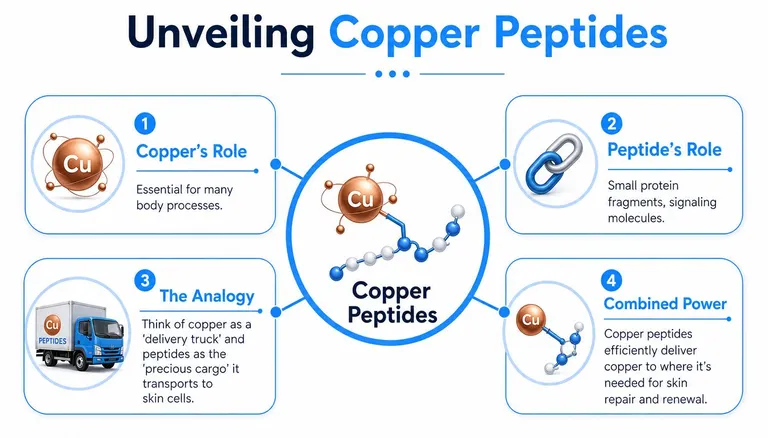
A copper peptide is a small peptide linked to a copper ion. The form you’ll see most often in skincare discussion is GHK-Cu, which combines a short amino-acid sequence with copper. That pairing matters because the peptide doesn’t just sit on the skin as decoration. It helps deliver a biologically useful signal.
A simple way to think about it is this. The peptide is the address label, and the copper is the useful cargo. Together, they help direct repair-related activity where skin can use it.
Why the pairing matters
Peptides on their own are often described as messengers. That’s a fair summary, but it can feel abstract. In skin, some peptides help nudge cells toward behaviors you want more of, such as repair, stronger matrix support, or better organization of structural proteins.
Copper adds another layer. It’s involved in processes that matter for healthy tissue, including enzyme activity tied to skin structure. So when people talk about copper peptide serum benefits, they’re usually talking about a signal-plus-support effect rather than simple moisturization.
For a broader primer on peptide categories in skincare, this overview of what peptides in skin care are helps place copper peptides in the bigger picture.
Why people get confused
The confusion usually comes from three places:
- “Peptide” sounds generic. There are many peptides in skincare, and they don’t all work the same way.
- “Copper” sounds harsh. People associate metals with reactivity, which makes them assume irritation is guaranteed.
- Blue formulas look theatrical. Many copper peptide serums have a bright blue tint, and that can make them feel more like branding than biochemistry.
In reality, a good copper peptide serum is less like a harsh active and more like a skilled project manager for your skin. It doesn’t force dramatic turnover the way acids can. It helps organize repair and structural maintenance.
If retinoids are like pushing the skin to work harder, copper peptides are more like giving the repair crew better instructions and better tools.
That’s why they appeal to people who want firmness and smoother texture but don’t tolerate aggressive actives very well.
The Science How Copper Peptides Renew Your Skin
Copper peptides get interesting once you stop thinking of them as a generic anti-aging serum and start looking at them as signaling molecules. In skin, GHK-Cu helps coordinate repair. It interacts with the cells and enzymes involved in rebuilding tissue, especially the proteins that give skin its bounce and structure.
A useful comparison is wound healing. When skin repairs itself after an injury, it has to send instructions, produce building materials, and organize those materials correctly. Copper peptides appear to support parts of that same communication-and-repair system, which helps explain why they are associated with firmer, smoother-looking skin over time.
Fibroblasts do the rebuilding
The main cells involved here are fibroblasts. These are the skin’s builder cells. They produce collagen, elastin, and parts of the extracellular matrix, which is the support network that keeps skin from looking thin or slack.
Copper peptides seem to encourage fibroblasts to act more like an active repair crew and less like a crew that has slowed down with age. That does not create overnight change. It can, however, improve the conditions that support:
- Softer-looking fine lines
- Better skin elasticity
- A smoother surface texture
If you have been comparing peptide options, this guide to the best peptides for skin helps place copper peptides in context, because not every peptide targets the same part of the repair process.
Why enzyme support matters
Collagen quality matters as much as collagen quantity. Skin does not benefit much from poorly formed structural proteins. They need to be built, linked, and arranged correctly.
That is where copper becomes relevant. Copper is involved in enzyme activity tied to tissue structure, including enzymes such as lysyl oxidase and prolyl hydroxylase, which participate in collagen maturation and stability. A simple way to picture it is construction work. Fibroblasts are the builders, collagen is the framework, and copper helps some of the tools work properly.
This is also why copper peptide serums appeal to people who want gradual strengthening rather than aggressive exfoliation. The goal is not to force rapid turnover. The goal is to support better repair.
Why visible results are gradual
Skin remodeling is slow. Fibroblasts need time to respond. Collagen and elastin need time to be produced and organized. Then the surface of the skin has to reflect those deeper changes.
That timeline matters for another reason. Because copper peptides work through ongoing signaling, using more is not always better. Overuse can backfire for some people, especially in already reactive routines. The safer mindset is steady, moderate use with a well-formulated product, not stacking multiple copper products and expecting faster results.
If you want more background on how GHK-Cu is discussed in skin and hair research, this comprehensive guide to GHK-Cu peptide covers the ingredient in more detail.
The practical takeaway is simple. Copper peptides work less like a quick cosmetic trick and more like long-term maintenance for the skin’s support system. That is promising, but it also explains why smart use matters as much as the ingredient itself.
Evidence-Backed Benefits of Copper Peptide Serums
What do copper peptides do for skin you can see in the mirror a few months from now?
The short answer is that they may help the skin act younger at a structural level. That matters because skin aging is not only a surface problem. It is also a support problem. When the underlying matrix is better maintained, skin often looks smoother, feels less fragile, and recovers more predictably.
Better collagen support
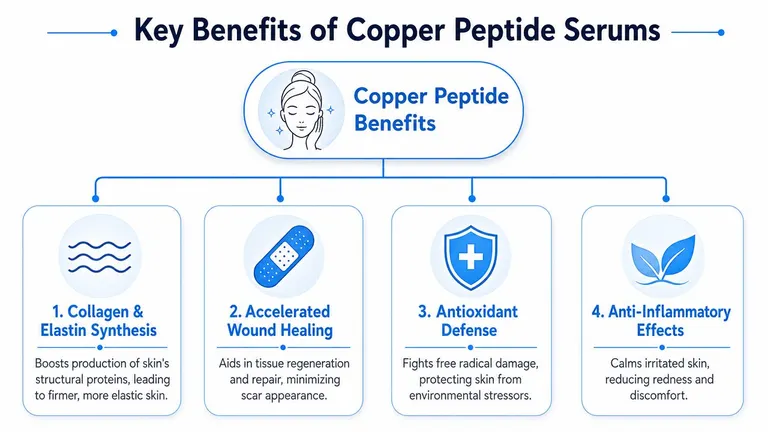
One of the clearest reasons people use copper peptide serums is collagen support. A 12 week clinical study summarized by Women’s Health reported improved collagen production in many participants using a GHK-Cu serum. That fits the known biology. GHK-Cu is studied for its signaling effects on fibroblasts, the cells that help build collagen and elastin.
A practical way to understand this is to compare skin to a mattress. When the internal support weakens, the surface starts to crease and sag more easily. Copper peptides are appealing because they are aimed at that support layer, not just short-term surface smoothing.
This is one reason copper peptides are often included among the best peptides for skin. They are used for skin quality, not just one isolated concern.
Firmer texture and a less crepey look
Collagen support can show up in ways that feel subtle at first. Skin may look a little denser. Fine lines may appear softer. Areas that once looked thin or tired can start to look more resilient.
That kind of improvement is easy to miss if you expect a dramatic change in a week. Copper peptides usually reward patience. The benefit is often cumulative, which is why overusing them in pursuit of faster results is not a smart tradeoff.
Here’s a helpful visual summary before we get more practical:
Support for repair and recovery
Copper peptides are also studied for their role in skin repair. In plain terms, they are used to support the environment skin needs to recover well. That is different from forcing rapid exfoliation. The goal is better function over time.
For some people, this means skin feels less rough, less easily irritated, and more able to bounce back after routine stress. That can be useful if your routine already includes stronger actives. If you also use exfoliants, timing and frequency matter. Pairing too many stimulating products can create irritation that cancels out the benefits, which is why practical layering advice such as Finding Favourites on glycolic acid can be helpful when planning the rest of your routine.
Antioxidant and calming effects
Copper peptides are also valued for antioxidant activity. Daily skin aging is partly a story of repeated small injuries from UV light, pollution, and inflammation. Antioxidants help limit some of that wear.
Users often describe this benefit in less dramatic terms. Their skin seems calmer. Redness looks less persistent. The face appears less stressed by the end of the day. Those changes may sound modest, but they are meaningful because healthy skin is not only smooth. It is stable.
That balanced view matters here. Copper peptides can be promising, but more product does not automatically mean better results. The strongest outcomes usually come from steady use, realistic expectations, and a routine that does not overwhelm the skin barrier.
Integrating Copper Peptides Into Your Skincare Routine
How do you add a promising active without turning your routine into a chemistry experiment?
Copper peptides tend to do best in a routine with a narrow job description. Give them a consistent place, keep the rest of the lineup stable, and your skin is much easier to read. That matters because the biggest mistake is rarely the ingredient itself. It is adding too many “helpful” steps at once and then having no idea what caused the reaction.
A practical starting point is once daily, usually at night. If your skin stays comfortable after a couple of weeks, you can decide whether there is any reason to use it twice a day. Many people never need to. More frequent use does not automatically mean better results, and this ingredient is one of the clearest examples of why restraint often works better than enthusiasm.
A simple order that makes sense
Copper peptide serums are usually water-based, so they generally go on after cleansing and before heavier creams. The layering logic is simple. Apply the thinner, treatment-focused product first, then use moisturizer to reduce water loss and support the barrier.
- Cleanse gently. Your skin should feel clean, not squeaky or stripped.
- Apply the copper peptide serum. A thin layer is enough.
- Follow with moisturizer. This helps limit dryness and keeps the routine tolerable.
- Use sunscreen in the morning. Protecting collagen matters more than chasing collagen with more products.
If your skin is reactive, start with three nights a week instead of every night. That gives you a clearer signal. If redness, stinging, or tightness appears, you can adjust before irritation builds.
How it fits with other actives
People often get confused on this point, and their confusion is understandable. Copper peptides are often described as gentle, so readers assume they can be added anywhere. In practice, they work best when you respect the whole routine, not just the serum bottle.
Exfoliating acids and retinoids already ask a lot from the skin. Copper peptides are not necessarily incompatible with them, but using everything in the same routine can make the skin barrier work harder than it needs to. A good comparison is exercise programming. A solid workout helps you improve. Five intense workouts stacked back to back usually leaves you sore, inflamed, and underperforming.
If you are already using glycolic acid and trying to sort out where lower-pH products belong, Finding Favourites on glycolic acid gives useful context for timing and pairing.
Here is a practical way to think about common combinations:
| Ingredient | Compatibility Level | Best Practice |
|---|---|---|
| Vitamin C | Use caution | If your skin is sensitive, separate them into different routines or alternate days. |
| Retinoids | Moderate | Alternating nights is often easier than layering both at once. |
| AHAs and BHAs | Use caution | Keep them in separate routines if your skin is prone to irritation. |
| Niacinamide | Generally compatible | Often a comfortable pairing for barrier support and overall skin stability. |
| Hyaluronic acid | Compatible | Works well alongside copper peptides for hydration. |
| Ceramides and moisturizers | Compatible | Helpful after application, especially if your skin runs dry or easily irritated. |
Example routines that keep things clear
The best copper peptide routine is usually simple enough to look a little boring.
- Morning: Cleanser, moisturizer, sunscreen
- Evening: Cleanser, copper peptide serum, moisturizer
If you also use a retinoid, try this instead:
- Night 1: Cleanser, retinoid, moisturizer
- Night 2: Cleanser, copper peptide serum, moisturizer
That alternating pattern is often easier on the skin and easier to troubleshoot. It also reflects the balanced reality that copper peptides can be helpful, but they do not need to be forced into every available slot. Safe use is part of effective use.
One practical rule matters more than any compatibility chart. If your skin becomes red, shiny, tight, itchy, or stingy, reduce the total number of active products before blaming one ingredient. In real routines, overuse is often the problem.
Potential Side Effects and Safe Usage Guidelines
What can go wrong with copper peptides if the ingredient is generally well tolerated? Usually, not the peptide itself. The problem is how people use it.
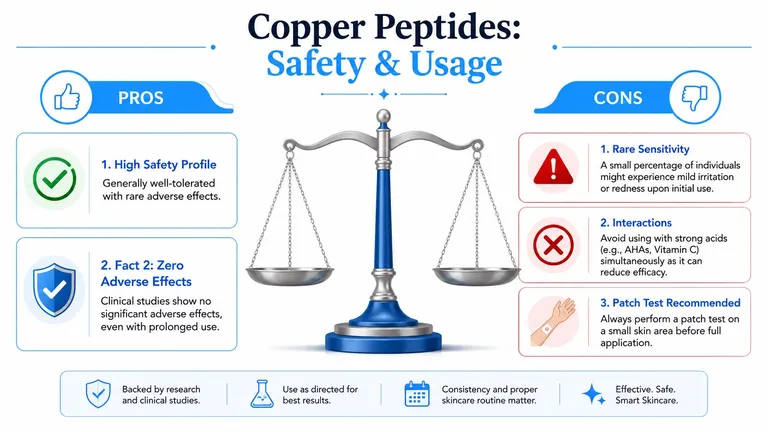
Copper peptides tend to have a favorable safety profile in skincare, which is one reason they attract so much attention. But “gentle” can be misunderstood. In skin care, a well-tolerated ingredient can still cause problems if it is layered into an already stressed routine. Skin behaves less like a machine and more like a healing fabric. If the fabric is frayed, even a helpful treatment can sting, irritate, or become one step too many.
That is the part many glowing reviews skip. The common risk is overuse.
What the safety discussion actually means
Published discussions of copper peptides generally describe them as low-risk when used in properly formulated products. Concerns come up at the edges, especially with excessive exposure, poorly designed formulas, or routines that already include multiple irritating actives.
There is also a theoretical caution worth understanding. Copper plays useful biological roles, but too much free copper is not automatically better for skin. In simple terms, the dose and the formula matter. A professionally made serum is designed to deliver the ingredient in a controlled way, which is very different from assuming that more copper equals more repair. If you want a quick overview of the peptide itself, this GHK-Cu ingredient reference is a helpful place to start.
In practice, the risk is overenthusiasm
Copper peptides are rarely the ingredient that causes trouble on their own. Problems are more likely in routines where someone:
- uses the serum too often, too soon
- applies it to skin that is already irritated, over-exfoliated, or freshly sunburned
- combines it with several strong actives without giving the skin time to adjust
- keeps using it despite burning, persistent redness, or unusual sensitivity
That pattern matters. If your barrier is already strained, adding another active can feel less like support and more like extra weight on an injured ankle.
Safe use habits that make sense
A cautious approach is usually the most effective one.
- Patch test first. Apply a small amount to a discreet area for several days before using it widely.
- Start with limited frequency. Two or three nights per week is often easier to tolerate than jumping into daily use.
- Pay attention to your skin’s response. Redness, warmth, stinging, tightness, or itching are signals to reduce frequency or pause.
- Keep the routine simple at first. The more variables you add, the harder it becomes to tell what your skin likes.
- Follow the product’s directions. Good formulas usually come with realistic guidance on frequency and layering.
One practical point is easy to miss. Irritation does not always appear as dramatic peeling. Sometimes it shows up as skin that looks shiny, feels tight, or suddenly reacts to products that were fine before.
When to pause
Pause copper peptides if your skin is actively inflamed, visibly over-exfoliated, sunburned, or recovering from a reaction. The same applies after aggressive treatments unless your dermatologist has advised otherwise.
Used carefully, copper peptides can be a smart addition to a routine. Used aggressively, they can become one more active in a lineup your skin never asked for. That balanced view is the safest one to keep.
How to Choose a High-Quality Copper Peptide Serum
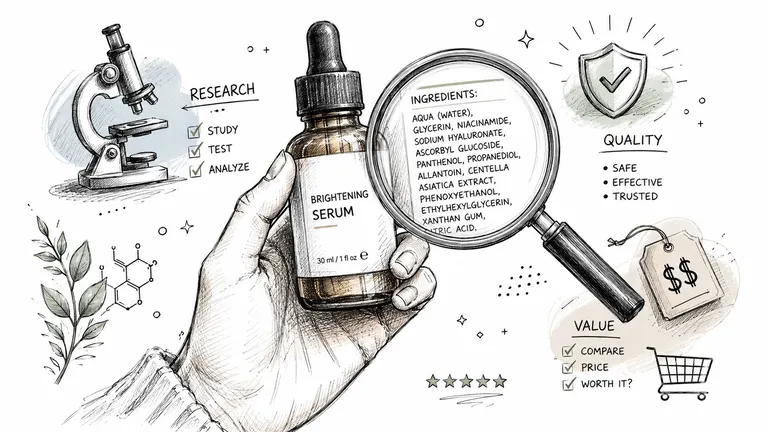
A good copper peptide serum should look credible before you even open it. The formula, packaging, and ingredient list tell you more than the branding does.
Start with the INCI list
Look for names such as GHK-Cu or Copper Tripeptide-1. If the front of the bottle shouts copper peptides but the ingredient list makes them hard to find, I’d be cautious. Marketing language is easy. Ingredient labeling is where brands show their work.
If you want a quick reference on the peptide itself, PepFlow’s GHK-Cu ingredient page gives a concise overview.
Packaging matters more than many people think
Copper peptides are the kind of active that benefits from thoughtful packaging. Better options include:
- Opaque bottles that limit light exposure
- Airless pumps that reduce repeated air contact
- Clean dispensers that help with consistency and hygiene
A jar format isn’t automatically useless, but it’s less elegant for an ingredient you want to keep stable over time.
Don’t judge only by color
Many copper peptide serums have a blue tint, which reflects the ingredient people are looking for. That can be a helpful clue, but it isn’t a guarantee of quality by itself. A bright blue serum can still be poorly formulated, overly fragranced, or built around marketing first.
Instead, judge the full picture:
| What to look for | Why it matters |
|---|---|
| Clear naming of GHK-Cu or Copper Tripeptide-1 | Confirms the active is actually present |
| Fragrance-conscious formula | Better for sensitive or reactive skin |
| Supportive base | Hydrators and barrier-friendly ingredients make daily use easier |
| Practical packaging | Protects the formula and improves consistency |
The best product is usually the one that your skin can tolerate consistently. With copper peptides, consistency matters more than drama.
Frequently Asked Questions About Copper Peptides
How long does it take to see results from copper peptides
Copper peptides are not instant-gratification skincare. They work through repair and structural support, so results tend to build gradually. Users should anticipate steady use over weeks, not overnight transformation. If your skin already feels inflamed or overworked, the first positive sign may be that it feels calmer and more resilient.
Are all copper peptides the same
No. The active discussed most often is GHK-Cu, and formulation quality can vary a lot from one serum to another. Two products can both say “copper peptides” and still differ in texture, stability, irritation potential, and how comfortably they fit into a routine.
Can I use copper peptides if I already use retinoids or acids
Usually yes, but you’ll often do better by alternating rather than piling everything into one session. If your skin is resilient, you may tolerate more combination use. If it’s reactive, separate your stronger active nights and let copper peptides play the support role.
Can copper peptide benefits come from anything besides serums
Yes. An overlooked area is copper oxide-embedded textiles. Research summarized in a PMC review on copper oxide textiles reports that items like pillowcases and socks can significantly reduce wrinkles and improve skin elasticity, offering a passive, continuous delivery method that may complement topical products.
That’s interesting because it widens the conversation. Copper peptides and copper-based skin support aren’t limited to a serum bottle. Different delivery methods may suit different goals and tolerance levels.
Who is a good candidate for a copper peptide serum
People who want firmer-feeling skin, better long-term texture, and a repair-focused ingredient often do well with it. It can also make sense for someone who finds many anti-aging products too harsh but still wants something more active than a basic moisturizer.
Who should be more careful
Anyone with a compromised barrier, very reactive skin, or a habit of stacking multiple strong actives without a plan should move slowly. Copper peptides are often gentle, but your overall routine determines whether the experience stays gentle.
If you’re tracking a broader peptide routine and want help staying organized, PepFlow is a practical tool for planning schedules, calculating doses, and keeping protocols consistent. It’s built for accuracy and routine management, which is useful when you don’t want guesswork creeping into your peptide workflow.